Film & TV Locations

Beyond the Screen: Home Alone's Iconic Chicago Filming Sites

Few films resonate with such a universal, nostalgic hum as Home Alone. For many, it’s not just a holiday tradition; it’s a portal back to childhood, to a simpler time when a booby-trapped suburban home felt like the ultimate adventure. As a travel writer who’s spent years sifting through the layers of cinematic history embedded in American landscapes, I've noticed a peculiar phenomenon: the magnetic pull of these film locations. Yet, the reality of visiting them often diverges wildly from the romanticized image in our minds. Let's peel back those layers and explore the places that brought Kevin McCallister's extraordinary Christmas to life, offering insights you won't find in your typical tourist brochure.

My first revelation about the film's geography came not from an official guide, but from a chance conversation with a local historian in Winnetka, Illinois. We were discussing the allure of the iconic McCallister residence, and he chuckled, "People expect to walk in and see the exact staircase. If only it were that simple!" It’s this kind of disconnect between expectation and the intricate reality of filmmaking that makes these explorations so compelling. What follows isn't just a list of addresses; it's an invitation to understand the craft, the compromises, and the enduring magic woven into these seemingly ordinary places.

The True Story of Kevin's Castle: Is It Really the McCallister House?

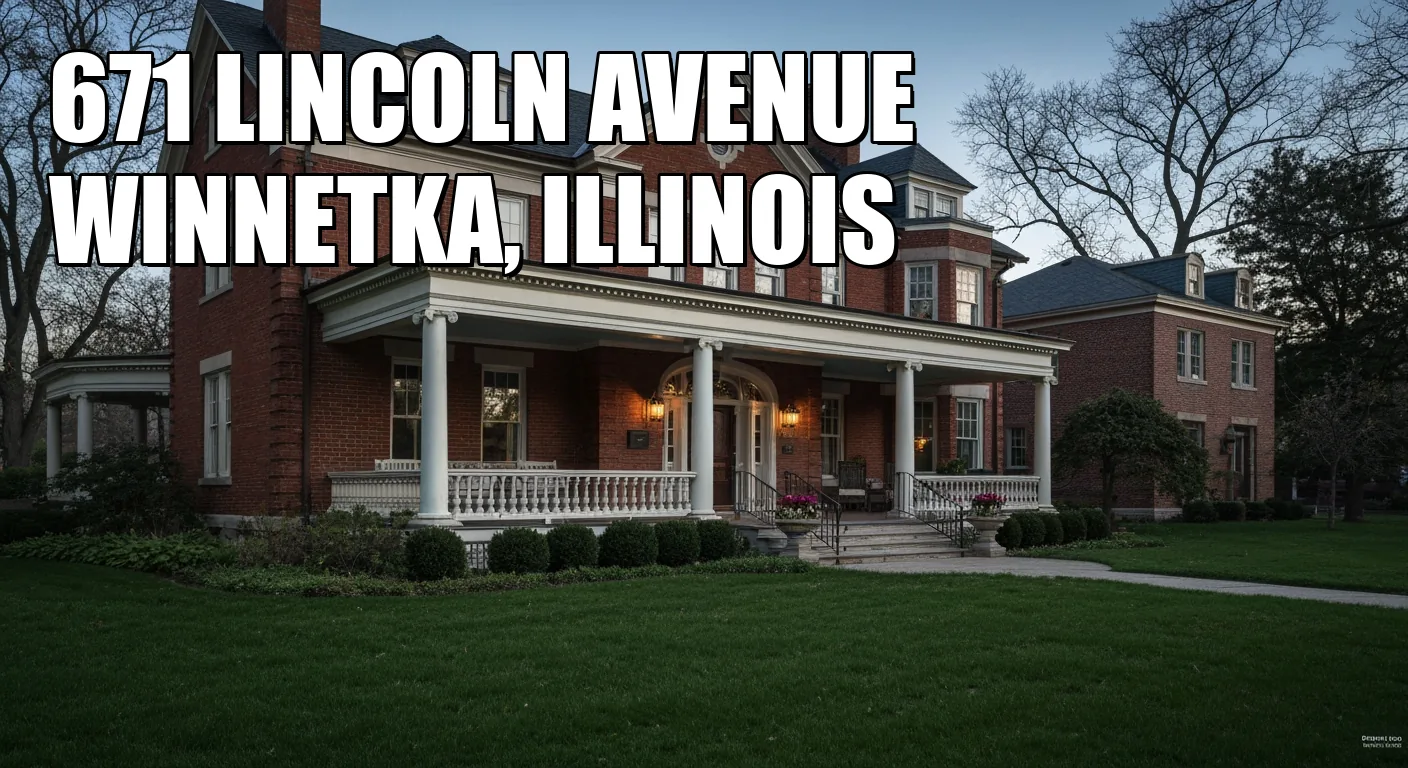
Ah, 671 Lincoln Avenue in Winnetka, Illinois. This red-brick Georgian-style home, built in 1921, stands as the undisputed visual anchor of Home Alone. Its stately facade, the wide front porch, the sprawling lawn – every detail is etched into our collective memory. This is the house you picture when you hear "Buzz, your girlfriend, woof!" But here’s the rub, and it’s a big one: while the exterior is undeniably the star, very little of the interior you see in the film was actually shot within its walls. Only specific elements, like the main staircase, the attic, and parts of the first-floor landing, were utilized. The rest? Pure movie magic, conjured elsewhere.

Standing outside this private residence today, you’re enveloped by the quiet charm of Winnetka. The street is tree-lined and upscale, exactly as you’d imagine the McCallister family to live. In the immediate aftermath of the film’s 1990 release, locals recall over 400 cars lining the street during the holiday season, a testament to its instant fame. If you plan a pilgrimage, remember this is someone’s home. Keep your distance, be respectful of the residents' privacy, and avoid lingering excessively. The best time to visit for that authentic wintery feel is December, but expect potential crowds and a greater chance of infringing on the homeowners' peace. For a quieter, more reflective experience, a brisk autumn day offers beautiful colors and fewer gawkers. Parking can be a challenge on this residential street, so consider parking a few blocks away and enjoying a leisurely walk.

Where the Real Interior Magic Happened: A High School's Unsung Role

Now, for the truly surprising twist, one that often eludes casual fans: the vast majority of the McCallister home’s interiors were constructed on an elaborate two-story soundstage. And where was this colossal set built? Not in some Hollywood studio, but in the gymnasium of the now-abandoned New Trier Township High School's West Campus in Winnetka. Director Chris Columbus openly admitted the actual house was simply too small to accommodate the sprawling film crew and equipment needed for all those intricate booby trap setups. This pragmatic decision transformed a suburban school gym into the chaotic, beloved interior we all recognize.

The ingenuity didn't stop there. The school's empty swimming pool played a rather unexpected role, doubling as the flooded basement where the Wet Bandits met their watery, electrocuted doom. Even the first-class cabin interiors of the American Airlines DC-10 were filmed on the basketball courts. This campus, a veritable chameleon of cinematic backdrops, had previously served producer John Hughes for classics like Uncle Buck and Ferris Bueller's Day Off. While the campus itself has undergone changes since, its legacy as a creative hub for some of the most iconic films of the era remains. You won't find public tours of the soundstage, of course, as it was a temporary setup. The insight here lies in appreciating the illusion—the painstaking effort to create a seamless world from disparate locations, proving that the magic of cinema often springs from the most mundane, unexpected places.

O'Hare's Controlled Chaos: More Than Just a Run to the Gate

Who could forget the frantic dash through the airport, the McCallister clan hurtling towards their Paris flight? That iconic sequence, brimming with holiday rush energy, was largely filmed at O'Hare International Airport, specifically Terminal 3, Concourse G, near Gate G6. What truly impresses is the cleverness of the production design: O'Hare didn't just stand in for Chicago's departure point; it ingeniously doubled for Paris's Orly Airport as well. A testament to skilled set dressing and creative camera angles, parts of Terminal 1 were also utilized to achieve that distinct 'European' look.

Trying to retrace their exact steps today in a bustling international airport is, frankly, a fool's errand. O'Hare is a perpetually busy transportation hub, not a static film set. While the concourse and gate numbers provide a specific reference, the experience isn't about finding a precise spot where Catherine O'Hara yelled "Kevin!" It's about immersing yourself in the genuine, albeit amplified, chaos that made the scene so believable. Take a moment to appreciate the contemporary artwork and sculptures commissioned during the airport’s renovations, visible in many background shots. If you happen to be flying through O’Hare, particularly Terminal 3, allow yourself to feel the echoes of that cinematic scramble. It’s a subtle nod to the film’s spirit, best appreciated during a layover rather than as a dedicated, stressful excursion.

The Divided Sanctuary: Kevin's Quiet Refuge Across Two Churches

One of the most poignant moments in Home Alone arrives when Kevin seeks solace in a quiet church, later encountering his enigmatic neighbor, Marley. This heartfelt scene, a true turning point for Kevin's character, wasn't shot in a single location but split between two distinct suburban Illinois churches. The exterior shots, where Kevin is first seen approaching the solemn structure, were filmed at Trinity United Methodist Church in Wilmette. This handsome Neo-Gothic edifice, completed in 1928 and designed by Granger & Bollenbacher, provides the perfect visual gravitas for a child's search for comfort. Interestingly, securing a village permit for filming here wasn't a given; it passed only after initial resistance from Wilmette officials, highlighting the sometimes-complex relationship between Hollywood and local communities.

For the interior scenes, where Kevin shares that profoundly moving conversation with Marley, the production moved to Grace Episcopal Church in Oak Park. It's within these walls, while a choir rehearses "O Holy Night," that Kevin confronts his fears and begins to understand the true meaning of family and forgiveness. The decision to use two separate churches wasn’t about deception, but about cinematic optimization—finding the perfect architectural exterior in one place and an equally fitting, emotionally resonant interior in another. If you wish to visit, remember these are active places of worship. Check their respective service schedules and visit respectfully, perhaps pausing to reflect on the scene’s powerful message within their hallowed halls.

Meigs Field's Ghost: Where Gus Polinski Found His Polka Groove

Of all the locations, this one carries a particular bittersweet note: Meigs Field Airport, the site of John Candy’s legendary, whirlwind cameo as Gus Polinski, the "Polka King of the Midwest." You won't find Meigs Field on a current map as an active airport because it no longer exists. This single-runway airport, operational from 1948, was controversially demolished by Mayor Richard M. Daley in 2003 to make way for Northerly Island Park. So, while you can visit the physical space, you can't walk onto the tarmac where Candy's Kenosha Kickers band strummed their accordions.

The anecdote surrounding this location is pure Hollywood lore: John Candy, a dear friend of John Hughes, was only available for a single day. The production team, however, managed to squeeze an astonishing 23 hours of continuous filming out of him, capturing all of Gus Polinski’s scenes – from the Scranton, Pennsylvania airport encounter with Kate McCallister to the polka band’s spirited performance on the airstrip and in a nearby warehouse. This Herculean effort underscores Candy’s generosity and professionalism, creating one of the film’s most memorable supporting roles. Visiting Northerly Island Park today isn’t about seeing a preserved film set; it’s an opportunity to contemplate the ephemeral nature of locations, both real and cinematic, and to appreciate the park itself as a beautiful, albeit different, urban amenity. You can almost feel the phantom echoes of polka music carried on the lake breeze.

Behind the Mayhem: Stunt Secrets and the Gritty Reality of Production

Beyond the specific addresses, a deeper appreciation of Home Alone’s locations demands an understanding of its production realities, particularly the sheer audacity of its practical effects. What typical guides often gloss over are the hair-raising stunt challenges that define much of the film’s physical comedy. Take Joe Pesci’s character, Harry, executing that jaw-dropping backflip down the McCallister house’s front stairs. Stunt coordinator Troy Brown performed that on the very first take, without harnesses or safety cables – a feat so audacious director Chris Columbus genuinely feared Brown had broken his back. This wasn’t CGI; this was raw, dangerous athleticism, born from a tight budget that precluded the luxury of erasing safety equipment in post-production.

Then there’s the infamous tarantula scene: Daniel Stern, as Marv, genuinely had a real tarantula crawling across his face. His terrified scream wasn’t acting; it was a primal, unadulterated reaction to a furry, eight-legged co-star, performed without protective equipment. And Macaulay Culkin carries a permanent scar from a rehearsal where Joe Pesci, perhaps a touch too much in character, accidentally bit his finger too hard. Even the seemingly innocuous "snow" caused problems; potato flakes, used for realism, turned yellow and developed an unpleasant odor after days under the hot lights. These are the untold stories, the gritty truths that underscore the immense dedication and occasional peril involved in crafting cinematic magic. Knowing these details doesn't diminish the film; it deepens our respect for the artistry and sheer grit behind every frame, making a visit to any of these locations resonate with a richer, more human context.

So, the next time you settle in to watch Kevin defend his home, remember: the world on screen is a carefully constructed illusion, a mosaic of real places and ingenious craftsmanship. These filming locations aren't just addresses; they're chapters in a captivating story, each offering a unique glimpse into the alchemy of moviemaking. Visiting them isn't about finding a perfect replica of the film; it's about connecting with the spirit of a beloved classic and appreciating the often-surprising truths hidden just beneath the surface of the screen.

Home Alone Filming Locations: Essential Traveler's Guide to Chicago & New York

What location was Home Alone filmed in?
Home Alone (1990) was primarily filmed in the Chicago suburbs, with the majority of scenes shot in Winnetka, Illinois, located about 15 miles north of downtown Chicago. The film crew shot across various Illinois locations including the McCallister house exterior, churches, and downtown Winnetka streets from February to May 1990.
Where is Kevin's house located?
Kevin's house, known as the McCallister house, is located at 671 Lincoln Avenue, Winnetka, Illinois 60093, a prestigious Georgian Colonial-style brick home built in 1921 with 5 bedrooms and 6 bathrooms.
Where is the actual Home Alone house located?
The actual Home Alone house is at 671 Lincoln Avenue, Winnetka, Illinois 60093, in an upscale suburb of Chicago known for its tree-lined streets and historic architecture.
Can you tour the Home Alone house?
The Home Alone house remains private residential property and does not offer public tours inside; however, visitors are welcome to view and photograph its distinctive exterior from the street, with tours available only to pre-qualified property buyers.
Is the Home Alone house a tourist spot?
Yes, the Home Alone house is a recognized tourist attraction, especially during the holiday season from November through January, though it is limited to exterior viewing from public areas with respectful behavior toward residents and neighbors expected.
Home Alone film location tour
Multiple tour companies in Chicago offer guided movie location tours featuring the Home Alone house exterior, including 3-hour private tours with hotel pickup and drop-off that visit iconic Chicago film locations like Wrigley Field and Union Station for approximately $315 per group.
Can you do a Home Alone tour in New York?
Yes, several tour operators offer Home Alone 2 movie location tours in New York City, including guided walks or pedicab tours visiting the Plaza Hotel, Central Park locations, Rockefeller Center, and other iconic filming sites from Home Alone 2: Lost in New York (1992).
Does room 411 exist in the Plaza Hotel?
Room 411, known as Suite 411 in the film, is a real suite at the Plaza Hotel where Kevin McCallister stayed in Home Alone 2; the concierge lobby and check-in area featured in the movie are part of the Plaza's historic design.
Is Duncan's Toy Chest a real store in New York?
No, Duncan's Toy Chest is a fictional store created for Home Alone 2; however, the exterior shots were filmed at the Rookery Building (209 S LaSalle St) in Chicago's Loop district, and the store was inspired by FAO Schwarz, a real toy store that moved to 30 Rockefeller Plaza in 2015.
What is the most famous movie filmed in Chicago?
Ferris Bueller's Day Off (1986) is widely recognized as one of the most famous and iconic movies filmed in Chicago, featuring numerous Chicago landmarks including the Sears Tower, Wrigley Field, and the Art Institute; it was selected for preservation in the National Film Registry in 2014.
How far is the Home Alone house from Chicago downtown?
The Home Alone house in Winnetka is approximately 15-20 miles (25-30 kilometers) north of downtown Chicago, with a travel time of about 30-45 minutes depending on traffic and transportation method.
What other Home Alone filming locations can visitors see in Chicago?
Additional Chicago-area filming locations include Grace Episcopal Church (1024 W Lake Avenue, Wilmette) where interior church scenes were filmed, Winnetka downtown where Kevin meets Santa, and various neighborhood streets used for exterior shots throughout the 1990 film.
What is the best time to visit the Home Alone house?
The holiday season from November through January is the most popular visiting time when the house attracts peak interest; however, visitors can view the exterior year-round during daylight hours while respecting the private property and residents' privacy.
Can you visit the Home Alone 2 filming locations in New York?
Yes, Home Alone 2 filming locations in New York are accessible to visitors, including the Plaza Hotel, Central Park (Wollman Rink, Bethesda Fountain, Gapstow Bridge), and various Manhattan landmarks featured in the 1992 film, with several guided tour options available.
Are there any Home Alone movie tours available in 2025?
Yes, multiple tour operators offer Home Alone movie location tours in both Chicago and New York in 2025, including private tours with guides, pedicab tours in Central Park, and combined movie location experiences visiting sites from both Home Alone films.