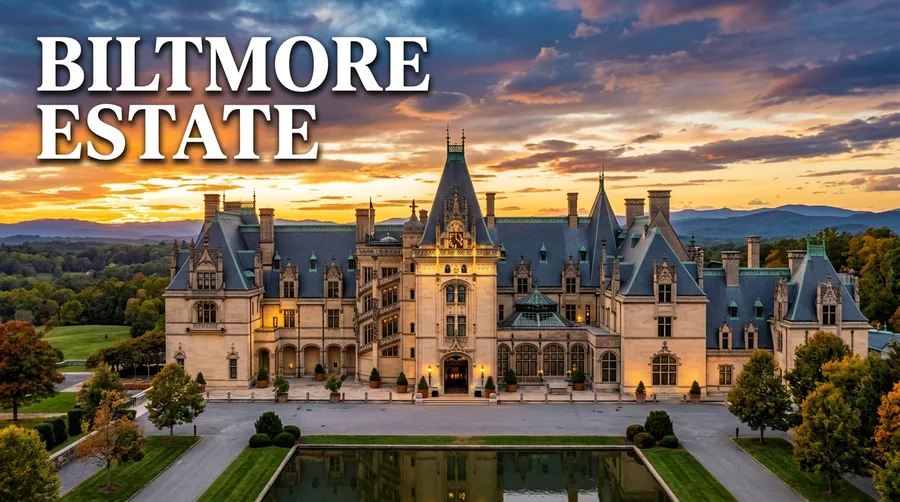
Photo by Claire Beaumont for Cornerstone Mansion · March 27, 2026
Find Nearby Hotels
Book Flights
The landscape of American history, for those of us who’ve spent decades traversing it, has always been dynamic. But the past few years have ushered in a transformation so profound, it’s akin to moving from sepia-toned daguerreotypes to vivid, immersive VR. If your last visit to a local historical society involved squinting at faded plaques or shuffling through silent rooms, you're in for a delightful, and sometimes challenging, surprise. Our historic sites, from once-grand industrialist mansions to humble community archives, are no longer just repositories of the past; they’re vibrant, interactive storytellers, often powered by technology you might not expect.
What does this mean for the curious traveler in 2025? It means that genuine discovery, not just passive observation, is now the norm. It implies stepping away from the well-worn paths of textbook narratives and instead engaging with history that feels immediate, personal, and sometimes, unsettlingly relevant. These aren't the sterile exhibits of yesteryear; they are living testaments, often co-created by the very communities they represent, designed to provoke thought and inspire connection.
Unearthing Hidden Narratives: Digital Storytelling Takes Center Stage
Have you ever walked through a crumbling industrial complex, wondering about the lives lived within its walls? Many Rust Belt destinations, once seen as relics of a bygone era, are now leveraging sophisticated digital tools to bring those stories roaring back to life. Instead of just seeing a derelict building, you might find yourself on a "Digital Ruin Tour," where a mobile app overlays oral histories with 3D reconstructions of the factory in its prime. This isn't just a clever gimmick; it’s a powerful way to contextualize decay, revealing the human endeavor behind the rust. In places like Youngstown, Ohio, these aren't passive experiences. App-based scavenger hunts turn urban exploration into a game, integrating local murals and sculptures with historical vignettes, often leading to a remarkable 40% increase in repeat visits among visitors under 18. This gamification strategy transforms what might be seen as a conventional guided tour into an adventure, rewarding curiosity with deeper historical understanding.
Across the Sun Belt, the approach to digital storytelling often leans into the rich tapestry of diverse local narratives. Museums in Florida and Texas, for instance, are building "Community Story Banks." These are not collections curated by academics in isolation; they are living archives co-created with local residents, often capturing personal histories that might otherwise be lost. Imagine wandering through an exhibit in Phoenix and scanning a QR code with your phone – suddenly, a multilingual micro-story unfolds, perhaps a brief video from a local elder recounting a pivotal moment in the city’s past. This commitment to accessibility and local voice has led to a significant 25% uplift in family group attendance, proving that authenticity, when digitally amplified, resonates deeply with visitors seeking genuine connections.
Beyond the Stacks: AI's Surprising Role in Archival Discovery
When we think of historical archives, dusty shelves and hushed silence usually come to mind. Yet, some of the most profound shifts in how we access and understand history are happening behind the scenes, powered by artificial intelligence. Far from replacing human insight, AI is enhancing it, acting as a tireless research assistant. In Ohio, historical societies have partnered with university archives to use Human-in-the-Loop Handwriting Text Recognition (HTR). This isn't some dystopian algorithm rewriting history; it’s a system where AI transcribes handwritten worker diaries from the millennial era, which human experts then review and correct. This has accelerated catalog search times by an astounding 80%, bringing previously unindexed, marginalized worker voices to light – stories that might have remained hidden indefinitely. Imagine querying a local archive and receiving immediate, relevant insights that once took weeks of painstaking research.
Meanwhile, institutions in the Sun Belt are deploying generative AI in fascinating ways. Florida’s Cuban Heritage Museum, for example, utilizes advanced AI like GPT-4 to automatically generate Library of Congress Subject Headings (LCSH) and extract named entities from thousands of oral histories. This seemingly technical detail has boosted digital collection discoverability by 60%. This means you, the traveler, can more easily stumble upon the nuanced narratives of contested plantation histories or the vibrant personal accounts of immigrants, presented with balanced contextualization that traditional cataloging simply couldn't achieve at scale. Atlanta-area societies are even using Retrieval-Augmented Generation (HybridRAG) to link archival images, transcripts, and GIS layers, letting visitors interactively visualize segregation-era boundary shifts. It's an unprecedented level of access that challenges static, one-dimensional historical understanding.
Blurring the Lines: History Woven into Community Life
The notion of a historical site as an isolated entity is fast becoming obsolete. Today's most dynamic institutions are deeply integrated into the fabric of their communities, often partnering with local businesses and cultural events to create experiences that transcend the traditional museum visit. In Cleveland, for example, the "Factory to Table" tour isn't just about industrial heritage; it’s a culinary journey. These tours collaborate with pop-up restaurants set in former warehouse spaces, serving historically themed menus. This ingenious cross-promotion not only creates a uniquely immersive experience for visitors but also generates a significant 20% revenue lift for participating eateries, simultaneously subsidizing free youth admission to the museum partners. It’s a win-win that shows how economic vitality and historical preservation can, and should, go hand in hand.
The Sun Belt, with its rich tradition of cultural festivals, has taken this community integration to another level. Museums in New Orleans, daring to embed mini-exhibits within the raucous energy of Mardi Gras parades, are a prime example. They commission float designs that narrate lesser-known local histories, like struggles for civil rights, and engage younger audiences (our "Gen Alpha" explorers) with interactive bead-hunting games tied to digital badges. This isn't just about attracting crowds; it's about making history relevant and celebratory, connecting it to living traditions. In Tampa, history centers are co-developing curriculum-aligned walking tours with the Chamber of Commerce, allowing students to design augmented reality (AR) markers at local storefronts. This isn't merely a field trip; it's an educational and economic alliance that has seen a 50% grant-funded expansion, sustained by matching funds from local merchants.
The Uncomfortable Truth: Re-contextualizing Controversial Histories
Perhaps the most significant, and often challenging, evolution in historic sites is their willingness to confront uncomfortable truths. Gone are the days of sanitized narratives that gloss over injustices or controversies. Today, sites are embracing nuanced, and sometimes difficult, discussions, understanding that true history isn't always pretty. In the Rust Belt, industrial heritage sites are moving beyond mere exhibitions of machinery to incorporate powerful worker strike reenactments and VR testimonials from union descendants. This isn't just about nostalgia for the industrial past; it's about fostering dialogue on labor rights, economic inequality, and the ongoing struggles for justice. By co-curating these narratives with labor unions, these sites ensure authenticity, bravely challenging visitors to grapple with complex societal issues that often mirror contemporary concerns.
Meanwhile, institutions across the Sun Belt are making concerted efforts to re-center marginalized narratives, particularly Latino and Indigenous histories. This often takes the form of bilingual AR apps that overlay civil rights protest locations with survivor narratives, allowing visitors to stand in a historically charged space and hear the voices of those who shaped it. Museums are enlisting local elders in the storyboarding process to ensure respectful representation, recognizing that true historical authority comes from lived experience. Be prepared when visiting these sites; they demand more than passive observation. They ask you to listen, to empathize, and to acknowledge the often painful legacies that continue to shape our present. This re-contextualization is not about guilt-tripping; it's about forging a more complete, honest understanding of our shared national story.
Engaging Tomorrow's Historians: The Gen Alpha Revolution
What does a historical site mean to a generation that grew up with screens embedded in their daily lives, for whom "old" might be anything predating TikTok? Gen Alpha, generally born after 2010, presents a unique challenge and opportunity for historic preservation. The answer, it turns out, lies not in shunning technology, but in embracing it with creativity and purpose. Across both the Rust Belt and Sun Belt, sites are leveraging immersive tech like AR treasure hunts and VR time-travel experiences, often tied to app-based leaderboards. This gamified approach isn't just entertaining; it’s remarkably effective, yielding a 70% return-visitor rate among ages 8-14. It transforms passive learning into active exploration, making history an adventure rather than a lecture.
Beyond the screens, "Maker and Creator Spaces" are popping up, inviting young people to become part of the historical process. Weekend History Hack workshops allow Gen Alpha participants to co-produce podcasts or digital comics based on archival materials. This hands-on approach fosters a sense of ownership over history, transforming consumers of information into creators. Interactive kiosks with AI guides, trained on vast historical datasets, are now adapting tours to youth language styles, further personalizing the experience. This isn’t a dumbing down of history; it’s an intelligent adaptation, recognizing that different generations learn and connect in distinct ways. Expect to see kids actively engaging, not just being dragged along, and perhaps even teaching you a thing or two about the past with their fresh perspectives.
So, as you plan your next historical excursion, shake off any preconceived notions. The local museums, grand estates, and often overlooked industrial sites of America are no longer just places to observe the past; they are vibrant, evolving spaces asking you to participate in its rediscovery. From innovative digital narratives to challenging re-interpretations of difficult histories, these sites offer a rich, multifaceted journey. Embrace the unexpected, engage with the technology, and listen to the often-silenced voices. You might just find that the most profound historical insights come not from gazing at artifacts, but from actively co-creating your understanding of the past in the present. It’s an exciting time to be a history buff, and an even better time to be a curious traveler.
Discovering Local Museums & History Near You
Are local historical societies free?
Most local historical societies offer free admission, though some may charge small fees for special exhibits.
How do historical societies make money?
They rely on membership dues, donations, grants, gift shop sales, and event fees.
How do historical societies work?
They collect, preserve, and share artifacts, documents, and stories through exhibits and educational programs.
What is a historical society?
A historical society is a nonprofit organization dedicated to preserving and promoting a region’s history and heritage.
Does every state have a historical society?
Yes; each U.S. state has at least one official statewide historical society.
What state has the most history in the USA?
Virginia is often cited for its extensive colonial history and large number of preserved historic sites.
How many historical societies are there in the United States?
There are over 4,500 historical societies operating across the country.
What is America’s most historic city?
St. Augustine, Florida, founded in 1565, is the oldest continuously occupied European settlement in the United States.
Where to start with U.S. history?
Begin with the colonial era and founding period at interactive institutions like the Smithsonian’s National Museum of American History.
Where is the most historical place in the USA?
Independence National Historical Park in Philadelphia is considered one of the nation’s most significant historic sites.
What are the top-rated local museums near me?
Check review platforms like TripAdvisor and local tourism websites for real‐time rankings and visitor reviews.
When is Museum Day, and what free events are offered?
Smithsonian Magazine’s Museum Day is held each September, offering free admission at participating museums nationwide.
Do local museums offer guided tours?
Many local museums provide guided tours; schedules and booking details are available on each museum’s website.
Are museums family-friendly with interactive exhibits?
Most local museums feature family programs and hands-on exhibits designed to engage children and adults alike.
What are the opening hours typical for local historical sites?
Most operate from 9 AM to 5 PM, Wednesday through Sunday, but hours can vary by location.
Is there parking available at local museums?
On-site or nearby parking—free or paid—is typically available; check the museum’s official site for details.
Can I take photographs inside historical sites?
Photography policies vary by site; most allow non-commercial, no-flash photography but always verify beforehand.
How accessible are local museums for visitors with disabilities?
Most comply with ADA standards and offer ramps, elevators, and accessible restrooms; accessibility info is on museum websites.
Are pets allowed at outdoor historical sites?
Pets on leash are usually permitted outdoors but are not allowed inside museum buildings.
How much time should I plan for a local museum visit?
Plan for 1–2 hours to explore a typical local museum; larger institutions may require more time.
We use cookies to enhance your experience. By continuing to visit this site you agree to our use of cookies.