A “haunted stay” can mean four different purchases: a bed inside a historic building, a room attached to a documented event, a guided visit to the relevant space or an after-hours investigation. The booking confirmation usually proves only the first.
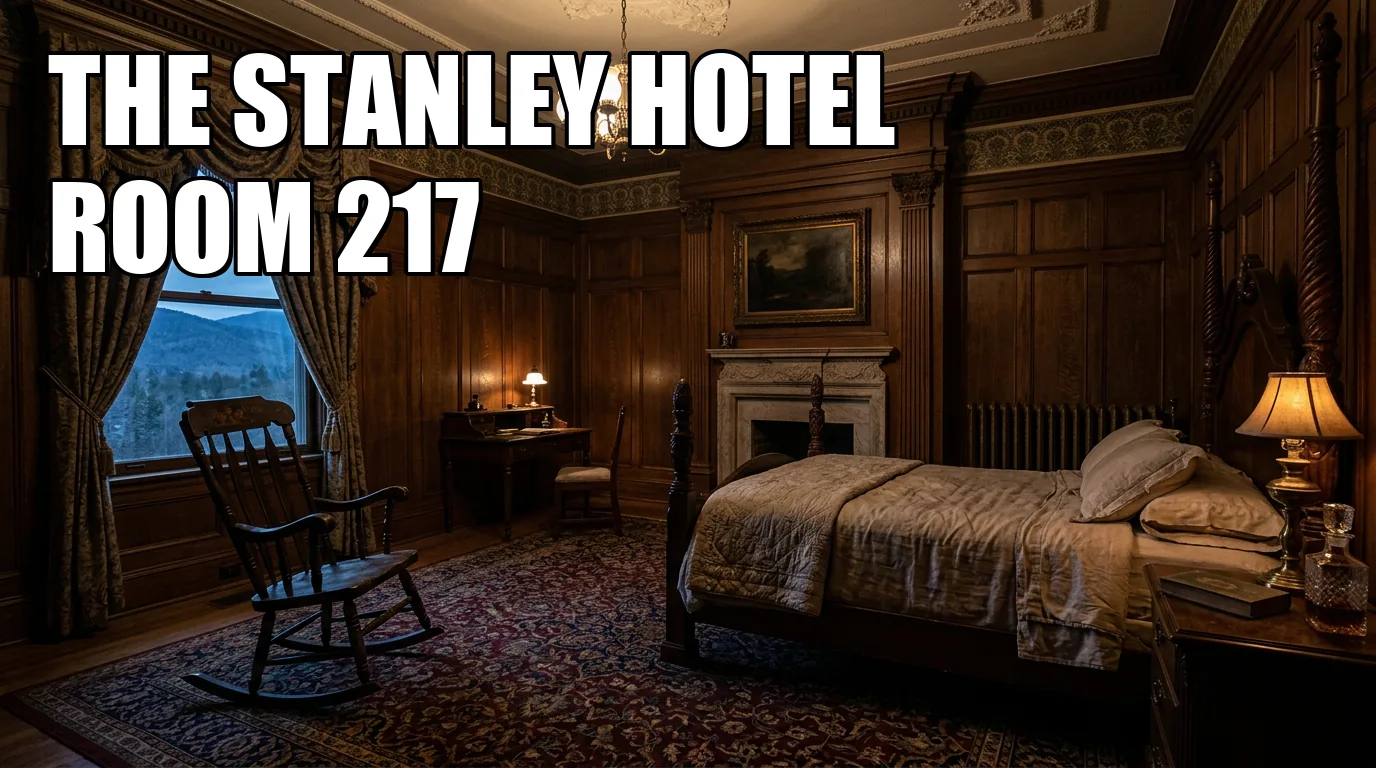
The distinction changes the experience. Room 217 at the Stanley is an exact literary room, but the contemporary report of the 1911 explosion does not name it. The Lizzie Borden House is the actual murder house, yet the historical locations and the present guest-room product still need separate labels. A Queen Mary stateroom includes a night on the ship, not every compartment promised by specialty tours. Waverly Hills has no hotel bed inside the sanatorium at all.
| Property | What the overnight product buys | What it does not establish | Separate access layer |
|---|
| The Stanley Hotel | A hotel room; Room 217 can be booked as the Stephen King room | That a 1911 newspaper identified 217 as the explosion room | Any tour or investigation must be booked and checked as its own product |
| Lizzie Borden House | A guest room inside the actual 1892 crime-scene house | That every current room name or lodging boundary matches the trial-era map | House tours and live investigations are sold separately from ordinary lodging |
| RMS Queen Mary | A historic stateroom plus the museum access described with the stay | Unescorted access to hidden, restricted or after-hours tour spaces | History, engineering, art and paranormal tours promise different routes |
| Waverly Hills Sanatorium | No hotel room in the hospital; a Pump House sleepover may accompany a private investigation | That “overnight” means sleeping in a former patient ward | Historical tours, paranormal tours and investigations control hospital entry |
The Stanley sells an exact literary room, not an archive-certified accident room
The Stanley Hotel’s current accommodation page identifies Room 217 as the room associated with Stephen King’s stay and the inspiration for The Shining. That is a precise, bookable connection between a writer, a room and a later work.
The 1911 evidence is narrower. A newspaper report describes a gas explosion in a second-floor room and the injury of chambermaid Elizabeth Wilson, but it does not identify Room 217. The hotel can attach the accident to its present room story; the surviving contemporary report cannot.
This is the same room-number break visible at other haunted hotels: a documented event can belong to the property while the marketed room number arrives later. A guest reserving 217 buys the exact King room and the hotel’s accumulated lore. A guest reserving another room buys neither access to 217 nor its exact literary provenance.
Lizzie Borden gives you the actual house, but not one all-access product
The Fall River house is different because the documentary event and the lodging building coincide. Trial testimony places Andrew Borden on the sitting-room sofa and Abby Borden in the guest chamber over the parlor. An overnight guest therefore sleeps inside the structure where the 1892 murders occurred, not in a later hotel using a nearby story.
That does not make every modern guest-room label a trial record. The house now operates as lodging, a museum-tour site and a paranormal venue. The trial establishes the historical rooms; the operator defines which present room is assigned to a guest, which spaces remain shared and which access belongs to a tour or special investigation.
The useful claim is building-level and event-level: this is the crime-scene house, and two interior locations are documented in testimony. An ordinary overnight reservation should not be described as exclusive after-hours control of the sitting room, guest chamber, basement or entire house unless the booked product explicitly says so.
A Queen Mary stateroom and a ship route are separate purchases
The City of Long Beach marked the Queen Mary’s return to public operation after its closure, and official lodging material again presents restored historic staterooms and suites. Sleeping aboard is genuine ship access: the room occupies the preserved ocean liner rather than a shore hotel borrowing its name.
The ship is also too large and operationally complex for a cabin key to explain the visitor’s route. The official tour menu separates general historical interpretation from engineering, art and paranormal products. Specialty descriptions promise restricted areas, hidden rooms or compartments rarely accessible to the public. Those promises belong to the relevant tour ticket.
It is safer to state the positive boundary than invent a security map. Lodging material promises the booked cabin and included museum access, while specialty tours separately promise restricted areas, hidden rooms or unusual routes. That separation supports an inference—not a published key map—that standard lodging does not include those specialty routes.
Waverly Hills is the clearest “overnight” trap
Waverly Hills operates tours and investigations in a former tuberculosis sanatorium. It does not operate a conventional hotel inside the main hospital. There is no ward-room key, front desk or restored patient room sold as nightly lodging.
The site’s official FAQ makes the overnight distinction unusually concrete. A sleepover is available only as an add-on to a private investigation, and sleeping takes place in the separate Pump House. The operator supplies bunk beds; guests bring their own sleeping bags or bed linens, towels and toiletries. The arrangement is an investigation add-on, not a hotel conversion of the sanatorium.
That boundary matters because “overnight at Waverly Hills” sounds more immersive than the product actually claims. The investigation supplies controlled access to the hospital; the Pump House supplies a place to sleep afterward. Combining them in one booking does not move the bed into a patient ward.
Ask four access questions before booking
- Where is the bed? Inside the documented resource, in a later annex, aboard the historic vessel or in a separate support building?
- Where did the event occur? Does a trial, inquest or contemporary newspaper identify the building, a room type, an exact room number or only the wider property?
- What opens the door? A hotel key, a daytime tour ticket, a specialty route or an after-hours investigation booking?
- What does “overnight” mean? Serviced lodging with a private room, exclusive use of a house, a bunk-room add-on or permission to remain on site during an investigation?
A room can be worth booking even when the ghost story is unproven. The error is treating atmosphere, historical location and access rights as the same claim. Buy the layer you actually want: the bed, the documented place, the guided story or the hours-long investigation. A property may offer all four, but one confirmation number rarely unlocks them all.
The Cornerstone Brief
One historic place, once a week — what it is, why it matters, whether it's worth going. No filler, no paid placements.
Coming soon. Unsubscribe any time.