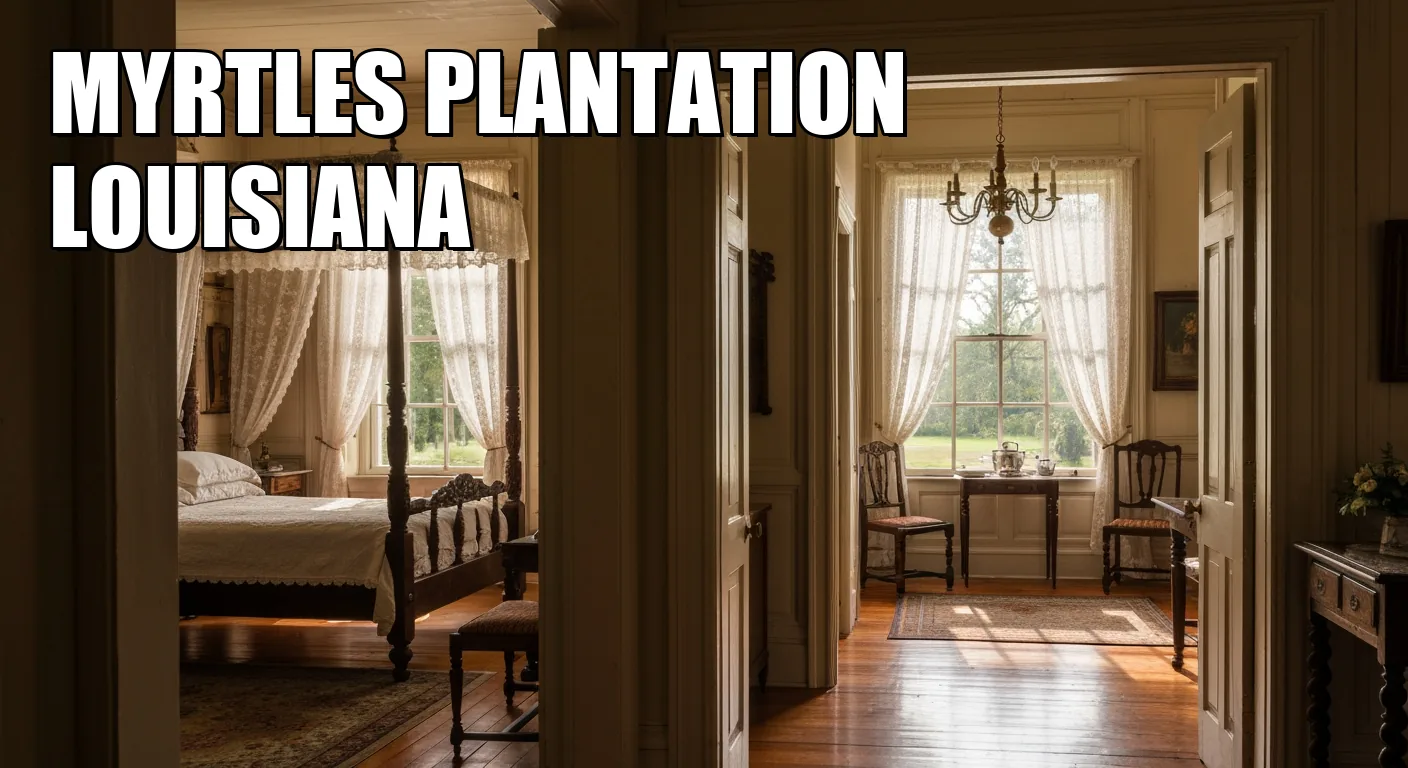
“Haunted plantation” describes a marketing bundle, not a building type. At Myrtles, the bed-and-breakfast, the 1796–97 house and the later ghost legend overlap without sharing the same evidence. At Oak Alley, the surviving Greek Revival mansion and the commercial cottages are separate visitor products, while the original slave cabins are gone. Destrehan sells both overnight cottages and an evening ghost tour, but the cottages’ construction history is not published. Whitney offers the essential control: a plantation museum centered on slavery, with no lodging and no official ghost product.
That is the useful question before booking: what exactly is historic here—the bed, the house, the documented people, or the story sold after dark?
Four properties, four different contracts
| Property | What you can access | What the evidence does not let you claim |
|---|
| Myrtles Plantation | A B&B and historic-house operation described as lodging in the main mansion and detached cottages; ghost folklore is layered onto the visit. | That a particular guest cottage is an original plantation dependency, or that Chloe and the 17th-step story are archival history. |
| Oak Alley | A Foundation museum on a 63-acre National Historic Landmark site, with separate overnight cottages and reconstructed slavery-exhibit cabins. | That a guest sleeps in an original slave cabin or a documented 1890s–1920s worker cottage. |
| Destrehan | A preserved principal house, unnamed-provenance Creole rental cottages, and an official evening tour through the manor and grounds. | That the cottages are original or relocated, that a named room was the 1811 courtroom, or that a curse is a historical record. |
| Whitney | A slavery-focused museum with original, moved and reconstructed site elements and guided or self-guided interpretation. | That it is a haunted B&B, an overnight property or a ghost-hunt venue. |
Myrtles: real architectural layers, invented certainty
The documented house begins with David Bradford’s 1796–97 raised frame building, originally a 1½-story structure whose western six bays form the core of the present facade. Ruffin Gray Stirling’s 1850s enlargement nearly doubled the house, adding the central hall, chambers, gallery and elaborate interior plaster and marble work. In 1834, Stirling bought the property and its enslaved workers from Clark Woodrooff, who had previously acquired them from Elizabeth Bradford. The plantation’s racialized labor system is not a supernatural embellishment; it is the material history beneath the B&B.
The records also dismantle the most famous ghost script. Sarah Mathilda Woodrooff and two of her children died of yellow fever in the 1820s; the available property records used by researchers contain no enslaved person named Chloe or Cleo. William Drew Winter was shot on January 26, 1871, on the porch and died there. The bloody climb to the 17th stair belongs to folklore, not the documented death location.
Available descriptions place current overnight rooms in the mansion and detached cottages, but the primary architectural record does not map each cottage’s date, original function or construction history. That gap matters. A room can be genuinely located on historic grounds without being an original room of the 1796 house.
Oak Alley: museum fabric is not lodging fabric
Oak Alley’s surviving centerpiece is the 1837–39 Greek Revival mansion, restored in 1925, aligned with a double row of 28 live oaks that predate it. The Foundation’s slavery research describes the plantation’s quarters and the forced labor that made the sugar operation possible. Separate documentation of the site exhibit states that none of the original slave cabins survive on the property; the six cabins in the slavery exhibit are reconstructions for interpretation.
Overnight cottages sit in a separate evidentiary category. The Foundation advertises lodging, but its official pages do not publish the cottages’ construction dates, original functions or relocation histories. A secondary stay report describes a mixture of 100-plus-year-old cottages and newly built deluxe units, including a modern cottage, but that is not an architectural survey. You may sleep on the estate; you may not honestly say the bed is in an original slave cabin or a proven worker quarter.
The distinction improves the visit rather than diminishing it. The allée, Big House and reconstructed cabins answer different historical questions. The cottage answers a hospitality question. None should be used as a substitute for the others.
Destrehan: the documented house and the unknown cottages
Destrehan’s principal house has unusually strong documentary footing. A surviving 1787 building contract records Charles Paquet’s construction for Robin de Logny; completion is dated to 1790. Paquet was a master builder of color moving from enslavement toward freedom during the project: his father’s 1788 will directed that he be purchased and manumitted, and later research dates his freedom papers to about 1789. The building contract records his obligations and compensation, not his legal status.
The site’s Marie Celeste and Marguerite cottages are bookable, and their names carry human histories: Marie Celeste was Robin de Logny’s daughter; Marguerite was an enslaved cook and laundress who lived on the plantation with her children. The official cottage pages describe modern sleeping layouts and amenities, but do not say when the physical buildings were built, where they originated or what they did before becoming rentals. Their names are historical interpretation; they are not proof of historic fabric.
The official haunted tour promises the manor’s interior halls and rooms plus a walk across the grounds. It does not publish a room-by-room paranormal map. Destrehan’s documented history includes the 1811 German Coast uprising and tribunals held partly at the plantation site, but the selected records do not establish that the current principal house was the courtroom. A night tour can layer a curse onto the property without converting that curse into an archive.
Whitney is the control case
Whitney Plantation is not a place to sleep or hunt ghosts. It is a museum devoted to the history and legacies of slavery on a plantation that operated through sugar, indigo and rice. Its landscape includes the Big House, original structures, moved cabins and reconstructed elements, along with memorials such as the Wall of Honor, Field of Angels and Children of Whitney. The museum’s authority comes from naming people, labor, violence and memory—not from making the site feel atmospherically haunted.
That makes Whitney useful even if your trip requires a bed elsewhere. It shows the difference between a site that interprets forced labor as its central subject and a commercial ghost product that uses a historic setting as its stage. A “haunted plantation” itinerary is ethically stronger when the museum day is not collapsed into the evening entertainment.
Choose the layer you actually want
For an overnight inside a historic-house operation: Myrtles offers the clearest B&B connection to a documented main house, but its cottage provenance remains open and its most famous ghost stories fail the archive test.
For mansion, landscape and lodging kept distinct: Oak Alley lets you see a restored Big House, an old allée, reconstructed slavery exhibits and separate cottages. Treat the cottages as lodging, not quarters.
For a night tour layered onto a documented site: Destrehan can provide both, but keep its unnamed-provenance cottages, manor tour and 1811 history in separate boxes.
For the most direct slavery-centered interpretation: Whitney is the day-museum control. Do not ask it to perform a ghost B&B role it does not claim.
The honest “veil” is a boundary map. A bed can stand on historic land without being original fabric; a reconstructed cabin can teach more than a surviving mansion wall; a ghost ticket can be entertainment without becoming evidence. Book the layer you want, then let the documented history remain larger than the haunting.