I’ve walked the creaking floorboards of countless historic houses across this country, from humble colonial saltboxes to Gilded Age palaces. For years, the story was often the same: focus on the prominent family, their achievements, their finely crafted possessions. A certain aesthetic reverence, a polite nodding to a sanitized past. Yet, something truly profound is happening beneath the grand eaves and behind the velvet ropes of America’s most significant homes. Many of these institutions are not just dusting off old exhibits; they're tearing down walls, both literal and metaphorical, to embed narratives that have long been suppressed—stories of enslavement, Indigenous histories, and the often-invisible immigrant experiences that built these very foundations. And, perhaps even more surprisingly, they’re doing it with technology that feels ripped from a sci-fi novel.
My latest rounds have revealed a fascinating, sometimes challenging, evolution. The shift isn't merely about adding a new plaque or two. It’s a holistic rethinking of who history serves and how it’s told, blending rigorous scholarship with tools like augmented reality (AR), AI-driven holograms, and interactive digital archives. This isn't just a trend; it's a critical movement towards a more inclusive, honest understanding of our shared past, and it's changing the very fabric of what a "historic house visit" means.
New England’s Quiet Revolution: More Than Just Grand Parlors
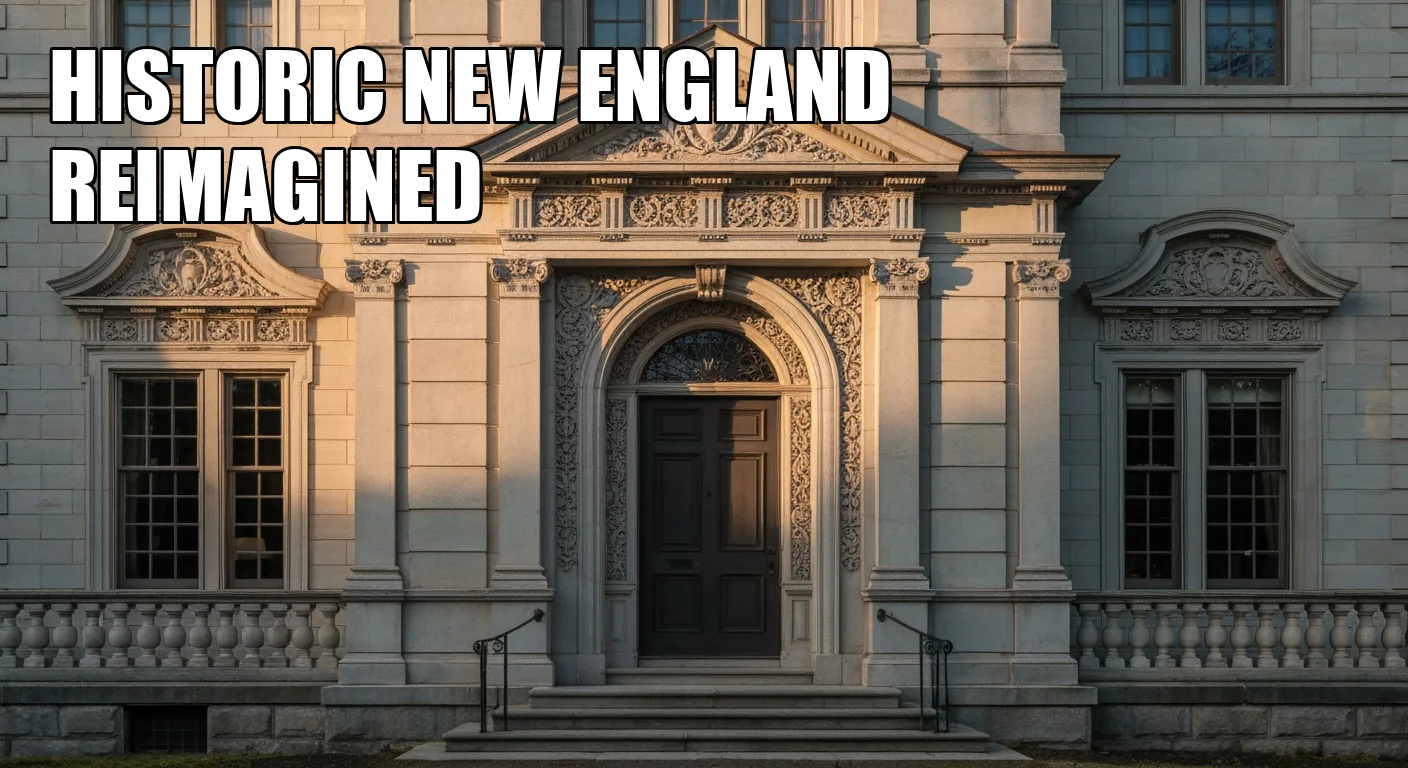
Historic New England (HNE), that venerable steward of 38 house museums spread across six states, has embarked on a fascinating multi-year endeavor they’ve dubbed the "Recovering New England's Voices Initiative." This isn't some small curatorial tweak; it’s a full-frontal assault on the traditional, often whitewashed, narratives. Launched in 2021, the initiative aims to unearth and amplify the lives of the enslaved, the domestic servants, the Indigenous inhabitants whose land these homes occupied, and the immigrant laborers whose hands often built and maintained them. It’s a brave and necessary re-examination, forcing visitors to confront the uncomfortable truths that underpin the region's picturesque charm.
What I found particularly compelling was the depth of the scholarly research. HNE isn't just guessing; they're diving deep into archives, uncovering the names and stories of free and enslaved Black individuals, documenting Indigenous land stewardship practices that predate European settlement, and giving voice to the myriad immigrant workers who toiled in these grand homes. It adds a crucial layer of complexity, transforming what might otherwise be a quaint tour into a powerful, often sobering, journey through social history. You walk through these rooms, now, with a profound awareness of the many unseen lives that made such domestic grandeur possible.
And then there’s the technology. At the Museum of African American History in Boston, I encountered an AI-powered hologram of Frederick Douglass. Now, I’ll admit, my initial reaction was skepticism. Does a digital apparition truly convey the gravitas of such a figure? Could it feel authentic? To my surprise, the first-person storytelling, delivered with uncanny realism, was remarkably effective. It offers an intimacy, a direct address that a static plaque simply cannot achieve. It’s a clever use of technology to bridge the temporal gap, making history feel startlingly present. At other HNE sites, interactive digital kiosks allow visitors to filter narratives by perspective—imagine hearing about the daily routine not just from the homeowner, but from a servant or even a descendant. This isn't just "cool tech"; it's a thoughtful re-centering of who gets to tell the story.
The sustainability model here is equally insightful. The Americana Foundation provided the crucial grant funding, ensuring these scholars are properly compensated—a vital detail often overlooked in underfunded institutions. Partnerships with local universities and, critically, with descendant communities ensure that the co-curation is respectful and authentic. And expanding membership programming to include virtual behind-the-scenes tours isn't just a pandemic-era pivot; it's a savvy move to boost off-season revenue and broaden accessibility beyond geographical limitations. It shows a forward-thinking approach to both content and commerce.
Raleigh’s Pope House: A Digital Lens on a Black Community’s Past
Down in Raleigh, North Carolina, the Pope House Museum offers another powerful example of this evolution. Built in 1901 by Dr. Manassa Pope, one of the city's first Black physicians, this home now pulses with a new kind of energy thanks to an AR mobile application launched in early 2025. This isn't merely a supplemental guide; it's designed to utterly recenter the visitor experience around Dr. Pope, his family, and the vibrant African American community they served.
Walking through the house with the AR app, I felt an entirely different connection to the space. The experience layers stories of Dr. Pope, his wife, and their children, drawing from archival oral histories to provide raw, first-person quotes. What struck me was the app's "conceptual matrix," which gives visitors agency to choose their interpretive "lenses"—perhaps focusing on Dr. Pope’s medical practice, or his family’s community activism. This isn’t just passive consumption; it’s an invitation to actively engage with the complexities of their lives. While sometimes the choices felt a tad overwhelming, the sheer depth of narrative available was impressive.
The truly innovative aspect comes from the geolocated AR markers placed on original floor plans. Hold your phone up, and you can see reconstructed rooms as they would have appeared when Black domestic staff and patients were present, overlaid onto the current space. This powerful visual literally reconstructs the unseen, making visible the labor and lives that were once integral but often erased from public memory. It’s an immersive ghost story, in the best possible sense, giving presence to those who once occupied these very walls. However, visitors should ensure their phones are fully charged before arriving, as the AR can be a battery hog, and a spotty Wi-Fi signal inside some older structures can occasionally cause hiccups—a common practical issue with such ambitious tech deployments.
Funding for this ambitious project came from a state humanities council grant and philanthropic sponsorship, but the clever bit is a revenue-sharing model with the AR vendor. This reduces upfront costs and incentivizes the vendor to maintain and improve the app, ensuring its longevity. Cross-promotional partnerships with local historic walking tours and medical schools are broadening the audience, drawing in new visitors who might not typically seek out a historic house, thereby diversifying its support base. It’s a smart way to make a museum feel less like an isolated artifact and more like an integrated part of the community’s ongoing story.
Echoes from Oregon's Past: Japanese American Stories Reimagined
Out on the Pacific Coast, the Japanese American Museum of Oregon (JAMO) in Portland offers a masterclass in adaptive reuse and narrative innovation. Located in a former Japantown hotel and bathhouse, its interpretive program, revamped in 2025, powerfully foregrounds immigrant narratives, particularly the harrowing experience of Japanese American wartime incarceration and redress. This isn't just a museum *about* history; it’s one deeply embedded in a historical site that once served as a vital hub for its community.
The decision to center first-person accounts of Oregon Nikkei internment is crucial. It brings a raw, human immediacy to a period often sanitized in textbooks. JAMO doesn't shy away from the pain, the resilience, or the enduring fight for civil rights post-war, weaving these threads through the multi-ethnic neighborhood histories that defined the area. The building itself, having witnessed so much, becomes a silent, powerful participant in the storytelling.
My visit revealed a blend of accessible technology and profound historical depth. Interactive touchscreens featuring geotagged maps and oral-history video clips allow visitors to connect personal stories to specific locations within the historic Japantown neighborhood, making the past tangible. What really impressed me was the searchable online digital archive, powered by the National Park Service’s NPGallery platform. This isn't just for scholars; it provides access to letters, photographs, and artifacts, letting *anyone* dive deeper into the history. It's a testament to democratizing historical access, taking the museum experience far beyond its physical walls.
And for a touch of the unexpected, QR-code-triggered AR portals project 3D models of reconstructed community landmarks onto cellphone screens. Imagine standing on a street corner and seeing a vibrant historical building appear on your phone where it once stood—it's a powerful way to visualize urban change and loss. While the execution can sometimes be a bit clunky, and requires a steady hand and good lighting, the concept is brilliant: bringing back the ghost of a lost neighborhood. JAMO’s economic sustainability, as a 501(c)(3) nonprofit, leverages state cultural agencies but also wisely adapts its historic Merchant Hotel building to include rentable event spaces and cooperative artist studios. This generates rental income, alongside membership tiers offering exclusive digital-archive access and VR tours, creating a remarkably diversified revenue stream. It’s a model of how historic preservation can be genuinely vibrant and self-sustaining.
The Unseen Costs of Digital Immersion: Beyond the Wow Factor
While the infusion of technology and underrepresented narratives into historic house museums is overwhelmingly positive, it’s not without its complexities. There’s a crucial difference between using technology to *enhance* a historical narrative and allowing it to *overshadow* the very history it’s meant to illuminate. I’ve seen some sites where the "wow" factor of a new gadget risks becoming the main takeaway, rather than the profound stories being told. Maintaining these digital platforms, from app updates to server costs, demands significant ongoing investment—something many smaller institutions struggle with long after the initial grant funding runs dry. We must also consider the digital divide; not every visitor has a smartphone, or the technical savvy to navigate complex AR interfaces. Accessibility, in its broadest sense, remains a constant challenge.
The real success, in my estimation, lies in the deliberate integration of technology not as a gimmick, but as a tool to reveal histories that were previously invisible or inaudible. The best examples, like those above, use it to give voice to the voiceless, to reconstruct lost communities, and to foster a deeper empathy. They challenge the visitor to not just look, but to *engage*. The economic models are equally varied. While grants and philanthropic donations are vital, institutions that are diversifying through adaptive reuse, virtual programming, and strong community partnerships—like JAMO—often appear to be charting the most resilient course for the future.
Charting Your Course Through Refreshed History: Practical Pointers
So, how does one best navigate this new landscape of historic house museums? First and foremost, check the museum's website well in advance of your visit. These institutions are dynamic, and exhibit specifics, especially regarding digital interactives, can change. You might need to download a specific app before you arrive, or ensure your phone is fully charged—a dead battery means a missed AR experience. Admission fees vary wildly, so verify costs and any potential parking fees.
Consider visiting on a weekday if you prefer a quieter, more contemplative experience; weekends often bring larger crowds. Don't be afraid to ask docents or guides about the "hidden" stories or the research behind the new narratives—they are often treasure troves of additional insights. Finally, while the tech is exciting, remember to put your phone down periodically and simply absorb the physical space. The smell of old wood, the quality of light through historic windows, the quiet resonance of a room—these sensory details are still a vital part of connecting with history, even as we embrace its digital future. These reinvented historic homes aren't just preserving the past; they're actively building a more inclusive future for how we understand it.