Bed & Breakfast

Beyond Wright: Unveiling Prairie Style B&Bs

There's a quiet revolution embedded in the very foundations of Prairie Style architecture, a philosophy that turned its back on European revivalism and embraced the vast, flat landscapes of the American Midwest. After decades of exploring historic sites, I’ve found that truly understanding this movement requires more than just a quick museum tour; it demands immersion. And what better way to achieve that than by sleeping within its very walls? Forget the often-sterile experience of a historic house museum; these bed and breakfasts offer an intimate, often surprisingly luxurious, glimpse into a design philosophy that shaped a nation's aesthetic.

How many times have we been told that Frank Lloyd Wright's vision was primarily about connection to nature? While true, it’s a simplification. His Prairie School movement, flourishing from roughly 1900 to 1920, was also a radical reimagining of domestic space for the burgeoning middle class. It emphasized open floor plans, horizontal lines that mirrored the prairie horizon, and local materials, rejecting the fussy Victorian ornamentation of the past. These aren't just buildings; they're manifestos, and staying in one, even a contemporary interpretation, offers an unparalleled perspective. For 2025, if you're seeking more than just a place to lay your head, consider these exceptional Prairie Style B&Bs.

Stepping Inside a Wright Original: A Rare Overnight Opportunity

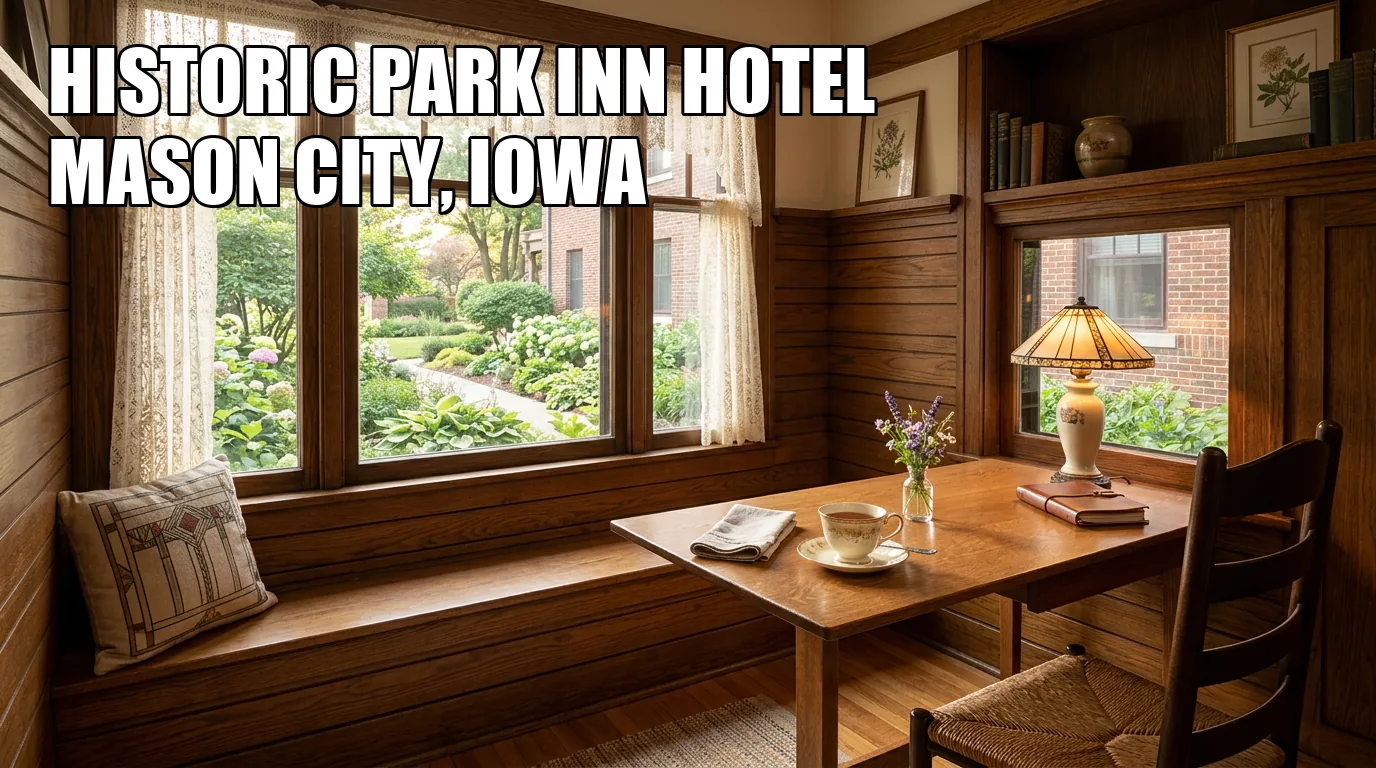
Imagine waking up in a space directly touched by the master architect himself. Few experiences rival an overnight stay in a Frank Lloyd Wright-designed structure, and the Historic Park Inn Hotel in Mason City, Iowa, offers precisely that. This isn’t merely a building *influenced* by Wright; it is the *only remaining hotel* he ever designed, completed in 1910. Its U-shaped floor plan, inward-focused on a glass-roofed atrium, was revolutionary for its time, creating a sense of intimate community within a public space. The deeply raking horizontal brick joints, wide overhanging roofs, and those distinctive blue and green art glass windows scream "Prairie School" from every angle, grounding the structure firmly to its flat Iowa surroundings.

What surprised me most about the Historic Park Inn wasn't just its historical weight, but its palpable sense of quiet grandeur. Guests often favor rooms with views of Central Park, and while there isn't a single "most requested" branded suite, the sense of sleeping within an active piece of architectural history is its own luxury. Expect nightly prices to range between $109 and $187, making it surprisingly accessible for such a significant site. To truly savor the experience without the bustle, I’d strongly recommend aiming for a mid-week visit, perhaps in late spring or early fall (April-May, September-October). Weekends can bring in larger tour groups, diluting the introspective atmosphere I find so crucial to appreciating Wright’s genius. Parking is generally available on-site or nearby, usually for a nominal fee or free, depending on the day.

Then there's the Emil Bach House in Chicago, Illinois – a jewel of late Prairie Style completed in 1915 for a brick company co-owner. This is not a hotel; it’s an entire Frank Lloyd Wright masterpiece available for private rental, and the experience is utterly different. Built on the principles of Wright's "Fireproof House for $5000" concept, it exemplifies cubic, geometric forms and flat, cantilevered roofs. But the real kicker, the detail that often escapes casual visitors, is the deliberate absence of a conventional front entrance. Instead, a meandering walkway guides you to rear entrances – a bold move by Wright to maximize original lake views and create a more intimate, discovery-filled approach to the home. The central fireplace, the open living areas, and the extensive use of cream-colored Ohio brick are all hallmarks of its original design, inviting contemplation of his architectural choices.

Staying at the Emil Bach House isn't cheap; it’s a full-house rental currently priced around $1,495 per night. This places it firmly in the "aspirational splurge" category for groups or a very special occasion. The primary bedroom is, understandably, the most prominent and sought-after. While the cost is steep, you're not just renting a house; you're renting a piece of architectural history, meticulously preserved. For a truly private, immersive experience, there's nothing quite like it. If you're considering it for 2025, book *well* in advance, especially if you're targeting a summer weekend. This isn't just accommodation; it's a private exhibition, best enjoyed with a deep appreciation for its history and design.

Echoes of Genius: Stays Influenced by Wright's Nearby Masterworks

Not every remarkable Prairie Style experience comes directly from Wright's drawing board. Sometimes, the magic lies in proximity, in sleeping just moments away from one of his iconic creations, allowing for a deeper exploration of the surrounding architectural landscape. Consider the Riverview Guest House in Kankakee, Illinois. While the guest house itself doesn't boast a Wright pedigree, its prime location adjacent to the B. Harley Bradley House (1900-1901) makes it an essential stop. The Bradley House isn't just *a* Wright design; it's widely considered his *first* Prairie School residence, a pivotal moment in American architecture.

The Bradley House itself, with its quasi-cruciform floor plan, low flared gabled roofs, and distinctive stucco and dark wood exterior, embodies the nascent Prairie Style. Its 90 original art glass windows are a spectacle, and the Roman brick fireplace stands as a central, symbolic hearth. A stay at the Riverview Guest House offers the unique advantage of exploring this foundational property with ease. Guests often gravitate towards the second-floor rooms for their enhanced privacy and superior views. While specific pricing for Riverview isn't widely published, typical B&B rates in Kankakee hover around $100-$150 per night, making it an affordable entry point into the world of Wright. The restoration of the Bradley House from 2005-2010 truly brought Wright's revolutionary design back to life, celebrating the horizontal landscape of the tallgrass prairie it inhabits. Visiting in the shoulder seasons (spring or fall) will allow for pleasant walking tours of the neighborhood and comfortable exploration of the Bradley House itself.

Another fascinating example exists in Grand Rapids, Michigan, with The Leonard at Logan House. This turn-of-the-century mansion, constructed in 1914, offers a different flavor of early 20th-century elegance. While not strictly Prairie Style, its location in the historic Heritage Hill neighborhood, directly adjacent to the renowned Meyer May House—another stunning Frank Lloyd Wright masterpiece—makes it a compelling choice. The Leonard at Logan House itself reflects the grand, yet unpretentious, prosperity of the influential Harry C. Leonard family who commissioned it. Expect beautiful hardwood floors and period furnishings that evoke a sense of the era, seamlessly blending original architecture with modern comforts.

When staying here, guests often seek out suites with Jacuzzi tubs and heated bathroom floors, suggesting a desire for classic luxury combined with contemporary amenities. A typical booking price hovers around $156 per night, representing excellent value for a historic mansion stay. The proximity to the Meyer May House cannot be overstated; it allows for multiple visits, perhaps a morning tour and a leisurely afternoon stroll around its exterior, offering insights into Wright’s evolution as an architect. Grand Rapids in the summer can be quite vibrant, so planning a visit for May or September might offer a more relaxed atmosphere and easier access to the Meyer May House tours.

Modern Interpretations: Capturing the Prairie Spirit Today

Who says you need a century-old structure to experience the spirit of Prairie Style? Some contemporary establishments have masterfully woven Wright's principles into new builds, offering all the aesthetic without the quirks of aging infrastructure. The PrairieSide Suites Bed & Breakfast in Grandville, Michigan, is a prime example. While a newer luxury B&B, it exemplifies contemporary prairie architecture with its strong horizontal design, thoughtful integration with the natural landscape, and an abundance of natural materials. This isn’t a pale imitation; it’s a confident reinterpretation, earning it accolades like "3rd Best Overall B&B in North America."

Every suite at PrairieSide is a testament to modern comfort informed by organic architecture, featuring king-sized beds, whirlpool tubs, and, critically, a fireplace in every room—a nod to the Prairie School's emphasis on the hearth as the home's spiritual center. The Southern Mansion suite, with its opulent Jacuzzi tub area and crystal chandelier, is particularly popular, offering an indulgent experience. Expect rates upwards of $256 per night, varying by room type and season. It’s a pricier option, but for those seeking modern luxury fused with a classic aesthetic, it delivers. Booking during the off-peak winter months (January-March, excluding holidays) might offer slightly better rates and a cozy, fire-lit retreat.

Similarly, in Valparaiso, Indiana, the Songbird Prairie Bed & Breakfast has garnered a reputation as "The Midwest's Most Romantic Luxury Inn." While the property is built in a federal style home, its underlying philosophy and amenities—emphasizing horizontal lines in its landscaping, integration with its 1.7-acre wooded site overlooking Lake Michigan, and a certified wildlife habitat—align remarkably well with prairie principles of organic architecture. Each of its five luxurious suites is named after local bird species, featuring fireplaces and whirlpool tubs, ensuring deep integration with the serene, natural surroundings.

The Robin Suite, boasting a two-person whirlpool and a fireplace, is the property's most luxurious and private offering. Nightly prices range from $229-$249 for standard suites to $259-$279 for premium suites. What’s often missed here is the deliberate connection to the landscape: this isn't just a fancy inn; it’s a sanctuary. For couples seeking a romantic getaway that respects nature and offers high-end amenities, Songbird Prairie is an excellent choice. Consider a visit in early summer to enjoy the full bloom of its natural habitat, but be prepared for potentially higher demand and book several months in advance.

Dispelling Myths & Practicalities: What Guides Don't Always Tell You

Choosing a Prairie Style B&B isn’t just about the aesthetics; it’s about managing expectations, especially when you venture into historic properties. One common misconception is that all Frank Lloyd Wright homes are universally accessible. While many have undergone meticulous restorations, older structures often have steeper stairs, narrower doorways, and fewer ADA-compliant features than modern builds. At the Historic Park Inn, for instance, you're embracing the charm of a 1910 building, which means you might encounter some of those period-specific quirks. Always check with the B&B directly about specific accessibility needs. What's more, the sheer artistry of Wright’s original art glass windows, while stunning, means rooms might not be as brightly lit as modern hotel counterparts – a feature to embrace, not complain about.

Another point: don't confuse "historic" with "dusty." All these establishments, whether original Wrights or modern interpretations, maintain exceptionally high guest review ratings (generally 4.7 to 4.9 stars). This isn’t happenstance; it reflects significant investment in preservation, maintenance, and modern comfort. However, a stay in a truly historic property, like the Emil Bach House, means you're not just a guest; you're a temporary custodian. Be prepared to treat the space with the reverence it deserves. For the uninitiated, the seemingly subtle horizontal emphasis in Prairie Style might feel less "grand" than a Gothic revival mansion, but the genius lies in its understated elegance and profound connection to its environment. It's about a holistic experience, not just individual showpieces. Parking, while generally available, can sometimes be street-side for older properties, so inquire about specifics when booking, especially if you have a larger vehicle or are visiting during a local event.

Finally, when planning for 2025, remember that these aren't your run-of-the-mill chain hotels. Each offers a distinct personality and a specific kind of hospitality. Pricing, as noted, varies wildly, from surprisingly affordable at the Historic Park Inn to the full-house luxury of the Emil Bach House. For the modern Prairie Style B&Bs like PrairieSide Suites or Songbird Prairie, you’re often paying for curated luxury and amenities that go beyond basic lodging. My advice? Read guest reviews thoroughly, not just for the praise, but for any practical notes about noise, amenities, or local access. A weekday stay almost always guarantees a more intimate experience at the historic sites, while weekend bookings are crucial for the romantic getaways. Ultimately, a Prairie Style B&B stay is about more than a bed; it's about an education, a relaxation, and a genuine connection to America's unique architectural heritage.

The Ultimate Guide to Prairie Style Bed and Breakfast Experiences

What is the history of prairie style bed and breakfast?
Prairie style bed and breakfast accommodations represent a modern way to experience architecture developed by Frank Lloyd Wright and the Prairie School around 1900, with contemporary B&Bs now housed in both authentic historic prairie homes and properties inspired by this movement. These establishments offer visitors an immersive experience of the architectural philosophy emphasizing organic design, horizontal lines, and harmony with nature.
Why is it called Prairie style?
The term "Prairie style" reflects the architectural movement's design philosophy to complement the sweeping, flat landscape of America's Midwest prairie with strong horizontal lines, low proportions, and quiet rooflines. Frank Lloyd Wright, the style's pioneer, believed the prairie's natural beauty should be recognized and accentuated through architecture that echoed its broad, level character.
Who created the Prairie style?
Frank Lloyd Wright pioneered and led the Prairie style movement as part of the Prairie School in Chicago around 1900, working with other talented architects including Marion Mahony Griffin and Walter Burley Griffin. Wright left Louis Sullivan's office in 1893 and established his own studio in Oak Park, Illinois, where he developed this revolutionary American architectural approach.
How does Prairie style differ from Victorian?
Prairie style represents a complete rebellion against Victorian architecture, featuring clean horizontal lines, minimal ornamentation, and integration with nature, whereas Victorian homes are characterized by elaborate, ornate vertical designs and decorative flourishes. Prairie homes emphasize simplicity and functionality, while Victorian homes showcase decorative artifice and traditional revival styles.
What are the three main features of Prairie style homes as shown in the Robie House?
The three main features exemplified in the Robie House are dramatic horizontal cantilevered rooflines that extend over exterior spaces, continuous banded windows that flood interiors with light and reinforce horizontality, and continuous walls that shield the ground floor from the street while integrating the building with its landscape.
What is the difference between prairie and craftsman style?
Prairie style emphasizes strong horizontal lines, sleek modern aesthetics, and features flat or hipped roofs with broad overhanging eaves, while Craftsman style is more conventional with greater emphasis on handcrafted details and vertical elements. Both share the Arts and Crafts movement's ideals regarding quality craftsmanship and natural materials, but Prairie style represents a more distinctly horizontal, modernist evolution.
What is one of the most famous Prairie style homes?
Fallingwater, designed in 1935 for the Kaufmann family in southwestern Pennsylvania, is Frank Lloyd Wright's most acclaimed prairie-influenced work and is considered the best all-time work of American architecture by the American Institute of Architects. The home dramatically showcases organic architecture philosophy by rising over a waterfall and harmonizing with its natural surroundings.
What are the features of Robie House?
The Robie House (1910) features interlocking horizontal volumes, dramatically cantilevered rooflines, a band of 14 stained-glass windows on the main second story, absence of traditional ornament, hidden entryway, continuous surfaces, and a knee wall that links the building to the landscape. The three-story structure achieves stunning horizontality through its attenuated composition and complete departure from traditional residential architecture.
What are three characteristics of the Prairie style in architecture?
Three key characteristics of Prairie style architecture are strong horizontal emphasis with low-pitched roofs and extended eaves that echo the prairie landscape, open interior floor plans with minimal walls creating flowing spaces, and large bands of windows and doors that integrate the building with nature while flooding interiors with light. Additionally, the style features minimal ornamentation and integration of natural materials like wood, brick, and stone.
What is a common feature for a Prairie style home interior?
Open floor plans with flowing, seamless spaces connecting key living areas are a hallmark of Prairie style interiors, emphasized by large windows that frame views of the surrounding landscape and reinforce the connection to nature. Prairie interiors also commonly feature built-in furniture, central fireplaces as focal points, and minimized walls to create a sense of spaciousness and flexibility.
Where are the best locations to visit prairie style bed and breakfast properties?
Top destinations include Oak Park, Illinois (with the largest collection of Wright's work), Spring Green, Wisconsin (home to Taliesin, Wright's 800-acre estate), Kankakee, Illinois (featuring the B. Harley Bradley House), and southwestern Pennsylvania near Fallingwater. La Crosse, Wisconsin also offers exceptional prairie style architecture with more designed prairie homes than any other city in the state.
What should I expect amenities-wise at a prairie style bed and breakfast?
Most prairie style B&Bs provide complimentary hot breakfasts (often delivered to rooms or served communally), free Wi-Fi, private bathrooms, and luxury amenities such as deep whirlpool tubs, spa services, and period-appropriate furnishings. Properties typically feature 5-10 spacious guest rooms with modern conveniences while maintaining historical character and architectural integrity.
What is the best time to visit prairie style bed and breakfast properties?
Spring through fall (March through November) is ideal for visiting prairie style accommodations, as many properties close or limit operations during winter months due to inclement weather. Peak seasons are typically late spring through early fall when weather is pleasant and Frank Lloyd Wright house tours and architectural landmarks maintain regular visiting hours.
How much do prairie style bed and breakfast stays cost in 2025?
Prairie style bed and breakfast rates in 2025 start from approximately $149-200+ per night for standard rooms, with luxury suites commanding higher prices, and rates vary by location, season, and property amenities. Most include complimentary hot breakfast, and many offer special promotions during off-peak seasons.
What are the requirements for booking a prairie style bed and breakfast?
Most prairie style B&Bs require guests to present a valid photo ID and credit card at check-in, with some properties exclusively accepting guests 21 years of age or older. Standard policies include first-night payment at booking or 50% of total stay, though cancellation policies and deposit requirements vary by property.
How can I visit Frank Lloyd Wright's prairie style homes while staying at a B&B?
Base yourself at a prairie style bed and breakfast in Illinois or Wisconsin to access major Wright sites: in Oak Park, IL, tour the Home and Studio and neighboring properties; in Spring Green, WI, visit Taliesin (2-4 hour estate tours available); or stay near Kankakee to see the B. Harley Bradley House. Most properties provide guidance on tour schedules and transportation to nearby architectural landmarks.