Photo by Marcus Bellingham for Cornerstone Mansion · February 18, 2026
Find Nearby Hotels
Book Flights
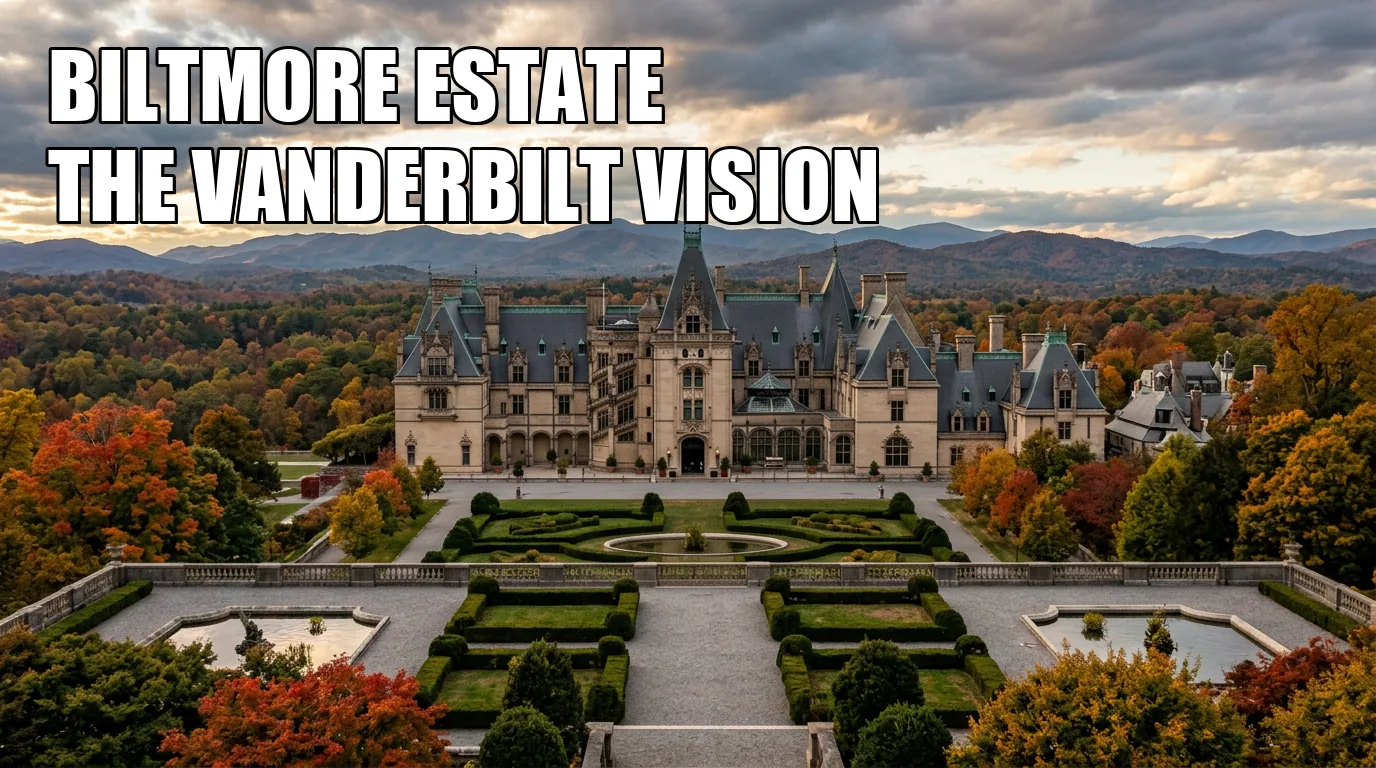
For years, I've crisscrossed this country, charting the rise and fall of fortunes etched in stone and timber. Most "grand estates" blur into a predictable symphony of marble and gilt. Then you encounter Biltmore, and it recalibrates your understanding of sheer scale, ambition, and the meticulous genius that went into creating something truly without peer in America. This isn't just a house; it's a statement, a testament to what unlimited resources and uncompromising vision could forge at the close of the 19th century. Yet, like any monumental site, the true insights often lie beyond the surface, in the subtle choices and the human stories intertwined with its construction.
## Unearthing the Vision: How Biltmore Took Shape
What does it truly take to conjure a European château in the mountains of North Carolina? It started, as all great projects do, with a pivotal meeting. On October 16, 1889, George Vanderbilt, his chosen architect Richard Morris Hunt, and the titan of landscape architecture, Frederick Law Olmsted, converged on the undeveloped property. This wasn't merely a casual sit-down; it was the genesis of a monumental undertaking, where the placement of the house and the very contours of the grounds were debated, imagined, and ultimately decided upon. Their collaboration wasn't just a partnership; it was a fusion of unparalleled talent, each bringing a distinct mastery—Vanderbilt's vision, Hunt's architectural prowess, and Olmsted's ecological foresight—that laid the groundwork for the most ambitious private residence ever conceived on American soil.
Mere months after that foundational discussion, the initial groundbreaking activities commenced in January 1890. This wasn't a matter of simply digging a hole for the foundation; it involved establishing an entire infrastructure to support the behemoth to come. Water lines had to be laid across vast distances, rail spurs were constructed directly to the site to ferry in materials, and perhaps most astonishingly, a brick production facility was built *on-site*. Imagine the logistical nightmare, the sheer manpower, and the engineering challenges involved in sustaining such a project in what was then a relatively remote area. It speaks volumes about Vanderbilt's determination not to be constrained by existing limitations, but to create his own.
While the preliminary infrastructure buzzed with activity, the first visible signs of the mansion's ascent—actual bricks and limestone blocks—weren't laid until 1891. From that point, the main construction surged forward, an unrelenting six-year effort that finally culminated on Christmas Eve 1895. It’s hard to fathom the dedication required, the sheer physical labor of over 1,000 workers who toiled tirelessly to transform a mountainside into a Gilded Age marvel. The completion date itself, Christmas Eve, feels almost symbolic, a grand gift presented not just to George Vanderbilt, but to the landscape and, inadvertently, to future generations who would marvel at its enduring presence.
## The Architect's Masterstroke: Richard Morris Hunt and His Grand Design
Choosing an architect for Biltmore was hardly a trivial decision for George Vanderbilt; it required someone with both immense talent and an understanding of the specific grandiosity he sought. He found his man in Richard Morris Hunt, a figure often hailed as the "Dean of American Architecture" during the late 19th century. What set Hunt apart wasn't just his prolific career but his unique training: he was the first American architect to attend the prestigious École des Beaux-Arts in Paris. This wasn't merely a school; it was the crucible where the principles of classical design, proportion, and ornamentation were perfected, making Hunt uniquely qualified to translate Vanderbilt's European aspirations into an American reality.
Hunt didn't just borrow from European styles; he masterfully adapted them. He conceived Biltmore in the Châteauesque style, drawing direct inspiration from the opulent early 16th-century châteaux nestled in France's Loire Valley—specifically, the iconic Château de Blois, Château de Chambord, and Château de Chenonceau. Think of Blois's famous spiral stair or its elegant colonnade on the east façade; Hunt reinterpreted these elements, along with its principal tower, to fit Biltmore's sprawling design. This wasn't plagiarism; it was a sophisticated re-imagining, a testament to Hunt's ability to capture the essence of French Renaissance grandeur and scale it to suit a new continent and a new patron.
The resulting structure, a four-story stone house stretching an astounding 780 feet along its façade, wasn't just large; it was a symphony of architectural details. Steeply pitched roofs, elaborate ornamental roof lines, spires, finials, pinnacles, and turrets—each element was meticulously crafted to evoke the Châteauesque aesthetic. It’s easy to get lost in the sheer volume of the place, but if you pause to examine the roofline, you begin to appreciate the layers of intricate stone carving and the deliberate echoes of European nobility. This level of detail, often overlooked by visitors rushing through, is where Hunt’s genius truly shines, demonstrating a fusion of classical principles with the dramatic flair of French Renaissance.
## The Grandeur of the Banquet Hall: Beyond Mere Dimensions
Every great house has a heart, and at Biltmore, that pulse beats most vigorously within the Grand Banquet Hall. This isn't simply a dining room; it's a cathedral of conviviality, a space designed to impress and envelop guests in an atmosphere of unbridled luxury. Its dimensions alone are staggering: 72 feet long, 42 feet wide, and soaring 70 feet high. The sheer verticality of the room, capped by a magnificent barrel-vaulted ceiling, immediately demands reverence, creating an acoustic and visual experience unlike any other space in the house. You can almost hear the echoes of laughter and conversation from a century past.
The room's focal point, however, is undeniably the monumental triple fireplace that commands one end, crowned by Karl Bitter's masterful high relief sculpture panel, "The Return from the Chase." This isn't just a decorative piece; it tells a story, depicting the spoils of the hunt and bringing a dynamic, narrative element into the static grandeur. It's a subtle reminder of the Vanderbilts' lifestyle and the era's appreciation for classical and allegorical art. Looking closely at the detail, you realize this isn't simply a functional fireplace; it's a work of art in itself, seamlessly integrated into the architectural fabric.
And what of the dining arrangements? Hunt designed an enormous oak dining table, capable of seating 38 guests comfortably, flanked by 64 chairs, including two gilded throne chairs for George and Edith Vanderbilt. The imagery this conjures—a multitude of esteemed guests, the clinking of crystal, the murmur of conversation—transports you directly into a Gilded Age dinner party. Adorning the walls are five Flemish tapestries, dating between 1546 and 1553, which aren't just old; they're ancient, priceless works of art that predate the house itself by centuries, offering a profound sense of history and European heritage within a distinctly American mansion. And as if that weren't enough, a 1916 Skinner pipe organ stands ready to fill this vast space with music, cementing its status as an unparalleled venue for entertainment and social gathering.
## A Glimpse into Leisure: Biltmore's Cutting-Edge Recreation
While the formal rooms of Biltmore speak to public display and entertaining on a grand scale, the basement reveals a fascinating, often surprising, aspect of Vanderbilt's private life: his dedication to cutting-edge recreation. You might expect a billiards room, perhaps a card parlor, but a bowling alley? The Biltmore bowling alley holds a singular distinction as one of the nation's first bowling alleys installed in a private residence. This two-lane marvel, nestled in the recreation level, wasn't merely a novelty; it was a testament to Vanderbilt’s embrace of modern leisure. It was also a clever use of space, duplicating the 95-foot length of the tapestry gallery directly above it, ensuring precise dimensions for the Brunswick Ball and Collar Company's regulation equipment.
Stepping into this space, you quickly realize how different "cutting-edge" was in the 1890s. Forget automated pinsetters and digital scoring. The Biltmore bowling alley operated on pure human effort. A servant, strategically positioned behind the second pillar, would reset the pins by hand, carefully avoiding the flying pins, then send the ball back to the bowler via a manual return mechanism. This meticulous, labor-intensive setup provides a unique window into the era's technology and the role of service staff in maintaining such luxuries. It forces you to question what "convenience" truly meant in a time before widespread mechanization, offering a stark contrast to the automated lanes we take for granted today.
This innovative bowling alley wasn't an isolated feature. It was part of an astonishing suite of basement recreation facilities. Imagine a 70,000-gallon heated indoor swimming pool complete with underwater lighting—a truly revolutionary feature for its time, anticipating modern aquatic centers by decades. Adjacent to it, a gymnasium boasted the era's most advanced fitness equipment. These spaces weren't just for show; they provided a comprehensive, private resort experience for Vanderbilt and his guests, showcasing a lifestyle that prioritized both intellectual pursuits (the renowned library) and physical well-being. It challenges the conventional image of Gilded Age figures as purely sedentary and reveals a vibrant, active dimension to their leisure.
## The Sheer Scale of Ambition: What 1,000 Workers Built
Beyond the architectural details and the specific rooms, the sheer scale of the Biltmore Estate demands a moment of contemplation. Over those six arduous years, the project employed more than 1,000 workers, a workforce of epic proportions for a single private residence. This wasn't merely a job site; it was, in many ways, an entire economy unto itself, providing livelihoods, developing skills, and shaping the fledgling city of Asheville. It reminds us that such grand personal endeavors had profound community impacts, both in their immediate construction and their long-term presence.
The finished house, standing as a monument to its creator's vision, encompasses 250 rooms spread across approximately 178,926 square feet of floor space. Let that sink in for a moment. This isn't just America's largest privately owned residence; it’s an architectural behemoth that defies easy categorization. It's larger than many state capitols, more intricate than most public buildings, and yet it was built as a home. What does such a dwelling say about the man who commissioned it, about the era in which it was built, and about the boundless ambition that defined the Gilded Age? It certainly wasn't built for quiet solitude.
Visiting Biltmore today means navigating crowds, especially during peak season. My advice? Go off-season, if possible, or arrive right when the doors open. The true magic of Biltmore, the quiet insights into its colossal undertaking and the mind of its creator, is best absorbed when you have a moment to simply *be* in its presence. Don't rush through the rooms; linger in the Banquet Hall, imagine the servant resetting pins in the bowling alley, and let the sheer audacity of its creation wash over you. It's a place that continually challenges your perception of what's possible, a magnificent, slightly overwhelming testament to a singular vision, meticulously crafted and surprisingly innovative, even by today's standards.
Famous Homes, Estates, and Public Houses
Track preserved homes, estates, and place-based biographies tied to real addresses and public sites.
Discover the Grandeur: Your Complete Guide to George Vanderbilt's Biltmore Estate
Can you tour the Vanderbilt Mansion?
Yes, multiple Vanderbilt properties are open for tours. The Biltmore Estate in Asheville, North Carolina is the most famous, offering daily self-guided tours of the 250-room mansion and 8,000-acre grounds. The Vanderbilt Mansion National Historic Site in Hyde Park, New York also offers guided mansion tours and exhibits.
How much does it cost to tour Vanderbilt Mansion?
Biltmore Estate prices start at $70 (summer), $85 (fall), and $130 (Christmas season). The Vanderbilt Mansion National Historic Site charges $15 per adult, with children 15 and younger free. Children under 10 receive free admission to Biltmore House when accompanied by a paying adult.
Are the Vanderbilt mansions open to the public?
Yes, the Biltmore Estate operates year-round with daily tours, and the Vanderbilt Mansion National Historic Site offers guided tours Tuesday through Sunday. Both properties welcome visitors for historical tours, garden walks, and special exhibitions.
Is the Vanderbilt Mansion worth visiting?
Yes, the Biltmore Estate is ranked #1 among Asheville attractions on TripAdvisor and offers an unparalleled glimpse into Gilded Age luxury with its stunning architecture, gardens, winery, and historical exhibitions. Most visitors spend 6-8 hours exploring the estate and find it a worthwhile investment.
What is the dark history of the Biltmore Estate?
The estate has experienced several tragedies including a 1922 incident where a security guard confronted intruders, and more recently, an employee was killed by a falling tree during high winds in April 2023. Additionally, a body (later identified as Helen Pardini, 69) was discovered on the grounds of the Vanderbilt Mansion National Historic Site in December 2024.
Who was the body found in the Vanderbilt Mansion?
In December 2024, a woman identified as 69-year-old Helen Pardini from Poughkeepsie was found dead near the Hudson River shore on the grounds of the Vanderbilt Mansion National Historic Site in Hyde Park, New York. Her death is being investigated as suspicious.
Are any Vanderbilts still rich?
While the Vanderbilt family fortune has significantly diminished since the Gilded Age (when it equaled approximately $185 billion), some descendants remain wealthy through family trusts and investments. Journalist Anderson Cooper, a Vanderbilt descendant, has a net worth of approximately $50 million.
Does Anderson Cooper own any of the Vanderbilt mansions?
No, Anderson Cooper does not own any Vanderbilt mansions. He resides in a historic 1906 firehouse in Greenwich Village that he purchased and renovated. He inherited only $1.5 million from his mother Gloria Vanderbilt's estate.
Can I go to Vanderbilt for free?
Children under 10 receive free admission to Biltmore House (though they need a ticket to enter the estate). Some cabin rental packages and special promotions occasionally offer free or discounted tickets. Children 15 and younger are free at the Vanderbilt Mansion National Historic Site when a paying adult is present.
George Vanderbilt mansion tour - what's included with admission?
Biltmore Estate admission includes self-guided access to the 250-room Biltmore House with audio guide, acres of gardens, the Conservatory, Antler Hill Village, a working farm, the award-winning winery with complimentary wine tasting, and access to extensive hiking trails.
How long does a typical Biltmore Estate visit take?
Most visitors spend 6-8 hours exploring the estate. The Biltmore House self-guided tour takes 1.5-2 hours, with additional time needed for gardens, winery, dining, and other activities. Biltmore recommends two days to fully experience all attractions.
What is the best time to visit the Biltmore Estate?
Late spring (May) and fall (September-October) offer beautiful gardens and foliage with moderate crowds. Winter (January-March) provides fewer crowds, while Christmas season features elaborate decorations. Avoid holiday weekends and peak tourist seasons if seeking a less crowded experience.
Is photography allowed inside Biltmore House?
Yes, cell phone and small cameras without flash are permitted for personal use only. Commercial photography, tripods, selfie sticks, and large equipment are prohibited. Flash photography and photos on stairs are not allowed for safety and to preserve the guest experience.
What dining options are available at Biltmore Estate?
The estate features seven restaurants ranging from fine dining to casual cafes, including The Stable Cafe, Bake Shop, Ice Cream Parlor, and multiple fine dining establishments. All feature estate-raised specialties and Biltmore wine selections.
Is Biltmore Estate wheelchair accessible?
Yes, Biltmore Estate is wheelchair accessible with elevators accessing the first and second floors of Biltmore House, ADA parking throughout the estate, and fully accessible shuttle service. The Walled Garden and Conservatory are also accessible, though some paths have slopes or gravel surfaces.
We use cookies to enhance your experience. By continuing to visit this site you agree to our use of cookies.