For years, I've crisscrossed this country, digging into the layers of history that cling to old buildings and forgotten streets. And few figures loom as large, or as enigmatically, in America's cultural tapestry as Humphrey Bogart. He was more than a movie star; he was an archetype, a voice, a presence. But to truly grasp the man behind the trench coat, you have to step away from the silver screen and into his actual residences. What I've found, trekking through the leafy streets of Los Angeles, is a narrative far richer and more nuanced than any glossy biography suggests. It’s not about seeing his furniture—because, frankly, most of that is long gone—but about feeling the echoes of legendary parties, simmering tensions, and quiet passions that defined his private world.
Stepping into the Heart of Bogie's Later Life: Holmby Hills
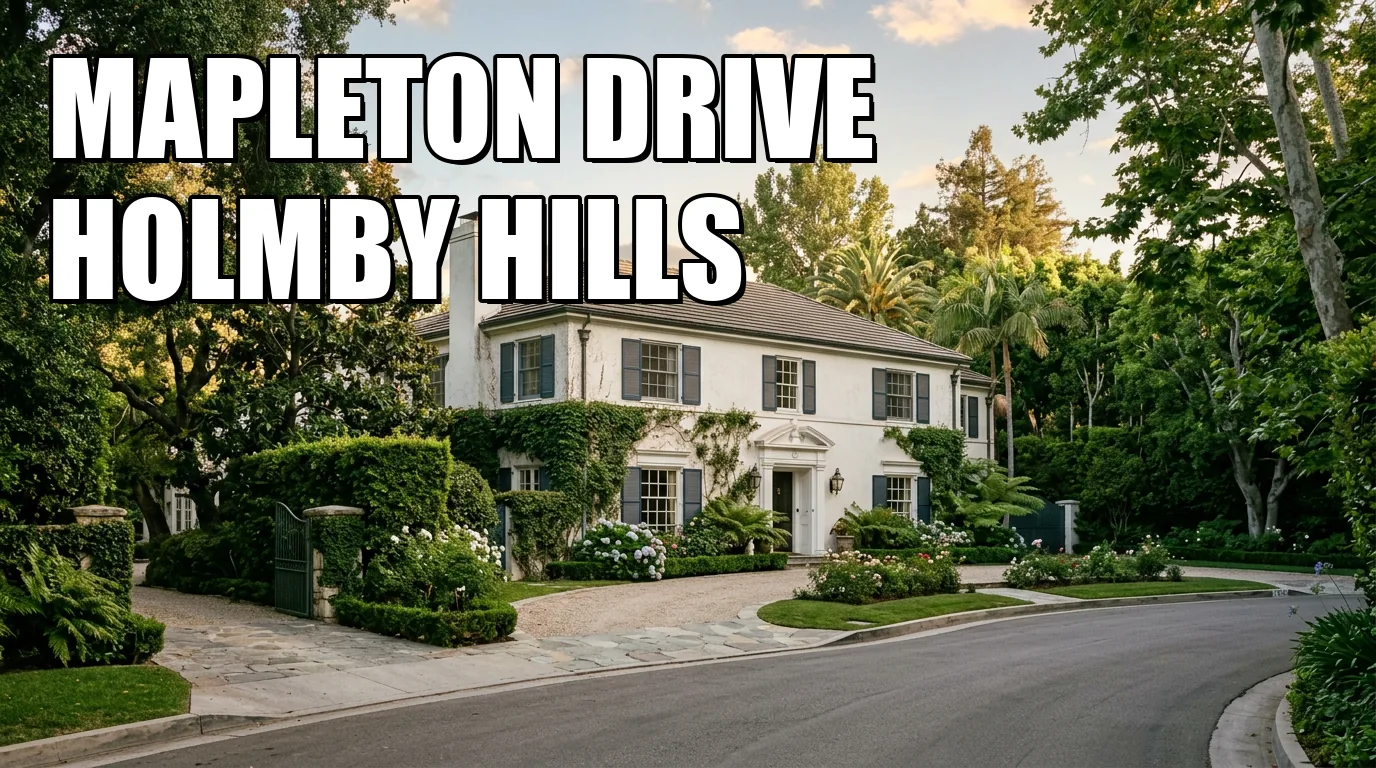
Ask anyone where Bogart truly made his mark in domestic Hollywood, and eventually, the conversation will circle back to Holmby Hills. The grand white brick mansion at 232 South Mapleton Drive isn't just an address; it was the crucible of his final, most iconic years. Bogart and Bacall shelled out a hefty $160,000 for this property in 1949, taking it over from none other than Hedy Lamarr. This became their fortress, their playground, and ultimately, Bogart’s final resting place when he succumbed to esophageal cancer in 1957.
This house, more than any other, is synonymous with the mythos of the "Rat Pack." But here's a detail often glossed over: the famous moniker wasn't born from some late-night, boozy brainstorming session by the men themselves. It was Bacall, ever sharp-tongued, who observed her husband and his disheveled cronies – Frank Sinatra, Judy Garland, David Niven, among others – returning from a Vegas jaunt in 1955. "You look like a goddamn rat pack," she supposedly quipped. And just like that, a legend was christened. Imagining those wild, unscripted evenings, with guests ranging from Errol Flynn to Nat King Cole, really forces you to reconcile the public image of Bogart with the convivial host who held court for Hollywood's A-list. While the grand facade still stands, be aware that Bacall sold the property in 1958, leading to "extensive renovations." This means any pilgrimage here is less about peeking into Bogart's actual living room and more about standing where the echoes of legendary gatherings still linger, appreciating the grandeur from a respectful distance.
"Sluggy Hollow": Unpacking the Darker Domestic Side
Before the relatively serene, albeit vibrant, days with Bacall, there was "Sluggy Hollow"—a name dripping with the kind of acidic humor only a truly volatile marriage could conjure. This property on Shoreham Drive, Bogart's home during his tumultuous union with actress Mayo Methot from 1938 to 1945, was anything but peaceful. Bogart, in a perverse act of endearment, mockingly called his combative, heavy-drinking wife "Sluggy," and the nickname bled into everything they owned: the dog, the boat, and eventually, the house itself.
If you’re seeking quiet contemplation, this isn't your spot. The stories emanating from Sluggy Hollow are less about star-studded parties and more about marital warfare. Dorothy Parker, no stranger to a sharp observation, once noted that the neighbors were "lulled to sleep by the sounds of breaking china and crashing glass." That’s not hyperbole. Imagine the chilling account of guests hearing gunshots from upstairs, only for Bogart to coolly declare, "Forget it. It's just Mayo playing with her gun." Then there’s the truly shocking revelation: Mayo, in fits of drunken rage, once fired a .45 into Bogart's suitcase as he cowered in the bathroom and, on another occasion, allegedly stabbed him in the back with a kitchen knife, convinced he was having an affair with Ingrid Bergman. The studio, ever protective of its assets and morality clauses, dispatched a doctor to stitch him up without police intervention. Visiting this area today offers a stark, almost unsettling contrast to the glitz of Holmby Hills; it’s a reminder that even Hollywood's most enduring stars had domestic lives riddled with very real, very dangerous demons. There’s no plaque here, no tour bus stop, just the quiet street, holding its secrets.
From Storybook Charm to Canyon Retreat: Bogart's Early Domestic Scenes
Tracing Bogart's domestic life further back reveals an intriguing architectural shift that hints at his evolving personal circumstances. Consider his time at 6310 Rodgerton Drive in Hollywoodland during the early 1930s. This English-style storybook home, built in 1927, presents a surprisingly whimsical facade for the tough-guy persona he was cultivating on screen. With its thatched-style roof, stone accents, and even a mock drawbridge, it looks like something plucked from a fairy tale. Inside, the original design boasted a dramatic two-story living room with vaulted, wood-beamed ceilings and an impressive fireplace. It's a stark contrast to the gritty roles that would soon define him, suggesting a softer, perhaps more romantic, side to Bogart that often gets overshadowed by his cynical on-screen characters.
Fast forward to 1945, and Bogart, now married to Lauren Bacall, settled into a different kind of idyll at 2707 Benedict Canyon Drive in Beverly Hills. This property, also a former Hedy Lamarr residence, offered a sprawling six-and-a-half acres of land, complete with a pool and a white picket fence. But what truly sets this residence apart in the Bogart lore isn't its grandeur but its quirky charm: the couple maintained eight coops, housing an ever-growing population of chickens, roosters, and ducks. It paints a delightful, unexpected picture of Hollywood royalty dabbling in farm life. Bacall, with decorator Bill Yates's help, famously took charge of the interior design, blending Dutch, Early American, and French provincial styles. She poured her heart into making it a home, not just a house, and contemporary accounts in magazines like *Movieland* praised her efforts, highlighting the comfortable, inviting atmosphere she created. These homes, while private and only viewable from the street, offer glimpses into the man before the legend fully cemented, and the woman who would shape his final act.
Bogart's True North: The Enduring Romance of the Santana
While houses provided shelter, family, and social standing, Bogart's heart truly belonged to the open sea. His 55-foot sailing yacht, the Santana, purchased from actor Dick Powell in 1945 for $50,000, was more than just a boat; it was his sanctuary, his escape, his undisputed passion. Bacall herself admitted in her autobiography that the yacht "enslaved" her husband, recognizing that on its decks, "he was truly had everything he'd ever dreamed of."
This isn't merely anecdotal. Bogart spent most weekends and holidays aboard the Santana, navigating the waters around Catalina Island off the California coast. Imagine him, far from the studio pressures and Hollywood gossip, at the helm, guests like Ingrid Bergman, Richard Burton, or David Niven enjoying the salty air. What truly fascinates me about the *Santana* is its enduring legacy. Unlike his homes, which have been altered beyond recognition or remain private, the *Santana* has been meticulously restored and remains in private ownership. While you won't likely stumble upon it without some serious yacht-spotting connections, the fact that this tangible piece of Bogart's deepest personal joy still sails is a powerful testament. It reminds us that beneath the tough exterior, there was a man who craved freedom and the quiet solitude of the sea, away from the manufactured realities of the silver screen.
What Remains (and What Doesn't): A Reality Check for Bogart Aficionados
When embarking on a pilgrimage to trace the footsteps of a legend like Bogart, it's crucial to set your expectations. Unlike, say, a restored presidential home, the bulk of Bogart's residences are private properties. This means you’ll be admiring them from the street, perhaps imagining the scenes that unfolded behind those walls, but never truly stepping inside. The *Holmby Hills mansion*, for instance, underwent extensive renovations after Bacall sold it, so while the structure remains, very little from Bogart’s occupancy—down to specific architectural features or original furnishings—is documented as surviving. The same goes for the other private homes.
Don't arrive expecting a museum. You won't find his original armchair, his favorite ashtray, or the exact dining table where the Rat Pack plotted mischief. The *Thomasville Bogart Collection*, launched in 2002, offers Art Deco and Key Largo-themed furniture, but it's a commemorative line, not a collection of his actual possessions. What these sites *do* offer, however, is a profound sense of place. Standing on Mapleton Drive, one can almost hear the clinking glasses and raucous laughter. Driving past Shoreham Drive, a shiver might run down your spine contemplating the domestic drama that played out there. The real treasure here isn't a preserved artifact, but the opportunity to connect with the *spirit* of these locations, to understand the trajectory of a complex man's life through the places he called home. To truly appreciate this journey, consider visiting Los Angeles during the milder spring or fall months, avoiding the peak summer crowds and intense heat, which makes street-level exploration far more pleasant. Parking in these residential neighborhoods is typically available on the street, but always be mindful of local parking restrictions and respect the privacy of current residents. It’s a journey of imagination, a testament to how profoundly a location can shape, and be shaped by, the lives lived within its unseen walls.
Exploring Humphrey Bogart's Legendary Hollywood Residences: Complete Visitor's Guide
Where are Humphrey Bogart's houses located in the United States?
Bogart lived in multiple residences throughout California, including 6310 Rodgerton Drive in Hollywood (1927-1937), the Garden of Allah at 8152 Sunset Boulevard, a property on Shoreham Drive in West Hollywood, and 232 South Mapleton Drive in Holmby Hills where he lived with Lauren Bacall (1947-1957).
Can I visit Humphrey Bogart's house in person?
The Bogart residences are private homes and are not open to the public for interior tours. However, you can view the exteriors from the street or join organized celebrity homes tours that drive past these historic properties.
What celebrity homes tours include Humphrey Bogart's house?
Multiple tour companies including Starline Tours, Big Bus Tours, Ultimate Hollywood Tours, and other celebrity homes tour operators include Bogart's former residences on their routes through Hollywood, Beverly Hills, and Holmby Hills.
How much do celebrity homes tours cost in Los Angeles?
Celebrity homes tours typically range from $29.99 to $64.00 per adult, depending on the tour operator and package selected; children's rates and group discounts are often available, with prices starting around $34 for private tours.
What is the most famous Humphrey Bogart residence?
The 6310 Rodgerton Drive home is one of the most iconic, as it's the Hollywoodland residence where Bogart lived from 1927-1937, though he is perhaps equally famous for his Holmby Hills mansion at 232 Mapleton Drive, which he shared with Lauren Bacall.
When did Humphrey Bogart live at 6310 Rodgerton Drive?
Bogart lived at this address from 1927 to 1937, approximately ten years before he starred in Casablanca (1942).
What style of architecture is the 6310 Rodgerton Drive house?
The 1927 home, designed by architect Evander Hoven, features English storybook architecture with a thatched-style roof, stone accents, and whimsical details including a drawbridge and leaded glass windows.
How long did Bogart and Lauren Bacall live on Mapleton Drive?
Humphrey Bogart and Lauren Bacall purchased their Holmby Hills mansion at 232 South Mapleton Drive in the late 1940s and lived there until Bogart's death in 1957.
What is the best time to take a celebrity homes tour?
Afternoon tours are recommended as mornings often experience foggy conditions in Los Angeles; tours operate daily between 10:00 AM and 6:00 PM from various locations with hourly departures.
How long do celebrity homes tours typically last?
Most celebrity homes tours are approximately 2 hours in duration, though longer options ranging from 3 to 5.5 hours are available depending on the tour company and included stops.
Is there parking available for celebrity homes tours in Hollywood?
Yes, Starline Tours offers underground parking at the Ovation Hollywood Shopping Mall with rates of $2 per 20 minutes or $6 per hour, with a daily maximum of $20; valet parking is also available at $30 daily maximum.
Are Humphrey Bogart's houses historical landmarks open for tours?
The residences are documented as historic resources by the City of Los Angeles but remain privately owned and are not officially designated as museums or open historic sites with interior public access.
What other celebrities lived at or near Bogart's residences?
The 6310 Rodgerton Drive property later housed choreographer Hermes Pan and musician Dean Torrence of Jan & Dean; the Mapleton Drive residence hosted members of the famous Rat Pack including Errol Flynn, Ava Gardner, Nat King Cole, and other Hollywood icons.
Can I view Humphrey Bogart's house from the street?
Yes, both the Rodgerton Drive and Mapleton Drive properties can be viewed from public streets, though they are gated and walled for privacy; the best viewing is from organized tour vehicles that drive through these neighborhoods.
We use cookies to enhance your experience. By continuing to visit this site you agree to our use of cookies.