New Orleans, a city perpetually suspended between revelry and reflection, wears its history on its sleeve like a well-loved, tattered tapestry. Every gas lamp, every wrought-iron balcony, every cobblestone seems to hum with stories. But few places encapsulate this dual nature quite as powerfully, or as unnervingly, as the Bourbon Orleans Hotel. Nestled squarely in the heart of the French Quarter, a stone's throw from the raucous energy of Bourbon Street, it stands as a testament to the city's layered past—and its enduring spectral residents.
For years, I’ve made it a point to visit historic hotels, drawn not just by their architecture or their storied pasts, but by the echoes I often sense within their walls. The Bourbon Orleans isn't simply "old"; it's a living archive of triumph, tragedy, and the mundane rhythms of life that somehow refused to fade with the turning of centuries. This isn’t a place where the hauntings feel contrived, tacked on for tourist appeal. Rather, the spirits here seem inextricably woven into the very fabric of the building, each apparition a spectral bookmark in a long, complex story. What you find here, I’ve learned, is a reflection of New Orleans itself: resilient, beautiful, and profoundly, unapologetically haunted.
What Made the Orleans Ballroom So Grand, and Why Does She Still Dance?
Before it became a hotel, this magnificent structure began its life in 1817 as the Orleans Ballroom, a beacon of opulence and social drama in a rapidly growing, cosmopolitan city. Picture the scene: the grandest masquerade balls and galas in the American South, where high society, Creole aristocracy, and international dignitaries mingled under glittering crystal chandeliers. It was a place where fortunes were made and lost, where scandalous affairs blossomed, and where the air thrummed with music, laughter, and the rustle of silks. This was the vibrant, intoxicating heart of 19th-century New Orleans high society, a world that seems almost impossibly distant from our own.
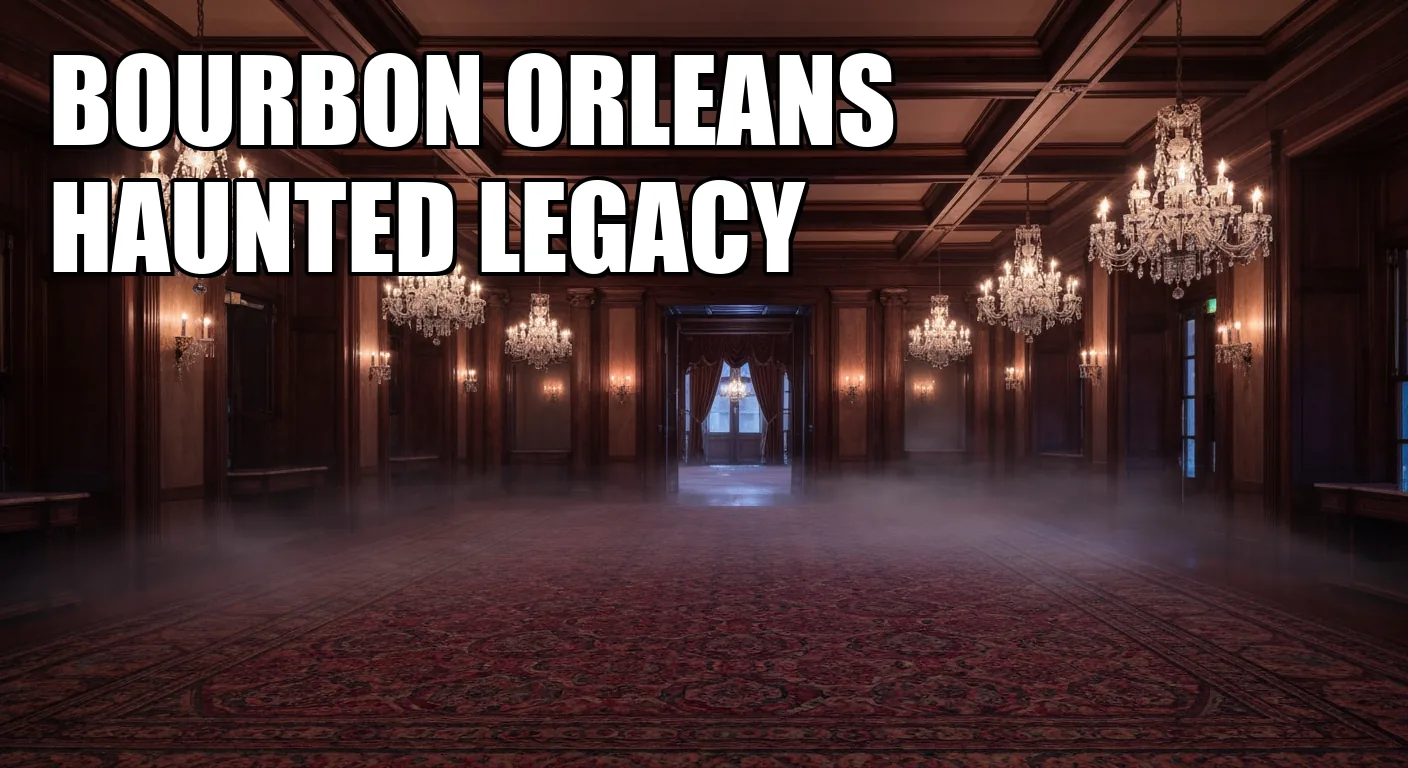
Perhaps that’s why the spirit known simply as the Dancing Lady remains. She’s not tied to a specific room, but frequently manifests in the very space that once housed the original Orleans Ballroom, now often used for hotel meetings and events. Witnesses describe her as a graceful figure, clad in mid-19th-century attire, twirling elegantly beneath those same crystal chandeliers. It’s an ethereal ballet, an echo of a bygone era, and what strikes me most is the sheer joy she seems to embody. Unlike many hotel spirits, often linked to sorrow or unresolved trauma, the Dancing Lady seems to be reliving a moment of pure bliss. She’s a reminder that not all hauntings are born of tragedy; some are simply an imprint of intense happiness, a desire to forever remain in one's most cherished memory. When you’re in the ballroom, especially during a quiet moment, you might almost hear the faint strains of a waltz or feel a breath of cool air as she glides past, a poignant and beautiful contrast to the more somber presences elsewhere in the hotel.
Diving into the Sixth Floor's Shadows: A Soldier's March and an Orphan's Play
Venturing beyond the ground floor, the sixth level of the Bourbon Orleans Hotel is a veritable hotbed of paranormal activity, its stories deeply rooted in the building's less glamorous, yet equally significant, chapters. This floor, more than any other, embodies the transformation of the building from a palace of pleasure to a sanctuary of solace, and tragically, a place of profound loss. What’s often missed in the quick telling of ghost stories is the raw human experience behind them, and here, that experience is palpable.
On one corridor, guests and staff have consistently reported the spectral presence of a Confederate Soldier. Clad in his distinct grey uniform, he’s seen marching the hallways, sometimes appearing as a full-bodied apparition, other times as a fleeting shadow. The historical context explains his presence: during the American Civil War (1861-1865), New Orleans was occupied by Union forces early on, but before that, and certainly during times of flux, buildings like the Orleans Ballroom were often commandeered for billeting troops or even serving as makeshift hospitals. It's believed this soldier succumbed to his injuries or illness while stationed here, perhaps still on duty, forever patrolling a space that represented his final post. His presence isn't menacing; it's mournful, a poignant reminder of the immense human cost of that brutal conflict. You might not see him, but you might feel a sudden chill or the faint scent of old pipe tobacco, a subtle hint of his lingering vigil.
Further down the same hallway, a starkly different, yet equally heartbreaking, spirit is said to reside: a little blond orphan girl. She’s often described as chasing a ball, her innocent laughter sometimes echoing through the quiet late-night hours, followed by the soft pitter-patter of tiny footsteps. Her story is intrinsically linked to the period when the building ceased being a ballroom and, in 1881, was acquired by the Sisters of the Holy Family (later the Sisters of the Holy Cross). They transformed the edifice into a convent and orphanage, a haven for the city's most vulnerable. Tragically, in 1888, New Orleans was ravaged by a devastating yellow fever epidemic—a scourge that regularly swept through the humid, mosquito-ridden city, claiming thousands of lives, particularly among the young and infirm. This little girl, a resident of the orphanage, is believed to have been one of its victims. Her joyful spirit, still playing, offers a heartbreaking contrast to the grim reality of her passing, suggesting a soul forever caught in her last moments of innocence before tragedy struck.
Room 644: Why Does a Nun Slap? Unpacking the Most Infamous Haunting
While many rooms at the Bourbon Orleans might have an occasional strange occurrence, Room 644 on the sixth floor has garnered an almost legendary status among paranormal enthusiasts and skeptical visitors alike. This isn't just a room with a "ghost story"; it's a focal point of intense, often interactive, activity, all centered around a specific, rather assertive, spectral resident: a nun. What gives this particular haunting its edge, and why does she apparently feel the need to physically manifest her displeasure?
The identity of this nun is widely believed to be one of the Sisters who ran the convent and orphanage. Guests in room 644 frequently report seeing her apparition, often in full habit, silently observing. But what truly makes her stand out is her occasional penchant for discipline. There are credible accounts from hotel staff, and even some guests, of feeling a distinct slap or sudden push, particularly if they utter profanities or engage in what might be considered boisterous behavior near her perceived domain. This isn't your typical shadowy figure; this is a spirit with agency, with a clear sense of propriety rooted in her life's calling. The idea of a nun, dedicated to faith and charity, becoming a disciplinary entity in the afterlife is fascinating. It speaks to a deep sense of order and perhaps an unfinished mission to maintain decorum, even decades after her passing. For anyone truly interested in a profound paranormal experience, booking Room 644 isn’t just a stay, it’s an invitation to a direct, if potentially chastising, encounter.
Beyond the Specters: Practicalities of a Paranormal Pilgrimage
So, you're intrigued. You want to experience the Bourbon Orleans, perhaps even hoping for a personal encounter with its storied residents. What should you expect, and how do you navigate a visit that blends historical appreciation with ghost hunting? First, understand that this is a functioning, often busy, luxury hotel in a prime French Quarter location. It's not a dusty, abandoned mansion, which means the atmosphere, while undeniably historic, won't always be that of a desolate haunted house.
If your primary goal is paranormal investigation, aim for a stay during the quieter months. Avoid major festivals like Mardi Gras, Jazz Fest, or Halloween, when the hotel is packed, and the sheer volume of human energy can make subtle ghostly manifestations harder to detect. Instead, consider visiting in late January/early February (pre-Mardi Gras), or perhaps a weekday in May or September. You’ll find fewer crowds, more attentive staff, and a quieter ambiance conducive to experiencing the hotel’s more ethereal qualities. Booking Room 644 specifically is possible, but be prepared that it's highly sought after, so reserve well in advance. Parking in the French Quarter is notoriously difficult and expensive; the hotel offers valet services, but it’s best to factor that into your budget. Expect to pay upwards of $40-50 per night for parking alone.
For the best chance of sensing something, spend time on the sixth floor late at night when the hallways are quiet. Sit in the ballroom during a lull, perhaps early morning, and simply observe. Don's just rush from one reported spot to another with a camera; allow yourself to soak in the deep history. These aren't just "ghosts"; they are echoes of individuals whose lives were intimately tied to this place. What does a Civil War soldier, forever marching, tell us about duty? What does an orphaned girl, still playing, convey about lost innocence? And what about a nun, still enforcing rules, says about the enduring power of conviction? The Bourbon Orleans isn't just selling a room; it’s offering a profound, if sometimes unsettling, connection to the past. Don't expect dramatic poltergeist activity every night; sometimes the most chilling encounters are the quietest—a sudden drop in temperature, a fleeting scent, or the distinct feeling of being watched, an undeniable sense that you are not alone in a place that has seen so much.
Ultimately, whether you believe in ghosts or not, a stay at the Bourbon Orleans Hotel offers an unparalleled journey through New Orleans’ complex narrative. It’s a place where grandeur, devastation, devotion, and daily life have converged for over two centuries, leaving behind an indelible mark—one that continues to resonate with energy, spirit, and perhaps, a few friendly, or not-so-friendly, specters. What you take away from it depends entirely on how openly you approach its fascinating, sometimes frightening, history.
Spirits of History: Your Complete Guide to the Bourbon Orleans Hotel's Haunted Heritage
Is the Bourbon Orleans Hotel in New Orleans haunted?
Yes, the Bourbon Orleans Hotel is widely considered one of the most haunted hotels in the United States, hosting as many as 17 resident ghosts according to paranormal investigations. The hotel has consistently ranked among the top 10 most haunted hotels in the U.S. according to USA Today's 10Best.
What is the most haunted room in the Bourbon Orleans Hotel?
Room 644 is reportedly the most haunted room in the hotel, where a nun is said to have committed suicide according to decades-old rumors. Guests and visitors have reported hearing anguished cries emanating from this rooftop room, and actor James Franco experienced unexplained phenomena including faucets turning on and off by themselves.
What is the history of the Bourbon Orleans Hotel?
The Bourbon Orleans Hotel was originally built in 1817 as the Orleans Ballroom by entrepreneur John Davis, designed by architect Henry Latrobe (designer of the U.S. Capitol), and served as an entertainment venue for Creole society. In 1881, the Sisters of the Holy Family converted it into a convent and orphanage, and in 1964 it was transformed into the luxury hotel that operates today.
What is the #1 most haunted hotel in the world?
The Riccarton Racecourse Hotel in Christchurch, New Zealand, is considered the world's #1 most haunted hotel, featuring the unsolved 1933 murder of Donald Fraser whose ghost reportedly still roams the hallways.
What happened in room 428 at the Stanley Hotel?
Room 428 at the Stanley Hotel is haunted by the ghost of a friendly cowboy of unknown identity, with guests reporting seeing a dark figure at the foot of their beds and hearing disembodied footsteps and furniture moving sounds.
What happened in room 407 at the Stanley Hotel?
Room 407 is haunted by the ghost of Lord Dunraven, a former land owner, who manifests as a dark shadowy figure standing in the corner of the room, with reports of lights turning on and off and faces appearing in the window when the room is vacant.
What is the scariest room at the Stanley Hotel?
Room 217 is the most famous and arguably scariest room at the Stanley Hotel, where a catastrophic gas explosion occurred in 1911 that killed housekeeper Elizabeth Wilson (though she miraculously survived), and where Stephen King stayed before writing 'The Shining.'
What scary movie was filmed at the Stanley Hotel?
Stephen King's 'The Shining' miniseries (1997) was filmed at the Stanley Hotel in Estes Park, Colorado, in March 1996, as King wanted a faithful adaptation of his novel after criticizing Stanley Kubrick's 1980 film version.
What is the Bourbon Orleans Hotel haunted history?
The hotel's haunted history stems from its past lives: the ballroom witnessed Quadroon Balls and was a society gathering place, a yellow fever epidemic swept through when it served as a convent and orphanage, and a nun allegedly committed suicide there, leaving behind restless spirits.
What spirits haunt the Bourbon Orleans Hotel?
The hotel is home to multiple spirits including a Confederate soldier on the sixth and third floors, a little girl playing with a ball on the sixth floor, ghost children from the orphanage era, nuns from the convent period, and a lonely ghost dancer seen dancing under the ballroom's crystal chandeliers.
Are there guided ghost tours at the Bourbon Orleans Hotel?
Yes, the Bourbon Orleans Hotel offers its own haunted tours every Thursday evening and is featured in various ghost tours like Grayline Tours' 'Ghosts & Spirits Walking Tour,' with special packages available through Cajun Encounters offering 15% discounts on both rooms and tours.
What are the room rates and availability at the Bourbon Orleans Hotel?
Rooms at the Bourbon Orleans Hotel start from $129 per night according to 2025 pricing, with French-inspired design, private balconies available in some rooms, and amenities including an outdoor pool, on-site restaurant, and bar with live jazz.
Where is the Bourbon Orleans Hotel located?
The Bourbon Orleans Hotel is located at 717 Orleans Street in the heart of the French Quarter (Vieux Carré) in New Orleans, Louisiana, steps away from St. Louis Cathedral, Jackson Square, and Royal Street.
Can you stay in the most haunted rooms at Bourbon Orleans?
Yes, guests can request to stay in Room 644, the most haunted room, or other reportedly active rooms on the fourth and sixth floors where paranormal activity is frequently reported.
What paranormal investigations have been conducted at Bourbon Orleans?
Various paranormal investigators and psychics have conducted investigations at the Bourbon Orleans Hotel, documenting evidence including electromagnetic field fluctuations, temperature drops, captured voices on audio recordings, and security camera footage of ghostly apparitions.
We use cookies to enhance your experience. By continuing to visit this site you agree to our use of cookies.