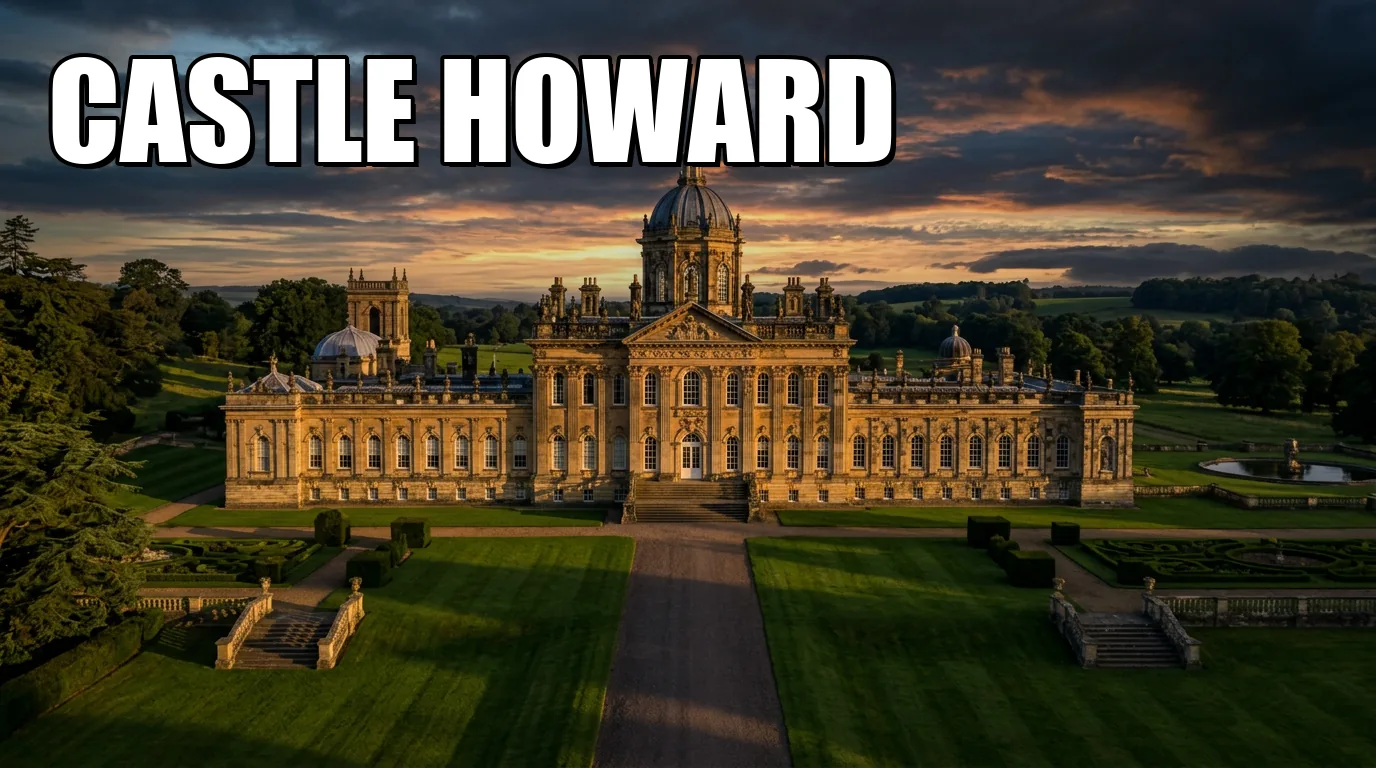
Stepping onto the expansive grounds of Castle Howard, a visitor might feel an immediate, almost uncanny familiarity. This isn't just another stately home; for millions, it's the very embodiment of Brideshead Castle, the setting for Evelyn Waugh's epic novel of faith, disillusionment, and aristocratic decay. But peel back the layers of two major adaptations—the iconic 1981 Granada Television series and the lavish 2008 feature film—and you discover a history far more intertwined with cinematic ambition and domestic resilience than any casual tourist brochure lets on.
My first visit, years ago, left me questioning the boundary between fiction and reality. Can a place so indelibly linked to a fictional narrative retain its own identity? Absolutely, and in the case of Castle Howard, its dramatic real-life history, particularly the devastating 1940 fire that gutted much of its interior, ironically made it a more compelling canvas for the very stories it would later host. This wasn't merely a convenient backdrop; it was a character in its own right, a testament to both enduring beauty and the scars of time.
The 1981 Series: A Phoenix Rises from the Ashes of Production
How do you resurrect a faded aristocratic dream when parts of your chosen location are, quite literally, burnt out shells? That was the challenge facing producer Derek Granger and his team for the 1981 Granada Television adaptation, a project that cemented Castle Howard’s place in global consciousness. Instead of shying away from the scars of the 1940 fire, they embraced them, crafting a symbiotic relationship that few film productions could ever hope to replicate. The Garden Hall, for instance, a room utterly destroyed and left as a desolate ruin, underwent a radical transformation. Granada Television, in an extraordinary arrangement with then-owner George Howard, essentially rebuilt it as a film set, transforming it into Charles Ryder's office for painting landscapes. This wasn't just film magic; it was a pragmatic partnership that benefited everyone: Granada got an authentic, bespoke set, and the estate received a fully restored hall, with film proceeds funding further reconstruction efforts. It's an insight into the often-unseen negotiations that breathe life into on-screen grandeur.
Beyond the architectural revival, the human drama behind the scenes was equally compelling. Did you know that the iconic casting of Jeremy Irons as Charles Ryder and Anthony Andrews as Sebastian Flyte almost didn't happen? Granger initially envisioned Irons as Sebastian and Andrews as Charles. Both actors had to actively lobby, practically beg, to switch roles, convincing the production team that their initial instincts were askew. It’s a fascinating glimpse into the often-unpredictable alchemy of casting, and how crucial those gut feelings can be. Imagine the series any other way; it’s almost impossible.
The production faced relentless pressure, particularly after an August 1979 ITV technicians' strike halted filming. When principal photography resumed on November 5, 1979, the original six-hour serial had been extended to seven two-hour episodes, piling on the demands. Laurence Olivier, a legendary figure, was on a tight schedule, yet his scenes hadn’t even been written when he was due to start! Producers Derek Granger and Charles Sturridge scrambled, racing against the clock to complete his dialogue just a week before his arrival. Actress Mona Washbourne, less fortunate, received her script on the very day she was due to begin filming. These aren't the polished anecdotes you'll find in typical 'making-of' features; they're raw glimpses into the chaos and improvisation inherent in ambitious filmmaking, proving that even the most meticulously planned productions are often held together by sheer willpower and last-minute heroics.
Consider another practical challenge: filming ocean liner scenes aboard the RMS Queen Elizabeth 2. Deck scenes could capitalize on an actual storm for authenticity, but how do you simulate a ship's rocking motion inside a grand dining room set? While small cabin sets were built to physically sway, the massive dining room posed a problem. Granger’s low-tech solution involved standing on a chair behind the camera and waving a stick, indicating to the cast which way to lurch. It’s a delightfully absurd image, yet it captures the ingenuity required to create an illusion without breaking the bank or logistics. This kind of spontaneous problem-solving, rather than advanced CGI, is what truly sets the 1981 production apart.
A Novice at the Helm: Charles Sturridge's Unexpected Ascent
Perhaps the most unexpected story from the 1981 series involves its director, Charles Sturridge. At only 28 years old, he found himself thrust into the director's chair after Michael Lindsay-Hogg departed. The initial reaction from the seasoned cast was, predictably, skepticism. Sturridge himself recalled the actors' doubts: "They thought I was part of an insurance scam, and that my inexperience would cause the production to fall through." Yet, Sturridge defied these initial misgivings, going on to deliver what Lindsay-Hogg himself lauded as "fabulous and beautiful work." This narrative isn't just about a film's success; it's a profound lesson in trusting talent, even when it's raw, and how sometimes the fresh perspective of an outsider can yield truly extraordinary results. It’s a story the conventional guides rarely highlight, perhaps because it challenges the notion of established wisdom.
Adding a touch of romance to the production's legacy, Sturridge would later marry Phoebe Nicholls, who played Cordelia Flyte, on July 6, 1985. This personal connection, born from the very set of Brideshead, offers a humanizing glimpse into the bonds forged during intense creative endeavors. It's a reminder that these grand productions are, at their heart, made by people, with all their attendant complexities and connections.
The 2008 Film: Reinventing Brideshead's Grandeur with Bold Strokes
Nearly three decades later, Castle Howard once again welcomed cameras for the 2008 feature film adaptation directed by Julian Jarrold. While many of the familiar spaces like the Great Hall and Grand Staircase were revisited, this production made its own indelible mark by tackling previously untouched, fire-damaged areas. The High Saloon and High South—rooms on the upper floor of the south wing that had remained gutted since the 1940 inferno—were dramatically transformed. These became the grand dining room and even Lord Marchmain's deathbed, adorned with elaborate religious murals painted in a contemporary style. This wasn't merely restoration; it was an artistic reimagining, a bold stylistic departure from the original 18th-century Pellegrini frescoes that had been destroyed. It’s a crucial point that highlights how different adaptations can interpret and literally reconstruct a setting to suit their own vision, offering a fascinating contrast to the 1981 series’ more faithful, albeit rebuilt, approach.
Filming, of course, isn't always about high drama. Matthew Goode, who stepped into Jeremy Irons’ shoes as Charles Ryder, shared an amusing anecdote from a press conference held within Castle Howard's Long Gallery. He recounted a skinny-dipping scene at the estate's Italianate fountain, admitting with humor, "It was cold—I think the crew will vouch for me on that. My teeth were chattering." It’s a refreshing, humanizing detail that cuts through the perceived glamour of period dramas, reminding us of the less-than-luxurious realities of filmmaking, even in the most magnificent surroundings.
The Howard family, still residents of the estate, extended genuine hospitality to the cast and crew during the 2008 production. George Howard fondly recalled how many actors and crew members shared his wife’s passion for Wimbledon. "Every now and again we'd wander into our drawing room to find them sitting there watching TV," he mused. This anecdote underscores the unique dynamic of filming in a living, breathing home, blurring the lines between set and residence, and offering a personal touch rarely afforded to productions in purpose-built studios.
Interestingly, Ben Whishaw, cast as Sebastian Flyte in the 2008 film, brought a unique perspective. He famously stated, "I didn't watch it, and to be honest, I haven't even properly heard about it" regarding the 1981 series. While some might see this as a controversial oversight, it also speaks to a new generation's approach to iconic roles—unburdened by previous interpretations, free to create something fresh. It challenges the conventional wisdom that actors must meticulously study prior performances; sometimes, blissful ignorance allows for radical originality.
Visiting Brideshead Today: Navigating Expectations and Echoes
If you're planning a pilgrimage to Castle Howard, brace yourself for more than just a grand day out; prepare for a journey through architectural splendor, cinematic history, and the very human stories behind the lens. What should you expect? First, the scale is immense. This isn't a cozy manor house; it's a monumental Baroque masterpiece. Allow ample time—a full day, easily—to explore the house, its vast gardens, and the surrounding parkland. While many guides focus on the sheer beauty, I urge you to seek out the specific rooms mentioned: the Great Hall, the Long Gallery, and particularly, the now-restored Garden Hall, imagining its transformation from ruin to Ryder's workspace. The Temple of the Four Winds, perched at the eastern edge of the estate, offers not just cinematic resonance but also breathtaking views, prompting reflection on the grand indulgence it once hosted on screen.
Expect crowds, especially during peak summer months and school holidays. To truly soak in the atmosphere and escape the tour groups, consider arriving early on a weekday or planning your visit for the shoulder seasons—late spring (April/May) or early autumn (September/October)—when the weather is often pleasant and the throngs are thinner. While the house itself requires an admission fee (check their official website for current prices and opening times, as these vary seasonally), simply walking the magnificent grounds can offer a profound sense of place. Parking is generally ample, though can involve a short walk to the main entrance.
The true magic of Castle Howard isn't just seeing the locations; it’s understanding the layers of history—both real and imagined—that have shaped it. It’s about comprehending the 1940 fire that scarred it, the extraordinary deals that rebuilt parts of it for a television series, and the creative decisions that reimagined other sections for a film. It’s about appreciating the ingenuity of a producer waving a stick to simulate a storm, the bravery of a young director, and the audacious choices made by actors. When you walk these hallowed halls, you’re not just admiring architecture; you’re engaging with a complex narrative of resilience, artistic vision, and the enduring power of storytelling.