There are houses, and then there are *places*. Casa del Herrero, nestled discreetly in the verdant hills of Montecito, unequivocally falls into the latter category. For years, I’ve tracked down historic homes across the United States, often finding them either immaculately preserved but lifeless, or charming but lacking that spark of true genius. This estate, however, is different. It’s a living testament to a particular moment in American design and collecting, a bold declaration of taste and historical reverence that continues to resonate almost a century later.
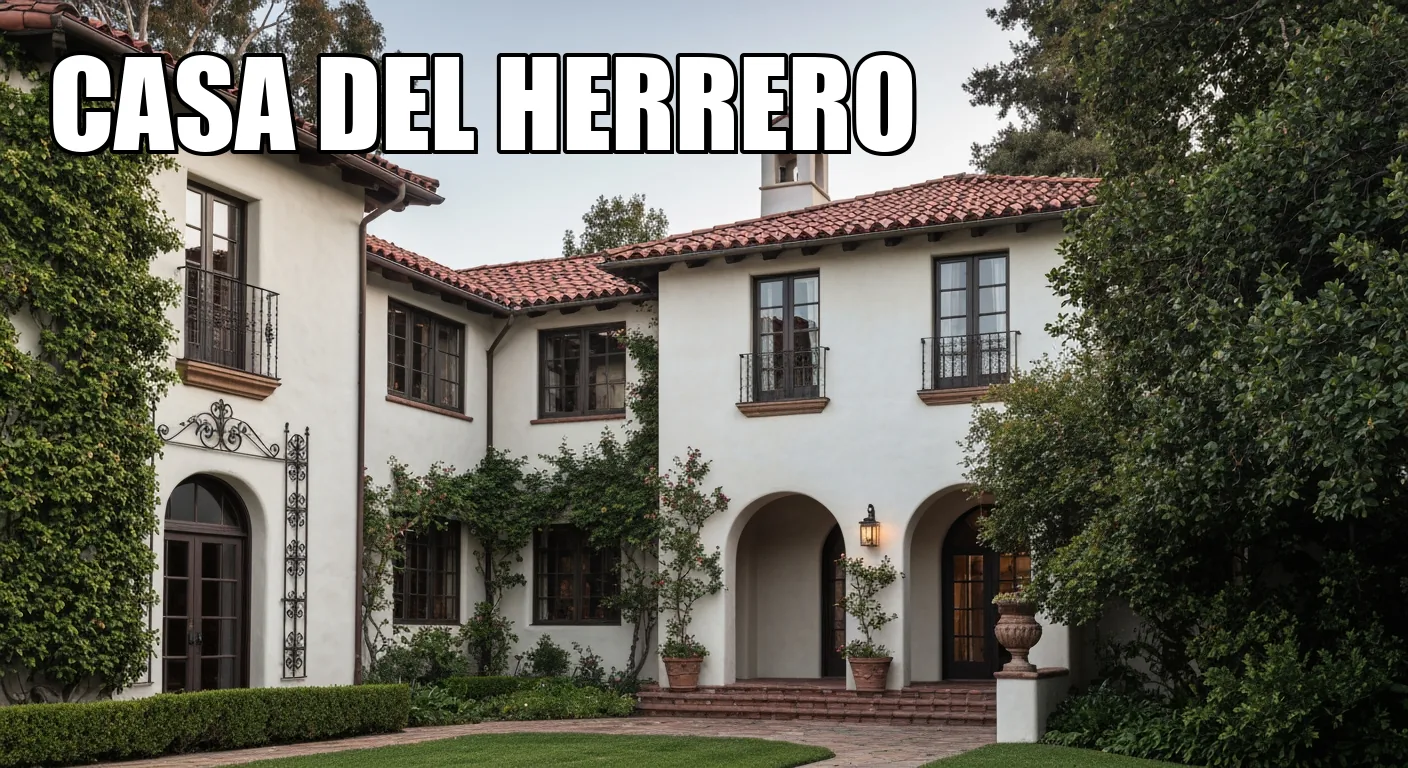
Approaching Casa del Herrero, or "House of the Blacksmith," as it translates from the Spanish, you might expect just another well-kept example of Spanish Colonial Revival architecture, a style ubiquitous in Southern California. But this isn't a mere pastiche; it’s an extraordinarily refined and comprehensive interpretation, born from the fervent vision of George Fox Steedman and brought to fruition by a dream team of early 20th-century designers. Forget quaint antique shops and casually curated estates; what the Steedmans created here is an immersive, almost theatrical experience of Old World grandeur.
Who Forged This Masterpiece? The Visionaries Behind the Walls
Every great house has its story, and Casa del Herrero’s begins with George Washington Smith. A Pennsylvania-born artist who stumbled upon Santa Barbara during a cross-country journey in 1916, Smith swiftly pivoted from painting to architecture, becoming the undisputed master of the Spanish Colonial Revival style. He didn't just design buildings; he practically defined the aesthetic of Santa Barbara, emphasizing clean lines, whitewashed stucco, and those iconic red tile roofs, all infused with subtle Andalusian influences. Smith’s genius lay in his ability to translate historical motifs into something fresh and elegant for the California landscape.
While Smith laid the architectural groundwork, the landscape architect Ralph Tallant Stevens, a Montecito native, was busy shaping the eleven acres of surrounding grounds. Stevens, who studied landscape architecture at Michigan State College, possessed an uncanny knack for blending formal landscape features — think terraces, parterres (ornamental garden plots), and fountains — with Mediterranean and subtropical flora. His designs for Casa del Herrero are not just pretty; they are integral to the estate’s narrative, drawing the eye and guiding visitors through a series of distinct "garden rooms" that both complement and contrast the architecture.
But the story doesn't end with Smith and Stevens. Following Smith’s death in 1930, his primary draftsperson, Lutah Maria Riggs, stepped into the spotlight, continuing to refine the estate. Riggs, a formidable architect in her own right, designed the distinctive octagonal library addition in the 1930s, a testament to her sophisticated understanding of the Spanish Colonial Revival aesthetic. Collaborators like landscape architects Lockwood de Forest and Francis Townsend Underhill also contributed, simplifying and perfecting the complex garden plans. This collaborative spirit, evolving over years, is something many architectural tours overlook, yet it's crucial to understanding the nuanced richness of Casa del Herrero.
More Than Just a Pretty Facade: Unpacking the Architectural Soul
Stepping beyond the main entrance, the immediate impression is one of restrained elegance. The 7,000-square-foot residence, completed in 1925, presents a surprisingly modest exterior with its white stucco walls and red-tile roof, adorned with wrought iron grilles and a striking carved stone lintel depicting a centaur blacksmith—a clever nod to the Steedman family’s metalworking heritage and the house’s very name. Yet, the true magic unfolds once you cross the threshold, where an unexpected opulence and an almost scholarly devotion to craftsmanship are revealed.
This isn't just decoration; it's history, physically transplanted. Imagine entering a home where original ceiling beams and architectural components were literally transported from churches in Italy and Spain, serving as authentic historical artworks rather than mere reproductions. That's the level of commitment you find here. Hand-painted Spanish tiles, created using traditional techniques, adorn fireplaces and walls throughout the residence, telling silent stories of artisans long past. One of the most fascinating details is the curved stairway off the dining room, a personal design contribution from George Fox Steedman himself, who collaborated with Smith on over 200 drawings and forty revised versions before finalizing its intricate form. This intense personal involvement is what elevates Casa del Herrero beyond a mere display house; it imbues it with a soul.
The Obsessive Pursuit of Authenticity: A Collector's Legendary Haul
What sets Casa del Herrero apart from many other grand estates of its era isn't just its architecture or landscaping, but the sheer, breathtaking scope of its original furnishings and antiques collection. Forget quaint antique shops; the Steedmans embarked on what amounts to a historical raid, a veritable tsunami of 15th- to 18th-century European treasures. In 1923, George Fox Steedman undertook a pivotal antiques-buying journey to Spain with renowned antiquarians Arthur and Mildred Byne, whose expertise proved invaluable. This trip wasn't just for pleasure; it directly influenced the house's evolving design.
The numbers alone are staggering: 160 shipping containers filled with centuries-old artifacts, primarily from Spain but also France and Italy. We’re talking about paintings, sculpture, tapestries, silver, furniture, rugs, and religious artifacts, all carefully selected to furnish the home. This wasn’t haphazard collecting; it was an archaeological approach to interior design, aiming to create an authentically curated environment that blurred the lines between residence and museum. Hundreds of original Spanish antique doors, for instance, were integrated as architectural elements throughout the house, not just decorative additions. Most of the original furniture from 1925 remains exactly where it was placed, offering an exceptionally vivid, almost time-capsule-like snapshot of early 20th-century aesthetic preferences among America's wealthy collectors.
What often goes unmentioned in typical tours is the profound intellectual curiosity that drove George Steedman. Beginning in 1927, he established a metalworking and silversmithing workshop right on the property. Here, working with apprentices, he produced approximately one hundred pieces of "domestic plate"—functional silver objects based on medieval prototypes—between 1927 and 1940. This wasn’t a hobby; it was a serious engagement with artistic creation, transforming the estate from a mere repository of treasures into a vibrant center for craftsmanship and creative expression, directly reflecting the "Blacksmith" in its name.
Gardens That Whisper Old-World Secrets and Practicalities
The eleven acres of gardens at Casa del Herrero are as meticulously planned and historically informed as the house itself. They represent a masterclass in creating intimacy within grandeur, a concept often lost in today's sprawling, undifferentiated landscapes. An overarching axial vista, stretching from the house's loggia down a long, grassy allée, serves as the central organizing principle, effortlessly drawing the eye and providing a sense of expansive, yet controlled, beauty. These aren't just gardens to look at; they are designed to be experienced, with multiple distinct "garden rooms" each serving different functions and aesthetic purposes.
One of the most captivating aspects is the strong Moorish influence woven throughout the landscape. You'll encounter multiple tiled fountain systems, adorned with exquisite blue-and-white glazed ceramic tiles—a hallmark of 1920s Spanish Revival garden design. These fountains, with their decorative tilework and intricate water channels, reflect Islamic garden traditions, creating serene focal points that invite quiet contemplation. Surprising elements like a distinctive cactus or Arizona garden, with its succulents and desert flora, provide a striking textural contrast to the more irrigated areas, reminding you that you are, indeed, in Southern California.
Beyond the aesthetics, the gardens also tell a practical story. Extensive citrus orchards speak to the region's agricultural heritage, while an herb garden and boxwood-edged rose garden served both decorative and culinary functions. The property's perimeter is thoughtfully screened by tall stands of eucalyptus and palm trees, creating a dense, protective enclosure that focuses the estate inward, away from the surrounding landscape. This deliberate inward focus is a subtle but powerful design choice, creating a private world that feels utterly removed from the hustle and bustle just beyond its walls.
Planning Your Pilgrimage to Montecito's Hidden Gem in 2025
So, you’re intrigued. You should be. Visiting Casa del Herrero isn't a casual drop-in; it requires a bit of planning, but the rewards are substantial. As of 2025, the estate operates primarily through guided tours, which are absolutely essential to appreciating the nuanced history and intricate details. You won't just wander freely, and honestly, you wouldn’t want to; the docents here are truly exceptional, bringing the Steedmans’ vision to life with stories you won’t find in any brochure.
I strongly advise booking your tickets well in advance, ideally several weeks out, especially if you plan to visit during peak spring or fall seasons, or any weekend. Check their official website for current pricing, but anticipate an admission fee in the range of $25-$35 per person for a guided tour. Parking is usually available on-site, but it’s best to confirm when booking. To truly avoid crowds and have a more intimate experience, aim for a weekday morning tour. Expect to spend at least two hours, perhaps more if you allow yourself to truly soak in the layered history and the sheer craftsmanship. This isn’t a quick snapshot stop; it’s an immersive journey into a meticulously preserved past, a profound architectural and historical experience that stands as one of America’s most significant examples of Spanish Colonial Revival design.