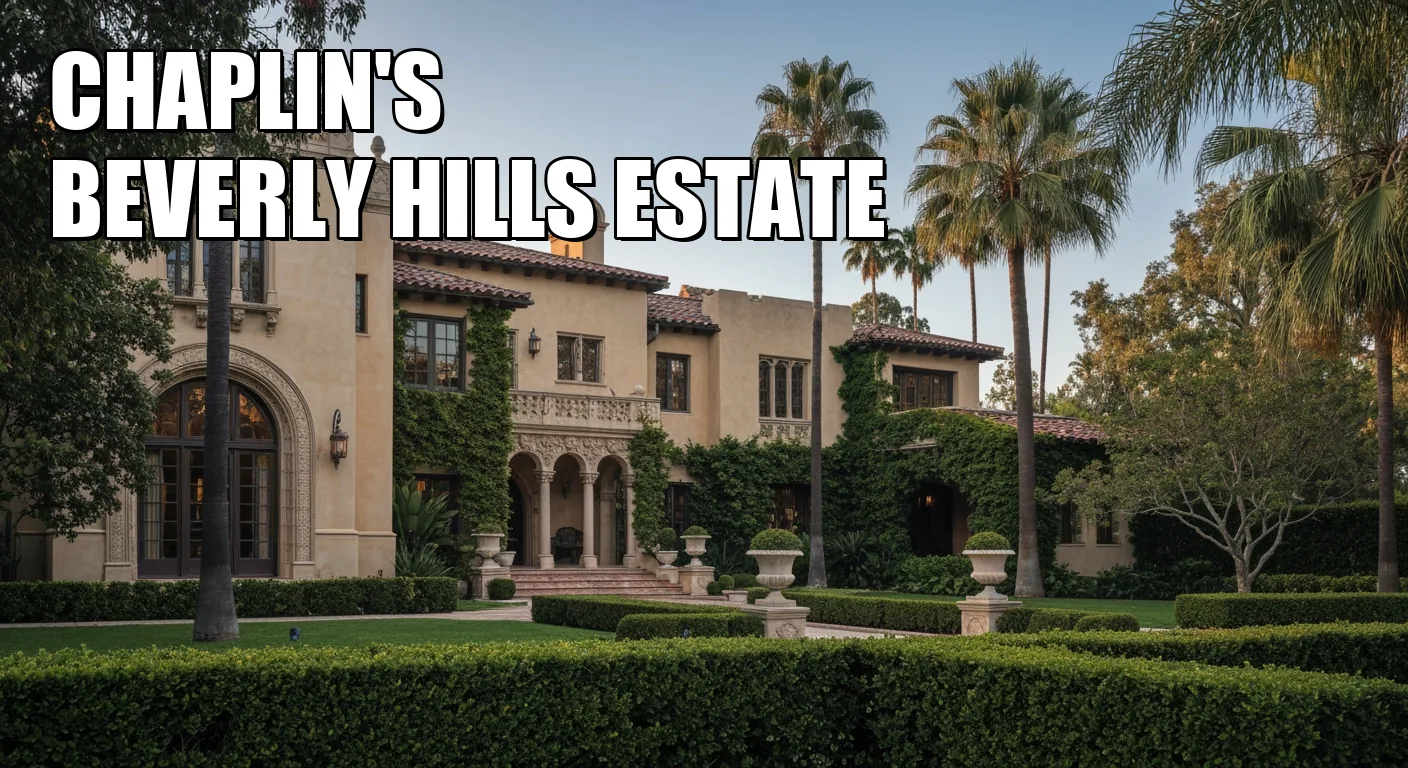
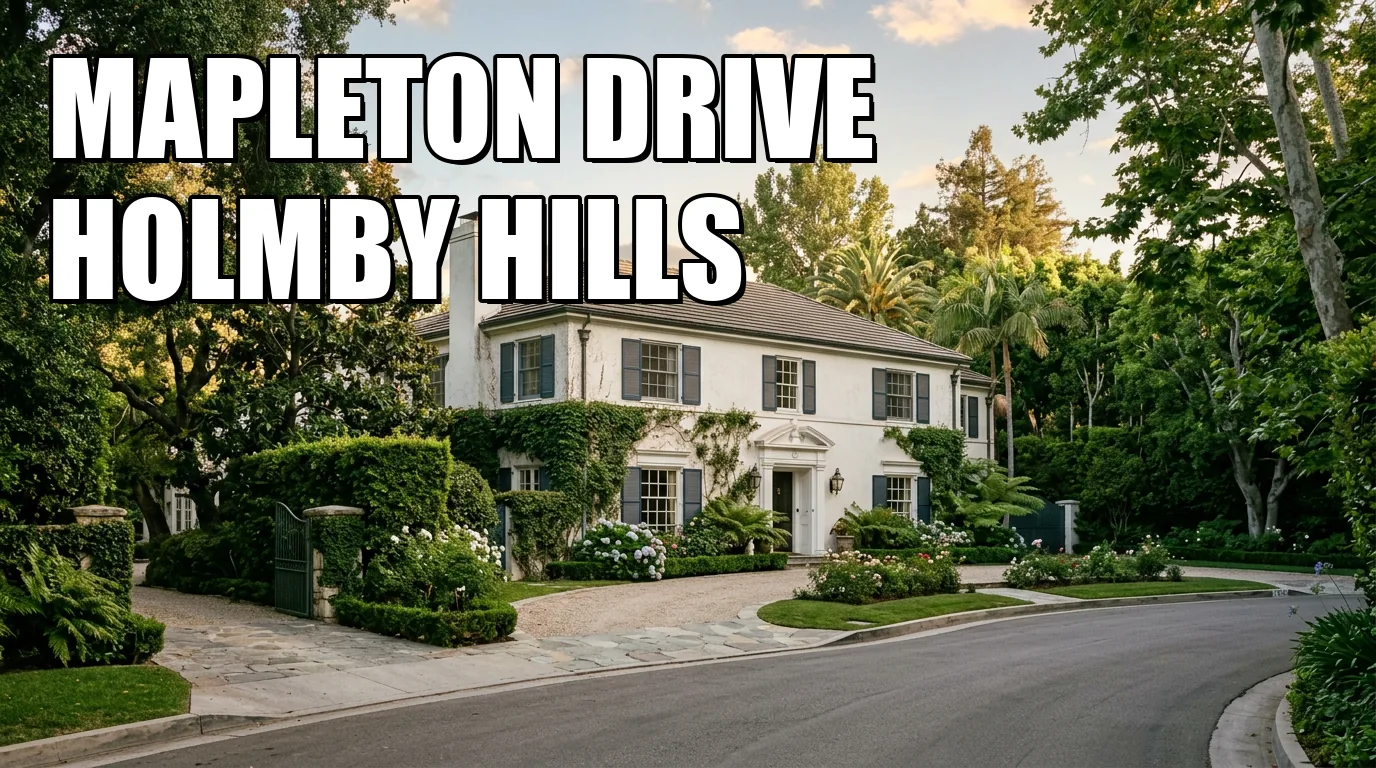
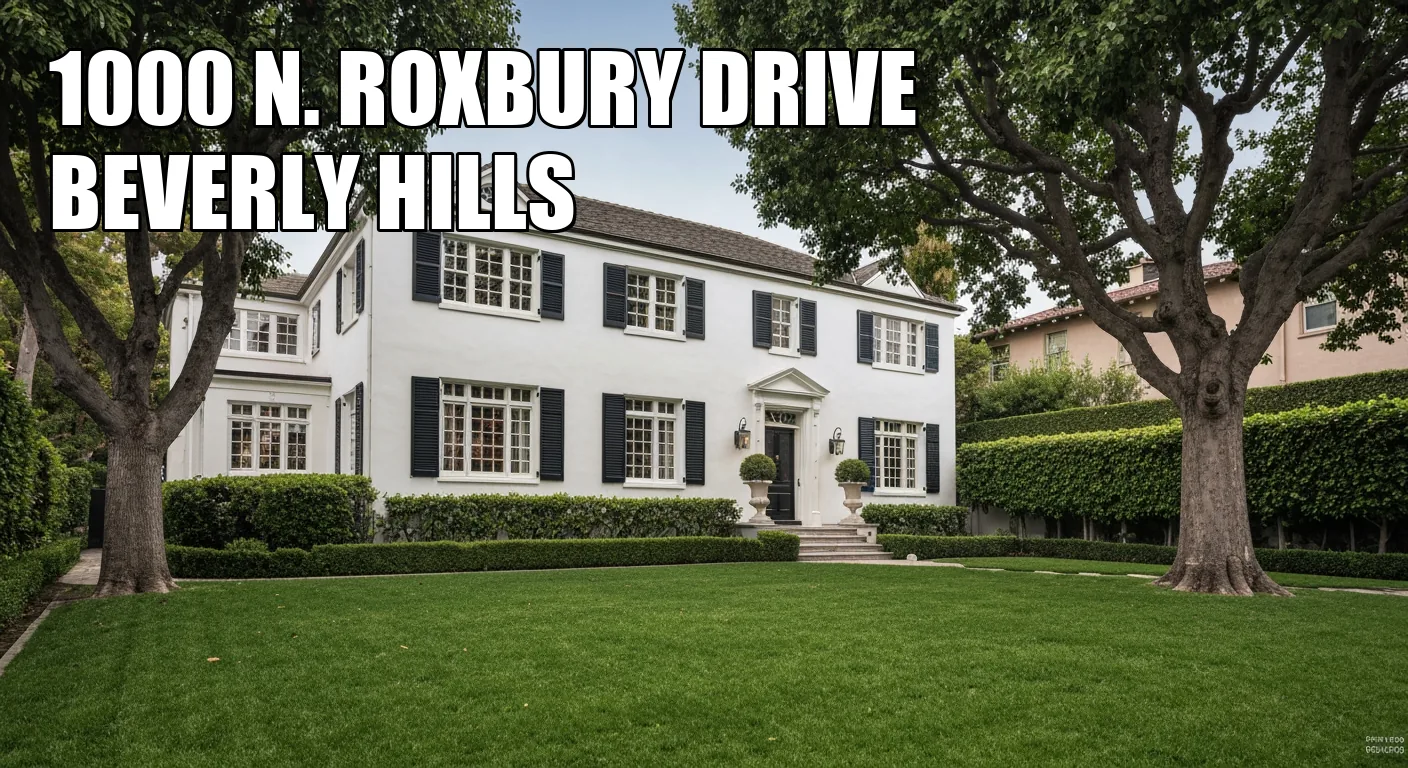
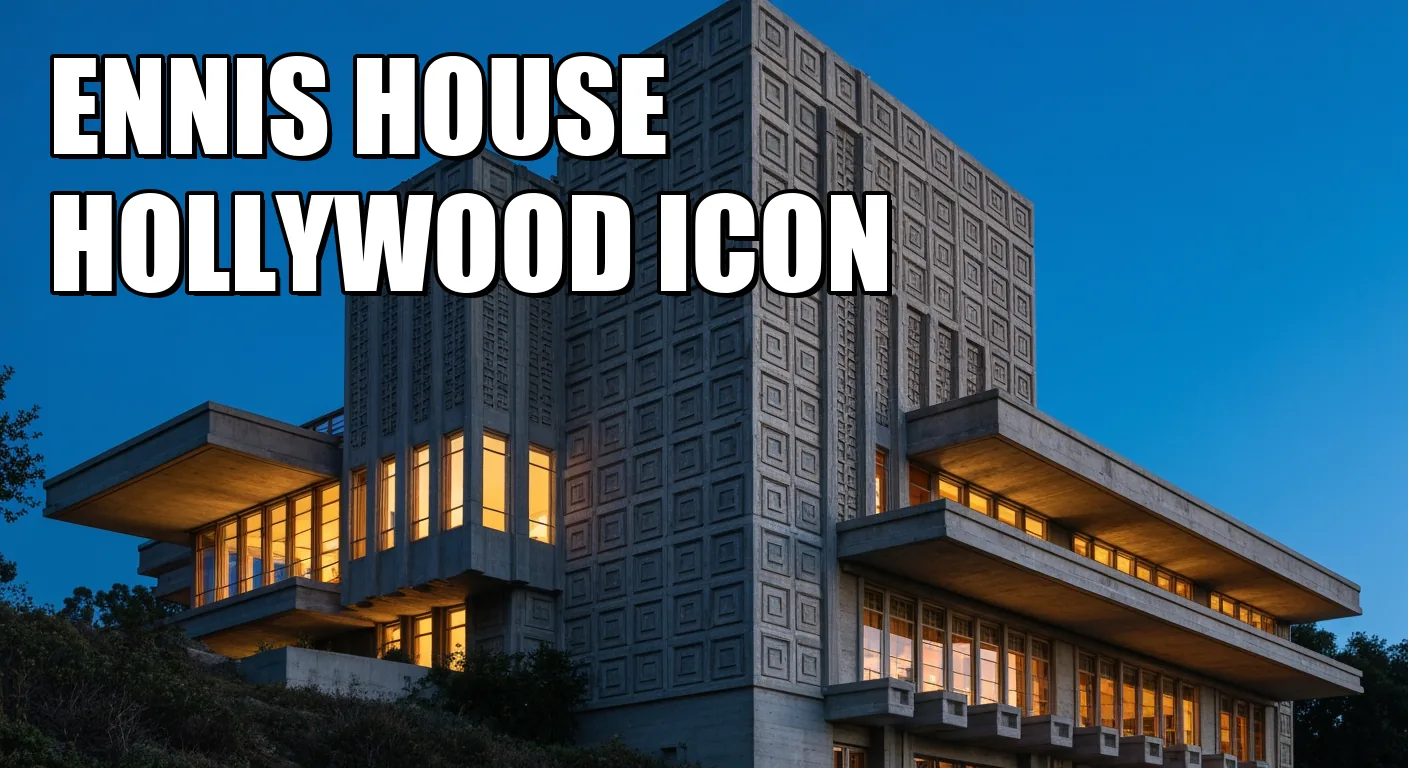
The enduring image of Charlie Chaplin, the "Little Tramp," is one of whimsical melancholy, a genius of physical comedy who captured the hearts of a nascent global audience. Yet, away from the flickering screen and the bustling sets of his La Brea studio, Chaplin's life was lived within the walls of some of Southern California’s most intriguing residences. As a travel writer who’s spent years peeling back the layers of historic sites, I’ve often found that the real story isn't just in the grand public monuments, but in the intimate spaces where history’s giants ate, slept, and dreamed. For Chaplin, his American homes were precisely these crucibles of creativity and personal turmoil, largely hidden from public view even today.Unlocking the Past: Why Chaplin’s Homes Remain So MysteriousMany visitors to Los Angeles hope to catch a glimpse into the golden age of Hollywood, perhaps imagining a tour through the opulent homes of its stars. With Charlie Chaplin, however, that expectation hits a wall—a beautifully manicured, private wall. Unlike a museum or a restored estate, nearly all of Chaplin's significant residences in the United States remain private property, occupied by new owners who understandably value their privacy. This lack of public access might initially disappoint, but it actually deepens the mystique. What we *can* glean from their histories, their architectural styles, and the stories associated with each address offers a far richer understanding of Chaplin's life and work than a mere walk-through ever could. It forces us to look beyond the superficial and consider the *context* of these places, not just their current appearance.
His nearly four decades in the U.S. were punctuated by a series of homes, each marking a different chapter, from the young, ascending star to the established, increasingly controversial titan. Let's delve into the specific properties that defined his American sojourn.Where Early Love and Heartbreak Collided: The De Mille Drive EstateNestled in the exclusive Laughlin Park enclave of Los Feliz, 2010 De Mille Drive marks Chaplin's first substantial foray into Hollywood domesticity. Built in 1915 as a striking Spanish Colonial Revival estate—a style characterized by its stucco exteriors, red-tiled roofs, and arched doorways, evoking old California missions—Chaplin moved in with his first wife, Mildred Harris, in late 1918. Their time here, though brief, was profoundly impactful. It was within these very walls that their only child, Norman Spencer Chaplin, was born on July 7, 1919, only to die a mere three days later. This unspeakable tragedy, a burden no parent should bear, weighed heavily on Chaplin and, as many biographers argue, directly influenced the poignant, bittersweet themes of his masterpiece, *The Kid*, released just two years later. To walk past this private residence today, knowing the emotional weight it once held, transforms it from just another grand house into a silent witness to Chaplin's formative grief.Moorish Fantasies and Artistic Currents: Beachwood Canyon's MoorcrestVenturing slightly north to the bohemian enclave of Beachwood Canyon, one encounters Moorcrest, a truly singular residence at 6147 Temple Hill Drive. Chaplin rented this distinctive mansion starting in 1921, a period of intense creative output following *The Kid*. What strikes a visitor about Moorcrest isn’t just its scale, but its almost whimsical Moorish-style architecture, a testament to the eclectic tastes of early 20th-century Los Angeles. Designed by Marie Russak Hotchener as part of the Theosophist Krotona Colony, the home boasts intricate art-glass windows, and, charmingly, one such window even features a memorial depiction of Chaplin’s iconic Little Tramp character. This place wasn't just a house; it was a reflection of the artistic and spiritual experimentation brewing in Los Angeles. Imagine Chaplin, fresh from the raw emotion of *The Kid*, living in this fantastical space. It later housed actress Mary Astor, further cementing its place in Hollywood lore. Today, it’s still privately owned, but the sheer architectural audacity of it makes it a standout, a visual anomaly that hints at the unconventional spirit of its past residents.The "Breakaway House": Chaplin's Creative Zenith on Summit DrivePerhaps no address better encapsulates Chaplin's Golden Age in America than 1085 Summit Drive in Beverly Hills. He purchased this fourteen-room, Georgian-style mansion—a classical, symmetrical design often featuring red brick and white columns—around 1922 and lived there for nearly two decades. Chaplin himself, with his characteristic hands-on approach, even had a hand in its design, playfully calling it "California Gothic." This wasn't just a home; it was his primary residence during his most prolific and celebrated filmmaking years, giving birth to classics like *The Gold Rush* and *City Lights*.
What makes this estate particularly fascinating is the story behind its nickname, the "Breakaway House." Chaplin, ever the pragmatic filmmaker, hired studio carpenters to build it. They were accustomed to constructing temporary, collapsible sets, not durable, load-bearing structures. The result? Within months, floors started to sag, and ceilings threatened to cave in. Chaplin famously had to spend double the original construction cost on repairs, a testament to the quirky realities of Hollywood’s early, unregulated boom. This irony—a meticulous artist living in a structurally unsound masterpiece—reveals a charmingly human side to the legend.
Beyond its structural quirks, 1085 Summit Drive became a vibrant hub of Hollywood's intellectual and social elite. Chaplin, a keen tennis player, installed an extensive court where he regularly entertained guests like the famously reclusive Greta Garbo. He even installed a grand pipe organ in the great hall, often playing for lavish parties. This was also the location, or at least in the immediate vicinity, where Chaplin famously met and befriended physicist Albert Einstein in 1931, an unlikely pairing that speaks volumes about Chaplin's own intellectual curiosity. After his forced exile from the U.S. in 1952, Chaplin briefly returned to Los Angeles in 1972 to accept an honorary Academy Award. A notable party was held at this very house, with guests including the sharp-witted pianist Oscar Levant, a poignant bookend to his American story. Chaplin's son, Charles Jr., noted his father's deep affection for this home, claiming he said he wouldn't want to live anywhere else in the world. This sentiment, juxtaposed with his eventual departure, adds a layer of bittersweet nostalgia to the already rich history of the "Breakaway House."An Intellectual Partnership: Alpine Drive with Paulette GoddardMoving into the late 1930s and early 1940s, Chaplin shared a home at 814 Alpine Drive in Beverly Hills with his third wife, actress Paulette Goddard. Their relationship, spanning roughly 1936 to 1940, represents a significant shift in Chaplin's personal life. Goddard was not just a beautiful actress; she was a fiercely independent and intellectually vibrant woman. Their partnership, a rarity among Chaplin's often tumultuous marriages, was marked by genuine creative equality. They appeared together in two of his most iconic films, *Modern Times* and *The Great Dictator*, showcasing a collaborative spirit. Accounts speak of them sharing regular tennis matches at his estate and sailing trips to Catalina Island aboard his yacht, the *Panacea*. This period at Alpine Drive signals a more balanced, mature dynamic in Chaplin’s domestic life, a welcome contrast to the dramas of earlier years. Like most, this home remains a private residence, leaving us to imagine their shared laughter and creative discussions echoing through its rooms.A Quiet Stability Emerges: Beverly Drive with Oona O'NeillThe 1940s saw Chaplin settle into another Beverly Hills address, 711 North Beverly Drive, with his fourth and final wife, Oona O'Neill. Their marriage in June 1943 was, to put it mildly, a sensation—he was 54, she was 18, the daughter of celebrated playwright Eugene O'Neill. The age gap scandalized Hollywood, yet it blossomed into Chaplin's most enduring and, by all accounts, happiest union. It was here, in relative privacy, that they began raising their children during the first decade of their marriage before Chaplin's dramatic departure from the U.S. in 1952. This home, more than any other, represents a period of domestic tranquility and family life for Chaplin, a stark contrast to his earlier bachelor pad days and tumultuous relationships. The property remains private, but its history speaks to the quiet, profound joy Chaplin finally found with Oona.Designing for His People: The Formosa Cottages (Now "The Charlie")Not all of Chaplin's properties were grand mansions. Beginning around 1923, Chaplin, ever the visionary, embarked on a fascinating project: constructing clusters of Tudor-style courtyard cottages near his studio in West Hollywood. His aim was practical: to provide housing for his actors and crew. The Formosa Cottages, or Chaplin Court, at 1328 N. Formosa Ave., were the first of these, comprised of four charming French chalet-style apartments. Chaplin himself even lived in one of these units, illustrating his commitment to a close-knit, communal studio environment. What’s particularly compelling is the caliber of talent that also called these modest, yet stylish, bungalows home. Douglas Fairbanks, star of *The Thief of Bagdad*, resided here, as did Rudolph Valentino during productions like *The Son of the Sheik*. This wasn't just a place for "the help"; it was a hub for Hollywood luminaries, a testament to Chaplin’s ability to create a nurturing, creative ecosystem.
Today, this site offers a unique, albeit still indirect, form of public interaction. The Formosa Cottages have been lovingly restored and transformed into "The Charlie" hotel. While many units remain private residences, the hotel allows guests to experience a piece of this history firsthand, a rare opportunity to sleep where legends once did. It's not a museum, but a living, breathing testament to a bygone era of Hollywood. Staying here offers a tangible connection, a way to experience the charm and atmosphere that drew so many creative minds to Chaplin’s orbit.A Curious Storage Spot: Santa Monica's Fire Truck GarageFinally, there’s a lesser-known property in Santa Monica at 345 West Channel Road. While not a primary residence, Chaplin owned this 0.3-acre parcel, utilizing an original structure primarily as a garage to store his quirky collection of antique fire trucks. This detail is pure Chaplin, a touch of whimsy and eccentricity tucked away from public view. Later, the property evolved into a studio compound for renowned abstract expressionist artist Sam Francis, who hosted artists like Ed Ruscha and Larry Bell. A fire in 2007 sadly destroyed much of Francis's original structures, leading to a modern, Balinese-inspired redesign. Though private and primarily a storage and later an artist's space, the Santa Monica property reveals another facet of Chaplin's eclectic interests and ownerships, a hidden layer to his extensive real estate footprint. It reminds us that Chaplin, beyond the glamour, was a practical man with interesting hobbies.Beyond the Driveway: Connecting with Chaplin's Legacy TodayIf you're in Los Angeles hoping to stroll through Chaplin's living room, you're bound for disappointment. None of his U.S. residential properties are open for public tours. They are, overwhelmingly, private homes. However, this doesn't mean his legacy is inaccessible. For those genuinely interested in his American story, there are still avenues to explore, even if they require a shift in perspective.
Driving past these grand, historic homes—perhaps as part of a curated driving tour of Beverly Hills or Los Feliz—allows you to appreciate their architecture and location within the broader fabric of early Hollywood. You can glimpse the exterior of the Chaplin Studios (now the Jim Henson Company Lot at 1416 N. La Brea Avenue), where he filmed many of his masterpieces. While typically closed to the public, the iconic gates and surrounding structures evoke a powerful sense of history.
What you *can* take away from this exploration is a deeper understanding of Chaplin the man: the tragic father, the architectural enthusiast, the social magnet, the intellectual partner, and ultimately, the family man who found peace after years of searching. His residences, even from afar, offer potent insights into the life of a cinematic titan who shaped an industry from within the privacy of his carefully chosen homes. So, while you won’t be buying a ticket to walk through his front door, the journey of discovering *where* he lived still offers an unparalleled, nuanced look at one of history's most beloved figures. It’s a quiet pilgrimage that demands imagination, but rewards with genuine understanding.
Exploring Charlie Chaplin's Hollywood Legacy: Guide to Chaplin Sites & Attractions
Is there a Charlie Chaplin estate or museum open to the public in the United States?
No dedicated Charlie Chaplin estate museum exists in the USA. The primary Charlie Chaplin museum, Chaplin's World, is located in Switzerland (Corsier-sur-Vevey on Lake Geneva). However, the USA offers several Chaplin-related attractions and historic locations in California.
What is The Charlie Hotel in West Hollywood and did Chaplin own it?
The Charlie Hotel is a luxury boutique hotel in West Hollywood built by Chaplin as courtyard cottages between 1923-1931. Originally used as his writing studio and residences, it's now a historically designated hotel open to the public for stays.
Where can I visit Charlie Chaplin's former studio in Los Angeles?
Charlie Chaplin Studios operated at 1416 N La Brea Ave in Hollywood (1917-1952) but is not open to the public as a museum. The site is a Historic Cultural Monument, viewable only from the exterior as a historic landmark.
What is the Charlie Chaplin's Hollywood Time Capsule Tour and how long does it take?
This 4-hour guided tour explores Chaplin's filming locations, his former residence, and iconic Hollywood landmarks from his era, with transportation included between sites. The tour costs approximately $100 per person.
When and where are Charlie Chaplin Days celebrated?
Charlie Chaplin Days occur in Niles (Fremont), California, typically in mid-May (2025 dates: May 16-18) and feature restored Chaplin films, walking tours, vintage train rides, and educational presentations about the six films Chaplin made at the Essanay Studio there.