Haunted Hotels

Chelsea Hotel: Legends, Lore, and Lingering Spirits

Stepping into the Chelsea Hotel, even after its recent, extensive renaissance, feels less like entering a building and more like slipping into a living, breathing archive. Its walls hum with the echoes of a thousand lives—some brilliant, some tragic, and some, it seems, eternal. For years, I’ve tracked the spectral undercurrents of America’s most storied places, but few locations blend celebrity, creativity, and chilling paranormal activity quite like this iconic New York City landmark. This isn't a museum; it's a crucible where bohemian dreams met stark reality, a place where the veil between worlds thins, especially when you know precisely where to look.

How does a single edifice gather so many restless spirits? Perhaps it’s the sheer density of human experience, the concentration of genius and despair under one roof for well over a century. Or maybe, as I've often suspected in my travels, places infused with such intense emotional energy become permanent conduits for what we call the supernatural. The Chelsea isn’t merely old; it’s *venerable*, carrying the weight of countless personal dramas, many of which ended not in triumph, but in sudden, heartbreaking finality. And these are the tales that truly endure, whispering through the very fabric of the building.

The Poet's Last Call: Dylan Thomas and Room 205

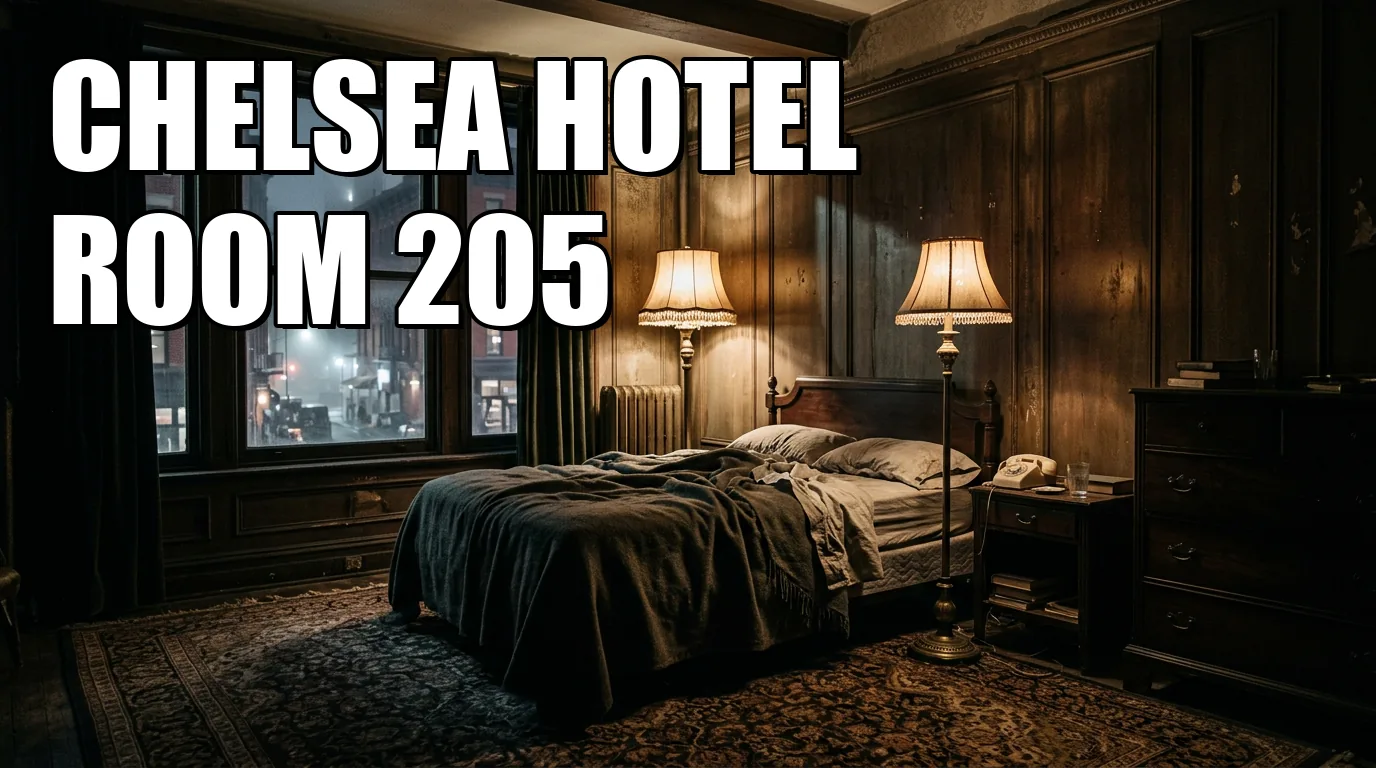
Could a poet’s spirit truly linger where his last, self-destructive words were uttered? In Room 205, legend insists that Welsh bard Dylan Thomas still holds court, an ethereal figure forever caught in the throes of his final, fateful binge. It was in this very room, on November 9, 1953, that Thomas famously collapsed after reportedly declaring, "I've had eighteen straight whiskies, I think that's the record!" He slipped into a coma, never to truly recover, dying shortly thereafter in St. Vincent’s Hospital. To dismiss this as just a grim historical footnote is to miss the tragic irony: a man who crafted such lyrical, life-affirming verse met his end with such brutal, self-inflicted finality.

What makes Thomas's haunting particularly poignant, and perhaps more plausible than some fleeting apparitions, is the deep impression his presence made on the hotel. He wasn't just a guest; he was a larger-than-life character whose boisterous, often self-destructive creativity defined an era. His spirit, many believe, remains tethered not by violence but by the sheer force of his personality and the unfinished melodies of his prose. Visitors, often those with a sensitive disposition, sometimes report a heavy, melancholic energy in the vicinity of the room, a palpable sense of lingering sadness or even a faint scent of stale whiskey, a detail that always sends a shiver down my spine.

A Punk Rock Requiem: The Anguished Echoes of Nancy Spungen

Then there's the brutal, unvarnished tragedy of Nancy Spungen in Room 100, an incident that remains one of the hotel’s most infamous and chilling chapters. On October 12, 1978, the girlfriend of Sex Pistols bassist Sid Vicious was found fatally stabbed in the bathroom of their room. The lurid details—the drugs, the tumultuous relationship, Sid Vicious's subsequent arrest and death before trial—cemented this room, and indeed the entire hotel, in the grim annals of punk rock mythology. This isn't a gentle, lingering presence; it’s a visceral, unsettling imprint of sudden, violent death.

What sets this haunting apart from Thomas's more poetic melancholy is its raw, unresolved nature. Reports from Room 100 often speak of a more aggressive, agitated energy: frantic knocks from within the bathroom, disembodied moans, or a pervasive sense of dread. It’s the kind of haunting that challenges the casual ghost hunter, pushing beyond mere whispers into something that feels deeply disturbed. While the hotel has undergone significant changes, some energies seem to defy renovation, stubbornly clinging to the very bricks and mortar where such intense human drama unfolded. Expectation vs. reality? You might not see a full-bodied apparition, but the sheer *weight* of this tragedy can be surprisingly palpable, especially on a quiet night.

Meeting Mary: The Titanic's Heartbreak on the Fifth Floor

Beyond the celebrity specters, there’s a more classical, deeply sorrowful haunting that has permeated the Chelsea for decades: the story of Mary, the Titanic ghost. This tale predates the other high-profile hauntings, rooted in the profound grief following the sinking of the RMS Titanic in April 1912. Mary, a distraught survivor, checked into a fifth-floor suite at the Chelsea, awaiting news of her husband. Upon learning of his confirmed death, she allegedly took her own life in the room. This particular story always grounds the hotel’s paranormal reputation in a universal human experience: inconsolable loss.

Her presence, often described as a hunched, weeping woman in 19th-century attire, has been encountered by numerous guests and residents across the 5th to 8th floors. Actor Michael Imperioli, for instance, recounted living on the 8th floor in 1996 and hearing inconsolable sobbing, later seeing a hunched figure he then associated with Mary’s tale, prompting his swift departure. Similarly, artist Jennifer Elise Schaperow felt an oppressive energy on the 10th floor around 1997, her roommate even reporting a ghostly man in their kitchen. These accounts, spanning decades and different floors, suggest a pervasive, rather than localized, spectral footprint, one born of deep emotional pain rather than sudden shock. It’s a classic example of a "residual haunting," where emotional imprints simply replay, rather than a conscious, interactive spirit.

Do These Ghost Stories Hold Water? Pondering the Authenticity

For the seasoned investigator or even the casually curious, the question inevitably arises: are these truly ghosts, or simply the powerful narratives we project onto a place brimming with history? The Chelsea Hotel certainly offers a compelling canvas for such projections. Its enduring mystique, its role as a sanctuary and a stage for counter-culture, creates an atmosphere ripe for the supernatural. While I've witnessed phenomena I can't rationally explain, I also appreciate how human imagination can elevate a mere creak in the night into a full-blown spectral encounter. The challenge for any visitor is to approach with an open mind, yet a critical eye, sifting through the layers of legend for genuine, unexplainable moments.

What’s crucial to understand is that the Chelsea's hauntings aren't tourist traps in the conventional sense. You won’t find designated "ghost tour" rooms or staged jump scares. The hotel’s recent grand reopening as a luxury property means it prioritizes comfort and curated experiences, not overt paranormal marketing. The spectral encounters, if they occur, are spontaneous, intimate, and often unsettling precisely because they aren't packaged. This is what makes the Chelsea truly unique among haunted destinations: its ghosts are simply part of its raw, unfiltered identity, not an attraction.

Navigating the Chelsea Today: Expectations and Practicalities for a Haunted Stay

Planning a visit to the Chelsea Hotel in 2025 means reconciling its storied past with its luxurious present. This isn't the bohemian crash pad it once was; it's now a sophisticated, high-end destination. Room rates reflect its prime Manhattan location and restored grandeur, often starting in the high hundreds, potentially reaching into the thousands for larger suites. You won't be paying a "ghost surcharge," but you'll be paying for an experience steeped in history. For those hoping to truly soak in the hotel’s atmosphere, consider an off-peak visit, perhaps a weekday in late autumn or early spring, when the city is vibrant but less suffocatingly crowded than summer or the holiday season. This allows for quieter hallways and a more contemplative experience, ideal for sensing subtle energies.

Parking in this part of Manhattan is, predictably, expensive, so factor in significant garage costs or rely on public transport, which is excellent. Don't expect a guided ghost hunt upon arrival; the hotel retains a certain dignified distance from its more sensational legends, letting the history speak for itself. Instead, for genuine encounters, cultivate patience and an observant nature. Spend time in the public areas, the grand staircase, and, if you're a guest, be attuned to your surroundings within your room. The Chelsea's current iteration offers an intriguing paradox: modern luxury overlaying a profound, ancient disquiet. It challenges the conventional wisdom that a haunted site must be decrepit; here, the ghosts coexist with polished brass and bespoke furnishings, making their lingering presence all the more startling.

What I find most fascinating is how this hotel, despite its transformations, continues to attract those drawn to its darker magnetism. The renovations have brightened the public spaces, but the deeper, structural memory of the place remains. The specific rooms tied to Thomas and Spungen—Room 205 and Room 100—are still very much part of the hotel’s fabric, though access for non-guests would be impossible without a booking. For a real chance at experiencing anything "haunted," a stay is truly the only option. However, simply wandering the exterior, taking in the iconic façade, and then settling into one of the nearby cafes with a book on the hotel's history can be a surprisingly fulfilling, and less expensive, way to engage with its spectral legacy.

Beyond the Apparitions: The Chelsea's Undying Cultural Resonance

Ultimately, the Chelsea Hotel transcends its ghost stories to embody a far grander narrative: that of America's artistic and counter-cultural pulse. It was a haven for literary giants like Arthur Miller and Jack Kerouac, musicians from Bob Dylan to Janis Joplin, and visual artists who shaped the very definition of modern art. This rich tapestry of human endeavor, passion, and often, profound struggle, is what truly makes the Chelsea an extraordinary place. The tragic deaths and chilling apparitions are just one facet of a diamond cut with countless facets of human experience. It's a place that insists on being remembered, not just for who died within its walls, but for who truly *lived* there, pushing boundaries and forging new artistic paths.

So, does the Chelsea Hotel truly harbor restless spirits? After years of chasing echoes in historic corridors, I can tell you this: the energy is undeniable. Whether you attribute it to residual human drama, collective belief, or genuine spectral phenomena, the Chelsea possesses a unique gravity. It’s a monument to the extraordinary, the unconventional, and the utterly unforgettable. And as you walk its hallowed halls, you can’t help but feel that you’re not just a guest, but a fleeting character in a story that began long ago, and, by all accounts, has yet to find its final chapter.

Shadows and Echoes: The Complete Guide to Chelsea Hotel's Haunted Legacy

What is the haunted story at the Chelsea Hotel?
The Chelsea Hotel, built in 1884 as a bohemian haven for artists and musicians, is haunted by the tragic spirits of its former residents, most notably punk rocker Sid Vicious and his girlfriend Nancy Spungen, whose death in 1978 became one of the most infamous events in rock history. Guests and staff report numerous paranormal activities including apparitions, unexplained noises, cold spots, and mysterious occurrences throughout the building's halls and rooms.
What is the #1 most haunted hotel in the world?
The Riccarton Racecourse Hotel in Christchurch, New Zealand, is frequently ranked as the world's most haunted hotel due to the unsolved 1933 murder of Donald Fraser, whose ghost is said to roam its hallways. However, the Chelsea Hotel remains one of the most famous and historically significant haunted hotels in America due to its rich cultural legacy and tragic events.
What happened in Room 100 at the Chelsea Hotel?
On October 12, 1978, Nancy Spungen, the 20-year-old girlfriend of Sex Pistols bassist Sid Vicious, was found dead on the bathroom floor of Room 100 with a single stab wound to her abdomen. Sid Vicious was arrested and charged with her murder, though he died of a heroin overdose in February 1979 before the case went to trial, leaving the incident shrouded in mystery. Room 100 was later destroyed and merged into an adjacent suite to prevent it from becoming a macabre tourist attraction.
What is the story behind the Chelsea Hotel?
Originally conceived in the 1880s by French architect Phillip Hubert as a utopian co-op community inspired by philosopher Charles Fourier's theories, the Chelsea Hotel was converted into a hotel in 1905 and became a legendary sanctuary for bohemian artists, writers, and musicians including Dylan Thomas, Janis Joplin, Bob Dylan, Andy Warhol, and Patti Smith. Over its history, the building has hosted groundbreaking artistic movements while simultaneously becoming a backdrop for tragedy, addiction, and loss.
What are dreaming walls inside the Chelsea Hotel about?
"Dreaming Walls: Inside the Chelsea Hotel" is a 2022 documentary film by Belgian filmmakers Maya Duverdier and Amélie van Elmbt that explores the hotel's utopian origins and its residents during an eight-year renovation period. The film uses archival footage, projections, and interviews to examine the building's role as a cultural landmark and questions how gentrification and luxury development are transforming this historic artistic sanctuary.
Where was Nancy Spungen found dead?
Nancy Spungen was found dead in the bathroom of Room 100 at the Chelsea Hotel on October 12, 1978, lying on the floor with a stab wound to her lower abdomen.
What famous person died at the Chelsea Hotel?
Poet Dylan Thomas died at St. Vincent's Hospital in 1953 after collapsing in a coma in Room 205 of the Chelsea Hotel, allegedly after consuming 18 straight whiskeys. Additionally, writer Charles Jackson died by suicide at the hotel, and Nancy Spungen was murdered there in 1978.
Is the Chelsea Hotel currently open for visitors?
Yes, the Chelsea Hotel reopened in 2022 as a luxury hotel after an extensive eight-year renovation that began in 2011, though it no longer accepts long-term residential tenants as it once did. Room rates start around $300 per night and can exceed $3,000 for premium accommodations.
Which ghosts are most commonly reported at the Chelsea Hotel?
The most frequently reported ghosts include Nancy Spungen, whose spirit is said to haunt Room 100 with sounds of crying and cold spots; Dylan Thomas, whose ghostly voice reciting poetry has been heard at night; Sid Vicious, spotted near the ground floor elevator and in the vicinity of Room 100; Mary, a Titanic survivor known as the "Vain Ghost" who appears at the west end hallway mirror; and Nadia, a former resident whose spirit remains outside the hotel after her tragic death.
Have there been documented paranormal investigations at the Chelsea Hotel?
Yes, various paranormal investigators and sensitives have visited the Chelsea Hotel over the years, and actor Michael Imperioli reported encountering a weeping woman in 19th-century clothing in the hallway during his 1996 stay. Multiple guests have documented experiences including hearing arguments, screaming, mysterious noises, unexplained cold drafts, and seeing full apparitions in various rooms throughout the building.
What specific paranormal activities do guests report in Room 100?
Guests staying in or visiting Room 100 (now part of a remodeled suite) report hearing a woman crying softly or anguished screams, unexplained cold drafts, doors slamming shut on their own, objects moving or being knocked over, and apparitions of a blonde woman. Some visitors also report hearing loud music or the sounds of a couple arguing when the room appears empty.
Are there other haunted rooms at the Chelsea Hotel besides Room 100?
Yes, multiple rooms at the Chelsea Hotel are reported to be haunted, including Room 114 where a guest reported seeing Dylan Thomas's face in a mirror, Room 120 where guests have felt oppressive energy, Room 124 where screams and ghostly apparitions have been witnessed, and Room 205 where Dylan Thomas stayed before his death. The 10th floor has also been noted as having particularly strong paranormal energy.
What is Mary the Titanic ghost's story at the Chelsea Hotel?
Mary was a Titanic survivor who stayed at the Chelsea Hotel after the 1912 disaster, but after learning her husband perished in the wreck, she hanged herself in a fifth-floor room. Her ghost, nicknamed the "Vain Ghost," is frequently seen standing beneath an archway at the western end of the hotel, staring at herself in a hallway mirror, as if eternally searching for her lost husband among the guests.
Can visitors request a haunted room at the Chelsea Hotel?
While the Chelsea Hotel no longer accepts long-term residents and has undergone significant renovations, visitors can book accommodations throughout the hotel. However, Room 100 was destroyed and merged into an adjacent suite after Nancy Spungen's death to prevent it from becoming a morbid curiosity, so that specific room is no longer available as a separate booking.
What precautions should visitors take when staying at the Chelsea Hotel?
While the Chelsea Hotel is generally safe for tourists, visitors interested in paranormal experiences should be aware that many reported hauntings occur at night, particularly in older sections and upper floors. It is recommended to be respectful of the hotel's tragic history, avoid disturbing other guests, and be prepared for the possibility of unexplained phenomena if you're seeking paranormal encounters.