Stepping onto the cobblestones of Boston or under the sprawling oaks of a South Carolina plantation, one can almost hear the echoes of a bygone era. For years, I’ve found myself drawn to these structures, not just for their aesthetic appeal, but for the stories they whisper – tales of aspiration, ingenuity, and the stark realities of life in early America. While most guides offer a superficial glance, I aim to arm you with a deeper understanding, distinguishing between the often-romanticized images and the actual stones and timbers that shaped our nation's first architectural identity. Forget the glossy brochures; we're going to talk about what truly sets these buildings apart, the challenges they faced, and what makes some worth seeking out, while others might just leave you wondering what the fuss was about.
The Great Divide: Climate, Culture, and the Architectural Soul of a Nation
How did two regions, both under British rule and ostensibly drawing from the same Georgian design playbook, end up with such distinct architectural expressions? It’s a question that has fascinated me for decades, and the answer, predictably, isn't simple. You see, the primary stylistic differences between early New England Georgian and Southern plantation homes aren't merely decorative whims; they’re deeply rooted in the practicalities of survival and the prevailing cultural currents of each region. Forget the notion that architecture is just about aesthetics; here, it’s about responding to brutal winters versus stifling humidity, about community versus isolated grandeur, and ultimately, about two divergent visions for the nascent American experience.
Consider the brutal New England winters, demanding structures that conserved heat above all else. This imperative shaped the very bones of their buildings. You'll find New England Georgian structures typically embracing hip roofs – those elegant, four-sided sloping roofs often punctuated by dormers – designed to shed snow efficiently and minimize exposed wall space. Chimneys, often paired and massive, were almost always centered or placed at either end, drawing heat up from a central hearth, reflecting a practical, inward-looking design. Most often, the cladding was simple, locally abundant wood: clapboard or shingle, a testament to Yankee pragmatism. Their floor plans often revolved around a central hall, a compact and efficient layout. Windows, arranged in strict symmetrical patterns—think “five over four” (five on the first floor, four on the second)—were often smaller, not just for symmetry but also to prevent heat loss. These were homes built for endurance, reflecting the stoic, community-oriented spirit of the northern colonists. You won't find excessive ornamentation here; utility and understated elegance were the order of the day.
Now, shift your gaze south, where the climate dictates an entirely different approach. Here, the enemy wasn't snow, but heat and humidity. Southern plantation homes, in response, developed unique strategies. They often sit on raised foundations, sometimes even brick piers, a critical adaptation to protect against ubiquitous flooding and to allow cooling air to circulate beneath the main living spaces. This elevation provided a literal and figurative lift. The most striking difference, to my eye, is the expansive front porch or veranda, often supported by substantial columns, creating shaded outdoor living areas that were essential for comfort. Chimneys, unlike their northern counterparts, are typically positioned on the sides, allowing for better air circulation and less internal heat retention. You'll notice wider overhanging eaves, specifically designed to cast deep shadows and shield windows from the relentless sun. The windows themselves tend to be taller and narrower, specifically designed to capture even the slightest cooling breeze. And yes, there’s often more ornamentation, a reflection of both French Colonial influences along the Gulf Coast and the planter elite's desire to display wealth and status. These were homes built for a different kind of life, one that celebrated outdoor living and grand entertaining, deeply intertwined with the landscape and the agricultural economy it served.
New England's Stark Beauty: Where Practicality Met Proper Proportions
When you walk through New England's historic towns, the Georgian influence is undeniable, yet it’s filtered through a distinctly American, and specifically northern, lens. It's often less about ostentatious display and more about sturdy craftsmanship and a quiet dignity. I’ve often found a certain charm in this understated elegance, though some visitors, expecting grand European flourishes, might initially be underwhelmed. But look closer, and the sophistication emerges.
Consider the Wentworth-Gardner House (1760) in Portsmouth, New Hampshire. Many guides will simply tell you it's a prime example of Georgian architecture, and they're not wrong, but that's like saying a fine wine is just "grape juice." This isn't just a house; it’s a masterclass in mid-Georgian design, built as a grand wedding gift, no less. You'll immediately notice the characteristic hip roof and the perfectly balanced proportions of its symmetrical facade. What often goes unmentioned is the sheer quality of the local craftsmanship evident in its wood clapboard siding, the precisely cut wooden quoins at the corners (those decorative blocks that mimic stone), and the sophisticated detailing inside. When you step into its formal rooms, pay attention to the carving – it’s exquisite, a testament to the skill available even in what was then a provincial outpost. The Metropolitan Museum of Art recognized its "nearly perfect Georgian architecture," which is high praise indeed. Visiting in the shoulder seasons (late spring or early fall) usually means fewer crowds, allowing you to truly appreciate its quiet grandeur without feeling rushed. Admission is typically around $10-15, and parking is often on-street or in nearby public lots, which can be tricky on a busy summer weekend.
Not far from there, also overlooking Portsmouth Harbor, stands the Moffatt-Ladd House (1763). This stately three-story wood-frame structure, another merchant's wedding gift, feels a bit grander, perhaps reflecting the later Georgian period's subtle shift towards more refined details. Its hip roof is topped by a widow’s walk – a flat platform surrounded by a low balustrade with urn finials. While it served no practical purpose for gazing at returning ships for most, it became a symbol of status. The exterior features those classic wood clapboards and corner quoins, but look at the windows: the first and second floors boast segmented arch pediments, while the smaller third-level windows butt directly against the roof cornice, hinting at the emerging Federal style's influence even then. Inside, the entrance hall is exceptionally spacious, renowned as one of the finest in New England, with its carved cornice and an impressive flight of stairs illuminated by a skylight. The house's connection to General William Whipple, a signer of the Declaration of Independence, adds another layer of historical resonance; he even planted a horse chestnut tree on the property in 1776, a living monument. Expect to spend $10-12 for admission, and try to visit on a weekday morning to fully appreciate the interior details without the jostle of tour groups.
Southern Grandeur: Adapting European Ideals to a Humid Reality
Journeying south, the architectural narrative shifts dramatically. Here, the aspirations were often grander, the scale larger, and the adaptations to climate more pronounced. While the foundational principles of Georgian design remained, they were reinterpreted through the lens of a burgeoning agrarian economy and a distinct social hierarchy. It’s easy to get lost in the romanticized image of these estates, but understanding their practical design choices reveals a lot about life in the antebellum South.
Take Stratford Hall (c. 1738) in Westmoreland County, Virginia, for instance. This isn't your typical Georgian manor; it's an architectural outlier, reflecting the ambitions of Thomas Lee, its builder. The mansion boasts a distinctive H-shaped plan, a feature quite unusual in Virginia, with two three-bay hip-roofed end blocks joined by decorative arches and massive clusters of chimney stacks. What immediately catches the eye is its elevation: sitting on a high basement with a piano nobile – the principal story raised above ground level. This wasn't just for show; it was a crucial defense against dampness and vermin, common issues in the low-lying Tidewater region. The Great Hall inside, with its elaborate bolection paneling and Corinthian pilasters, speaks volumes about the sophisticated tastes – and the wealth – of the planter class. Don't forget the four dependencies, positioned at each corner, housing everything from offices to kitchens, demonstrating a self-sufficient complex designed for a large, often isolated, household. This was the birthplace of two Declaration signers and, later, Robert E. Lee. Admission typically runs $15-20, and the grounds are extensive enough to warrant a half-day visit. Arriving early is always wise, especially if you want to photograph the exterior without crowds.
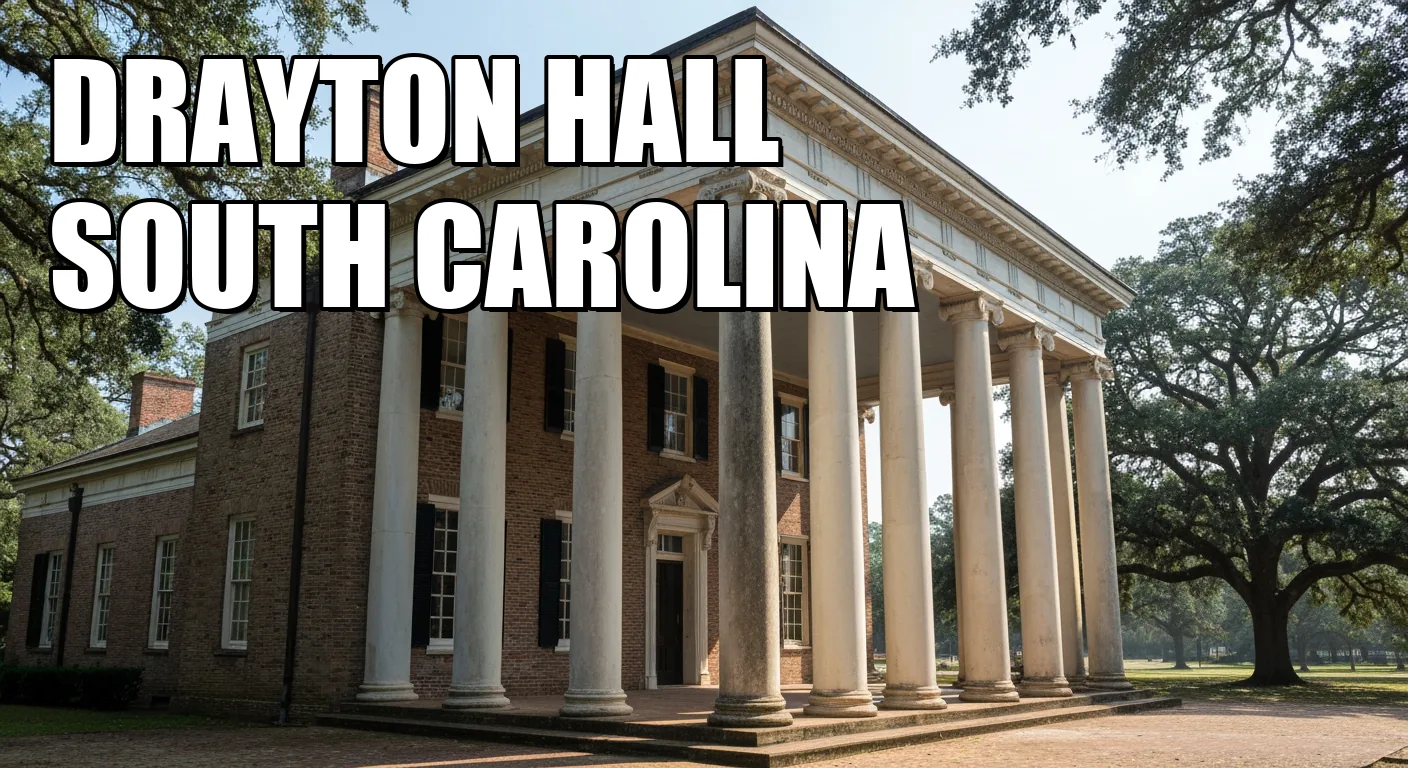
My personal favorite, and a true architectural marvel, is Drayton Hall (c. 1738-1752) near Charleston, South Carolina. This house truly stands apart, even amongst its peers. Begun by a young John Drayton, it’s not just old; it's the oldest surviving example of Georgian-Palladian architecture in the United States. Most guides will tell you about its age, but few delve into *why* that's so significant. Its double projecting portico on the west facade, resembling features from Andrea Palladio’s Villa Cornaro in Italy, signals a sophisticated understanding of classical design. The seven-bay, double-pile plan and its symmetrical divided staircase backed by a grand salon speak to a level of architectural literacy often attributed only to European elites. Crucially, Drayton Hall has survived intact through the Revolutionary War, the Civil War, and even the devastating Great Earthquake of 1886. Why? Partly due to luck, but also due to robust construction. Unlike many other plantations that underwent Victorian "improvements," Drayton Hall remains remarkably untouched, offering an authentic glimpse into the 18th century. It’s a powerful experience, stripping away the layers of interpretation you find at other sites. Entrance fees are usually around $20-25. It’s about a 30-minute drive from downtown Charleston, and I strongly recommend going during the cooler months (November-March) to avoid the oppressive humidity and mosquito population, which can be quite fierce in summer.
While technically constructed just after the colonial period in 1823, the Rosalie Mansion in Natchez, Mississippi, serves as a magnificent capstone, a culmination of Southern colonial architectural traditions. Built by cotton planter Peter Little, this cubical three-story brick mansion exemplifies the transition into the Federal style while holding onto Georgian grandeur. Its monumental four-column Tuscan portico with a gabled pediment is iconic, but notice the practical adaptations: broad entrances with double-leaf doors, sidelight windows, and semi-oval transom windows – all designed to maximize airflow in that sweltering climate. The wide hallways and high ceilings weren't just for show; they were essential for comfort. Its design was so influential that it became a prototype for numerous antebellum mansions in Natchez and throughout the broader South. What many visitors don't realize is its role during the Civil War, serving as a Union Army headquarters. General Walter Gresham ensured its preservation, a rare feat amidst the devastation. Rosalie offers a layered history, combining architectural beauty with a compelling wartime narrative. Expect admission around $15-20, and tours are generally frequent. Natchez is best explored in early spring or late fall to enjoy comfortable weather for walking and touring.
Beyond the Facade: What These Walls Truly Whisper
So, what do these magnificent structures, standing centuries after their creation, really tell us? More than just architectural styles, they reveal the pragmatic responses to environmental challenges, the social aspirations of their owners, and the evolving identity of a young nation. The robust, inwardly focused New England homes speak to a community where practicality and shared purpose were paramount. The sprawling, outwardly grand Southern plantations, with their cooling porches and elevated foundations, reflect a world deeply connected to the land and a hierarchical society built on agricultural wealth and, tragically, enslaved labor. It's a stark contrast that's often overlooked when we simply admire a pretty facade.
Don't fall into the trap of viewing these sites solely through a romanticized lens. Many plantation homes, while beautiful, are also somber reminders of the institution of slavery. Responsible historical sites like Drayton Hall are making concerted efforts to tell the complete, often uncomfortable, story. When you visit, actively seek out the narratives of all who lived and worked there, not just the wealthy owners. It’s easy to be charmed by the architecture, but the true insight comes from understanding the *entire* human story encapsulated within those walls. This critical perspective, I believe, is what transforms a simple tourist visit into a genuinely profound historical experience.
Planning Your Architectural Pilgrimage: Practicalities and Pitfalls to Avoid
Ready to embark on your own journey through America's colonial past? Excellent. But approach it with a seasoned traveler's mind. First, timing is everything. For New England, aim for the shoulder seasons – late April through May, or mid-September through October. The foliage is stunning, the weather is pleasant, and the notorious summer crowds are manageable. For the South, absolutely avoid July and August unless you thrive in sauna-like conditions; March-April or October-November offer far more comfortable temperatures and lower humidity. Trust me, trying to appreciate period architecture while sweating through your clothes is a quick way to sour the experience.
Regarding costs, most major historic homes charge an admission fee, typically ranging from $10 to $25 per adult. Some offer discounts for seniors, students, or AAA members, so always inquire. Parking, especially in dense city centers like Boston, can be a headache and an added expense, sometimes $20-30 for a few hours. Whenever possible, utilize public transport or park slightly further out and enjoy a walk. At more isolated plantation sites, parking is usually ample and included. Guided tours are often mandatory for house interiors; embrace them, but don't be afraid to ask probing questions beyond what's in the script. Remember, the goal isn't just to see these buildings, but to *understand* them, to connect with the lives lived within their walls. Look for the wear on the stair treads, the subtle imperfections in the glass, the way the light falls through a particular window—these are the details that truly bring history to life.