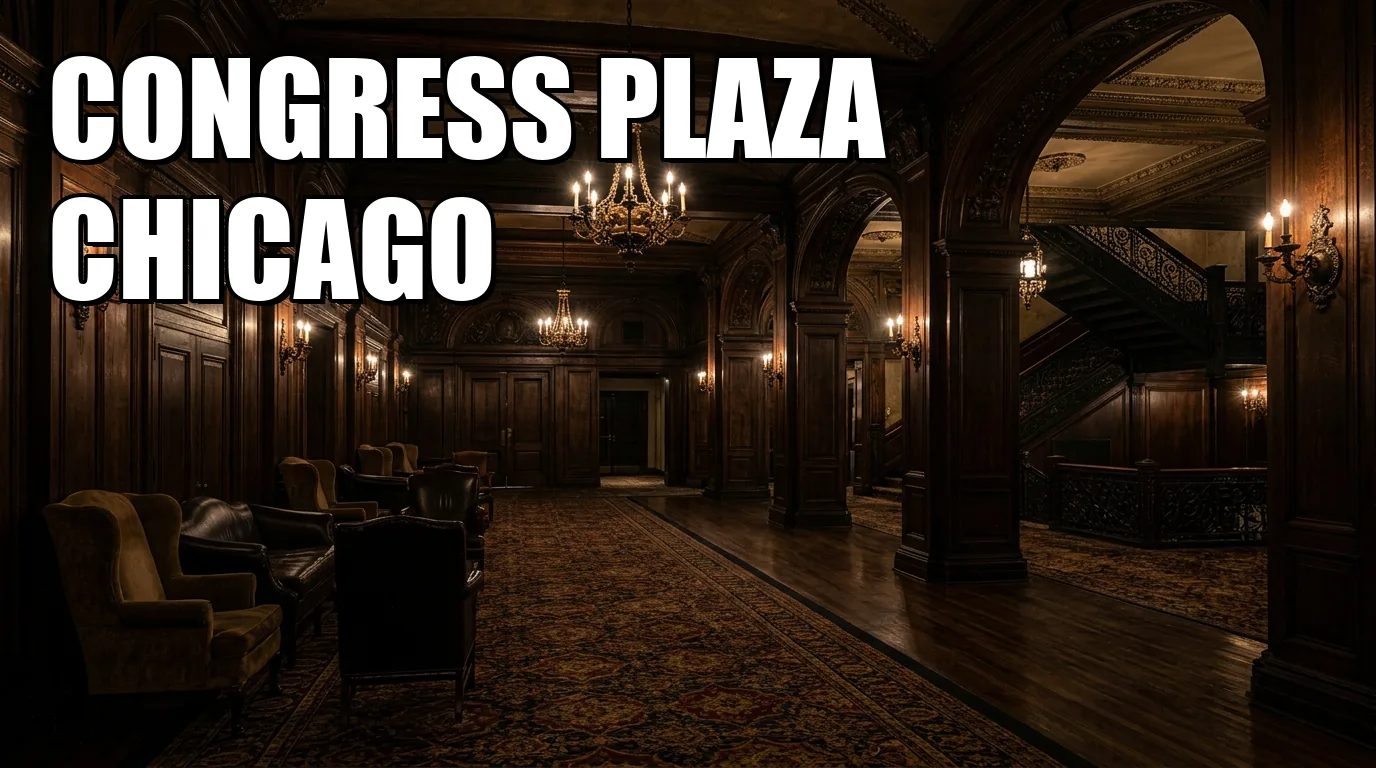
At a Glance 1893 Original hotel opening
Grant Park Front-door Chicago anchor
$62 Official nightly self-parking fee
- Congress Plaza makes sense when Grant Park, the Art Institute side of downtown, and a big old Michigan Avenue address are the point.
- The useful tradeoff is location and hotel scale versus parking friction and legacy-building quirks, not whether every ghost story online feels dramatic enough.
- Read it alongside the Chicago planner and the Room 441 page so the booking logic stays bigger than one legend.
Room 441 sounds like a precise historical coordinate. Congress Plaza Hotel is not a single, unchanged grid. It began as an 1893 annex, gained a second major tower between 1902 and 1907, severed its original underground connection to the Auditorium Hotel, and later received new corridors, suites and public rooms. None of the selected sources provides a historic-to-current room-number crosswalk.
That does not make the Room 441 reports meaningless. It changes what they can prove. “Room 441 in the South Tower” is a present folklore location; without plans or directories linking numbering campaigns, it is not automatically the site of an older event.
The hotel began as an annex to another building
The first section opened in 1893 as the Auditorium Annex for World’s Columbian Exposition traffic. The city’s landmark record credits developer Ferdinand Peck with opening the Congress Hotel as an annex and says Clinton J. Warren designed the facade to harmonize with the Auditorium Building across the street. The hotel’s own history gives a different attribution—R. H. Southgate as developer, with Adler & Sullivan as consultants. Those are competing source traditions, not one settled sentence, so the provenance should keep them distinct.
The most revealing connection was “Peacock Alley,” an underground marble passage between the annex and the Auditorium Hotel. The hotel’s own history says that passage closed in 1911 and was succeeded by a promenade of the same name running through the Congress lobby toward Harrison Street. The current name preserves memory; it does not mean the visitor is walking through the original underground fabric.
The South Tower made one hotel from two campaigns
Holabird & Roche designed the South Tower, constructed across 1902–07. That campaign added a major second room block and the Gold Room; the Florentine Room followed in the north tower in 1909. The hotel history says that by 1908 the property had more than 1,000 guestrooms and “an identity of its own.” That is a scale milestone, not a safe date for the formal name: CBS reports that the hotel was renamed the Congress Hotel in 1911.
“Three hotels stitched together” is a tempting corridor metaphor, but it is not the documented construction history. The stronger description is two principal tower campaigns, an earlier physical relationship to the Auditorium Hotel, and repeated interior modernization. Those are enough to explain why one hallway can feel unlike another without inventing a third original hotel.
Renovation history breaks easy room-number assumptions
The hotel’s chronology records electrical work in 1916–17, replacement bathroom fixtures in 1923–24, and a much larger 1950–52 program that created a new front desk, new corridors, new third-floor public rooms and new Congressional and Presidential suites. A further 1960s campaign added a ballroom and escalators.
None of those projects, by itself, proves that today’s Room 441 was renumbered. Together they establish why continuity has to be demonstrated rather than assumed. A usable provenance chain would need at least one dated historic floor plan, one current plan and a record showing how room numbers survived or changed between them. The selected archive has none of the three.
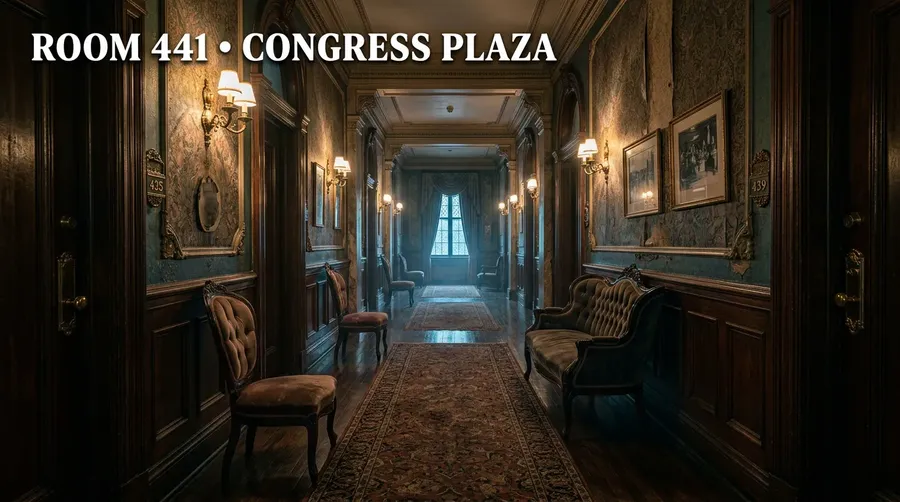
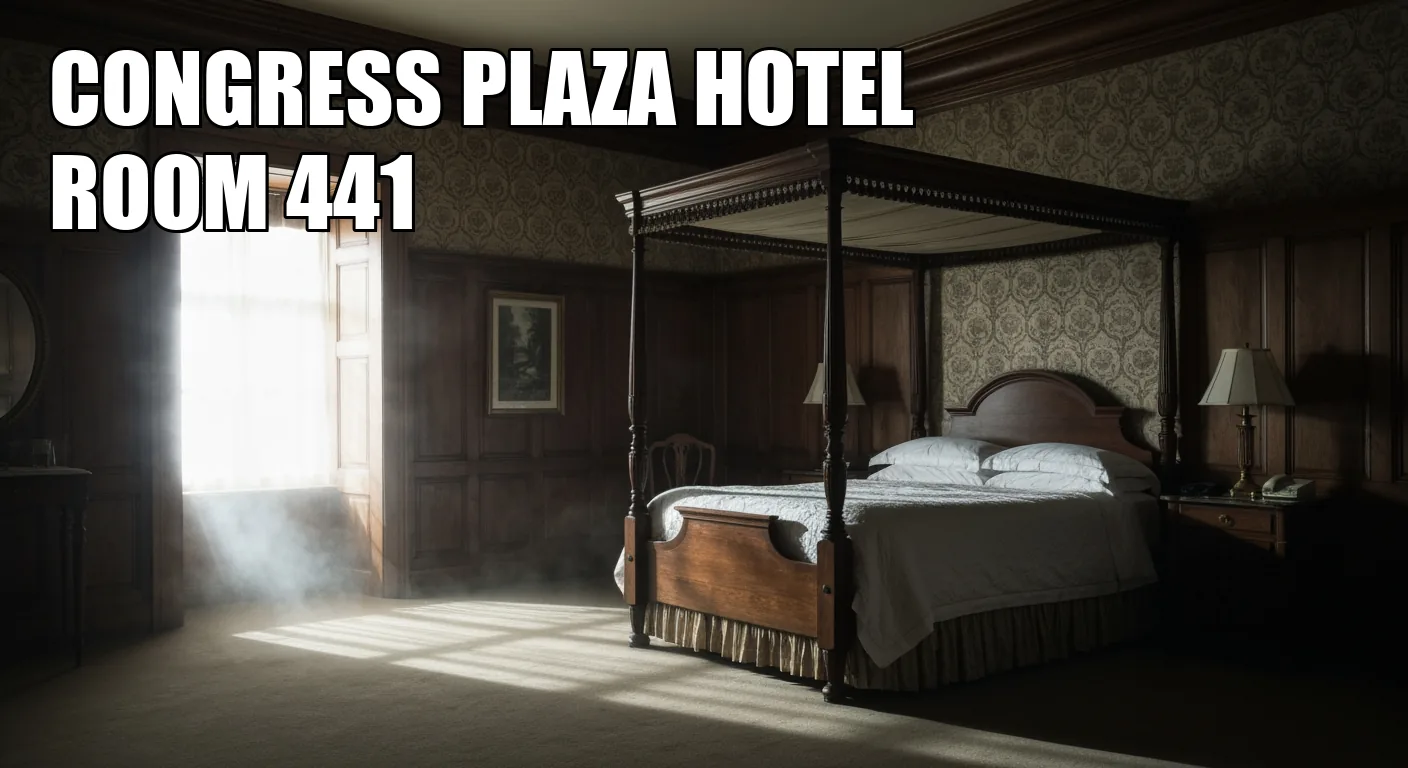
CBS’s 2021 report places the modern Room 441 legend on the fourth floor of the South Tower and attributes its shadow-woman and disturbed-bed stories to a Chicago ghost-tour operator. The same report says nobody knows who the woman is. No named death, dated incident or historical room record connects a person to 441 in the selected evidence.
The Langer tragedy shows how a story moves floors
A real 1939 tragedy involving Adele Langer and her two young sons later became attached to child-ghost stories in the hotel. The value of the case here is not paranormal. It is documentary: CBS cites a contemporary Chicago Tribune account that placed the family’s room on the thirteenth floor, while the modern tour account in the same CBS report locates the haunting on the twelfth.
That one-floor migration is exactly the problem a provenance test is meant to catch. The historical event is not strengthened by moving it to match a present hallway story, and the hallway story is not authenticated by borrowing a documented tragedy from a different reported floor. Event history and ghost geography must remain separate unless a source connects them.
Four coordinate tests for Congress lore
| Claim or feature | What is documented | What remains unproved |
|---|
| Room 441 | CBS reports a current South Tower room legend and repeated guest/security stories through a tour operator. | The woman’s identity, a historical event in that room, and numbering continuity. |
| Langer child-ghost story | A contemporary account cited by CBS places the 1939 deaths on the thirteenth floor. | The later twelfth-floor assignment and any specific current room. |
| Peacock Alley | An underground marble link to the Auditorium Hotel existed; it closed in 1911. | Physical continuity between that tunnel and the present same-named lobby promenade. |
| 1893 hotel identity | The north tower began as the Auditorium Annex; the South Tower followed in 1902–07. | The shortcut that today’s building was one unchanged 1893 hotel plan. |
Read the tower before the room number
- Identify the campaign. Ask whether the space belongs to the 1893 north tower, the 1902–07 south addition or a later remodel.
- Date the name. “Peacock Alley” can name both a lost underground passage and its lobby successor. Shared wording is not shared fabric.
- Demand a crosswalk. Before linking a modern room number to an old event, look for plans or directories on both sides of the claimed date. If one side is missing, stop at “current lore location.”
Congress Plaza does not need a debunked atmosphere. Its documented history already contains an exposition-era annex, a major tower expansion, a vanished inter-hotel passage and decades of remaking. The honest way to handle Room 441 is to let it remain a modern legend in a real South Tower room—without using its precise number to manufacture a precision the historical record does not supply.
The Cornerstone Brief
One historic place, once a week — what it is, why it matters, whether it's worth going. No filler, no paid placements.
Coming soon. Unsubscribe any time.