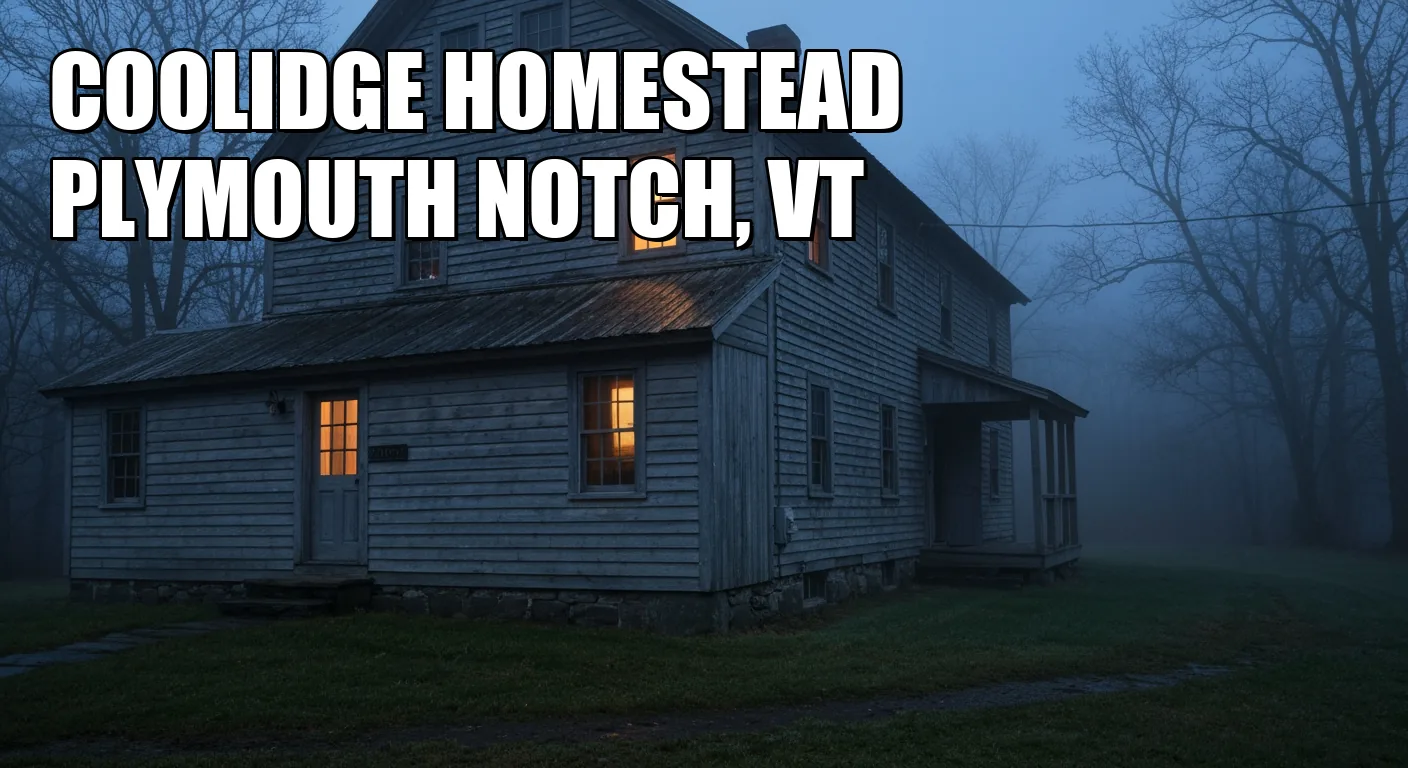
There are historic sites that roar with grandeur, boasting gilded age opulence or monumental declarations carved in stone. Then there's the Calvin Coolidge Homestead in Plymouth Notch, Vermont, a place that whispers. It’s not about palatial rooms or lavish furnishings; rather, it’s a humble, unassuming farmhouse where the very fabric of American leadership was dramatically, yet quietly, rewoven in the pre-dawn hours of an August morning. I've traversed battlefields and stately homes from Gettysburg to Monticello, but few places have offered such an intimate, almost voyeuristic, glimpse into a pivotal national moment as this unpretentious New England village.
Most people who bother to visit already know *something* about the midnight oath—the most famous detail surrounding the 30th president's ascent. Yet, knowing the bare facts doesn't prepare you for the raw, palpable sense of history that lingers in that specific sitting room, a history so distinct it makes you question how we typically frame presidential narratives. This isn't a site designed for mass tourism, nor does it strive for the polished perfection of a Colonial Williamsburg. What you find here is an authenticity so profound it demands a different kind of engagement, offering insights into character and circumstance that most textbook accounts simply can't convey.
The Unscripted Dawn: A President's Oath in Lamplight
Imagine, if you will, the deepest hour before morning light, the kind of stillness only rural Vermont can offer. That's precisely when history called upon Calvin Coolidge. On August 3, 1923, at 2:47 a.m., a telegram arrived in Plymouth Notch, bearing the shocking news: President Warren G. Harding had died unexpectedly in San Francisco. Coolidge, vacationing at his childhood home, was awakened by his father with the grim tidings. No grand ceremony, no televised address, just a simple request from a grieving nation’s Attorney General for the Vice President to take the oath of office immediately.
The oath wasn't administered in a grand hall, nor even a well-lit study, but in the family’s modest sitting room, now famously known as the "Oath of Office Room." The details are almost cinematic in their spareness: a kerosene lamp—electric lighting had been installed in the house but Coolidge’s staunchly traditional father, John Coolidge, still preferred the old ways and refused to switch it on—provided the flickering illumination. Young Calvin raised his hand, placed on his late mother's family Bible, and repeated the oath, administered by his own father, a notary public. It’s an almost impossibly quaint, yet deeply profound, scene that captures the essence of a different America. This wasn't just a legal formality; it was a deeply personal, almost familial, transfer of immense power.
What Remains in the "Oath of Office Room"?
Stepping into the alcove where the "Oath of Office Room" is preserved feels like peering into a sacred, undisturbed tableau. The room itself is small, almost humble, and yes, it’s now behind glass. Some might find this frustrating, wanting to touch the very table where that pivotal moment unfolded, to truly immerse themselves. But I'd argue the glass serves a critical purpose: it emphasizes the fragility and preciousness of the event, forcing a respectful distance that enhances its mystique. You're not just looking at furniture; you're witnessing a moment frozen in time, safeguarded against the inevitable wear of eager hands.
The artifacts remain exactly as they were that night, carefully positioned: the kerosene lamp, the family Bible, and the small wooden table. This isn't a museum recreation; these are the actual, original items. The simplicity of these objects speaks volumes about Coolidge himself—"Silent Cal," a man known for his reticence and plainspoken integrity. No elaborate trappings of power, just the essentials. It’s a powerful counterpoint to the pomp and circumstance often associated with presidential transitions, underscoring the deep roots of American leadership in ordinary lives, far removed from Washington D.C.’s corridors of power. What other presidential home allows you to witness such an intimate, utterly unadorned moment of national leadership?
Beyond the Solemn Oath: A Living Historic Village
To view the Coolidge Homestead as *just* the "Oath of Office Room" is to miss the broader, equally compelling picture. Plymouth Notch isn't merely a house; it's a remarkably preserved 19th-century village that has been meticulously maintained as the Calvin Coolidge State Historic Site. Most guides will focus intensely on the oath, and rightly so, but they often neglect the immersive experience of the surrounding village. This isn't some reconstructed theme park; many of the buildings are original, providing a genuine sense of the isolated, self-sufficient life that shaped Coolidge’s formative years.
Visitors can wander through the village's general store, which still operates, offering old-fashioned candy and souvenirs, and the church where the Coolidge family worshipped. There's also the cheese factory, a blacksmith shop, and even the small schoolhouse Coolidge attended. This holistic approach is what truly makes the site unique. It illustrates not just *where* a president was born, but *how* a president was forged by his environment. You begin to understand why a man from such a quiet, industrious place would later be known for his frugality and aversion to excessive talk. It’s a genuine step back into a simpler, yet profoundly hardworking, era of rural New England life, challenging the notion that presidential origins must always be grand or urban.
Planning Your Journey to Plymouth Notch: Practicalities and Perspective
Making the pilgrimage to Plymouth Notch requires a bit of planning, primarily due to its location. This isn't Boston or New York; it's deep in rural Vermont, meaning cell service can be spotty and the pace of life significantly slower. The best time to visit, in my experience, is from late spring through early fall (May to October), when the weather is pleasant and all village buildings are open. While Vermont's fall foliage is undeniably stunning, expect larger crowds and higher accommodation prices during September and October. If you truly seek the quiet solitude that defines the site, aim for a weekday visit in June or early September, just after the summer rush.
Admission is straightforward: a $12.00 fee for adults (ages 15 and older) covers access to the entire Calvin Coolidge State Historic Site, including both self-guided exploration and any available guided tours. Families can opt for a Family Pass at $30.00, which accommodates up to six people with a maximum of four adults, a sensible option for larger groups. Parking is readily available and typically free. Don't expect a plethora of dining options right on site; pack a picnic or plan to drive to nearby towns like Woodstock or Ludlow for a meal. This remote setting, however, is part of its charm, forcing you to slow down and truly absorb the atmosphere, rather than rushing between attractions. It’s a place that rewards patience and a willingness to simply *be* in history.
Coolidge's Enduring Echo: Why This Humble Homestead Still Matters
In an age of constant noise and performative politics, the Calvin Coolidge Homestead stands as a powerful, almost subversive, reminder of a different kind of leadership. It’s not a place that screams for attention; it simply exists, holding a profound narrative within its unassuming walls. What surprised me most wasn’t the drama of the oath itself, which I already knew, but the way the *entire village* coalesces to explain the man behind "Silent Cal." You don't just learn about the oath; you understand the quiet, industrious, unpretentious environment that shaped a president.
This site challenges the conventional wisdom that presidential homes must be grand or that history only happens in bustling metropolises. It underscores that profound moments, and indeed profound leaders, can emerge from the most unexpected, humble corners of the country. A visit here isn't merely a historical tick-box; it's an opportunity for reflection on the values of perseverance, simplicity, and quiet duty that, for a brief moment in the 1920s, guided the highest office in the land. The lasting impression is one of respect—not just for Coolidge, but for the resilience and integrity embodied by an entire way of life that now seems increasingly distant, yet remains vividly preserved in this Vermont hamlet.