Historic Mansions

Delaware's Sussex: Unearthing America's Quiet Corners

For years, I’ve trekked across battlefields where the very soil seems to hum with past struggles and wandered through grand European estates that redefine human ambition. Yet, some of the most profound historical insights often emerge from places that don’t scream for attention. Consider Sussex County, Delaware—a region many only associate with Rehoboth’s boardwalks and Bethany’s sand dunes. But dig just a little deeper, peel back the layers of vacation rentals and coastal chic, and you’ll discover a quiet, stubborn thread of history, stubbornly clinging to a landscape that time, and tourism, often overlook. Is it fair to compare the modest, often underfunded, historic sites of rural Delaware with the behemoths of British heritage like Battle Abbey or Bignor Roman Villa? Absolutely. Not to diminish one, but to illuminate the other. The contrast, in fact, reveals something crucial about America’s own relationship with its past: how we choose to preserve it, present it, and whether we truly understand its value beyond the obvious tourist draw. This isn't about grand narratives; it’s about the subtle, often overlooked stories that truly define our heritage.

The Parson Thorne Mansion: A Glimpse into Delaware's Gentry

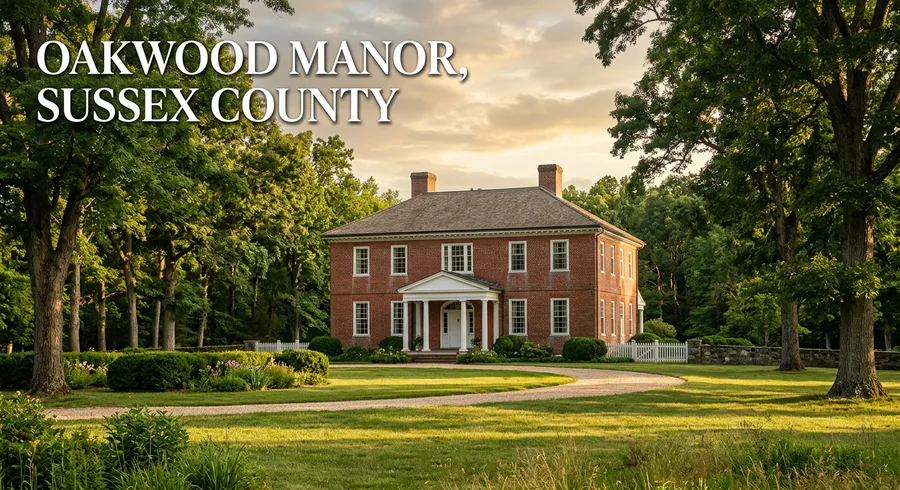
What often strikes visitors first about Milford’s Parson Thorne Mansion isn’t its imposing size—it’s actually rather stately but not overwhelming—but its quiet dignity. Standing as one of Delaware's oldest brick structures, this elegant Georgian mansion, built in the mid-18th century, offers a direct portal into the lives of the prominent families who shaped early Delaware. Think governors, senators, and powerful landowners whose decisions rippled through the burgeoning colony. Unlike a sprawling English estate managed by a national trust, this mansion’s survival is largely due to the Milford Historical Society, a dedicated local group whose efforts, often incremental and grant-dependent, keep its doors open. Walking through its rooms, painstakingly recreated to reflect 18th-century interiors through meticulous historical paint analysis, you can almost hear the rustle of period silks or the clink of teacups. Here, the preservation isn’t about generating massive revenue from international tourism; it’s a labor of love, a community’s commitment to its own story. While a place like England's Bignor Roman Villa, with its well-funded charitable trust, can dedicate resources to advanced mosaic conservation and year-round educational programs, Parson Thorne’s stewards face a different reality. Their challenge is maintaining structural stability and ensuring the authentic recreation of spaces with more limited resources, which often translates into preservation projects spanning years rather than months. You won't find flashy multimedia exhibits or interactive timelines here. Instead, interpretation relies on the passion of volunteer guides during infrequent open-house tours, typically on designated Sundays. This means planning your visit requires a bit of foresight—check the Milford Historical Society's website well in advance for specific dates, as they aren't weekly occurrences. What you *will* gain, however, is an intimate, unhurried experience, often led by someone who lives and breathes local history, ready to share anecdotes that no pre-recorded audio guide could ever deliver. Expect a deeply personal dive into prominent figures like Governor Richard Bassett and the architectural nuances that define Georgian design in the colonies.

Prince George’s Chapel: A Sacred Legacy in Dagsboro

Drive further south into the gently rolling farmlands of Dagsboro, and you'll encounter Prince George’s Chapel, a simple, yet profoundly evocative Anglican church dating back to 1757. This isn’t a grand cathedral, nor a crumbling abbey, but a testament to colonial religious life—a beautifully preserved edifice whose original 18th-century fabric remains largely intact. The "Friends of Prince George's Chapel" manage the site under a state lease, a model that differs significantly from English Heritage, which operates with comprehensive, long-term conservation management plans for sites like Battle Abbey. Here, restoration is a periodic, often grant-dependent endeavor, focusing keenly on maintaining the original structure rather than large-scale enhancements. What truly sets this chapel apart is the atmosphere. Step inside, and the quiet reverence is palpable. Light filters through the clear glass windows, illuminating the simple wooden pews and the altar, where sermons would have echoed nearly three centuries ago. The surrounding graveyard, too, is a powerful historical document, bearing the names of early settlers, Revolutionary War veterans, and notable figures whose lives were interwoven with the land. It’s a place of quiet contemplation, a stark contrast to the often bustling, multi-faceted visitor experiences at major European heritage sites. Similar to Parson Thorne, visiting Prince George's Chapel requires diligence. It's typically open during special events or on specific open-house Sundays, with docent-led talks providing context on colonial religious practices and the lives of those interred in its hallowed grounds. Digital content is minimal, confined mostly to a Facebook page and some printed brochures, meaning you need to seek out information actively. Don't expect elaborate digital reconstructions or an app telling you who's buried where; instead, prepare for a focused, deeply traditional interpretive experience that emphasizes direct interaction with the site and its history through informed human guides. Parking is usually ample on site, and there's no admission fee, but a donation to the Friends group is always appreciated.

Marketing American History: A Tale of Two Sussexes

It’s impossible to discuss these sites without touching on the stark differences in how history is marketed, especially to an American audience. In England, the allure of "Roman Britain" or the "Norman Conquest" is leveraged by powerful tourism networks. Bignor Roman Villa, for instance, appears in South Downs campaigns, using targeted social media ads in North America to draw visitors. Battle Abbey, with its dramatic narrative of the 1066 Battle of Hastings, is a staple for heritage-travel operators, offering themed battlefield tours that resonate deeply with history buffs worldwide. These sites benefit from decades, if not centuries, of established tourism infrastructure and a well-oiled machine that understands how to package and promote history on a global scale. Sussex County, Delaware, operates in an entirely different arena. Its historical marketing is, frankly, largely local. Parson Thorne Mansion is promoted primarily through state tourism directories and occasional feature articles in regional publications. Prince George's Chapel surfaces on state archives websites and local tourism portals but lacks any dedicated, targeted campaigns aimed at East Coast travelers specifically interested in colonial history. This isn't a critique of their efforts, which are substantial given their resources, but an observation on the fundamental disparity. The challenge isn't the lack of compelling stories, but the limited reach and funding to tell them on a broader stage. What's missed here are the "ghosts" of daily colonial life, the profound resilience of early settlers, and the subtle ways Delaware shaped the early nation—stories that could captivate a wider audience if only they knew where to look.

Reimagining Engagement: A Transatlantic Bridge?

Imagine, if you will, stepping onto the grounds of Prince George’s Chapel and, through your smartphone, seeing an 18th-century colonial rector deliver a sermon, his words echoing across the centuries. Or picture strolling through Parson Thorne Mansion, and an augmented reality overlay brings the elegant parlor to life with the whispers of its original inhabitants. This isn't mere fantasy; it's the visionary potential of a "Transatlantic Ghosts of History" AR tour, a concept being explored to bridge the interpretive and marketing gaps between these quiet Delaware gems and their more globally recognized English counterparts. Such an initiative, perhaps launching as early as 2026, could transform how visitors interact with these sites. Think of it: Roman villa owners coming to life at Bignor, paired with Sydenham Thorne in Delaware, their daily routines digitized and overlaid onto the physical space. A Norman monk at Battle Abbey might find his counterpart in a colonial rector at Dagsboro. This isn't just about cool tech; it's about making history immediately accessible, dynamic, and emotionally resonant for a modern audience accustomed to digital engagement. It would create a shared economy, allowing joint ticket bundles and cross-promotion between US and UK tourism boards, finally giving these understated Delaware sites the international exposure they deserve. The digital humanities layer—scholarly narratives, archival documents, oral histories—tied to GPS coordinates, would offer a depth of understanding that current static panels simply cannot. This kind of forward-thinking approach, connecting two "Sussexes" across an ocean, could dramatically enhance preservation funding, elevate interpretive richness, and forge a novel tourism narrative, allowing these quiet corners of Delaware to finally tell their full, compelling stories to the world.

The Undeniable Charm of Delaware's Unsung History

Ultimately, visiting the historic sites of Sussex County, Delaware, isn’t about ticking off famous landmarks; it’s about slow travel, intentional discovery, and appreciating history in its rawest, most authentic form. These are not curated theme parks of the past. They are places that demand your patience and reward your curiosity, offering stories that resonate precisely because they are not shouted from the rooftops. They are the quiet, unassuming foundations upon which America was built, often maintained by the sheer dedication of local communities. What I've learned from countless trips to places like Parson Thorne and Prince George's Chapel is that the most profound insights often come not from the grandest monuments, but from the most understated. These sites offer an opportunity to step away from the polished narratives, to engage with history on a human scale, and to feel a deeper, more personal connection to the enduring spirit of the past. They remind us that history isn't just about battles and kings; it's about the homes, churches, and everyday lives that shaped a nation, waiting patiently for you to listen.

Timeless Wonders: Sussex’s Historic Gems

What are the best castles in Sussex?
Arundel Castle, Bodiam Castle, Lewes Castle and Pevensey Castle are among the top-rated historic fortresses in Sussex, offering a mix of motte-and-bailey and medieval stone architecture.
What is the prettiest castle in the UK?
Dover Castle is frequently cited as England’s most beautiful castle, combining strategic heritage with panoramic views across the English Channel.
What is the most beautiful part of Sussex?
The South Downs Heritage Coast—especially the Seven Sisters chalk cliffs and Beachy Head—represents the most scenic stretch of Sussex, famed for its rolling chalk hills and sea views.
What is the oldest castle in Sussex?
Lewes Castle, built shortly after the Norman Conquest in 1066, is the oldest standing castle in Sussex, featuring dual mottes and an adjoining archaeology museum.
What castles are like Arundel Castle?
Bodiam Castle offers a similar moated design and 14th-century ambiance, with extensive battlements and a surrounding water-filled moat.
What is the most beautiful castle?
Dover Castle is often hailed as the most beautiful castle in England, lauded for its blend of Roman, medieval and WWII-era features set against stunning coastal vistas.
Is it worth going to Arundel Castle?
Yes; Arundel Castle offers immersive events, historical reenactments, guided tours and gardens, making it a must-visit for history enthusiasts and families alike.
Does anyone still live in Arundel Castle?
Yes; the Castle remains the principal seat of the Dukes of Norfolk and is still inhabited by the Howard family descendants.
Where is the Downton Abbey house?
The real-life ‘Downton Abbey’ is Highclere Castle, located in Highclere Park near Newbury, Berkshire.
What is special about Arundel Castle?
Arundel Castle is one of England’s longest continually inhabited castles, with nearly 1,000 years of history under the Howard family and remarkable Norman and Victorian architecture.
When is the best time to visit historic sites in Sussex?
Visiting in spring (April–June) or autumn (September–October) offers mild weather, blooming gardens and fewer crowds at major sites.
How can I reach Sussex castles by public transport?
Most castles are accessible by train—Arundel via Arundel station, Lewes via Lewes station and Pevensey via Pevensey & Westham station—followed by local bus or taxi.
What family-friendly activities are available at Arundel Castle?
Arundel Castle hosts medieval jousting, Easter festivals, craft workshops and costumed character trails suitable for children aged 3 and up.
What guided tours are offered at Sussex historic sites?
Arundel Castle provides daily guided house tours and themed History Man walking tours; Lewes Castle offers audio-guided trails and live archaeology talks.
Which nearby towns should visitors explore?
Historic towns such as Lewes, Hastings and Chichester each offer independent shops, museums and medieval street layouts complementing nearby castles.