Historic Mansions

Digital Echoes: A Human Expert's Guide to Tech-Driven History

Digital Echoes: A Human Expert's Guide to Tech-Driven History
Photo by Nathan Prescott for Cornerstone Mansion · March 13, 2026

Find Nearby Hotels

Book Flights

There’s a curious shift happening in the realm of historical interpretation, one that demands a different kind of travel bag: a fully charged phone and an open mind. As someone who's spent decades sifting through historical dust, walking hallowed grounds, and questioning every plaque, I’ve watched technology evolve from glorified slideshows to experiences that can genuinely reshape our understanding of the past. This isn't just about seeing history; it's about stepping into it, albeit through a digital lens. My recent journey through a trio of sites—New Philadelphia, Illinois; Carlisle, Pennsylvania; and Lowell, Massachusetts—proved this point, challenging my long-held notions of authenticity and engagement. This isn't your typical itinerary; it's a deep dive into how AR, VR, and digital archives are bringing contested narratives to life, and what that truly means for the conscientious traveler.

An Unseen Town Emerges: New Philadelphia's Digital Reconstruction

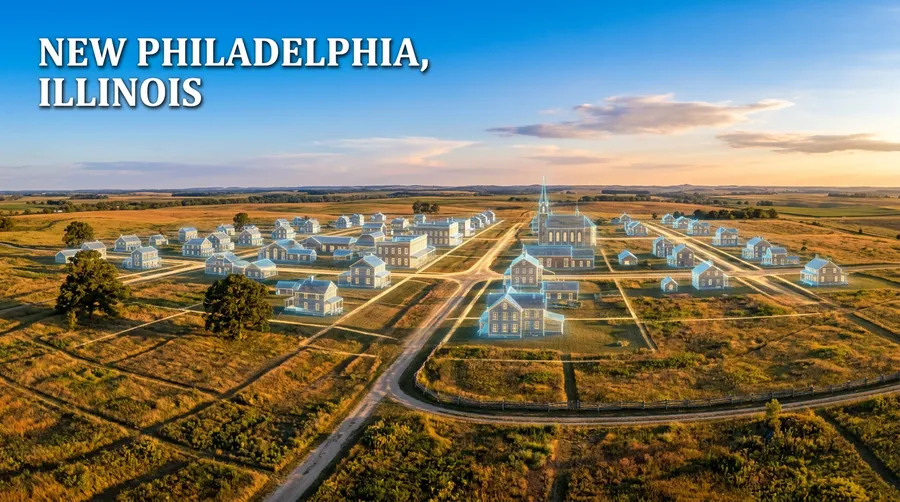
Imagine a town that exists mostly in the ether, a vibrant community brought back to life not by brick and mortar, but by pixels and sound. That’s New Philadelphia, Illinois, a place that, on a raw November morning, presents itself as an expansive, windswept field. Yet, this unassuming landscape holds the story of Free Frank McWorter, an enslaved man who bought his freedom, then that of his family, and in 1836, audaciously founded the first town platted and registered by an African American before the Civil War. There’s an undeniable power in standing on ground where such a radical act of self-determination took root, even if the physical evidence has largely vanished. The power here, ironically, comes not from what you see, but what you download.

The New Philadelphia AR App, available for free at the trailhead kiosk, transforms the empty landscape. As you walk the ¼-mile trail, eleven Augmented Reality (AR) markers spring to life on your phone screen, overlaying digital reconstructions of homes, businesses, and people onto the real-world view. I found myself congregating with virtual residents, hearing snippets of daily life, and witnessing the interracial cooperation that defined this unique frontier community during the tumultuous Reconstruction era—the period after the Civil War when the nation grappled with integrating formerly enslaved people into society. This spatial empathy, where homes and lives literally disappear and reappear before your eyes, fosters a profound, almost haunting, connection to the precarious gains of Reconstruction.

But here’s where the expert eye starts to question. While the AR provides an unparalleled sense of the lost community, the "stylized animations" inevitably impose a modern aesthetic on 19th-century realities. Does this visual interpretation risk sanitizing the complex, often harsh, truths of the time? Whose voices, precisely, are we hearing in those audio narrations? The issue of "narrative ownership" becomes critical; ensuring descendant-community curation is not just good practice, it's essential for ethical historical representation. When planning your visit, remember the site is entirely outdoors, making spring and fall ideal for comfortable walking. There are no admission fees, but a strong phone battery is crucial, and downloading the app beforehand (especially if cell service is spotty) is a smart move.

Echoes from Carlisle: Navigating a Painful Digital Archive

From the windswept fields of Illinois, the journey takes us to Carlisle, Pennsylvania, home of the infamous Carlisle Indian Industrial School. Operating from 1879 to 1918, this institution was a cornerstone of a federal policy aimed at assimilating Indigenous youth—a stark example of "Kill the Indian, Save the Man." Unlike New Philadelphia, where technology resurrects what's gone, here, it unearths what was deliberately buried: the personal stories of those whose identities were systematically stripped away. The Carlisle Indian School Digital Resource Center, based at Dickinson College, is a formidable, freely accessible database, an aggregation of student records, photographs, and, crucially, tribal oral histories.

Sifting through this interactive archive is not a passive experience; it's a profoundly emotional one. You can filter by tribal affiliation, years attended, or document types, tracing the journeys of individual children. The Geographic Information System (GIS)-based visualizations, which map data points onto a geographic interface, starkly illustrate the vast distances students were forcibly removed from their homes. Seeing a boy’s letter home, stained with tears, or a girl’s intricate craftwork—small acts of defiance and resilience—humanizes statistical data in a way no textbook ever could. This isn't just information; it's a raw, unfiltered window into generational trauma, making the digital interface a powerful, yet unsettling, mediator.

The ethical tightrope here is palpable. "Consent and privacy" for records involving minors, many now ancestors, must be paramount. More critically, the potential for "re-traumatization" for visitors and, especially, descendant communities, is immense. This archive isn't designed for casual browsing; it requires a preparedness for confronting painful testimonies. I’d advise setting aside a full day for this digital deep dive, perhaps even breaking it up with walks around Dickinson’s campus to clear your head. There are no digital access fees, but the emotional cost can be considerable. It’s a powerful experience, but one that demands a measure of self-care and respect for the stories it holds.

Beyond the Loom: Lowell's Industrial Story, Reimagined in VR

Our final stop, Lowell, Massachusetts, throws us headfirst into the clamor and grit of America’s Industrial Revolution. Lowell National Historical Park commemorates a time when textile mills drove the nation’s economy, employing thousands of "mill girls" who were, for a time, hailed as a model workforce. The Tsongas Industrial History Center here offers a different kind of immersion: Virtual Reality (VR) and live-interactive virtual field trips, bringing 19th-century mill interiors and worker dormitories to vivid, visceral life. This isn't just about seeing the machines; it's about feeling the oppressive environment.

Donning a VR headset on-site, I was immediately plunged into the din of a working mill. The ambient machinery sounds, the close quarters, and the avatars of mill-girl workers around me created a powerful, almost claustrophobic, sense of immersion. The heat, the deafening roar of the looms, the sheer monotony—these elements, beyond static exhibits, build a visceral insight into the daily hardships of industrial labor. It effectively bypasses the intellectual distance, offering a raw, sensory connection to the experience. For those unable to visit in person, remote learners can join "Engineering a Better Future" field trips via Zoom, participating in interactive problem-solving within virtual breakout rooms—a genuinely innovative approach to accessibility.

Yet, the very effectiveness of VR raises its own set of questions. Is there a danger of "sensationalism" overshadowing the nuanced struggles of the labor movement? Does the hyper-realism risk turning hardship into a spectacle? Furthermore, the "accessibility divide" for VR headsets is a real concern; not all visitors are comfortable with, or able to use, such technology due to sensory sensitivities or other barriers. The park does offer traditional interpretive exhibits, which is crucial, but the draw of the VR is undeniable. Expect crowds, especially during peak tourist seasons like summer and fall foliage weekends. Park admission, which includes the VR experience, is typically $20 per person, with parking fees around $10-15 per day at designated lots. Arriving early, particularly on weekends, can make a significant difference in parking availability and reducing wait times for VR access.

The Double-Edged Byte: Ethics in Digital History

My journey through these three sites—New Philadelphia's ghost town given digital form, Carlisle's archive of stolen childhoods, and Lowell's industrial might resurrected in pixels—reinforces a critical truth: digital history is not a neutral medium. It's a powerful tool, capable of democratizing access and deepening empathy, but it also carries inherent risks. The "ethical pitfalls" aren't just academic; they directly impact how we understand and honor the past. There’s a constant tension between authenticity and interpretation, between making history engaging and making it responsible. We must ask: does the convenience of digital access inadvertently sanitize suffering, smoothing over the rough edges of trauma?

The danger lies in the digital experience inadvertently entrenching singular narratives or, worse, exploiting cultural trauma for educational impact. Responsible practice, I’ve come to believe, demands vigilant attention to several key areas. "Collaborative curation," actively engaging descendant communities and scholars in content creation, isn't optional; it's the bedrock of legitimacy. Transparency is equally vital: clearly distinguishing archival data from interpretive dramatizations helps visitors understand what's factual and what's a reconstruction. Finally, "multimodal accessibility" isn't just about offering remote access; it means providing non-digital alternatives for those with sensory sensitivities or economic barriers to technology. A great digital experience should supplement, not replace, the fundamental human connection to a place and its stories.

Mapping Your Digital Pilgrimage: Practicalities & Ponderings

If you're considering a similar journey, understand that this isn't a passive vacation; it's an immersive, often emotionally charged, intellectual exercise. This particular itinerary, designed for a 5-day drive, traces a fascinating arc through American history, from the hopeful aspirations of a free Black community to the tragic assimilation policies against Native Americans, and finally, the crucible of industrialization. I’d strongly recommend undertaking this trip in the spring or fall, when the weather is mildest for outdoor activities like New Philadelphia, and crowd levels are more manageable at Lowell. Summer brings significant heat and larger crowds, especially at popular national parks.

While the digital access to these sites is often free—the New Philadelphia AR app, the Carlisle archive, and Lowell's VR tour with park admission—there are still significant costs to consider. A rental car for the five days, factoring in gas for the substantial drives (Lowell to Carlisle is roughly 7-8 hours; Carlisle to New Philadelphia is another 8-9 hours), will likely run you around $450. Factor in about $600 for four nights of lodging, assuming mid-range hotels at an average of $150 per night. Meals and incidentals will add another $250 for roughly $50/day. The total estimated cost, around $1,320 USD, might seem substantial, but it’s a small price for such a profound engagement with history. Pack layers, sturdy walking shoes, and, most importantly, an external phone battery pack for those long days of digital exploration.

Ultimately, this digital pilgrimage isn't about ditching traditional history; it's about expanding its horizons. These technologies are not merely educational tools; they are empathy engines, allowing us to walk in digital footsteps, hear echoes of forgotten voices, and confront the complexities of our shared past in startling new ways. Yet, the human element—the critical thinking, the ethical considerations, the willingness to be uncomfortable—remains the most vital component. By balancing the allure of immersive technology with rigorous ethical consideration, we can illuminate contested pasts, honor collective memory, and truly understand the profound stories etched into America's landscape, both physical and digital.

Echoes of the Past: USA Historical Journey FAQ

How to plan a historical trip?
Research your destination’s key sites, create a day-by-day itinerary, book accommodations and entry tickets in advance, and factor in guided tours or audio guides for deeper insights.
How to plan a heritage trip?
Identify heritage themes (e.g., colonial, civil rights), map related sites, arrange transportation between locations, and include local museums or cultural centers to enrich your experience.
Can ChatGPT plan a trip?
ChatGPT can help generate detailed itineraries, suggest attractions and routes, and offer packing tips, but it cannot make bookings or handle real-time reservations.
How to plan a trip of a lifetime?
Define your must-see sites, set a realistic budget, balance high-profile attractions with off-the-beaten-path experiences, and allow flexibility for spontaneous discoveries.
Where are the best places for historical vacations?
Top U.S. destinations include Washington, D.C. for its national monuments, Colonial Williamsburg for living history, Boston’s Freedom Trail, and Gettysburg for Civil War heritage.
Which is the most beautiful historical place in the world?
Angkor Wat in Cambodia is renowned for its majestic temple complex and intricate carvings set against a lush jungle backdrop.
What is the #1 vacation spot in the world?
Osaka, Japan has been named the No. 1 trending destination for 2025 due to its vibrant food scene and proximity to several UNESCO World Heritage Sites.
What is the cheapest vacation in the world?
Laos offers the lowest average daily travel cost in 2025, with budget travelers spending as little as $16 per day on accommodation, food, and transport.
What is the least visited country in the world?
Tuvalu is the least visited country, welcoming only around 3,700 international tourists annually.
What is dark tourism?
Dark tourism involves visiting sites associated with death, tragedy, and historical trauma, such as Chernobyl or the 9/11 Memorial.
What are the peak visiting times for historical sites?
Most U.S. historical sites see peak attendance from late spring through early fall, especially June to September.
How much do tickets to major historical sites cost?
Entry fees vary widely, from free admission at many national landmarks to $20–$30 per person at popular museums or preserved homes.
Are guided tours available at historical landmarks?
Yes; many landmarks offer ranger-led or third-party guided tours, often included in entry fees or available for an additional charge.
What should I pack for a historical site visit?
Bring comfortable walking shoes, weather-appropriate clothing, sun protection, a refillable water bottle, and a portable charger for audio guides.
Are historical sites accessible for travelers with disabilities?
Most major U.S. historical sites provide ramps, elevators, and accessible restrooms, but checking specific site accessibility guides before visiting is recommended.