Photo by Nathan Prescott for Cornerstone Mansion · January 16, 2026
As a travel writer who’s spent decades rummaging through America’s attic, I thought I’d seen every iteration of "historic site." From grand presidential homes to battle-scarred fields, the script felt familiar: a docent, a brochure, perhaps a static exhibit or two. But lately, something genuinely fresh is stirring in the realm of heritage interpretation, particularly with the latest designations of National Historic Landmarks (NHLs). These aren't your grandmother's historic mansions, nor are they sprawling national parks. These are often modest, sometimes remote, but always deeply significant places, and they're leveraging digital wizardry to tell stories that have, for too long, been whispers.
What truly sets these recent additions apart is their embrace of technology. Where established sites often cling to traditional methods—and frankly, sometimes feel a little dusty—these new NHLs are pioneering immersive digital experiences. They’re solving real-world accessibility problems, breathing life into under-told narratives, and engaging a new generation of visitors in ways a printed pamphlet simply can't. Let’s peel back the layers on a few of these fascinating newcomers and discover how they’re redefining what it means to visit American history.
Boulder's Bold Stand: A Courthouse of Conscience
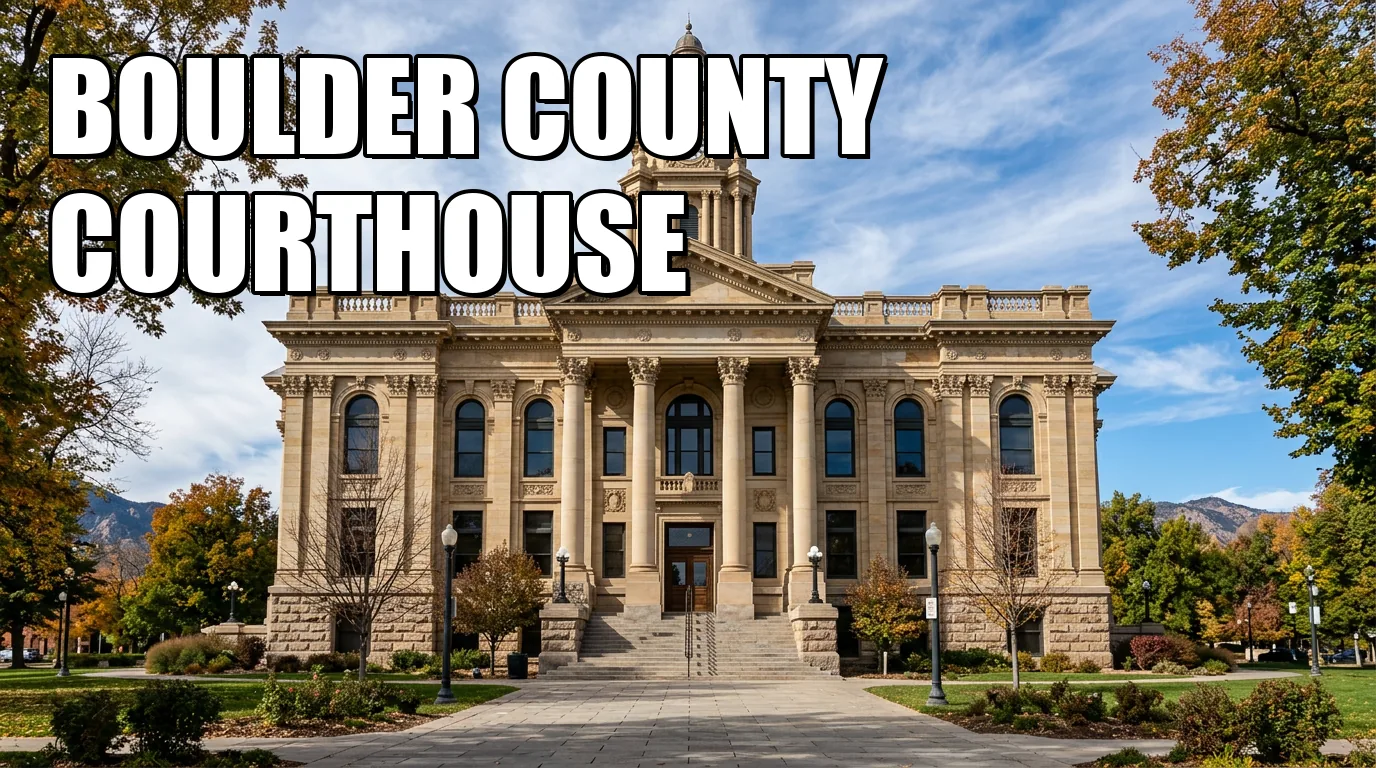
Imagine walking through a bustling, modern county courthouse, then pulling out your phone to witness history unfold right before your eyes. That’s the experience awaiting visitors at the Boulder County Courthouse in Colorado, designated an NHL on December 16, 2024. Its significance isn't in grand architecture or a pivotal battle, but in the quiet, courageous acts that transpired within its walls in 1975. Here, County Clerk Clela Rorex defied convention, issuing six marriage licenses to same-sex couples, a foundational, though ultimately short-lived, moment in the fight for LGBTQ+ rights in the United States. This wasn't merely a legal formality; it was a defiant, human gesture that reverberated nationally.
Accessing a functioning courthouse, as you might expect, isn't like strolling into a museum. Security screenings are mandatory, and visits are limited to weekdays, subject to the court's schedule. You won't find a dedicated visitor center or elaborate signage explaining the context of Rorex’s actions. Instead, Boulder County has smartly embraced a mobile app, launched in 2025, which employs augmented reality (AR). Point your device at the courtroom, and you’ll see spectral reenactments of those 1975 license signings superimposed onto the contemporary setting. Moreover, a community-sourced digital archive invites former litigants and advocates to upload their oral histories and photographs. This innovative approach overcomes the inherent limitations of a living, working building, transforming it into an interactive portal to a pivotal moment. Contrast this with something like Mesa Verde National Park, just a few hours southwest, where ranger-led tours of ancient cliff dwellings and printed brochures, while historically valuable, have seen little interpretive evolution in decades. Boulder’s courthouse tells us that sometimes, the most profound histories are found not in grand isolation, but woven into the fabric of everyday life, digitally brought to the foreground.
Unearthing Silent Voices at Summit Camp
High in California's Tahoe National Forest, a remote 26.5-acre stretch of land known as Summit Camp became an NHL on December 15, 2024, preserving the largest archaeological remains of Chinese railroad workers along the transcontinental route. This isn't a place for casual exploration; it's a testament to immense human endeavor and hardship, a tangible link to the often-overlooked Chinese contributions to shaping America. The site retains intact foundations and artifact scatters, its original landscape context remarkably undisturbed.
The challenge here is profound: how do you interpret a largely invisible history in a remote, high-elevation site that's inaccessible in winter and lacks any permanent on-site facilities? The U.S. Forest Service, managing this crucial parcel, has turned necessity into innovation. They’ve developed a 3D point-cloud model of excavated walls and the entire camp layout, accessible year-round through an NPS web interface. This virtual tool allows you to explore the camp as if you were there, revealing the spatial organization and scale of this forgotten community. An interactive, GIS-based digital archive complements this, cataloging over 10,000 artifacts with searchable metadata. You're not just reading about history; you're sifting through its physical remnants, digitally. Compare this to the nearby Donner Memorial State Park, which, while historically significant, offers visitors traditional self-guided trails with static panels. Summit Camp's digital pivot is a masterstroke, making a fragile, remote history globally accessible and profoundly impactful, proving that a physical footprint isn't always a prerequisite for deep engagement.
Powering Progress: The Reeve REA Plant's Resurgence
What does a diesel-powered generating plant in rural Iowa have to tell us about American history? Quite a lot, actually. The Reeve REA Power Generating Plant near Hampton, designated an NHL in 2024, stands as a powerful symbol of the New Deal's transformative impact. This plant didn't just generate electricity; it ignited a social revolution, bringing power to rural American homes and farms, catalyzing the creation of community-owned cooperatives. For decades, these communities lived in literal darkness, bypassed by commercial utility companies. The REA changed that, and this plant is a beautifully preserved piece of that story.
The Franklin County Historical Society, which lovingly restored the plant in 1989, maintains its 1938 machinery bay, control room, and original diesel generators in static, yet operable, condition. Visiting here feels like stepping back into a moment of industrial pride. Accessibility, however, is limited to weekends, and you’ll need your own transportation to reach this county historic ground. While physical signage inside the plant is minimal, for safety reasons, the plant truly comes alive through its digital interpretation. Touchscreen kiosks present invaluable oral-history clips, harvested from interviews with cooperative founders and early employees. These aren’t just dry facts; they’re the voices of the people who lived this change, telling stories of seeing electric lights for the first time. An online educator portal further expands its reach, offering downloadable lesson plans and digitized plant blueprints. This approach directly contrasts with places like the Amana Colonies Historic District, which still largely relies on traditional docent-led tours. The Reeve REA Plant, through its digital storytelling, demonstrates how crucial personal narratives are in understanding the broader historical currents.
The Kregel Windmill: Turning Innovation into Heritage
Venturing further into the heartland, Nebraska City, Nebraska, now boasts its own distinctive NHL in the Kregel Windmill Company Factory, designated on May 20, 2025. This factory, a testament to early 20th-century agricultural industrial heritage, was once central to Midwestern farming, producing windmills that pumped water and powered livelihoods across vast, treeless landscapes. The graceful, often overlooked windmill was an engineering marvel, and Kregel was a significant player in its manufacture.
Today, the restored warehouse and assembly halls beautifully preserve original machine tools and steel-frame glazing; its exterior brickwork even underwent comprehensive stabilization in 2023. While the site now functions as a community center, public tours require advance booking, and finding your way from the town’s historic district might present a minor challenge due to limited signage. However, similar to the other new designations, Kregel doesn't rely on just its physical presence. A geolocation-based AR app overlays historic production footage directly onto the current factory spaces. Imagine standing in a quiet, empty hall, then seeing spectral workers operating belt-driven lathes as they would have a century ago. This immersive layer bridges the gap between past and present, offering a vivid, dynamic understanding of the manufacturing process. Furthermore, a crowd-sourced "Windmill Stories" portal invites descendants of factory workers to share photographs and anecdotes, deepening the collective memory of the site. This level of interactive engagement provides a far more personal connection than, say, the paper maps and static exhibits one might find at Homestead National Historical Park.
A New Horizon for Historical Exploration
These newly designated National Historic Landmarks are more than just places; they represent a significant philosophical shift in how we preserve and present American history. Traditional interpretation, with its reliance on guided tours and printed materials, often struggles with accessibility, engagement, and the sheer cost of maintaining extensive on-site infrastructure. The digital strategies deployed at Boulder County Courthouse, Summit Camp, the Reeve REA Plant, and the Kregel Windmill Factory directly address these issues.
Consider the practical implications: a remote archaeological site like Summit Camp, otherwise accessible to only a hardy few, becomes a global classroom through 3D models. A functioning public building like the Boulder Courthouse, with its inherent security and scheduling constraints, transforms into an AR-powered time machine. These innovations aren’t just "nice-to-haves"; they are fundamental to bringing under-told narratives—like those of Chinese railroad workers, LGBTQ+ pioneers, and rural electrification heroes—to a broader, more diverse audience. They democratize access to heritage, making history vibrant and immediate, not just something to be observed from a respectful distance. This isn't just a trend; it's the future of how we'll connect with our complex, layered past, inviting us to not merely consume history, but to interact with it, question it, and contribute to its ongoing story. For the discerning traveler, it means a fresh, often surprising, and deeply enriching way to experience the tapestry of American heritage.
Historic Mansions Worth Building a Weekend Around
Start with the estates and mansion properties that still justify tickets, routing, and a real visit, not just a mood-board detour.
A heritage site is a landmark or area officially recognized for its cultural, historical, scientific or aesthetic value and protected by law or international treaty.
What qualifies as a heritage site?
Sites qualify by meeting criteria set by bodies like UNESCO or the U.S. National Park Service, such as historical significance, integrity, and authenticity.
What are the criteria for a heritage site?
UNESCO criteria include outstanding universal value, authenticity, and integrity, while U.S. listings require significance in American history, architecture, archaeology or culture.
What is the meaning of heritage site?
It denotes a place deemed valuable for its cultural, historical or natural importance and preserved for current and future generations.
Who determines the status of a heritage site?
Internationally, UNESCO’s World Heritage Committee; in the U.S., the National Park Service administers the National Register of Historic Places.
How do you qualify to be listed as a world heritage site?
A member state nominates a site that meets at least one of UNESCO’s ten criteria and demonstrates adequate legal protection and management plans.
Who manages heritage sites?
In the U.S., sites are managed by federal agencies (e.g., National Park Service), state historic preservation offices, and local authorities.
Who is in control of the Heritage Foundation?
The Heritage Foundation is governed by its Board of Trustees and led by its President and CEO.
How can I find heritage sites near me?
Use the National Park Service’s interactive National Register map or UNESCO’s World Heritage Centre GIS to search by location.
What are the best heritage sites to visit in the United States?
Popular sites include Independence Hall (PA), Mesa Verde National Park (CO), and the Statue of Liberty (NY), each offering unique historical experiences.
What is the best time of year to visit heritage sites?
Spring and fall offer mild weather and fewer crowds, making them ideal for most heritage site visits.
Are there entrance fees at heritage sites?
Some federally managed sites charge fees, while many state and local sites offer free access or suggested donations.
Can I take guided tours at heritage sites?
Yes; most sites offer ranger-led or private tours, which can be booked online or on-site.
What should I bring when visiting a heritage site?
Pack water, comfortable shoes, sun protection, and any site-specific permits or passes.
Why This Page Exists
Maison builds place guides to help readers plan a real visit or understand a real site. When a page makes present-day access, booking, or visitor claims, those details are revised against public-facing source material and editorial review. For the wider standards behind that work, see methodology.
The Cornerstone Brief
One historic place, once a week — what it is, why it matters, whether it's worth going. No filler, no paid placements.
Coming soon. Unsubscribe any time.
We use cookies to enhance your experience. By continuing to visit this site you agree to our use of cookies.