
Echoes Across Deserts: A Deeper Look at Historic Sites
For years, I've dismissed the idea of "sister cities" as a touch too saccharine, often more about photo ops than genuine cultural exchange. Yet, a recent proposal for a "Sister Heritage Sites" program, linking some of Saudi Arabia's most breathtaking UNESCO-listed locations with U.S. National Historic Landmarks, has genuinely piqued my interest. These aren't just arbitrary pairings; they’re drawn from deep, resonant themes: ancient trade, architectural brilliance, and the ceaseless, fascinating churn of multicultural life. It forces us to reconsider what we think we know about our own historical sites, prompting a journey that isn’t just about looking, but about *seeing* anew.
### Tracing Ancient Footprints: Mesa Verde's Kinship with Hegra
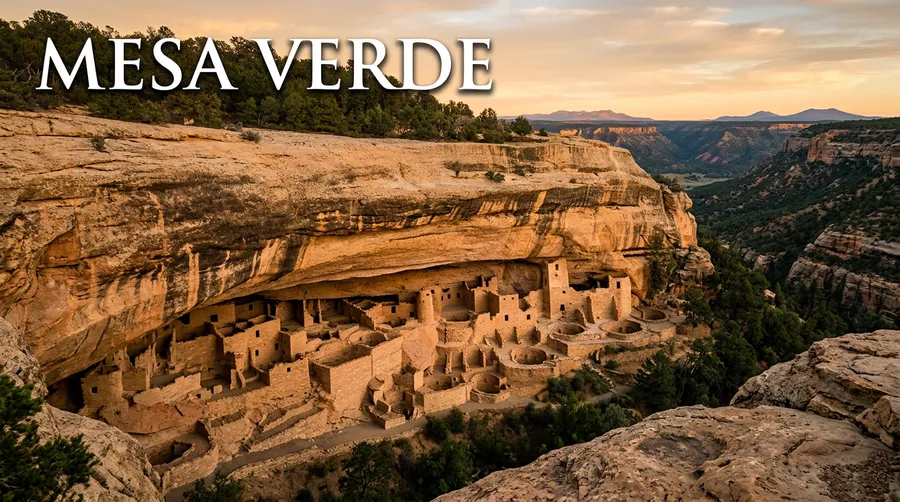
Have you ever stood on the edge of a mesa in southwestern Colorado, gazing down at the intricate cliff dwellings of Mesa Verde, and felt an almost primal connection to the tenacity of human spirit? I certainly have, countless times. These remarkable homes, carved into natural alcoves by the Ancestral Puebloans—a prehistoric Native American culture that flourished in the Four Corners region between 600 and 1300 CE—represent a profound adaptation to a challenging, arid landscape. Most visitors are awestruck by the sheer audacity of these structures, often wondering how such a complex society managed to thrive here for so long.
What few realize, however, is the striking parallel these cliffside settlements draw with places thousands of miles away, specifically Hegra (Madāin Sālih) in modern-day Saudi Arabia. Hegra, an ancient Nabataean necropolis and a vital caravan oasis from the 1st century BCE to the 1st century CE, also features monumental architecture carved directly into rock faces. While the Nabataeans sculpted elaborate tomb façades for their dead, creating an external grandeur, the Ancestral Puebloans meticulously crafted living spaces within their stone canyons, a more internal, communal expression. Both cultures, separated by continents and millennia, mastered the art of survival and sophisticated water management in unforgiving deserts, anchoring vast, pre-modern trade networks that stretched far beyond their immediate horizons. When you visit Mesa Verde, don't just admire the architecture; try to feel the echoes of those distant trade routes, envisioning the intricate flow of goods and ideas that connected these seemingly disparate worlds. Planning a trip? Aim for late spring or early fall to avoid the searing summer heat and massive crowds; the park can be overwhelming, and ranger-led tours to the cliff dwellings (which are essential for close-up viewing) fill up incredibly fast, often requiring booking weeks in advance, particularly for iconic sites like Cliff Palace. Parking can be a challenge, too, especially around the major viewpoints, so arrive *early* in the morning.
### A Symphony of Souls: New Orleans' French Quarter and the Heart of Jeddah
Stepping into New Orleans' French Quarter is less like entering a historical district and more like diving headfirst into a rich, simmering stew of cultures. Founded in 1718 CE, this district has long served as a vibrant hub of French, Spanish, African, and Caribbean exchanges, all flowing through the mighty Mississippi River. The wrought-iron balconies, sun-drenched courtyards, and the distinct aroma of chicory coffee and beignets tell a story of layered heritage, a true American melting pot that has birthed unique musical forms like jazz and a world-renowned Creole cuisine.
It’s an experience that, for me, instantly calls to mind Historic Jeddah (Al-Balad), the ancient port city on Saudi Arabia's Red Sea coast. Dating back to the 7th century CE, Al-Balad was a crucial crossroads for Red Sea commerce and, much like New Orleans, became a melting pot of Arab, African, and South Asian cultures. Picture the intricate wooden mashrabiya screens and the towering wind catchers in Jeddah; they’re not merely decorative, but ingenious architectural solutions to a hot, humid climate, much like the wrought-iron balconies and shaded courtyards of the French Quarter. Both cities breathe history, not as a static museum piece, but as a living, evolving entity, where music (think Mawlid chants in Jeddah or the improvisational brilliance of jazz in New Orleans), food, and artisan crafts continue to tell a dynamic story. The challenge in New Orleans is often discerning the truly authentic from the tourist-trap façade. Skip Bourbon Street for a quiet stroll through residential streets in the morning, or venture into the Marigny for a more local music scene. A good strategy: visit in the shoulder seasons of October-November or March-April to enjoy milder weather and slightly smaller crowds. Expect parking to be expensive or non-existent in the Quarter; use ride-shares or park further out and walk.
### Oases of Human Ingenuity: Filoli's Grandeur and Al-Ahsa's Ancient Greenery
Our final pairing takes us from the ancient, natural wonder of an oasis to the meticulously crafted grandeur of a 20th-century American estate. Filoli Historic House & Garden, nestled just south of San Francisco, California, is a magnificent country estate built in the early 1900s. Its formal gardens, inspired by European Renaissance design, exemplify the merging of ambitious landscape artistry and residential splendor, showcasing a deliberate human transformation of the natural environment into a vision of beauty and order. It’s a place of quiet retreat, built for reflection and sophisticated gatherings, embodying a distinctly American ideal of leisure and cultivation.
This grand estate finds an unexpected resonance with Saudi Arabia’s Al-Ahsa Oasis, one of the world’s largest and oldest oases, with continuous human settlement stretching back to the Bronze Age. Al-Ahsa isn't just a natural phenomenon; it's a testament to millennia of human ingenuity, featuring vast palm groves and spring-fed canal gardens, all nourished by an intricate system of underground water channels known as *qanats*. While Filoli’s terraced fountains and reflecting pools represent a controlled, aesthetic use of water, Al-Ahsa's water management is an ancient, sprawling system that literally sustains life and agriculture for hundreds of thousands. Both locations, though vastly different in scale and origin, are powerful demonstrations of humanity’s capacity to turn water-scarce environments into flourishing, productive, and beautiful landscapes. Filoli, in its own way, served as a retreat for scientific and artistic *salons*—gatherings for intellectual and creative exchange—echoing Al-Ahsa’s ancient role as a vital node on pilgrimage routes, where travelers found respite and shared knowledge. If you plan to visit Filoli, choose a weekday morning in spring (April-May) for peak bloom and fewer visitors; admission is typically around $30-35 per adult, and tickets are often reserved online in advance. Don't underestimate the walking required to fully explore the gardens; wear comfortable shoes.
### Unveiling Deeper Narratives Through Comparison
The genius of these "Sister Heritage Sites" pairings lies in their ability to strip away our preconceptions. We tend to view our own history as isolated, a unique trajectory. Yet, when we place Mesa Verde alongside Hegra, or the French Quarter next to Historic Jeddah, or Filoli beside the Al-Ahsa Oasis, new narratives emerge. We begin to understand universal themes: humanity's battle against the elements, our shared impulse to create beauty, the enduring power of trade and cultural exchange, and the profound ways water shapes civilization. These aren't just academic exercises; they offer a richer, more nuanced way to experience and appreciate the U.S. sites on their own terms.
Imagine the upcoming cross-promotional campaign: simultaneous VR launch events allowing you to "walk" through Hegra and Mesa Verde, or joint academic grants sparking comparative studies of ancient water management. It's not just about promoting tourism to Saudi Arabia (though that's certainly a goal); it's about enriching our understanding of our *own* heritage. A traveler might engage with virtual exchange workshops, or even explore future dual-destination itineraries. This initiative promises to offer more than just a trip; it offers an intellectual journey, challenging the notion that history exists in silos. It suggests that by looking outwards, we can often see our own story with greater clarity and appreciation. In the end, the most profound insights often come when we dare to compare, to connect the seemingly disparate threads woven across the tapestry of human history.
Exploring Saudi Arabia’s Timeless Treasures
What is the most famous landmark in Saudi Arabia?
The Kaaba in Mecca is considered Saudi Arabia’s most renowned landmark, drawing millions of pilgrims annually.
What is the most famous historical landmark?
Madā’in Ṣāliḥ (Hegra) in Al-Ula, Saudi Arabia’s first UNESCO World Heritage site, is celebrated for its well-preserved Nabataean rock-cut tombs.
What is the ancient monument in Saudi Arabia?
The rock-cut tombs of Madā’in Ṣāliḥ date back to the 1st century CE and represent one of the Arabian Peninsula’s oldest standing monuments.
What is the famous place in Saudi Arabia?
Al-Balad, the historic district of Jeddah, is famed for its coral-stone houses, winding alleyways, and traditional souks.
What is the most holy place in Saudi Arabia?
The Masjid al-Haram in Mecca, encompassing the Kaaba, is Islam’s holiest site and the focal point of the Hajj pilgrimage.
Can non-Muslims go to Mecca?
Non-Muslims are legally prohibited from entering the Mecca city limits under Saudi regulations.
Why cant Christians enter Mecca?
Saudi law reserves Mecca access exclusively for Muslims to preserve its sanctity under Islamic tradition.
Can non-Muslims say inshallah?
Yes; “inshallah” (“God willing”) is a common Arabic expression used by speakers of all backgrounds.
Best time to visit Madā’in Ṣāliḥ?
October through March offers mild temperatures ideal for exploring the rock-cut tombs and desert landscape.
How much does a Diriyah tour cost?
Guided tours of Diriyah typically range from USD 75–150 per person, depending on package inclusions.
What are the entry requirements for Saudi historical sites?
Visitors need a valid tourist visa, proof of vaccination against COVID-19 per Saudi health regulations, and site-specific permits for UNESCO locations.
What should I see at Al-Ula?
Don’t miss the archaeological site of Hegra, the Jebel Ikmah inscriptions, and the Elephant Rock natural formation.
Are there guided tours in Al-Balad, Jeddah?
Yes; licensed guides offer walking tours of Al-Balad’s UNESCO heritage area, covering historic houses and traditional markets.