Photo by Philip Hargrove for Cornerstone Mansion · January 5, 2026
When I first stepped into one of those colossal Gilded Age "cottages" in Newport, Rhode Island, I wasn’t just seeing a grand house; I was walking onto a movie set frozen in time, a tangible link between America's most extravagant past and its enduring cinematic allure. These aren't just buildings; they're stages where history played out, and where Hollywood continues to recreate it, often blurring the lines in fascinating ways. For decades, the country's most opulent estates, built by the titans of industry and society during the late 19th and early 20th centuries, have served as the ultimate backdrops for tales of romance, intrigue, and dizzying wealth.
What is it about these places that so captivates filmmakers and visitors alike? It’s more than just the sheer scale or the intricate detailing. It’s the palpable sense of a bygone era, an age of unapologetic excess and social stratification that seems almost too fantastical to be real. Yet, it was. From the grand balls of fictional millionaires to the quiet desperation of real heiresses, these mansions have borne witness to stories that resonate deeply, offering a visually stunning shorthand for an entire historical period. So, grab your imaginary top hat, because we’re about to journey through the seven most iconic Gilded Age film locations, peeling back the layers of silver screen glamour to reveal the surprising truths and practical realities of visiting these architectural marvels.
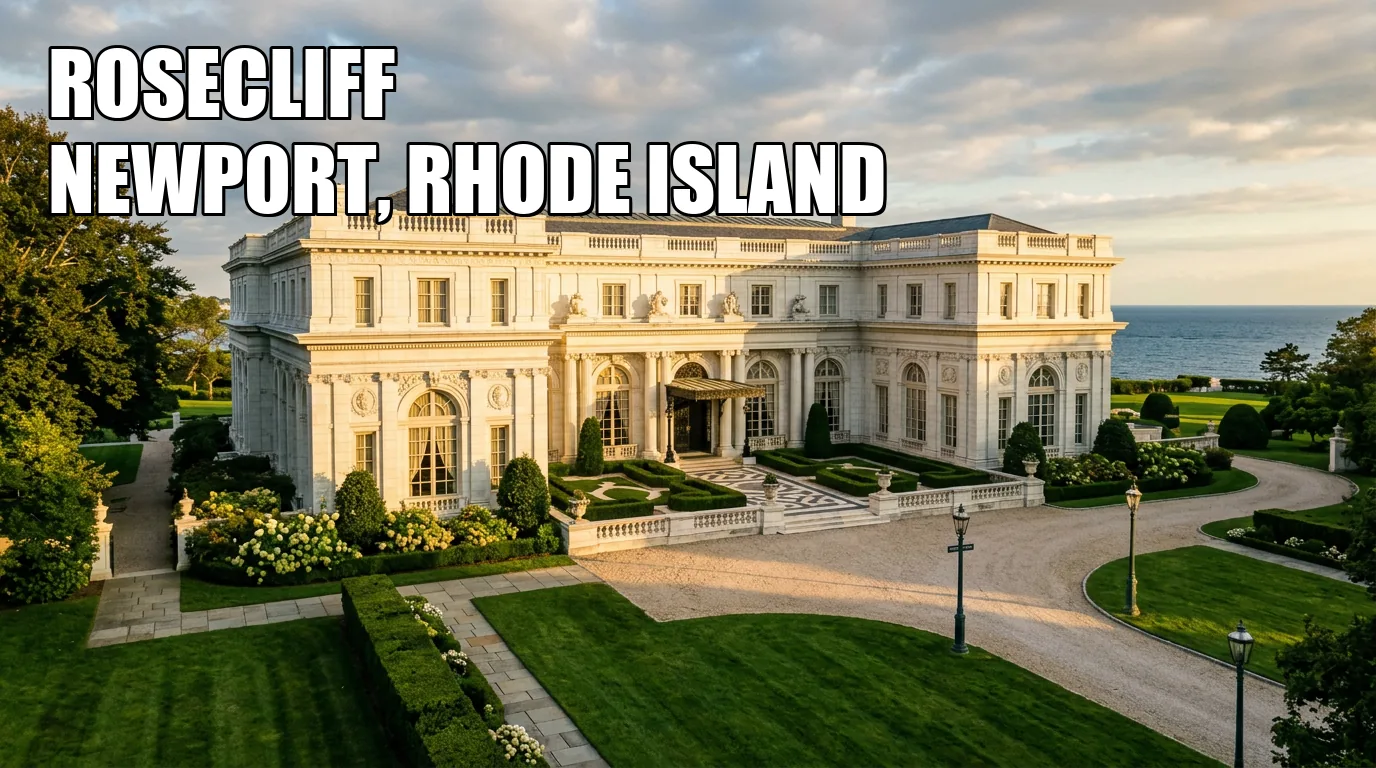
Have you ever wondered where Jay Gatsby threw those legendary, glittering parties? For many of us, the image seared into our minds isn't from the pages of Fitzgerald, but from the 1974 film adaptation of *The Great Gatsby*, featuring Robert Redford and Mia Farrow. The mansion that brought Gatsby's West Egg fantasies to life was none other than Rosecliff, a dazzling Newport estate designed by Stanford White. Built between 1898 and 1902 for silver heiress Theresa Fair Oelrichs, this mansion was explicitly modeled after the Grand Trianon at Versailles – a detail that instantly tells you everything about the aspirations of its original owner.
Filming for *The Great Gatsby* consumed Rosecliff from June to September 1973, making its magnificent, 40-by-80-foot ballroom an icon. That gold room sequence, with its elaborate gilt ceiling and opulent architectural details, isn't just a set; it's the heart of the mansion, and it’s the element that truly defined Gatsby’s lavish world. Beyond this classic, you might recognize Rosecliff's distinctive ballroom from Arnold Schwarzenegger's tango in *True Lies* (1994) or even catching a glimpse of its famous ceiling in the opening credits of HBO's *The Gilded Age*. It’s a workhorse of a location, versatile enough for grand balls or quiet, contemplative moments. Visiting Rosecliff today, especially during the shoulder seasons of May or October, offers a chance to experience that ballroom without the peak summer crush. Expect admission fees around $30, which often includes other Newport mansions if you opt for a multi-house ticket. Parking can be a tight squeeze, so consider the free shuttle from the Newport Visitors Center if you're exploring multiple estates.
Marble House: The Vanderbilts’ Golden Touch on Film
Just down the road from Rosecliff, the formidable Marble House stands as another monument to Newport's gilded glory and cinematic presence. Completed in 1892 for Alva and William Kissam Vanderbilt, this Richard Morris Hunt masterpiece ushered in the true Beaux Arts architectural style for American residential buildings. Like its neighbor, Marble House played a pivotal role in the 1974 *Great Gatsby* film, specifically for the unforgettable ballroom scene where Jay Gatsby and Daisy Buchanan share their iconic dance. This was filmed in the mansion's ornate Gold Room, a space dripping with gilded finishes and architectural embellishments.
What's striking about Marble House isn't just its beauty, but its sheer audacity. It cost an astronomical (for the time) $11 million, with $7 million alone spent on 500,000 cubic feet of marble. This isn't just decoration; it's a statement of power and wealth, something that comes across powerfully on screen, whether it’s transformed into Queen Isabella's palace in *Amistad* (1997) or serving as George Russell's actual bedroom in HBO's *The Gilded Age*. Yes, they filmed in Consuelo Vanderbilt’s actual bedroom, giving a fascinating authenticity to the series. My advice for a visit? Go on a weekday, especially in spring, to truly appreciate the intricate details of the Gold Room without feeling rushed by tour groups. The guided tours are informative, but wandering through at your own pace offers a more immersive experience, allowing you to truly appreciate the craftsmanship that caught Hollywood's eye.
The Breakers: How Newport's Grandest Estate Handles Its Stardom
No discussion of Newport's Gilded Age mansions – or their cinematic lives – would be complete without The Breakers. As the largest and arguably most iconic of Cornelius Vanderbilt II's "summer cottages," this 70-room Italian Renaissance Revival palazzo, built between 1893 and 1895, is the undisputed king of the hill. It’s a behemoth, a statement, and, since 2022, a central character in HBO's *The Gilded Age*. The sheer scale of its Great Hall, with its 50-foot ceiling and a painting of Aurora, simply takes your breath away, even more so when you realize it’s been meticulously transformed to represent the Russell family's Manhattan ballroom.
Beyond the Great Hall, The Breakers' Music Room has also found fame, often doubling as the Russell family's billiards room. What typical guides won't tell you is the immense logistical challenge of filming in such a meticulously preserved historic site. The Preservation Society works hand-in-glove with production crews, moving priceless artifacts and protecting every surface. Imagine trying to film a dramatic scene while safeguarding an imported Italian marble floor or a delicate 19th-century billiard table! This delicate dance ensures the mansion's irreplaceable features remain intact, a testament to its status as a living museum. When planning your visit, be prepared for crowds, especially in summer. Arriving right at opening (usually 9:00 AM) or an hour before closing (often 5:00 PM) offers the best chance to appreciate the grandeur in relative peace.
Lyndhurst Mansion: A Gothic Revival Escape Upstate
Venturing beyond the coastal opulence of Newport, we find Lyndhurst Mansion in Tarrytown, New York – a striking counterpoint to the classical styles dominating Rhode Island. This Gothic Revival country estate, which started its life in 1838 and expanded through the 19th century, was famously home to railroad magnate Jay Gould. Its unique architectural style, characterized by pointed arches, intricate stonework, and an almost fairytale-like quality, makes it instantly recognizable and a favorite for filmmakers seeking something a little different.
For five weeks, Lyndhurst became a bustling production hub for HBO's *The Gilded Age*, the largest production ever filmed there. It serves as the elegant home of Aurora Fane in the series, with its picturesque exterior, grand picture gallery, and ornate reception rooms providing diverse backdrops. Here’s an interesting insight: during filming, all existing furniture was removed and carefully stored, protecting the historic interiors. The production team even carried out restoration work on areas of wear and tear, leaving the mansion in better shape than they found it – a win-win for preservation! Beyond its Gilded Age connections, Lyndhurst's distinctive profile can be seen in the 1970 film *Dark Shadows* and even the History Channel's *The Men Who Built America*. To truly appreciate its unique aesthetic, visit in the fall when the changing leaves frame its Gothic spires beautifully. Unlike the Newport mansions, Lyndhurst often requires timed tickets purchased in advance, so check their website before you go.
The Elms: A French Château with a Working Heart
Another Newport gem, The Elms, offers a slightly different flavor of Gilded Age extravagance. Completed in 1901 for coal magnate Edward Julius Berwind, this mansion was explicitly modeled after an 18th-century French château. What sets it apart, in a practical sense, is that it was one of the very first homes in America wired entirely for electricity, with no backup gas lighting system. This detail might seem small, but it speaks volumes about the Berwinds’ forward-thinking embrace of modern technology alongside their desire for period elegance.
The Elms has found its niche in HBO's *The Gilded Age* as the Russell family's Newport residence, showcasing not just the lavish drawing room and ballroom, but crucially, the servant kitchens and Berwind’s own bedroom. The kitchen, in particular, gets a lot of screen time, depicting the bustling household hub where the chef, butler, and servants toiled and gossiped. This focus on the "below stairs" life gives viewers an authentic, often overlooked, glimpse into the vast infrastructure required to run such an estate. It’s a refreshing contrast to the endless ballrooms, reminding us that these grand houses were also places of intense labor. If you visit, make sure to take the "Servant Life Tour" – it's a fascinating look at the often-unseen side of Gilded Age living and provides context that goes beyond the pretty façade.
Biltmore Estate: America’s Largest and Most Versatile Star
Now, let's talk about the big one. If you’re looking for sheer scale, nothing in America compares to the Biltmore Estate in Asheville, North Carolina. Commissioned by George Vanderbilt and built between 1889 and 1895, this 250-room, 178,926-square-foot behemoth isn't just America's largest privately owned home; it's a veritable studio backlot in itself. Its versatility has led to appearances in approximately 25 major motion pictures and television series, from serving as Richie Rich's estate in *Richie Rich* (1994) to subtle cameos in *Forrest Gump* (1994) and *Patch Adams* (1998), and even the recent Hallmark production, *A Biltmore Christmas* (2023).
The French Renaissance château exterior, combined with Frederick Law Olmsted’s masterful landscaping and formal gardens, provides filmmakers with an unparalleled array of distinct settings. Its 70-foot-tall Banquet Hall, with its towering triple fireplace, offers an unmatched visual representation of Gilded Age grandeur. However, here’s a critical observation: while Biltmore is undeniably impressive, it sometimes feels less like a historic home and more like a carefully managed theme park. The sheer volume of visitors can detract from the feeling of stepping back in time. My advice? Book your tickets *far* in advance, especially if you're aiming for a popular season like Christmas. Consider a weekday visit in late January or early February for fewer crowds, though some garden features might be dormant. Expect a full day and significant walking; wear comfortable shoes, and don't underestimate the sheer physical effort of traversing such an enormous estate.
Winchester Mystery House: The Gilded Age's Quirkiest Off-Screen Star
Finally, we arrive at a location that challenges our very notion of what a "Gilded Age mansion" truly is: the Winchester Mystery House in San Jose, California. While Sarah Winchester’s continuous construction began in the 1880s and continued for decades, technically extending beyond the traditional Gilded Age end date, it’s undeniably a product of Gilded Age wealth and eccentricity. This isn't about opulent balls or grand architectural statements in the classical sense; it's about a wealthy heiress's lifelong obsession, grief, and superstition manifested in a labyrinthine, bizarre, and utterly unique architectural marvel.
The mansion served as the primary filming location for the 2018 supernatural thriller *Winchester*, starring Helen Mirren as Sarah Winchester. They managed a whirlwind 72-hour shoot of exterior, aerial, and interior scenes at the actual estate, before relocating for additional studio work. What makes it a star isn't its grandeur, but its sheer weirdness: staircases leading to ceilings, doors opening onto brick walls, and rooms built within rooms. It’s a psychological landscape as much as a physical one. This mansion's unique idiosyncrasies, born from Sarah Winchester's belief she was haunted by the spirits of those killed by Winchester rifles, offer an entirely different visual vocabulary than the Beaux Arts and Renaissance Revival styles of the other estates. It provides a stark, fascinating counter-narrative to the gilded opulence, reminding us that wealth during this era could manifest in profoundly unusual ways. If you visit, prepare for an experience unlike any other Gilded Age home. It’s less about admiration for beauty and more about a profound sense of wonder and bewilderment at human psychology. Tours run year-round, but booking online is essential, especially for weekend slots.
These Gilded Age mansions aren't just relics; they're dynamic stages where history and fantasy intertwine, offering visitors an unparalleled opportunity to step directly into the lavish worlds they’ve seen on screen. Each offers a unique perspective on a pivotal era of American history, whether through its architectural style, the personal story of its owners, or the creative ways filmmakers have utilized its grandeur. From the dazzling ballrooms of Newport to the sprawling landscapes of the Biltmore, and the bewildering corridors of the Winchester Mystery House, these estates promise more than just a tour—they offer an immersive journey into a world where fact is often stranger, and more compelling, than fiction. So, go forth, explore, and let these incredible homes tell you their stories.
More Film & TV Locations
These guides identify the real building or site first, then explain what visitors can still see in person.
Explore Historic Estates: Your Complete Guide to Gilded Age Mansion Filming Locations
Where are the main Gilded Age mansion filming locations?
HBO's 'The Gilded Age' films across multiple states including Newport, Rhode Island (The Breakers, Marble House, Rosecliff, The Elms, Chateau-sur-Mer), Tarrytown, New York (Lyndhurst Mansion), Troy and Albany, New York, Long Island estates (Old Westbury Gardens, Sands Point), and various locations in the Hudson Valley.
Are the houses in The Gilded Age real mansions?
Yes, many are real historic mansions from the Gilded Age era that are now museums or maintained estates, though some interior scenes of main character homes like the Russells' townhouse are filmed in real mansions with exteriors featuring custom sets and filming techniques.
What house is the Russell house in The Gilded Age?
The Russell family's townhouse is a fictional creation for the show inspired by real Vanderbilt mansions; while it doesn't exist as depicted, interior scenes were filmed at Marble House in Newport, which features the bedroom inspiration from Alva Vanderbilt's actual suite.
Where are the mansions in The Gilded Age filmed?
Primary filming occurs at Newport's Preservation Society mansions (The Breakers, Marble House, The Elms, Rosecliff, Chateau-sur-Mer), Lyndhurst in Tarrytown, and exterior shots throughout Troy, Albany, and other Hudson Valley locations that stand in for 1880s Manhattan.
Do any of the Gilded Age mansions still exist in New York City?
Only a handful of original Gilded Age mansions remain in Manhattan, with most converted to museums, institutional use, or luxury apartments; notable survivors include the Frick Collection on 70th Street and a few restored townhouses on the Upper East Side.
What happened to all the mansions from the Gilded Age?
Most were demolished between the 1920s-1980s due to the Great Depression, declining family fortunes, changing architectural tastes, and urban redevelopment that replaced them with skyscrapers, apartment buildings, and retail stores like those on Fifth Avenue's former Millionaires' Row.
Who was the richest family during the Gilded Age?
The Vanderbilt family, particularly Cornelius Vanderbilt II with a net worth equivalent to $2.3 billion in today's money, were among the wealthiest, followed by the Astors (around $1.3 billion adjusted), with John Jacob Astor IV reaching approximately $4.3 billion.
Do people still live in Gilded Age mansions?
Yes, some restored Gilded Age mansions remain private residences with owners who preserve their historic features, while others function as museums, institutional headquarters, or have been converted into luxury apartments; many Newport estates are maintained by the Preservation Society of Newport County.
Are there any 5th Avenue mansions left from the Gilded Age?
Very few original Gilded Age mansions remain on Fifth Avenue; most were demolished for development, though a Stanford White-designed townhouse at 973 Fifth Avenue remains as one of only two single-family White residences still standing in Manhattan from that era.
What is the best time to visit Gilded Age filming locations?
May through November is ideal for outdoor exploration and grounds tours, though mansions are open year-round; Newport mansions operate daily with seasonal variations, while Lyndhurst offers classic tours Thursday through Tuesday year-round.
How much does it cost to tour the Gilded Age filming location mansions?
Newport mansion tours typically cost $20-$25 per person for individual properties, with combination tickets available for visiting multiple mansions; Lyndhurst in Tarrytown offers similar pricing with various tour options, and many locations offer discounts for advance online purchases.
What is the most visited Gilded Age filming location?
The Breakers in Newport is the most popular, being the grandest Vanderbilt mansion with 250 rooms and featured prominently in the show's opening credits, attracting thousands of visitors annually for self-guided and guided tours.
Which Gilded Age mansion appears in the show's opening credits?
Rosecliff in Newport appears in the opening credits, with its famous 40-by-80-foot ballroom ceiling featured prominently in the show's signature sequence.
Can you visit the filming locations where The Gilded Age was filmed?
Yes, most primary filming locations are open to the public; Newport mansions, Lyndhurst in Tarrytown, and Old Westbury Gardens offer daily tours with tickets available online, and walking tours of Troy and Albany highlight exterior filming locations from the series.
What filming locations are specifically used for Gilded Age mansion interiors?
Marble House, The Elms, Chateau-sur-Mer, and Kingscote in Newport serve as primary interior filming locations for character homes, with Marble House particularly featured for Russell family bedroom and intimate scenes due to its authentic Vanderbilt-era furnishings and architecture.
Why This Page Exists
Maison builds place guides to help readers plan a real visit or understand a real site. When a page makes present-day access, booking, or visitor claims, those details are revised against public-facing source material and editorial review. For the wider standards behind that work, see methodology.
The Cornerstone Brief
One historic place, once a week — what it is, why it matters, whether it's worth going. No filler, no paid placements.
Coming soon. Unsubscribe any time.
We use cookies to enhance your experience. By continuing to visit this site you agree to our use of cookies.