Famous Residents

Fair Lane: Deconstructing Henry Ford's Enigma

Find Nearby Hotels

Book Flights

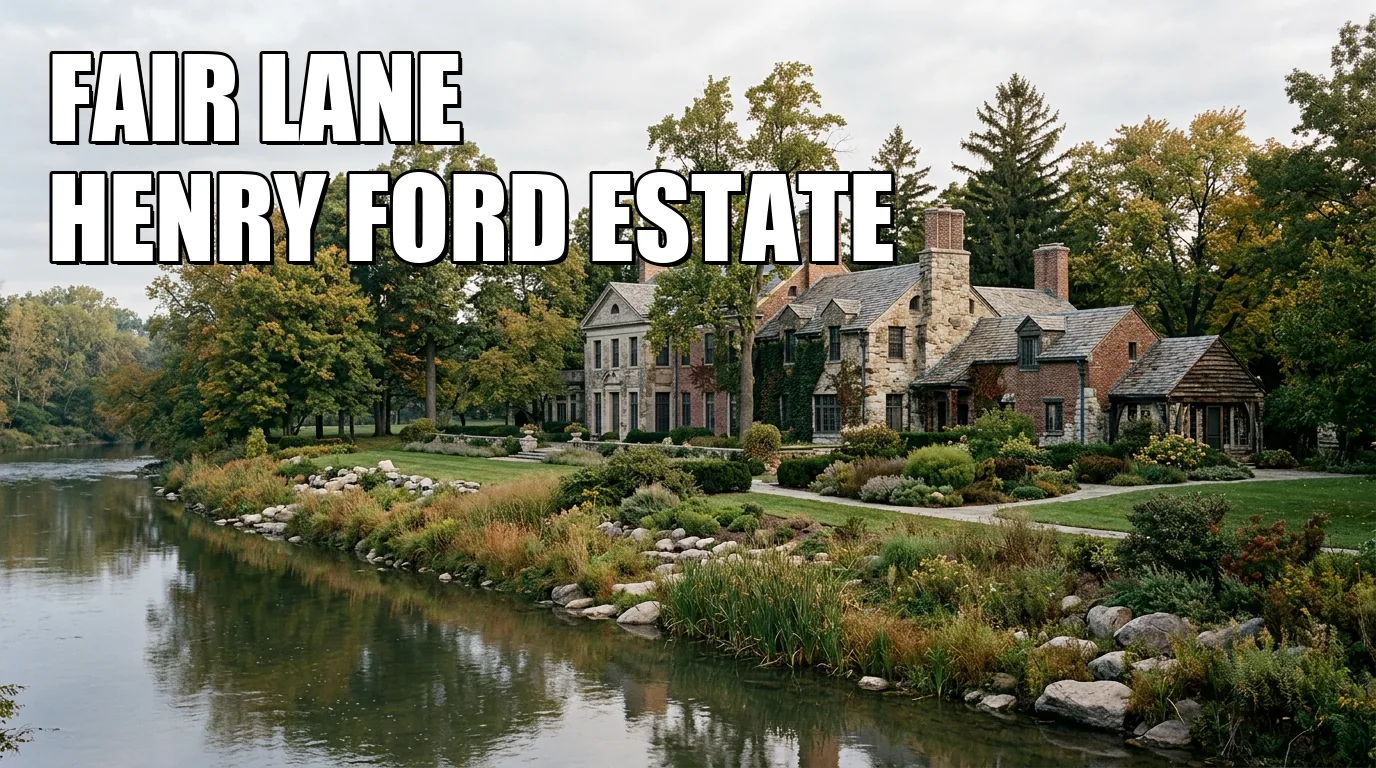
Whenever I approach a place like Fair Lane, Henry Ford’s sprawling estate nestled along the Rouge River, my first instinct is always to look past the manicured lawns and the familiar name. What’s truly *underneath* the surface here? What contradictions does it hold? Because let’s be honest, few figures in American history encapsulate paradox quite like Henry Ford: the revolutionary who hated change, the innovator who romanticized the past, the industrialist who championed conservation. His home, a sprawling monument to his vision and his complexities, is a far more insightful portrait of the man than any biography could ever hope to be. Stepping onto the property, you immediately sense the layers of intention, some harmonious, others frankly clashing. Fair Lane isn't merely a grand house; it's a meticulously engineered ecosystem, a showcase of Ford's personal philosophies, often at odds with themselves. From its self-sufficient power grid to the very stones of its construction, every element whispers a story about a man who shaped modern America yet clung fiercely to its agrarian roots. Forget what you think you know about industrial moguls; this place will challenge every assumption.

The Hydroelectric Heartbeat: An Edison-Designed Marvel

Few visitors grasp the sheer audacity and foresight encapsulated in Fair Lane's power generation, primarily because it's largely hidden from immediate view. On the south bank of the Rouge River, discreetly connected to the main house by a 300-foot underground service tunnel, stands the hydroelectric powerhouse and dam system. Constructed between 1914 and 1915, its cornerstone wasn't just laid by anyone; it was none other than Thomas Edison himself who officiated on October 28, 1914. More surprisingly, Edison actually *designed* this ingenious system for his friend Ford. Think about that for a moment: the wizard of Menlo Park crafting the power source for America’s auto magnate. This wasn't just about convenience; it was a testament to Ford’s deep-seated obsession with self-sufficiency. The dam, a significant engineering feat for its time, incorporated an innovative fish ladder on its south side—a detail that speaks volumes about Ford's often-overlooked commitment to wildlife conservation, even as his factories churned out world-changing machines. This robust system provided enough electricity not only for the entire Fair Lane estate but also for a substantial part of nascent Dearborn. Inside the six-level powerhouse, two 55-kilowatt water-powered generators hummed alongside an emergency steam generator. The third level even housed a garage complete with an automotive turntable, while Ford’s personal experimental laboratory occupied the fourth floor, where he continued to tinker with mechanical concepts. This is where the pragmatic innovator truly shines, a far cry from the simplified image of a mere factory owner.

Architectural Alchemy or Aesthetic Discord? The Corner Tower's Enigma

Walk around the river-facing eastern side of the main mansion, and you'll encounter a feature that often stops visitors cold: a distinctive round, castellated corner tower. Completed during the main house construction between 1914 and 1916, this medieval, castle-like element is perhaps the most glaring example of Fair Lane’s architectural identity crisis. Initially, visionary Prairie Style architect Marion Mahoney Griffin was on the job, but when she was dismissed, William Van Tine stepped in. His additions—this very tower, along with a stepped, parapeted gable—created a striking, yet undeniably *aesthetically dissonant*, composition. The tower stands as a powerful visual metaphor for the clash of ideas shaping the estate. Griffin's original Prairie School design championed low, horizontal lines and an organic integration with the landscape, a distinctly American modernist approach. Van Tine, however, layered on English Gothic Revival forms, yielding an uneasy partnership between centuries and continents. This isn't merely an architectural oddity; it’s a living testament to Ford's often-conflicting desires: to be modern and traditional, American and European, all at once. It questions the very notion of a cohesive "style" and forces you to confront the often-messy realities of grand vision executed by committee.

Where Rustic Met Refined: The Field Room's Surprising Purpose

Descending to the lower level of the main mansion, a shift in atmosphere is palpable. Here, accessible from the central corridor, lies the Field Room, a space so different from the mansion's formal areas it feels like entering another world. With its massive, hand-hewn fieldstone fireplace, this room exudes a deliberate rusticity, a design overseen by Clara Ford herself. What might seem like a simple family room held a far more profound purpose for Henry Ford. The Field Room wasn't just a casual gathering spot; it became the stage for Ford's passionate revival of American folk dancing in the 1920s and beyond. His interest wasn't merely recreational; it was part of a broader cultural movement, his "Americanization leisure reform agenda." He believed traditional dances fostered community and moral uprightness, a stark contrast to what he perceived as the corrupting influences of jazz and modern culture. In 1924, Ford even established the Ford Motor Company Music Department, and this very room at Fair Lane served as an early laboratory for his cultural experiments. It’s a remarkable insight into his philosophical tension, showcasing how the man who industrialized the world also sought to preserve, even resurrect, agrarian traditions.

A Private Pastime: The Mansion's Secret Bowling Alley

Tucked away on the lower level, also accessed from the central corridors, visitors will discover Fair Lane’s single-lane bowling alley. While it might seem a curious amenity today, its presence offers a fascinating glimpse into the leisure activities of early 20th-century industrialists and the social norms of the era. This wasn't just any private bowling alley; it was among the *very first* installed in an American mansion, dating back to the initial construction period of 1915-1916. For the wealthy, bowling represented a novel form of recreation where men and women could participate together without transgressing Victorian and Edwardian social conventions. Its installation at Fair Lane coincided with similar trends among industrial magnates, such as Henry Frick adding a two-lane alley to his New York mansion in 1914. This small, often-overlooked room becomes a symbol of modernization, not just in industry, but in domestic life, reflecting a broader shift towards incorporating recreational spaces within private residences. It hints at the ways these titans of industry navigated their public persona of relentless progress with their private pursuit of comfort and controlled leisure.

Aquatic Innovation: Ford's Climate-Controlled Pool

One of the estate's most compelling demonstrations of Ford's engineering prowess, though often presented simply as a luxury, is the indoor swimming pool. Located on the first floor of the main mansion, this feature, completed between 1915 and 1916, was initially conceived for his son, Edsel. What truly sets it apart, however, is its innovative engineering: the pool’s water was heated and filtered through the adjacent powerhouse system via that same underground tunnel. This made it one of the first fully automated, climate-controlled private swimming pools in an American residence. Here, Ford's obsession with efficiency and self-sufficiency converged with comfort. The continuous circulation and heating of the water, directly powered by the estate's own hydroelectric plant, was a marvel. It speaks to a man who, even in his leisure, sought ultimate control and technological integration. For a period, when the house transitioned to public visitation, this remarkable pool was irreverently converted into a dining room for tour groups. Thankfully, extensive restoration efforts have since worked to return it to its original purpose, allowing us to appreciate its original intent and the technological leap it represented.

Planning Your Encounter with Ford's Legacy

Should you wish to experience Fair Lane’s unique blend of innovation and contradiction firsthand, timing your visit can significantly enhance the experience. The estate, situated in Dearborn, Michigan, is generally open year-round, but aiming for the shoulder seasons—late spring (April-May) or early fall (September-October)—often provides the most pleasant weather and fewer crowds than the peak summer months. Admission typically runs around $20 for adults, with discounts for seniors and children. Be aware that parking is generally available on-site, usually for a nominal fee or included with admission. I’d strongly advise checking the official Fair Lane website for current hours, ticketing, and any special events, as these can vary. Consider arriving early on a weekday to truly savor the details without the bustling weekend throngs. A common pitfall is rushing through; allocate at least two to three hours to explore the grounds and interior properly. Don't just look at the artifacts; try to imagine the decisions, the arguments, and the sheer intellectual energy that went into creating such a complex personal landscape. What you’ll find isn’t just a rich man’s house, but a profound statement about the very soul of American ingenuity and its ever-present tensions.

The Henry Ford: Your Complete Visitor's Guide to America's Premier Innovation Museum

What are the hours of operation for The Henry Ford Museum and Greenfield Village?
Both venues are open 7 days a week from 9:30 a.m. to 5 p.m. (Closed on Thanksgiving and Christmas Days). The Ford Rouge Factory Tour opens Friday through Sunday from 9:30 a.m. to 3 p.m.
What are the current admission prices for 2025?
General admission to Henry Ford Museum of American Innovation is $34 for adults, $30.50 for seniors (62+), and $25.50 for youth (5-11); children 4 and under are free. Greenfield Village costs $37 for adults, $33.25 for seniors, and $27.75 for youth.
What is the main difference between Henry Ford Museum and Greenfield Village?
The Henry Ford Museum of American Innovation is an indoor facility showcasing American innovations including vehicles, historic artifacts, and interactive exhibits. Greenfield Village is an outdoor 80-acre campus featuring 7 historic districts with reconstructed buildings, working farms, and historic home experiences.
How long should I plan to spend at The Henry Ford?
Plan at least 3-4 hours for the museum or 4-5 hours for Greenfield Village. A full day is ideal if you want to explore both venues or take the Ford Rouge Factory Tour.
What are some must-see attractions at The Henry Ford?
Must-see highlights include the Rosa Parks Bus, President Kennedy's Presidential Limousine, the Dymaxion House, Edison's Workshop at Greenfield Village, the Allegheny Locomotive, and the Ford Rouge Factory Tour showcasing modern automotive manufacturing.
How much does parking cost?
Parking is available for $9 per vehicle in several lots surrounding The Henry Ford. However, on busy days the lots fill up quickly, so arrive early.
What dining options are available at The Henry Ford?
The Henry Ford Museum offers Lamy's Diner (serving lunch 11 a.m.-3 p.m. with 1940s-style fare) and Plum Market Kitchen featuring chef-crafted cuisine and Zingerman's coffee. Greenfield Village offers quick seasonal bites and an inspired full-course experience at Eagle Tavern.
What is the best time to visit The Henry Ford with fewer crowds?
Visit on weekdays, particularly Monday to Friday, or arrive first thing in the morning when the museum opens to experience fewer crowds and more comfortable conditions.
How can I reach The Henry Ford by public transportation?
You can take the SMART bus (Line 261) from downtown Detroit to Dearborn Transit Center, or take Amtrak to Dearborn Station and then catch the #140 city bus to The Henry Ford's entrance (approximately 15 minutes).
Are children under 5 free to enter?
Yes, children 4 and under receive free admission to both Henry Ford Museum of American Innovation and Greenfield Village. For select weekends in September and October, children 11 and under get free admission with purchase of an adult or senior ticket (limit 2 kids per paid adult).
Is The Henry Ford wheelchair accessible?
Yes, all public entrances and most exhibits in the museum are wheelchair accessible. Greenfield Village's grounds and many buildings are accessible with paved walkways, though some garden pathways have uneven terrain. Interior of some exhibits (Rosa Parks Bus, Allegheny Locomotive cab, Dymaxion House) have limited wheelchair access.
Are pets allowed at The Henry Ford?
No, pets are not allowed except certified service animals trained to perform specific tasks for people with disabilities. Comfort, therapy, or emotional support animals are not permitted.
What are the membership benefits and pricing?
Memberships start at $75 annually (Student) and include 12 months of free admission to both the museum and Greenfield Village, free parking, complimentary giant screen films, and 10% savings on dining and shopping. Family memberships range from $235-$600 depending on coverage.
Can I take photographs inside The Henry Ford Museum?
Yes, personal photography is generally allowed for reference purposes, though flash photography and tripods may be restricted in certain areas. Commercial or professional photography requires prior permission and fees.
What items am I allowed to bring?
You can bring empty reusable water bottles, backpacks, and collapsible wagons. Outside food and alcoholic beverages are not permitted, though you may bring a small amount of snacks into Greenfield Village. Strollers are permitted with size restrictions.