Famous Residents

Fallingwater's Hidden Depths: A Guide to Its Genius and Flaws

Find Nearby Hotels

Book Flights

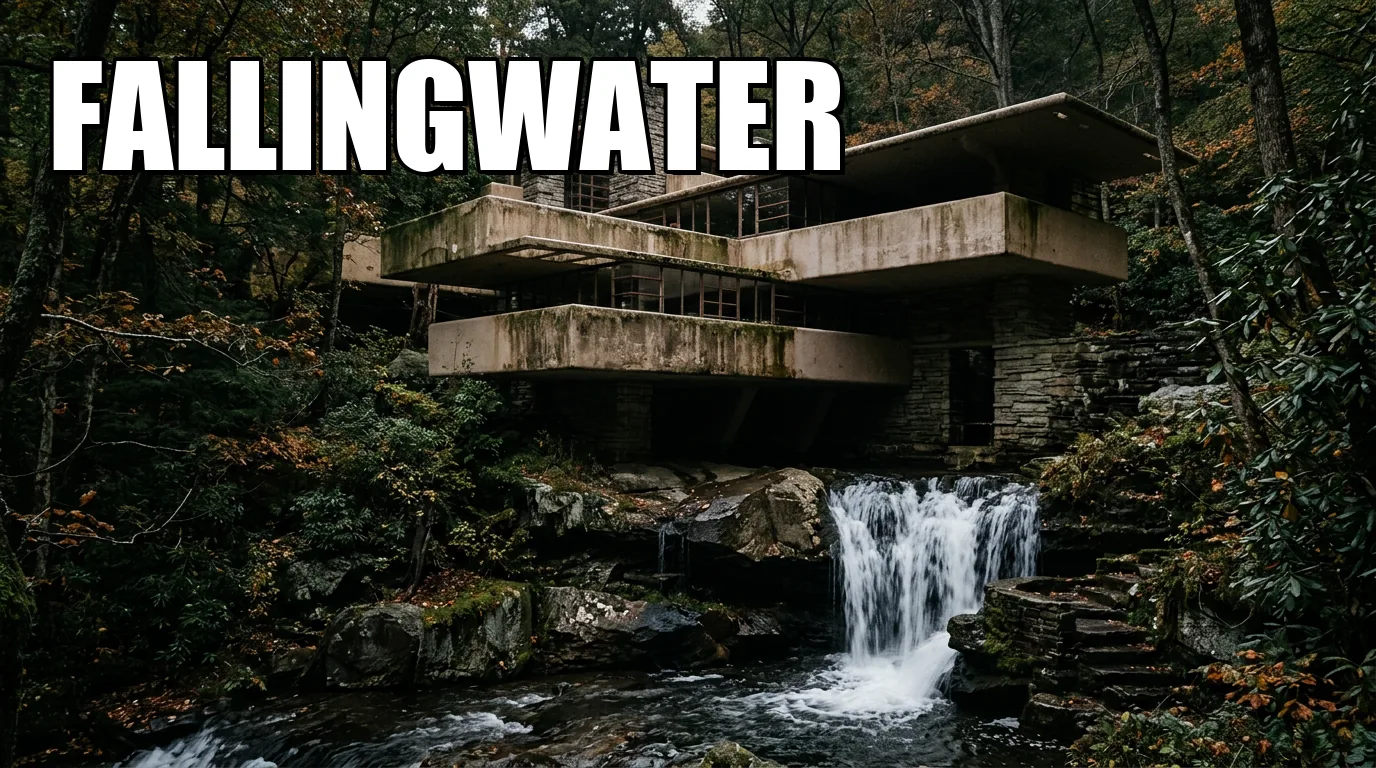
Few architectural creations capture the imagination quite like Frank Lloyd Wright's Fallingwater. Perched precariously, yet gracefully, over Bear Run in rural Pennsylvania, it’s a site that has graced countless coffee table books and architectural treatises. Most visitors arrive expecting a serene, almost spiritual experience, a testament to man's harmony with nature. And, yes, it delivers that. But what the glossy brochures and superficial tours often miss is the sheer, audacious drama of its birth, a tale brimming with human fallibility, stubborn genius, and a constant, quiet battle against the very forces of nature it sought to embrace.

My first pilgrimage to Fallingwater wasn't just a sightseeing trip; it was an attempt to peel back the layers of myth surrounding one of America's most celebrated structures. I wanted to understand not just what Fallingwater is, but how it came to be, and why its story continues to resonate with such potent lessons about ambition and engineering. What I discovered was far more complex and compelling than any mere architectural marvel, revealing a building that was, from its very inception, a defiant act against conventional wisdom, almost to its own peril.

When Genius Clashed with Gravity: The Unseen Battle Beneath the Cantilevers

The iconic image of Fallingwater is undoubtedly its bold, projecting terraces. They defy expectation, stretching outward from the bedrock like concrete arms reaching for the cascade below. Yet, these very cantilevers – rigid structural elements anchored at only one end, supporting a load along their unsupported length – became the nexus of a ferocious, almost catastrophic, conflict between the architect's vision and the cold realities of structural engineering. The initial working drawings were completed in January 1936, with construction officially beginning in April. By August of that year, the project teetered on the brink of disaster.

Contractor Walker J. Hall, a man whose practical experience likely saved Fallingwater from early collapse, was the first to sound the alarm. He scrutinized Wright's plans for the main living room cantilever and made a terrifying discovery: the specified reinforcement was more than 50% under-reinforced. This wasn't a minor oversight; it was a fundamental miscalculation that put the entire audacious design in jeopardy. Edgar Kaufmann Sr., the client, commissioned an independent peer review, which tragically confirmed Hall's findings. Wright's response? A legendary explosion of ego, famously declaring, if I don't have your confidence—to hell with the whole thing. His refusal to acknowledge any design flaws, at least publicly, and his initial rejection of all recommendations for additional reinforcement, speaks volumes about the man behind the myth. It's a reminder that even the greatest minds are not infallible.

Here’s where the narrative takes a surprising turn, highlighting the unsung heroes who quietly defied an architectural titan. Despite Wright’s intransigence, the Metzger-Richardson Company, the reinforcing steel supplier, made a critical, covert decision. Between August 1 and 18, 1936, they discreetly doubled the number of 1-inch square reinforcing bars in the large cantilevered beams of the living room. This wasn't at Wright's instruction; it was an act of quiet rebellion, executed on Kaufmann’s authority and cost, by those who knew the structural integrity of the house depended on it. Without this clandestine intervention, the very terraces that define Fallingwater would likely not exist today, or at least not in their original form. It’s a testament to the practical wisdom of the builders that often goes unnoticed in the shadow of the architect's genius. Even more remarkably, tests in the 1990s confirmed the concrete itself tested at over 5,000 pounds per square inch (psi), a full 30% stronger than initially expected, adding another layer of unintended structural resilience to the house.

A Wall Too Far? The Architect's Fury and an Unseen Rescue Attempt

The engineering challenges, however, didn't end with the hidden reinforcement. A critical error during construction was the omission of pre-cambers – a slight upward incline designed into formwork to counteract the inevitable downward deflection of a structure once the forms are removed. Without these, the cantilevers had no way to compensate for settling. Upon stripping the formwork, the first-floor terrace immediately sank by approximately 1.75 inches. This wasn't merely cosmetic; it was a visible symptom of underlying stress.

By December 1936, just months after the concrete pour, cracks began to spiderweb through the parapet walls of the master terrace. Five major cracks were detected throughout the structure, visible evidence that the house was struggling under its own weight. This alarming development prompted Kaufmann's consulting engineers to propose a radical, and to Wright, sacrilegious solution. In January 1937, a stone wall was discreetly installed beneath the western second-floor terrace, a desperate attempt to shore up the visible distress. This stone addition, intended to provide crucial structural support, represents the fundamental tension between Wright’s aesthetic idealism and the pragmatic need for stability.

When Wright discovered this unauthorized support wall during a subsequent site visit, his fury was incandescent. He saw it as an affront, a public declaration of his design's perceived failure. He ordered his on-site supervisor, Bob Mosher, to subtly remove the top course of stones, effectively rendering the wall useless, before it was eventually disassembled entirely. Wright's indignant reaction, though understandable from an artistic perspective, starkly illustrates his unwavering confidence, even in the face of glaring structural warnings. He pointed out that the cantilever had successfully supported test loads for weeks without the wall, a bold claim that, while true, didn't negate the underlying issues that would haunt the house for decades.

Quarry to Cantilever: The Craftsmen, Materials, and Unsung Heroes of a Vision

Beyond the structural drama, Fallingwater’s profound connection to its site is owed to a meticulous selection of materials and the skilled hands that shaped them. Wright’s genius lay in his ability to demand this integration, making the house seem to emerge organically from the landscape rather than merely sitting upon it. The local Pottsville sandstone, a beautiful calcareous stone, was quarried directly from the site, less than 500 feet from the waterfall itself. This decision wasn't just aesthetic; it minimized transportation costs and ensured a material harmony that could not have been achieved with imported stone. The stone was laid in irregular patterns, mimicking the natural rock formations along the streambed, blurring the lines between nature and architecture. It's a detail easily overlooked, but it's fundamental to the organic architecture philosophy Wright so vehemently championed.

The reinforced concrete, which forms the daring cantilevers and much of the internal structure, was mixed on-site using local aggregate. This labor-intensive process, largely done by hand, underscores the craftsmanship involved in an era before widespread mechanized construction. The flooring, for instance, utilized an ingenious inverted T-beam construction, where the concrete slab was positioned *below* the beams. This not only placed the majority of the concrete in the optimal compression face for the cantilevers but also created the smooth, uninterrupted ceilings that characterize the interior spaces.

Many other elements were equally considered, speaking to a forward-thinking design sensibility. The steel window and door frames, for example, were manufactured by Hope's Windows of Jamestown, New York, a relatively innovative choice for the 1930s, when wooden sashes were still the norm. These, along with all other metalwork including railings and shelves, were painted in Wright's signature Cherokee Red, an earthy, iron-oxide hue inspired by natural materials and indigenous traditions. It’s these thoughtful, consistent details, from the largest stone to the smallest painted metalwork, that weave together to create Fallingwater's immersive, singular atmosphere, all orchestrated by Wright but brought to life by a team of dedicated craftsmen and engineers like Walker J. Hall, William Wesley Peters, and Taliesin apprentices Bob Mosher and Edgar Tafel.

The House That Was Falling Down: What it Takes to Keep a Masterpiece Afloat

The structural struggles that marked Fallingwater's genesis weren't merely historical footnotes; they cast a long shadow over its future. The cantilevered terraces continued to sag over the decades, a slow, inexorable surrender to gravity. By 1995, a comprehensive structural report confirmed what many had long suspected: the house was, quite literally and ironically, falling into the waterfall. The major cantilevers had sagged by more than 7 inches by 2001, pushing the structure perilously close to catastrophic failure. This revelation, often glossed over in popular accounts, underscores the monumental task of preserving such a daring piece of architecture.

Preventing an irreversible collapse required a radical, yet sensitive, intervention. From 2001 to 2002, a pioneering post-tensioned steel cable system was installed, a testament to modern engineering's ability to salvage historical masterpieces. This intricate process involved drilling through existing joists and threading multistrand and monostrand post-tensioning tendons – high-strength steel cables – through them. These tendons were then anchored with concrete blocks and tensioned, effectively pulling the sagging cantilevers back into a stable position. Led by Robert Silman Associates, this project was one of the earliest examples of using prestressed concrete members to repair and strengthen a historic building, achieving structural integrity without compromising Fallingwater's iconic aesthetic. It's a potent reminder that preserving our architectural heritage often requires a blend of historical reverence and cutting-edge innovation, a dialogue between past design and future survival.

Navigating Bear Run: Practicalities and Surprises for Your Pilgrimage

So, you've decided to make the pilgrimage to Fallingwater. Excellent choice, but go armed with more than just a camera; bring a keen eye and a critical mind. This isn't just a house; it's a living artifact of architectural ambition and human ingenuity, warts and all. What should you expect, and how can you maximize your visit?

Forget the notion of just showing up. Fallingwater is an incredibly popular destination, and tours are almost always sold out, especially during peak seasons. You absolutely must book your tour tickets well in advance, sometimes months ahead, especially for weekend visits or during the fall foliage season (late September through October). I'd recommend opting for the In-Depth or Details tours if available; they offer smaller groups and more access to the interiors, providing a richer context for the stories you've just read. A standard tour will set you back around $35-40, while the more comprehensive options might be closer to $80-100, but they're worth every penny for the deeper insights.

Arrive early, even if you have a timed ticket. The visitor center itself is discreet, nestled away from the main attraction, and the walk to the house is a crucial part of the experience. It allows for a gradual immersion into the natural setting, preparing you for the architectural reveal. Parking is ample and usually included in your admission, but allow extra time to navigate the relatively remote roads of rural Fayette County, Pennsylvania. The best months to visit are late spring (May-June) or early fall (September-October), when the surrounding natural beauty enhances the house's organic connection to the landscape, and the weather is generally mild. Avoid peak summer holidays if you dislike crowds, and note that the house is typically closed on Wednesdays, as well as some major holidays. Expect walking, some stairs, and a surprisingly intimate, almost meditative, experience despite the crowds. It's a chance to truly reflect on how a structure, born of both brilliance and fierce contention, can ultimately endure as an enduring symbol of architectural daring.

Discover Fallingwater: Your Complete Guide to Frank Lloyd Wright's Architectural Masterpiece

What is Fallingwater and its history with Frank Lloyd Wright?
Fallingwater is a legendary house designed by Frank Lloyd Wright in 1935 and built between 1936-1937 as a weekend retreat for the wealthy Kaufmann family. It was built directly over a waterfall on Bear Run in the Laurel Highlands of Pennsylvania, making it one of the most iconic buildings of the 20th century.
What was the significance of Frank Lloyd Wright's design for Fallingwater?
The design was a turning point in Wright's career, perfectly exemplifying his organic architecture philosophy where buildings harmonize with their natural surroundings. Its daring construction over an active waterfall and seamless integration with nature made it revolutionary and helped establish Wright as America's greatest architect.
What's so special about Fallingwater?
Fallingwater is special because it merges architecture with nature in a way few buildings ever have, featuring cantilevered terraces that extend over the waterfall, flowing interior spaces, natural materials from the surrounding landscape, and large windows that bring the outdoors inside. The American Institute of Architects named it the best all-time work of American architecture.
What is Frank Lloyd Wright's most famous house?
Fallingwater is widely considered Frank Lloyd Wright's most famous house and his masterpiece, earning UNESCO World Heritage status and recognition as a National Historic Landmark.
Where is Fallingwater Frank Lloyd Wright located?
Fallingwater is located at 1491 Mill Run Road, Mill Run, Pennsylvania 15464, in the Laurel Highlands of southwest Pennsylvania's Allegheny Mountains, approximately 90 minutes south of Pittsburgh.
What is the meaning of Fallingwater?
The name 'Fallingwater' literally refers to the waterfall on Bear Run over which the house is built, symbolizing Wright's vision of architecture that flows with and celebrates natural water features rather than fighting against them.
Why is Fallingwater difficult to maintain and inhabit?
Fallingwater's location directly over a waterfall creates constant exposure to moisture, humidity, and water infiltration, causing perpetual structural challenges and leaks. Additionally, Wright used less reinforcing steel in the concrete cantilevered terraces, which has required ongoing restoration efforts to prevent deterioration.
Where are Frank Lloyd Wright buildings located across the United States?
Frank Lloyd Wright designed over 400 structures throughout his lifetime, with 532 eventually built across most U.S. states. Significant collections include Taliesin in Wisconsin, the Guggenheim Museum in New York, and numerous residences scattered from Arizona to Pennsylvania.
Who owns Fallingwater house today?
Fallingwater has been owned and operated by the Western Pennsylvania Conservancy since 1963, when Edgar Kaufmann Jr. entrusted it to the nonprofit conservation organization to preserve it for future generations.
Can you visit the Fallingwater house?
Yes, Fallingwater is open to the public year-round with guided tours available daily except Wednesdays. Tours range from grounds-only passes to in-depth guided house tours, with prices starting at $18 for grounds access and $89 for comprehensive in-depth tours.
What are the current tour options and pricing for 2025?
Tour options include Guided House Tours ($42), In-Depth Guided Tours ($89), Guided Grounds Walking Tours ($29), Family Field Trips ($31 per person), Grounds Pass ($18), and private specialty tours. Tours operate from 8 a.m. to 4 p.m. daily except Wednesdays.
What is the best time of year to visit Fallingwater?
Fall, particularly September through early October, offers beautiful foliage and comfortable weather, though spring is also ideal. Summer (July-August) is peak season requiring booking 4-6 weeks in advance, while winter has limited hours.
How long should I plan to spend at Fallingwater?
Plan at least 2-3 hours total; guided house tours last approximately 1-2 hours depending on the tour type, plus time for arrival, parking, the visitor center, and grounds exploration. The full in-depth experience is recommended for 3+ hours.
Are there age restrictions for visiting Fallingwater?
Children under 6 are not permitted on house tours but can enjoy grounds-only access; the In-Depth tour requires children to be at least 9 years old. A Family Field Trip tour with exterior-only access is available for families with young children.
Are personal photographs allowed inside Fallingwater?
Personal photography without flash is permitted on In-Depth Guided Tours for noncommercial use only, but not on standard Guided House Tours. Commercial photography and drones are prohibited on the property.