Film & TV Locations

Forrest Gump's Footsteps: Uncovering Filming Magic

Few films have woven themselves into the fabric of American culture quite like Forrest Gump. It’s a tapestry of innocence, fate, and relentless forward motion, echoing our collective myths and dreams. For many, myself included, the thought of tracing Forrest's literal footsteps—from a park bench in Georgia to the vast expanse of the American West—is an irresistible call. But as any seasoned traveler knows, the reality of a cinematic pilgrimage rarely matches the silver screen's polished fantasy. My wanderings have taken me to these legendary sites, and I've found that understanding what you're truly visiting, and why, makes all the difference.

This isn't just about finding a spot where a camera once stood; it's about connecting with a story that resonated deeply, and perhaps, discovering a little more about America's diverse landscapes along the way. Be forewarned: some of these "locations" exist more in memory and myth than in tangible brick and mortar. Let's peel back the layers and see what remains of Forrest's world.

Chippewa Square: The Bench That Wasn't Quite There

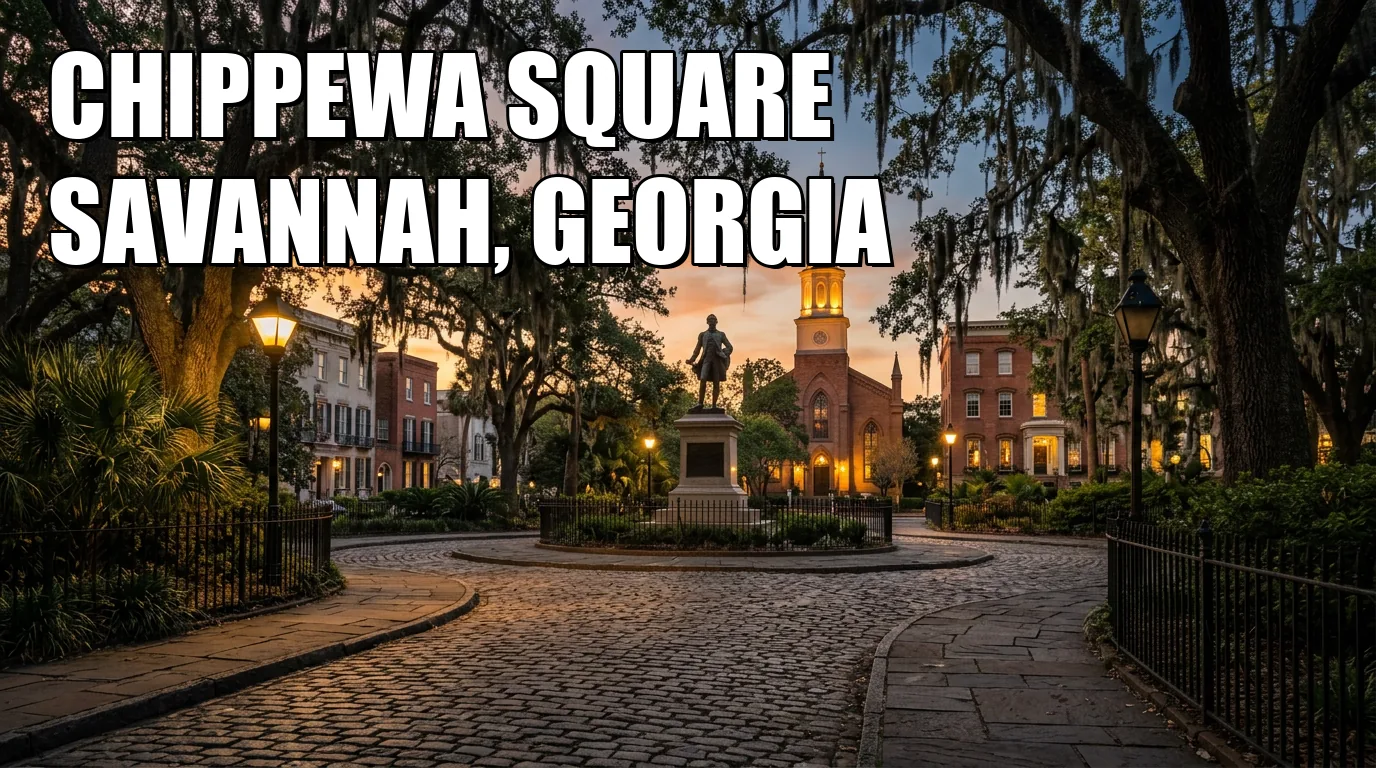
Ah, Savannah. Its Spanish moss-draped squares, cobblestone streets, and antebellum charm make it a quintessential Southern dreamscape. It’s no wonder Robert Zemeckis chose this city as the backdrop for Forrest’s philosophical musings on a park bench. Every visitor to Savannah, it seems, eventually asks, "Where's the Forrest Gump bench?" The expectation is often to find the very spot, perhaps even the very bench, where Tom Hanks delivered those memorable lines about life being like a box of chocolates. Reality, however, has a way of being far more nuanced.

Your search will lead you to Chippewa Square, a picturesque green oasis at the intersection of Bull Street and Hull Street, dominated by a statue of Georgia founder James Oglethorpe. Yes, this is *the* square. The scenes were indeed filmed on its north side, with Oglethorpe's gaze fixed stoically in the background. What many don’t realize, however, is that the iconic bench wasn't a permanent fixture of the square at all. It was, in fact, a carefully crafted fiberglass prop, brought in specifically for the three days of filming back in 1993.

After the cameras stopped rolling, the original prop bench was wisely whisked away to Paramount Studios in Los Angeles, becoming a prized piece of movie memorabilia. A replica, however, was graciously donated to the Savannah History Museum, where you can actually see it today. This subtle distinction – visiting the *site* versus seeing the *prop* – changes the entire experience. Instead of a selfie with the 'actual' bench, you're left to contemplate the power of storytelling against a beautiful, historic backdrop.

Is Chippewa Square still worth visiting? Absolutely. But not just for Forrest. Its enduring appeal lies in its inherent Savannah-ness. Stroll through the square, soak in the ambiance, and imagine the film crew recreating that magic. You'll find ample street parking, but it can be challenging during peak tourist season (spring and fall). Consider visiting early in the morning or late afternoon for a more contemplative experience, dodging the tour groups that descend upon the square throughout the day. The square itself is a public park, so there's no admission fee, but a visit to the Savannah History Museum (which typically costs around $20 for adults) is the only way to get up close with a physical representation of Forrest's seat.

Where the Road Ends: Monument Valley's Endless Run

From the genteel South, Forrest’s journey takes us to the stark, breathtaking beauty of the American Southwest. The scene where Forrest, having run across the entire country, suddenly stops in the middle of a highway and declares, "I'm pretty tired… I think I'll go home now," is one of the most poignant moments in the film. This pivotal cinematic moment was captured against the dramatic backdrop of Monument Valley, a landscape so iconic it feels like it belongs to every American’s collective memory, regardless of whether they’ve actually visited.

Specifically, the spot is now affectionately known as Forrest Gump Point, located at Mile Marker 13 on Highway 163 within the Navajo Nation Reservation. You'll find it roughly 20 minutes north of Monument Valley's main entrance, straddling the Utah-Arizona border. GPS coordinates (37°06'09.5N 109°59'21.1W) will lead you right to it, and you'll know you’ve arrived when you see the long, straight road stretching into the distance, framed by the majestic Mittens and other sandstone monoliths.

Unlike Chippewa Square, there's no prop to hunt for here, no museum exhibit. This is pure landscape cinema. The "crusade unit," a special film crew dedicated solely to Forrest's running sequences, spent approximately 14 days in 1993 capturing this and other cross-country sprints across multiple states. Here, the monument isn't man-made; it’s the grandeur of nature itself. Expect to pull over to a busy shoulder alongside dozens of other eager photographers, all trying to capture that perfect, solitary shot of the road disappearing into the horizon. The sheer scale of the desert makes you feel small, mirroring Forrest's journey and reminding you of the vastness of the human spirit.

There's no admission fee to stop at Forrest Gump Point, as it's a public highway. However, you are on Navajo Nation land, so it’s crucial to be respectful of the environment and local culture. The best times to visit are during the shoulder seasons—spring (April-May) and fall (September-October)—when temperatures are more moderate and the light for photography is often spectacular. Summers can be brutally hot, and winters bring unpredictable weather. It’s an essential stop for any film enthusiast, but even if you've never seen the movie, the view alone is worth the drive. Just be mindful of traffic; it’s still an active highway, and selfie-takers often get a little too comfortable in the middle of the road.

The Elusive Childhood Home: A Set Built to Vanish

Of all Forrest's legendary locations, his childhood home holds perhaps the most sentimental weight. It's where he grew up with Mama, where young Forrest first learned to "run, Forrest, run!" from bullies on bikes, and where so many formative moments unfolded. The emotional core of the film often returns to this modest house in Greenbow, Alabama (though, of course, it was filmed elsewhere). The thought of visiting such a foundational place, seeing the porch swing, the familiar front door, often brings a wistful sense of anticipation.

Here’s the hard truth, the one that often surprises and disappoints: the Gump family home was a temporary structure, purpose-built for the movie on Bluff Plantation, an expansive 8,000-acre estate near Varnville, South Carolina, specifically southeast of Yemassee. This wasn't some existing Southern charmer adopted by Hollywood; it was a 3,500-square-foot fabrication, hastily constructed for just two months of filming in 1993. And once filming wrapped, it was gone. Torn down. Demolished. The house, built without adhering to permanent building codes, simply wasn't meant to last beyond its cinematic purpose.

This revelation often hits visitors like a punch to the gut. The house, the very symbol of Forrest’s roots, exists only in celluloid. What does remain, however, is the long, iconic driveway leading to where the house once stood. This tree-lined path, virtually unchanged, is still recognizable from the "Run, Forrest, run!" chase scene. The catch? Bluff Plantation is private property. While the entrance to the grounds and the driveway are visible from Twickenham Road, you cannot simply drive up and explore. This is a location best appreciated from a respectful distance, acknowledging the film's magic without infringing on private land. There are no tours, no visitor centers, and certainly no admission fees because there’s nothing permanent to visit.

So, why bother visiting a non-existent house? For the devoted fan, it's about the pilgrimage, the understanding of cinematic illusion, and appreciating the landscape that once framed such profound storytelling. It’s a sobering reminder that many film locations are just that – temporary sets, not enduring landmarks. For those who still wish to make the drive, Varnville is a small town, and opportunities for food or lodging are limited. Plan your trip with the understanding that this is a drive-by appreciation of a phantom structure, a quiet nod to a powerful memory.

Beyond the Frame: The Enduring Allure of Cinematic Journeys

What makes a film location truly resonate? Is it the tangible artifact, the very bench or building? Or is it the enduring power of the narrative, the emotional connection we forge with characters and their journeys? My travels to these iconic Forrest Gump sites have underscored a fascinating truth: the strength of a movie’s connection often transcends the physical reality of its filming locations. From Savannah’s prop bench to Monument Valley’s timeless vistas and Varnville’s vanished home, each site offers a different facet of what it means to visit a cinematic legend.

The lessons gleaned from these pilgrimages extend beyond mere photo opportunities. They teach us about the ingenuity of filmmakers, the fleeting nature of movie sets, and the deep emotional attachment we form with stories. When you visit Chippewa Square, you're not just seeing a park; you're feeling the gentle pulse of Savannah, a city that perfectly encapsulated Forrest's quiet wisdom. At Monument Valley, you're not merely observing a desert highway; you're standing in a landscape that has long symbolized freedom and the American spirit, a truly vast and inspiring canvas for a man’s epic run.

And at Varnville, while the house itself is gone, the surrounding lowcountry landscape still evokes the rural solitude of Forrest's early life. It’s a powerful, if melancholic, reminder that some of the most impactful places in our collective imagination are transient, existing primarily in the flicker of light on a screen. Perhaps this absence makes the memory of the film even stronger, forcing us to conjure the images in our minds, rather than relying on a physical presence.

Planning Your Own Gump Odyssey: Practicalities and Reflections

Embarking on a journey to these Forrest Gump locations is less about following a rigid itinerary and more about embracing a sense of adventure and a deep appreciation for the film’s legacy. Since these sites are spread across thousands of miles, attempting to visit all three in one go would be a formidable road trip, best undertaken over several days or even separate trips, each focused on a specific region.

If you're contemplating a multi-state tour, consider starting with Savannah, perhaps combining it with other historical sites in Georgia or South Carolina. Then, for Monument Valley, it's best integrated into a larger Southwest adventure, exploring national parks like Zion, Bryce Canyon, or the Grand Canyon. Each locale offers distinct experiences, and managing your expectations, particularly for the Varnville site, will be key to a fulfilling trip. Remember, the true magic lies not just in standing where Forrest stood, but in reflecting on the journey, both his and your own.

Complete Guide to Forrest Gump Filming Locations Across America

What were the filming locations for Forrest Gump?
Forrest Gump was filmed across multiple U.S. states from August to December 1993, with major scenes shot in South Carolina (Beaufort, Yemassee, Fripp Island, Hunting Island), North Carolina (Grandfather Mountain), Maine (Marshall Point Lighthouse), Georgia (Savannah), coastal Virginia, Arizona (Monument Valley), Montana, and Los Angeles. The fictional town of Greenbow, Alabama was actually filmed in Varnville, South Carolina.
Can you visit where Forrest Gump was filmed?
Yes, many filming locations are accessible to visitors including Chippewa Square in Savannah, Grandfather Mountain in North Carolina, Marshall Point Lighthouse in Maine, Monument Valley in Utah, and various locations throughout Beaufort and coastal South Carolina.
Can you visit the Forrest Gump house?
Unfortunately, the Forrest Gump house cannot be visited as it was a temporary set built on Bluff Plantation near Yemassee, South Carolina, and was removed after filming concluded.
Can I visit the real Forrest Gump bench?
Yes, the original bench used in the movie is now housed in the Savannah History Museum in Savannah, Georgia, where you can sit on it and take photos.
Where is the Forrest Gump bench statue?
The bench is permanently displayed at the Savannah History Museum in Savannah, Georgia, located at 303 Martin Luther King Jr. Boulevard.
Why was the Forrest Gump bench removed from Chippewa Square?
The bench was removed from Chippewa Square after principal photography ended to restore the historic square to its original condition; it was donated to the city and is now preserved at the Savannah History Museum.
What disorder did Jenny have in Forrest Gump?
Jenny's specific illness is not named in the movie, but screenwriter Eric Roth confirmed it was late-stage HIV/AIDS in the canceled Forrest Gump sequel novel, which aligns with theories about her death in the 1980s.
What mental disability did Forrest Gump have?
Forrest's IQ was stated as 75 in the film, which made him ineligible for public school; he was never explicitly diagnosed with a specific disorder in the movie, though some debate whether this represents autism or intellectual disability.
Is there a real life Forrest Gump?
The character was inspired by multiple real people rather than one specific individual; however, Rob Pope is known as the 'real Forrest Gump' for running across the United States multiple times, completing the route five times in 422 days in 2018.
Forrest gump filming locations guide - which state had the most filming?
South Carolina had the most filming, with major scenes shot in Beaufort, Yemassee, Fripp Island, and Hunting Island, representing much of the movie's Alabama settings and Vietnam war scenes.
How much does it cost to visit the Savannah History Museum where the bench is displayed?
Admission is $12 for adults and $8 for children ages 3-12; the museum is open daily from 9:00 AM to 4:00 PM.
Where is Forrest Gump Curve and can I visit it?
Forrest Gump Curve is located on Grandfather Mountain in North Carolina along the main road to the summit between the Wilson Center and the Mile High Swinging Bridge; a parking area is available nearby, though walking or running on the road itself is not permitted.
What is Forrest Gump Point in Utah?
Forrest Gump Point is located at mile marker 13 on Route 163 near Mexican Hat, Utah, on the Navajo Reservation, where Forrest ended his cross-country run in the movie; it offers spectacular Monument Valley views.
What's the best time to visit Forrest Gump filming locations?
April and October are ideal months to visit Beaufort and South Carolina locations due to pleasant weather; weekday mornings are best for visiting the Savannah History Museum with fewer crowds.
Are there guided tours available for Forrest Gump filming locations?
Yes, several tour operators in Beaufort offer golf cart and bus tours that visit multiple film locations including scenes from Forrest Gump and other movies; tours typically last 1-2 hours and include historical narratives about the filming.