Does the term "French Colonial architecture" conjure images of wrought-iron balconies dripping with ferns, gas lamps casting shadows on cobbled streets, and the unmistakable scent of chicory coffee wafting from shuttered windows? Most likely, your mind's eye is firmly fixed on the French Quarter of New Orleans, and for good reason—it’s a living museum. Yet, what if I told you that finding *authentic* French Colonial structures directly on the U.S. Gulf Coast, outside the Crescent City's immediate orbit, is akin to a historical scavenger hunt? It's a far more challenging, and ultimately, rewarding pursuit than most guidebooks let on.
Why this scarcity on the actual coastline? The answer lies in geography and a brutal history of natural forces. The Gulf Coast proper—think Mississippi, Alabama, and the coastal stretches of Louisiana outside of New Orleans—is a fragile ribbon of land, susceptible to relentless storm surges, devastating hurricanes, and sprawling marshlands. Early French settlements here were often ephemeral, built from less durable materials, or later adapted and rebuilt under Spanish or American rule. The surviving gems are, therefore, not just architectural marvels but testaments to resilience, revealing unique adaptations born of necessity and ingenuity.
Unraveling the Myth of Pure French Colonialism
Before we embark on this architectural journey, it's crucial to understand a fundamental truth: the "French Colonial" label along the Gulf is rarely pure. The period of French dominance (roughly 1699-1763) was followed by a significant Spanish presence (1763-1803), particularly in New Orleans and Mobile. This historical overlap meant that many buildings attributed solely to French influence were either constructed or heavily modified during the Spanish era, resulting in a fascinating architectural hybrid—what we often refer to as French Creole. Expect to see elements like Spanish tile, enclosed courtyards, and specific window treatments blending seamlessly with Gallic forms. It’s this very impurity that makes the region's built environment so compelling.
Pascagoula's Enduring Enigma: The LaPointe-Krebs House
Journeying east from New Orleans, one might assume the French influence quickly fades. However, tucked away in Pascagoula, Mississippi, stands a structure that defies expectations and offers a unique window into early colonial construction: the
LaPointe-Krebs House. Dendrochronology, the scientific dating of tree rings, confirmed its construction date as 1757, making it Mississippi's oldest continuously inhabited structure. Originally granted to Joseph Simon dit La Pointe, it was his son-in-law, Hugo Krebs, who built this remarkable home.
What makes this house truly special is its construction material:
tabby concrete, a mix of oyster shells, sand, and lime, a method rarely seen outside of coastal Georgia and Florida, and here, the only known example on the entire Gulf Coast. Imagine the labor involved: harvesting countless oysters, burning their shells for lime, then mixing and pouring this primitive concrete for 18-inch thick walls. The original single-story, three-room section, and an eastern addition proudly showcase this robust, hurricane-resistant material, a testament to the early settlers' pragmatic adaptation to their environment. A later western addition, circa 1820, reveals a shift to
bousillage—a mixture of clay and Spanish moss packed between cypress uprights—indicating evolving building techniques and available resources. Its steep hipped roof with dormers, a characteristic French Colonial feature, caps a structure that has weathered centuries of Gulf Coast storms, standing as a stark reminder of colonial ingenuity against nature's wrath. Visiting offers a tangible connection to a harsh past, but be prepared for a humble, rather than grand, experience; it's a testament to survival, not opulence.
New Orleans' Old Ursuline Convent: A Beacon of French Public Design
While our quest focuses on the "coast proper," no discussion of French Colonial architecture would be complete without acknowledging New Orleans. The
Old Ursuline Convent, built between 1748 and 1752, isn't just a historical building; it’s practically a national treasure, designated by the National Park Service as "the finest surviving example of French colonial public architecture in the country." Designed in 1745 and funded by plantation owner Claude Joseph Villars Dubreuil, this three-story brick edifice marked a significant architectural leap for New Orleans.
Preceding it, most structures relied on vulnerable timber framing with bousillage infill, a method prone to rapid decay in the subtropical humidity and frequent fires that plagued the city. The convent's substantial brick construction, later stuccoed white, was revolutionary, offering unprecedented durability and grandeur. Its steeply pitched hipped roof, with its graceful curved eaves and small dormers, hints at metropolitan French influences, while the generous interior spaces and high ceilings were practical adaptations to the hot, humid climate, designed to encourage airflow. Look closely at the interior cypress staircases with their delicate wrought-iron railings; they were salvaged from the original 1730s convent, a poignant reminder of continuity and resourcefulness. Standing today, it provides an invaluable insight into the aspirations of French officialdom and religious orders in the New World. Plan your visit during the cooler months, as the un-air-conditioned interior can be stiflingly warm, offering an authentic, if uncomfortable, glimpse into 18th-century living.
Madame John's Legacy: A Survivor from a Fiery Past
Just a few blocks from the Ursuline Convent, within the vibrant bustle of the French Quarter, lies
Madame John's Legacy. This raised galleried cottage, documented by a 1788 building contract, is remarkable not just for its age, but for its sheer luck. It's the only surviving example of French Colonial-style residential architecture in the French Quarter to have miraculously escaped the devastating fires of 1788 and 1794. While constructed by Spanish military official Manuel de Lanzos, its design hearkens back to French forms, a testament to the enduring influence even under new governance.
The structure features a full-height raised brick basement, practical for flood protection and cooling, with brick-between-posts construction on the upper story, covered externally with horizontal wooden boards. Like many French Colonial homes, it boasts a steep double-pitched hipped roof and full-height galleries—those shaded outdoor living spaces crucial for comfort in Louisiana's sweltering climate. What truly distinguishes the interior is the absence of a central hallway; all rooms open directly onto these exterior galleries through
French doors, a design that maximized cross-ventilation and provided fluid access to the outdoor living spaces. Behind the main house, an open courtyard, kitchen, slave quarters, and a two-story
garçonnière (guest quarters, likely from the 1820s) complete the complex, offering a rare, complete picture of a colonial urban household. It challenges the romanticized image of the French Quarter, revealing the pragmatic, often austere, reality of colonial urban living. Arrive early on a weekday to avoid the tour groups and truly absorb the quiet echoes of its past.
Parlange Plantation House: A Grandiose Debate on Dating
Moving inland, along the Cane River (a former Mississippi River oxbow lake), we find ourselves at the stately
Parlange Plantation House in Pointe Coupee Parish. This is where the narrative of French Colonial architecture gets delightfully muddled. While oral history suggests a construction date around 1750, scholarly analysis points to a later period, perhaps 1830-1840. Regardless of the exact year, its architectural DNA is undeniably French, a testament to Vincent de Ternant, the Marquis of Dansville-sur-Meuse, who received the original French land grant.
This two-story raised cottage epitomizes the grand plantation house style uniquely adapted to Louisiana’s semi-tropical environment. Its main floor perches atop a raised brick basement, with brick pillars extending to support spacious galleries on the second story. The walls were plastered with bousillage, that distinctive native mixture of mud, sand, Spanish moss, and animal hair, then painted. Both floors feature seven service rooms arranged in a double line, again, with no central hallways; every room accesses the galleries through French doors, often topped with fan-shaped transoms, maximizing light and airflow. The high hipped dormered roof, covered with cypress shingles, crowns this impressive structure. Nearby, an octagonal brick
pigeonnier (dovecote) stands, not merely a home for birds, but a clear marker of plantation wealth and status. The extensive use of bald cypress plank construction throughout, a local, durable timber, points to materials and labor provided by enslaved craftspeople. It’s a powerful, if somewhat uncomfortable, reminder that the beauty of these structures is inextricably linked to a complex human history. While a private residence, its exterior can be admired, sparking contemplation on architectural evolution and historical interpretation.
Mobile's Vincent-Doan House: A Creole Jewel in Alabama
Crossing into Alabama, the search for French Colonial traits becomes even more specialized. In Mobile, the
Vincent-Doan House, dating to 1827, stands as the city's oldest home in its original location and the oldest surviving example of French Creole architecture. Built by Captain Benjamin Vincent, a merchant who commanded cargo vessels between New Orleans and Mobile, it showcases how French Creole traditions, often associated solely with Louisiana, permeated other Gulf Coast port cities.
This Gulf Coast cottage is a fascinating blend, featuring Spanish terra cotta floor tiles in the kitchen—a clear nod to intermingling cultural influences—and an elegant two-story exterior staircase. Its pitched second-floor porch deck is a practical design, helping to shed the region's torrential rains. The raised foundation, a recurring theme in Gulf Coast architecture, offers vital protection against coastal flooding and storm surge. It subtly challenges the notion that Mobile was purely a Spanish or American city; its very fabric reveals the enduring, adaptable principles of French Colonial design interwoven with Caribbean influences. While not as grand as some Louisiana plantations, its significance lies in its quiet survival and its unique reflection of Mobile's often-overlooked Creole past. Check local historical society listings for potential tour days, as accessibility can vary.
Oakland Plantation: Natchitoches' Comprehensive Creole Complex
Further inland, along Louisiana's Cane River again, near the historic town of Natchitoches, sits
Oakland Plantation Main House, an expansive complex begun in 1818 and completed in 1821. Its original owner, Jean Pierre Emanuel Prud'homme, a French Creole planter, acquired the land through a Spanish grant around 1785. This site is less about a single building and more about a holistic understanding of a French Creole agricultural enterprise.
The main house itself is a raised Creole cottage with a brick basement and a wooden frame upper story, a quintessential French Creole design. Its interior follows the classic French Colonial floor plan: rooms arranged around exterior galleries, accessed by French doors, notably without interior hallways. High ceilings, another common feature, promoted crucial air circulation in the humid climate. The steep hipped roof with dormers completes the picture of a regional adaptation. Yet, what truly elevates Oakland Plantation is the presence of
17 surviving original outbuildings—pigeonniers, a carriage house, a carpenter's shop, and multiple slave cabins—making it one of the most complete French Creole plantation complexes. It doesn’t just show you a house; it transports you to an entire working world, offering a stark, unvarnished look at the realities of plantation life and the skilled labor that sustained it. This site is definitely worth dedicating several hours to; the breadth of structures provides an unparalleled educational experience, far beyond what you'd typically find at a single house museum.
Maison Olivier / Acadian House: Bayou Teche's Illustrious Creole Legacy
Finally, venturing into Louisiana's Bayou Teche region, Saint Martinville presents the
Maison Olivier / Acadian House, dating to approximately 1815. This exemplary Raised Creole Cottage, built for wealthy Creole planter Pierre Olivier Duclozel de Vezin, displays a fascinating blend of Creole, Caribbean, and French influences that are hallmarks of Gulf Coast architecture. Designated a National Historic Landmark, it represents the architectural traditions of early French settlers who carved out a life in this rich, watery landscape.
Notice the distinct construction: the ground floor walls are an impressive 14 inches thick, crafted from brick made from the adjacent Bayou Teche clays—a brilliant example of local resourcefulness. The upper floor walls revert to bousillage between cypress uprights, highlighting the varied construction methods within a single building. It exhibits all the expected French Colonial features: a raised foundation, full-length galleries, a dormered hip roof, and French door access to all rooms, bypassing interior hallways. This house tells a story of adaptation, not just to climate, but to local materials and cultural exchange. It’s a microcosm of the entire region's architectural journey, showing how European forms were utterly transformed by the American South. To truly appreciate its setting, consider visiting in the spring or fall when the bayou's natural beauty is at its most vibrant and the heat is less intense, allowing for a leisurely stroll through its grounds.
Decoding the Enduring Characteristics of Gulf Coast French Colonial
From Pascagoula to Natchitoches, these structures collectively paint a vivid picture of French Colonial adaptation. They consistently feature
raised foundations, an indispensable defense against floods and humidity. Materials like
tabby concrete,
brick-between-posts, and
bousillage speak to resourcefulness and local availability. The ubiquitous
steep hipped roofs with dormers provided attic space and shed water efficiently, while
full-length galleries offered crucial shade and outdoor living areas. The absence of interior hallways, with all rooms opening via
French doors directly onto these galleries, along with high ceilings, was a masterclass in passive cooling, a necessary innovation in the subtropical climate. What emerges isn't a rigid architectural doctrine, but a sophisticated, pragmatic response to a challenging environment, often blending with Spanish and Caribbean influences to create a truly unique American style. This journey reminds us that history isn't static or neatly compartmentalized; it's a dynamic, evolving narrative etched in stone, shell, and cypress.
Exploring French Colonial Heritage on the Gulf Coast
What is Gulf Coast French Colonial architecture?
Gulf Coast French Colonial architecture features distinctive styles including raised cottages with steep roofs, timber framing, and brick or stucco construction, often with galleries and interior courtyards. The style reflects influences from French, Spanish, and Caribbean building traditions developed during French settlement from 1699 onwards.
When did France colonize Louisiana?
France founded the Louisiana Colony in 1699 when Pierre Le Moyne d'Iberville established Fort Maurepas in what is now Ocean Springs, Mississippi, becoming the first permanent European settlement on the Gulf Coast. The colony remained under French control until 1762, was briefly returned to French rule from 1801-1803, and was then sold to the United States through the Louisiana Purchase in 1803.
Did the French colonize Florida?
The French established Fort Caroline in present-day Jacksonville, Florida in 1564 as part of an early colonial attempt, but the settlement was destroyed by Spanish forces in 1565 and France never secured permanent control over Florida. French explorers such as Jean Ribault attempted to establish colonies in Florida between 1562-1565, but these efforts ultimately failed.
Where are the best Gulf Coast French Colonial sites to visit?
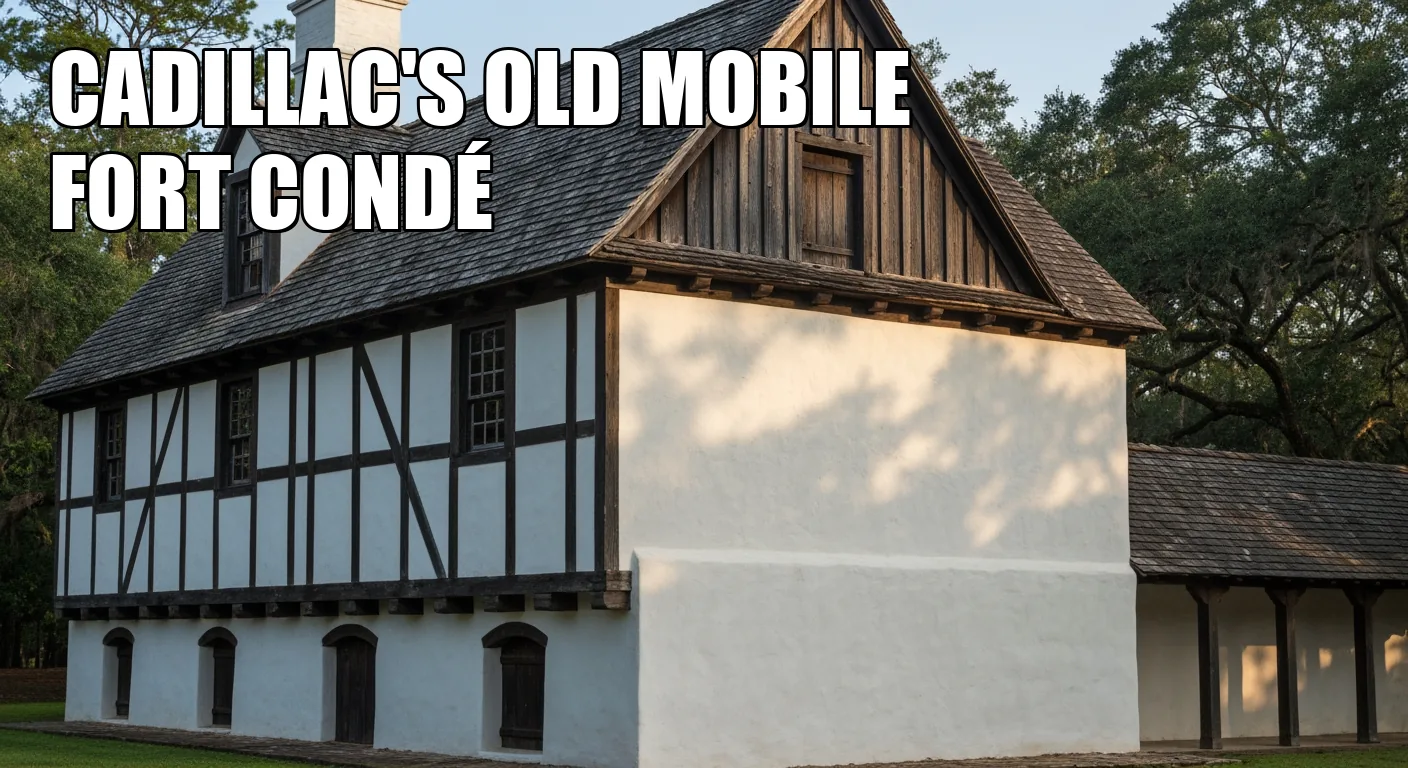
Top sites include Natchitoches, Louisiana (oldest permanent European settlement in the Louisiana Purchase territory, founded 1714), the French Quarter in New Orleans, Colonial Fort Condé in Mobile, Alabama, the LaPointe-Krebs House in Pascagoula, Mississippi, and Ocean Springs, Mississippi where France's first Gulf Coast settlement was established in 1699.
What can I experience at Natchitoches?
Natchitoches features a 33-block National Historic Landmark District with French Colonial, Queen Anne, and Victorian architecture, Fort St. Jean Baptiste State Historic Site with living history demonstrations, Cane River Creole National Historical Park, and historic plantations like Melrose and Roque House. The town showcases authentic Creole culture and architecture from the 18th and 19th centuries.
What is the Old Ursuline Convent?
Built in 1745, the Old Ursuline Convent in New Orleans is the oldest building in the Mississippi River Valley and represents French Colonial architecture at its finest. Currently operating as a museum, it features exhibits about early American heritage, religious history, and local legends, with admission around $8 for adults as of 2025.
What defines Creole architecture on the Gulf Coast?
Creole architecture includes distinctive raised cottages with steeply pitched roofs, front galleries, and timber-frame construction filled with brick or bousillage (mud and Spanish moss), as well as urban Creole townhouses featuring thick brick walls, interior courtyards, cast-iron balconies, and ground-floor businesses with residential units above. This style emerged from the mixing of French, Spanish, African, and Caribbean building traditions.
When is the best time to visit Gulf Coast French Colonial sites?
March through May and October through November offer the most pleasant weather and fewer crowds than summer months; early spring is ideal for festivals and outdoor exploration. September is generally the least expensive for New Orleans accommodations, while summer can be uncomfortably hot and humid.
How much does it cost to visit these colonial sites?
Admission prices vary: Old Ursuline Convent Museum ($8 adults), Fort St. Jean Baptiste ($6 ages 7-61), LaPointe-Krebs House Museum ($5-10 estimated), and Colonial Fort Condé in Mobile (often free on first Sundays); many French Quarter walking tours cost $25-35, with some free self-guided options available.
What is Colonial Fort Condé in Mobile?
Built in 1723 by the French, Fort Condé (also called Fort Charlotte under Spanish rule) is a partially reconstructed 18th-century fort in Mobile, Alabama that offers living history demonstrations, reenactments, and exhibits about colonial military life. It serves as a museum operated by the History Museum of Mobile with regular educational programs.
What is the LaPointe-Krebs House?
Located in Pascagoula, Mississippi and built in 1757, the LaPointe-Krebs House is the oldest scientifically dated building in Mississippi and the only remaining example of tabby concrete construction on the Gulf Coast. Now a museum, it tells the story of French Colonial settlement and uses unique construction techniques from the colonial period.
What is the relationship between Côte d'Ivoire (Ivory Coast) and France?
As of 2025, Ivory Coast has transitioned to a post-colonial relationship with France, with the country announcing in January 2025 the withdrawal of French military troops and taking control of the last French military base in February 2025. Although Ivory Coast gained independence in 1960, France maintained military presence and influence for decades before this recent strategic shift.
When did France colonize Côte d'Ivoire?
France officially colonized Côte d'Ivoire on March 10, 1893, initially as a protectorate before consolidating it into a full French colony. The territory remained under French control until independence was declared on August 7, 1960.
Why did France colonize Côte d'Ivoire?
France colonized Côte d'Ivoire during the late 19th-century Scramble for Africa to establish territorial claims, secure trade routes, and access valuable resources in West Africa. The colonization was part of France's broader imperial expansion to create French West Africa as part of its colonial empire.
Which African countries are rejecting France's military presence?
As of 2025, six African nations have cut military ties with France: Mali (2022), Burkina Faso (2023), Niger, Chad, Senegal, and Ivory Coast (January 2025), with French forces being expelled or withdrawn from military bases across these countries. These countries have cited concerns about sovereignty, ineffective security operations, and growing anti-French sentiment among their populations.
What is the current France-Africa relationship in 2025?
France's influence in Africa has significantly declined by 2025, with multiple former colonial territories distancing themselves from Paris by expelling military personnel and turning to alternative partners like Russia and other nations. France is attempting to recalibrate its African strategy with temporary deployments and training missions rather than permanent military bases.
Is Côte d'Ivoire owned by France?
No, Côte d'Ivoire has been an independent nation since August 7, 1960, and is not owned by France, though France maintained military presence and significant influence until 2025. The country is now sovereign and has formally ended French military occupation as of February 2025.