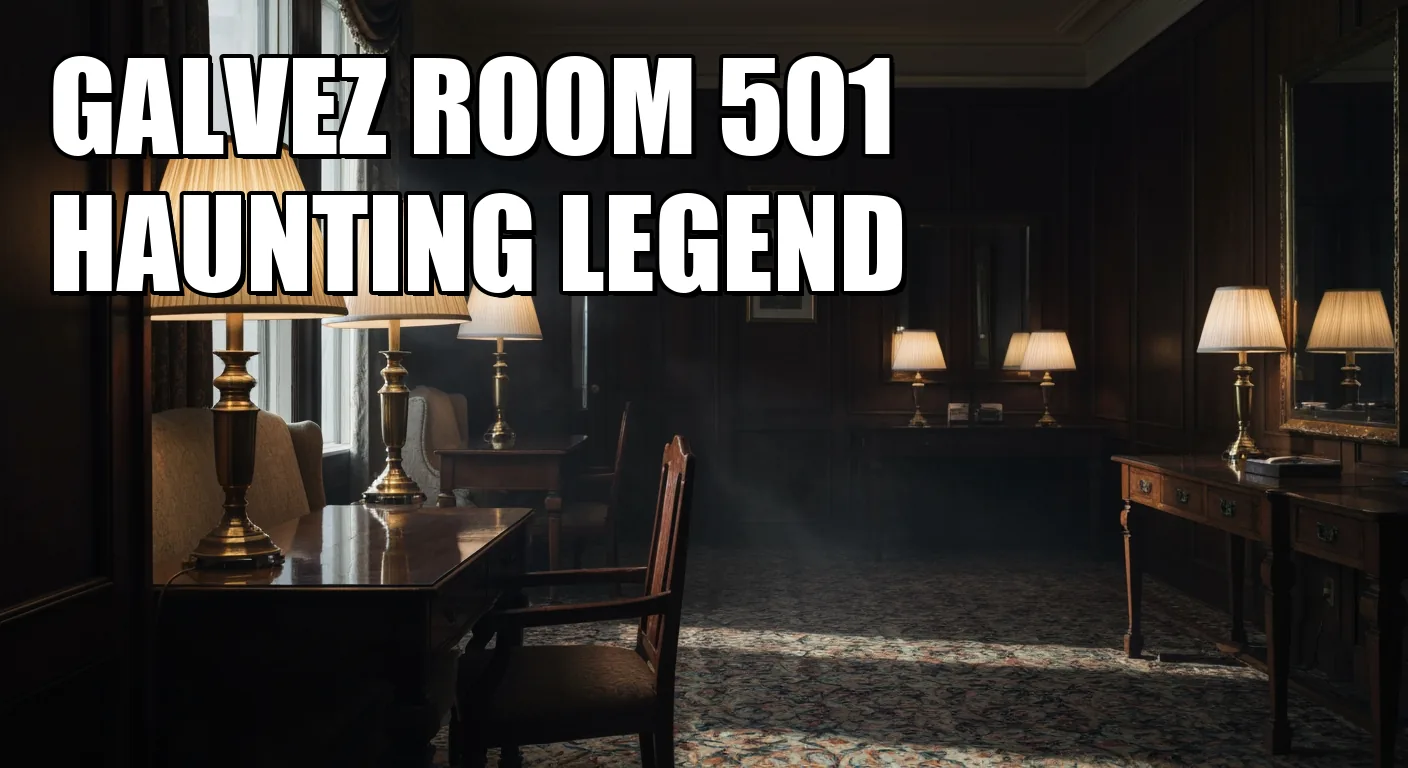
What Really Fuels the Legend of the Love-Lorn Lady?
The story of Audra, the "Love-Lorn Lady," is the beating heart of Room 501's spectral reputation, a narrative so tragic it almost feels designed for a gothic novel. Here’s the gist: in the mid-1950s, a young bride-to-be, Audra, checked into the Galvez repeatedly, her heart aflutter with anticipation for her sailor fiancé's return from sea. He was due back in Galveston, and she, presumably, wanted to be nearby, perhaps even staying in the very room they might share once he docked. Then came the devastating news—his ship, it was reported, had foundered, every soul lost to the waves. Overwhelmed by grief, Audra climbed to the west turret of the hotel, a distinctive architectural feature, and tragically ended her own life. The cruel twist of fate? Her fiancé arrived back in port just days later, having survived, only to discover the devastating news of her suicide. It’s a gut-wrenching tale, universally placed around 1955, and that particular year isn't just a detail; it's a linchpin in the continuing narrative, a historical anchor for the paranormal phenomena that allegedly plague this particular chamber.Most ghost stories are vague, nebulous affairs, tied to a general location or a long-forgotten resident. What makes Audra’s narrative so compelling, so sticky, is its acute focus. We know her name, her motivation, her tragic error, and the exact year of her demise. This isn't some shadowy, undefined presence; it’s a specific, heartbroken individual whose anguish, many believe, never truly departed this grand hotel. Her story bypasses the usual skepticism that greets tales of "cold spots" or "unexplained noises" because it offers a deeply human, if utterly sorrowful, reason for a spirit to linger. It provides context, and in the world of the supernatural, context often makes all the difference between a fleeting rumor and a persistent legend.
Unlocking the Anomaly: Does Room 501's Key Hold a Secret?
For a hardened skeptic like myself, the most intriguing, and frankly, disquieting, piece of evidence surrounding Room 501 isn't a shadowy apparition or a disembodied moan. It's the utterly mundane, yet profoundly unsettling, electronic key card anomaly. Hotel staff have recounted numerous instances where attempts to program new electronic key cards for Room 501 simply fail, or, more chillingly, when returned key cards are scanned, the system registers them as "Expired 1955." Think about that for a moment. This isn't a flickering light or a cold breeze; it's a digital echo from a bygone era, a date irrevocably tied to Audra's tragedy, manifesting within a modern security system. It suggests a glitch in the very fabric of time, or at least, a deeply ingrained memory within the hotel's unseen energy.This "Expired 1955" phenomenon is precisely the kind of detail that separates the Galvez's haunting from countless others. It's not subjective; it's a reported data point that challenges easy dismissal. While one might attribute a phantom phone ring to a wiring issue or a chill to an old building's draft, how do you explain a specific, historic date appearing on a contemporary electronic reader? It forces a pause, a re-evaluation of what we consider possible. Moreover, it speaks to the idea that Audra's presence isn't just an atmospheric feeling; it’s something that can, at least on occasion, interfere with the very technology designed to control access to her former refuge. It’s a subtle yet powerful affirmation for believers, and a genuine head-scratcher for those of us who prefer logical explanations.
Beyond the Keycard: What Else Lingers in Audra's Orbit?
While the keycard mystery is the star, Room 501 and its immediate surroundings are a veritable stage for a host of other reported phenomena, each adding a brushstroke to Audra's spectral portrait. Guests and hotel staff have described phantom phone rings, where the in-room telephone will ring incessantly despite no incoming calls logged at the switchboard. Imagine trying to sleep, only for the phone to shriek, and when you answer, there’s nothing but dead air. Then there are the environmental shifts: sudden, inexplicable drops in temperature, creating chilling "cold spots," often accompanied by flickering lights. Housekeeping staff have particularly noted these occurrences, often in the very process of preparing the room, suggesting a disembodied presence rather than a guest's imagination.The visual reports are equally compelling. Orbs of light—small, spherical anomalies—have been sighted floating across the fifth-floor hallway, directly adjacent to 501. While skeptics might attribute these to dust motes or camera flashes, their consistent appearance in a specific area is noteworthy. Perhaps most unsettling are the auditory experiences: guests report the sound of elevator doors opening and closing near the lobby, often accompanied by faint, disembodied sobbing, particularly around 4 AM—a time when the hotel is usually at its quietest, making such sounds all the more jarring. Even the unlit west turret, where Audra reportedly met her end, occasionally shows signs of life, with unexplained lights emanating from its depths despite the absence of any power sources. These aren't just isolated incidents; they're a pattern, contributing to the persistent aura of unease surrounding the room.
Is Seeking Audra's Presence an Experience Worth the Effort?
For those drawn to the macabre or simply curious about the paranormal, the burning question isn't just *what* happens in Room 501, but *is it worth* the pilgrimage? If you're hoping for a dramatic poltergeist encounter, you might be disappointed. Audra's manifestations tend to be subtle, persistent, and often, profoundly sad. Many who visit the Galvez on one of the ubiquitous ghost tours—which almost invariably feature Room 501 prominently—report feeling a general "creepiness" rather than a direct interaction. These tours, while excellent for historical context and amplifying the legend, can sometimes set expectations a little too high, reducing a nuanced haunting to a series of jump scares.Booking Room 501 itself can be a challenge. While the hotel doesn't specifically market it as "the haunted room" for booking, guests can certainly request it. Expect it to be a premium experience, not necessarily in price, but in demand. If you're serious about seeking an experience, consider visiting during the off-season, perhaps late fall or early spring, when the hotel is less crowded and the atmosphere might feel less diluted by general tourist bustle. Weekdays are almost always quieter than weekends, offering a more introspective environment. Arriving early for check-in might also give you a chance to speak with staff, like Senior Concierge Jackie Hasan or Restaurant Operations' Pamela, both of whom have personally attested to strange occurrences, from rooms going dark mid-renovation to numerous guests abruptly checking out in the middle of the night from Room 501, citing weird phenomena. Their firsthand accounts lend a layer of credibility that standard tourist brochures simply can't capture.
The Enduring Echo: Why Does Audra's Story Resonate So Deeply?
The Hotel Galvez itself boasts a rich history, far beyond Audra's tragedy. Opened on June 10, 1911, at a cost of $1 million, it quickly earned the moniker "Playground of the Southwest." Its guest list reads like a who's who of American history and culture, having hosted U.S. Presidents like Franklin D. Roosevelt, Dwight Eisenhower, and Lyndon Johnson, alongside entertainment legends such as Frank Sinatra and Dean Martin. Yet, despite these illustrious visitors, their presence rarely enters the hotel's ghost lore. Instead, it is the story of a heartbroken, unknown woman, Audra, that commands attention, making Room 501 the undisputed epicenter of its spectral reputation. Why is this singular, tragic tale so much more potent than the echoes of presidents and movie stars?I believe it's because Audra's story taps into a universal human fear: the ultimate betrayal of hope, the devastating consequences of misinformation, and a love cut short. Her specific, localized tragedy provides a focal point for our own anxieties about loss and regret. Unlike the grand figures who passed through the Galvez, Audra was an ordinary woman caught in an extraordinary, heartbreaking circumstance. Her story is relatable, visceral, and emotionally charged. Her continued presence, evidenced by the "Expired 1955" keycode and the phantom sobs, isn't just a spooky tale; it's a poignant reminder of a life tragically interrupted, a testament to the idea that some emotions are so powerful, they can transcend the boundaries of life and death, leaving an indelible mark on the physical world. For me, that’s what makes Room 501 not just a haunted room, but a powerful, if sorrowful, historical touchstone.