Bed & Breakfast

Gettysburg B&Bs: History's Heartbeat, Not Just a Bed

There's a curious magnetism to Gettysburg, an undeniable pull that draws millions to its hallowed ground each year. We come to walk the fields where a nation's fate hung precariously in the balance, to ponder the sacrifices, and to feel the weight of history. But where do you lay your head after a day spent traversing Devil's Den or reflecting at the Soldiers' National Cemetery? For many, the answer lies not in a chain hotel, but in a bed and breakfast, a choice that promises more than just a place to sleep: it offers an immersive experience, a chance to truly inhabit the past.

I've stayed in my share of historic inns, from New England farmhouses to antebellum mansions, and Gettysburg’s offerings stand out. What makes them unique isn't just their age, but their profound connection to the three pivotal days of July 1863. You're not just sleeping in an old house; you're often occupying a space that bore witness to the battle, served as a makeshift hospital, or sheltered terrified civilians. This isn't merely a romantic notion; it’s a tangible link that transforms a simple overnight stay into a significant part of your historical pilgrimage.

Beyond the Battlefield: What a Gettysburg B&B Truly Offers

What sets a Gettysburg bed and breakfast apart from standard lodging? It’s an immediate, palpable sense of place. Unlike the predictable uniformity of hotel chains, each B&B here possesses a distinct personality, shaped by its original architecture, its owners, and crucially, its unique historical footprint. Imagine waking up in a room where a Confederate sharpshooter once peered out, or where wounded soldiers lay recovering from horrific injuries. This isn't just historical trivia; it’s an atmosphere you can breathe in, an ambiance that deepens your understanding of the town's profound narrative. Owners often live on-site, offering a personal touch and a wealth of local knowledge that no concierge desk could ever match, adding another layer to the experience.

Yet, an experienced traveler quickly learns that not all historical claims are created equal, nor is every B&B experience universally ideal. While the charm of an antique-filled room is undeniable, it sometimes comes with creaky floorboards, shared bathrooms (though this is increasingly rare in modern B&Bs), or a lack of modern amenities like lightning-fast Wi-Fi. It's a trade-off, certainly, but one most visitors seeking this particular brand of immersion are more than willing to make. The trick, then, is to choose wisely, knowing which properties offer genuine historical depth paired with comfort, and which might lean a little too heavily on manufactured folklore.

Unearthing Gettysburg's Most Characterful Stays: A Traveler's Guide

When I look for a truly authentic Gettysburg experience, I prioritize properties with a verifiable connection to the Civil War era. The Brickhouse Inn, for example, immediately grabs attention. Part of its property, the 1830 Welty House, served as a position for Confederate sharpshooters during the battle. This isn't just a story; you can almost feel the tension in the air, imagining the view from those windows as the fighting raged. Staying here means you're literally on the ground where history unfolded, offering a perspective no guided tour alone can provide. Its location, often a stone's throw from major battlefield avenues, makes early morning or late evening explorations incredibly convenient, letting you experience the fields without the midday crowds.

For those seeking a quieter, more contemplative immersion, the Lightner Farmhouse B&B offers a different kind of profound connection. This property, spanning 18 acres, functioned as a Civil War hospital. The sheer scale of what occurred in these farmhouses after a major engagement is hard to fathom, and staying at Lightner gives you a glimpse into that somber reality. Here, the historical weight feels less about the direct combat and more about the aftermath – the suffering, the care, the sheer human cost. The peaceful, expansive grounds encourage reflection, a stark contrast to the intense energy of the battlefield tours. It's a place where you can truly process the enormity of what happened, rather than just observing it.

Echoes and Whispers: Navigating the Paranormal Claims

Gettysburg is, perhaps predictably, a hotspot for paranormal enthusiasts, and many historic B&Bs lean into this reputation. The Tillie Pierce House Inn is one such establishment, named after a young girl who bravely aided the wounded during the battle. While claims of general paranormal activity abound across many properties, the Tillie Pierce House has a particularly persistent story attached to its Blue Room. Reports here speak of footsteps emanating from the attic directly above, a detail specific enough to pique even a skeptic’s interest. Is it residual energy, a trick of an old house's settling, or something more? The beauty of these claims isn't necessarily in their verifiable truth, but in how they amplify the historical narrative, inviting guests to ponder the lingering echoes of intense human experience.

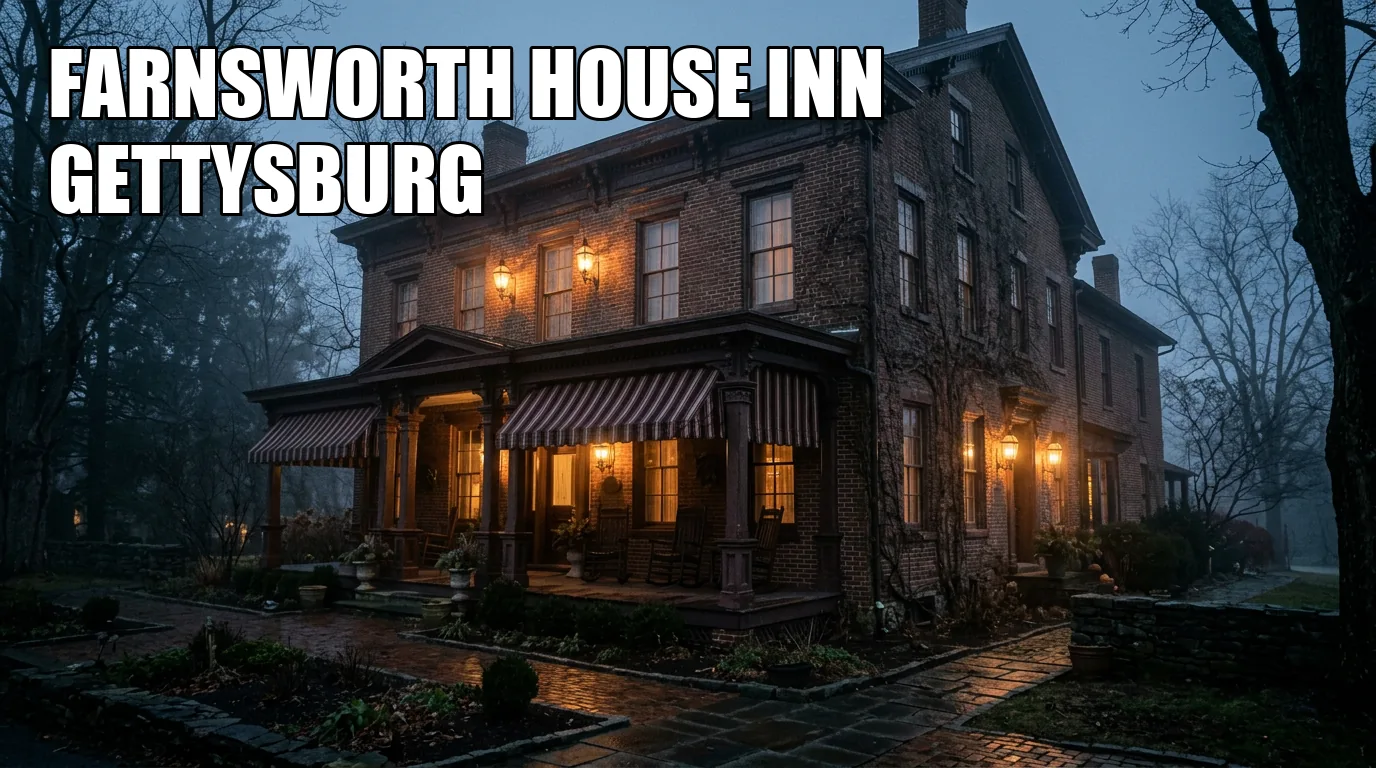
Another landmark property, the Farnsworth House Inn, built in 1810, is practically a monument to its wartime role. Its walls bear no fewer than 135 bullet holes, testament to its use by Confederate sharpshooters. Like Tillie Pierce, it also served as a hospital, and the sheer volume of human suffering that passed through its doors makes it a natural magnet for ghost stories. Guests often report encounters with spirits ranging from soldiers to children. While I approach all paranormal claims with a healthy dose of academic curiosity rather than blind belief, the Farnsworth House's physical scars give its ghostly tales an undeniable grounding in brutal reality. Whether you believe in ghosts or not, the palpable history here is undeniable; the bullet holes alone are worth the visit, telling a silent story more eloquent than any spectral whisper.

The Keystone Experience: Beyond the Battlefield's Edge

Sometimes, the most compelling historical stays aren't directly on the immediate front lines, but offer a different perspective, a slight remove that allows for broader appreciation. The Keystone Inn, a charming 1913 Victorian house, exemplifies this. While it wasn't a direct participant in the battle like the Welty House or Farnsworth, its age places it firmly within the post-war era, a time when Gettysburg was already grappling with its identity as a national shrine. Its rooms, named after military figures such as General Reynolds and General Ewell, connect guests to the larger narrative without the intensity of a battlefield-adjacent stay. This elegant Victorian offers a glimpse into a later period of Gettysburg's development, providing a luxurious, yet still deeply historical, lodging option for those who appreciate comfort blended with subtle historical homage. It’s a place that allows you to absorb the town's atmosphere without feeling constantly besieged by its past tragedies.

The choice between these various styles of historic B&Bs often comes down to personal preference. Do you crave the raw, visceral connection of a house riddled with bullet holes, or prefer the refined elegance of a later Victorian property that still honors the past? The Keystone Inn, slightly removed from the immediate downtown bustle, provides a tranquil retreat after a day of intense touring, demonstrating that historical immersion comes in many forms, not just the dramatic. This distance can sometimes offer a fresher perspective, allowing the visitor to synthesize the day's historical lessons in a more serene environment.

Booking Your Own Slice of History: Practicalities and Pointers

Now, let's talk brass tacks. While the allure of a specific "haunted room" or a precise historical incident in a particular room is strong, the reality of booking these unique properties can be a bit more fluid than a standard hotel reservation. Unlike large chains, most B&Bs, especially historic ones, do not publish specific room numbers linked to documented incidents or exact nightly rates online. Their pricing often fluctuates wildly with seasonality—expect significantly higher rates during summer, fall foliage season, and especially around the battle anniversary in early July. To secure the best rates and truly understand a room's unique story, your best bet is to call the B&B directly. Engage with the innkeepers; they are often the custodians of these oral histories and can offer insights you won't find on a website.

Parking, for instance, is another practical consideration rarely detailed in glowing reviews. Many of these historic properties, built long before the automobile, offer limited on-site parking, or rely on street parking. Always inquire about this when booking, especially if you're traveling with a car. Expect check-in times to be less flexible than a hotel; B&Bs operate on a more personal schedule. My advice? Plan your visit for the shoulder seasons—late April/May or late September/October. The weather is pleasant, the crowds are thinner, and you’ll likely find better rates and more availability. Don’t just look for "a room." Tell the innkeeper what you're hoping to experience – whether it's historical immersion or a hint of the spectral – and they can often guide you to the perfect fit. And if you're hunting ghosts, remember: what often matters more than seeing a full apparition is simply feeling the palpable weight of history, a sensation Gettysburg's B&Bs deliver in spades.

Ultimate Guide to Gettysburg Bed & Breakfast Accommodations

What is the history of Bed and Breakfast?
The bed and breakfast concept originated in ancient civilizations with public guesthouses and evolved through monasteries and private homes offering travelers shelter and meals, becoming a formalized hospitality model where families opened their homes to weary travelers before the rise of large hotels.
What is the history behind Gettysburg?
Gettysburg, Pennsylvania, is most famous for the Battle of Gettysburg (July 1-3, 1863), a three-day Civil War battle that marked the turning point of the conflict with over 50,000 casualties, where Union forces defeated Confederate General Robert E. Lee's second invasion of the North.
What is the history of the Gettysburg Hotel?
The Gettysburg Hotel, Pennsylvania's oldest hotel built in 1797, was originally named Scott's Tavern and later became the Indian Queen before being renamed the Gettysburg Hotel in the 1890s; it served as a field hospital during the Civil War and is now known as Hotel Gettysburg, a historic landmark on Lincoln Square.
What is the history of Gettysburg bed and breakfast accommodations?
Gettysburg bed and breakfast establishments evolved from Civil War-era homes and buildings that were converted into lodging facilities, offering visitors intimate historical accommodations while preserving the town's heritage; many historic homes dating back to the 1800s now operate as charming B&Bs throughout the region.
What is the most haunted hotel in Gettysburg PA?
The Farnsworth House Inn, built around 1810 and voted #4 Best Haunted Hotel in the USA, is considered one of the most haunted locations in Gettysburg with reports of 16 spirits including Civil War soldiers and a former midwife, as it was used as a hospital during the battle.
What happened in room 428 in the Stanley hotel?
Room 428 at the Stanley Hotel in Estes Park, Colorado (not Gettysburg) is reportedly haunted by the ghost of a friendly cowboy known as Rocky Mountain Jim Nugent, with guests reporting seeing shadows at the foot of their beds and some female guests waking to feel kisses on their foreheads.
What movie was filmed in Gettysburg?
The 1993 epic war film 'Gettysburg' directed by Ronald F. Maxwell was filmed in Gettysburg, as was 'Gods and Generals' and the more recent 'A Gettysburg Christmas' starring Lee Majors, making the town a popular filming location for Civil War and historical dramas.
What happened in room 441 of Congress hotel?
Room 441 at the Congress Plaza Hotel in Chicago (not Gettysburg) is considered the most haunted room in that hotel, with reports of the silhouette of a woman, objects moving without being touched, and lights flickering on and off throughout the night.
What happened at Devils Den in Gettysburg?
Devil's Den, a boulder-strewn hill on the south end of Gettysburg Battlefield, was the scene of heavy fighting and significant infantry combat on July 2, 1863, during the Battle of Gettysburg and was used by artillery and sharpshooters during the conflict.
What is the scariest haunted hotel?
The 1886 Crescent Hotel & Spa in Eureka Springs, Arkansas, is regarded as America's Most Haunted Hotel, with hundreds of reported paranormal experiences including apparitions of guests and staff members, and is frequently featured on paranormal investigation shows for its significant supernatural activity.
What is the best time to visit Gettysburg?
The best times to visit Gettysburg are September through November or March through May, when temperatures are cooler and crowds are smaller; summer months (June-July) are peak season but hotter and more crowded, though July offers special anniversary events near the battle's date.
What are typical prices for Gettysburg bed and breakfast accommodations?
Gettysburg bed and breakfast prices generally range from $132 to $250+ per night depending on location, season, amenities, and room type, with rates varying based on proximity to downtown and the busy summer season.
What are must-see attractions in Gettysburg?
Must-see attractions include the Gettysburg Battlefield and National Military Park, the Museum & Visitor Center with its Cyclorama painting, Seminary Ridge Museum, Little Round Top, Devil's Den, David Wills House (where Lincoln stayed), and the Gettysburg National Cemetery.
How do I book a bed and breakfast in Gettysburg?
You can book Gettysburg bed and breakfasts directly through their websites, major booking platforms like Booking.com, Expedia, and TripAdvisor, or contact the Gettysburg tourism office for recommendations and availability.
What amenities are typically offered at Gettysburg B&Bs?
Gettysburg B&Bs typically offer full breakfast, free Wi-Fi, private bathrooms, period furnishings reflecting Civil War era, gardens or outdoor spaces, common areas like parlors and libraries, and many feature fireplaces, Jacuzzi tubs, and themed rooms with historical significance.