Photo by Philip Hargrove for Cornerstone Mansion · December 1, 2025
Does true architectural genius lie in the daring ambition of height, the revolutionary embrace of new materials, or perhaps the sheer theatricality of a grand entrance? Having spent decades traversing this country, poking into forgotten corners and re-examining the celebrated, I’ve learned that America’s early 20th century was a crucible for all these questions. This era, stretching roughly from 1900 to 1930, wasn’t merely about erecting buildings; it was about sculpting an identity, pushing the very boundaries of engineering, and sometimes, letting ego dictate the skyline.
What visitors often miss, lost in the selfie-snapping shuffle, is the intense competition and often staggering human stories behind these colossal structures. Many guidebooks gloss over the *why* and simply state the *what*. My aim is to peel back those layers, to give you a sense of the era's pulse, the architects' daring, and what makes these sites truly worth your time, beyond just ticking a box.
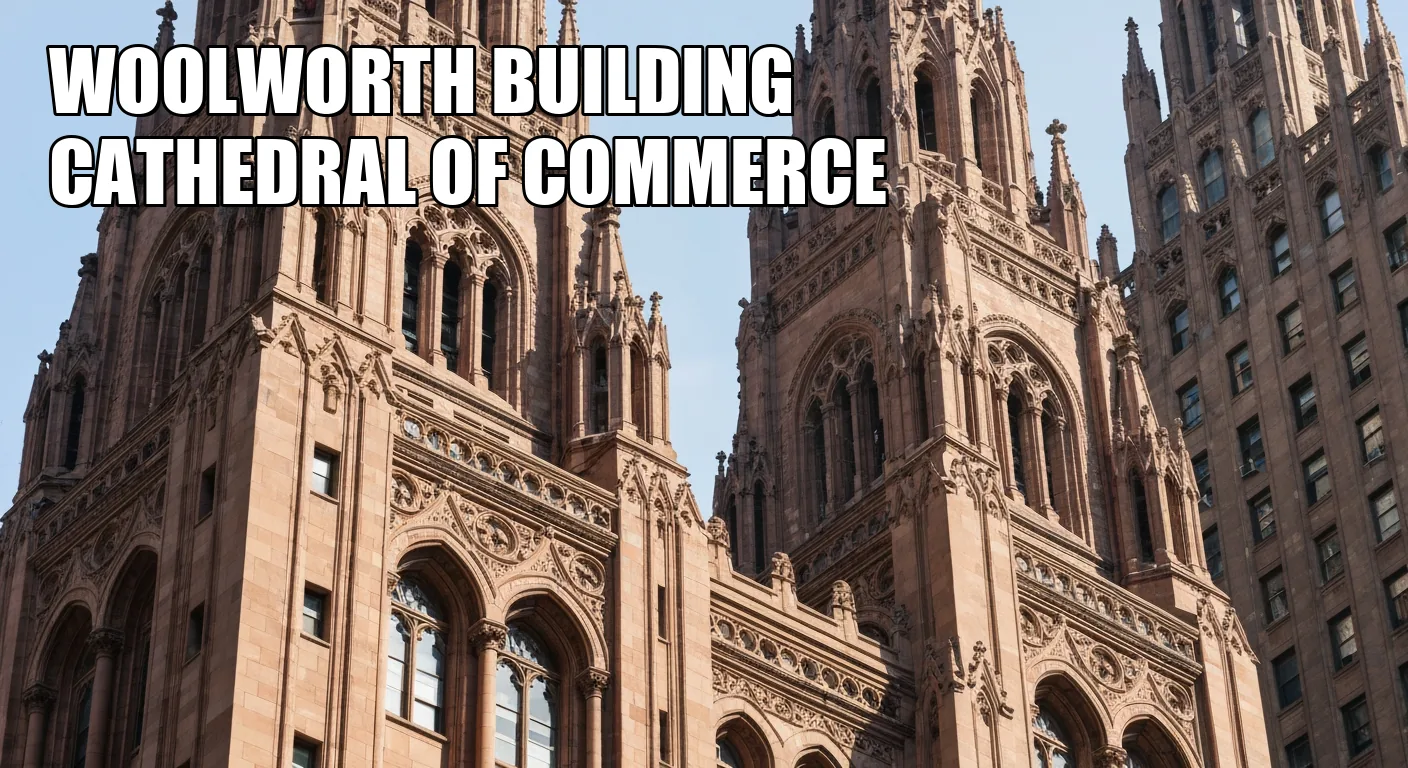
The Enduring Echoes of Woolworth’s "Cathedral"
Step onto Broadway and cast your gaze upwards towards the Woolworth Building, completed in 1913, and you're instantly transported to a time when commerce was indeed considered a religion worthy of cathedrals. Designed by Cass Gilbert in a soaring Neo-Gothic style, this 792-foot behemoth was, for a short period, the world's tallest building. Its nickname, the "Cathedral of Commerce," wasn't just marketing; it was a genuine reflection of its terra-cotta-clad grandeur and ornate detailing that mimicked European ecclesiastical structures.
But what truly cements its place in history, beyond its initial record-breaking height, is the sheer spectacle of its dedication. On April 24, 1913, President Woodrow Wilson, from Washington, D.C., pressed a telegraphic button to simultaneously illuminate some 80,000 incandescent light bulbs throughout the structure. Imagine the awe of New Yorkers witnessing that dramatic, long-distance electrical activation – a nascent symbol of modern connectivity and power that still resonates today. While public access to the magnificent lobby is now largely restricted (a disappointment for many), even gazing at its exterior, especially at dusk, offers a tangible link to that audacious spirit. It prompts a question: how many modern corporate headquarters inspire such poetic reverence?
A Ghost of Grandeur: Recalling the Original Pennsylvania Station
Few architectural stories in America carry quite the same weight of tragedy and loss as the original Pennsylvania Station, completed in 1910. If you’re visiting New York today, you’ll encounter the much-maligned modern iteration, but it’s crucial to understand the masterpiece that once stood there. Designed by the esteemed firm of McKim, Mead & White, this was no mere transit hub; it was a monumental gateway to the city, evoking the grandeur of ancient Rome. Its colossal waiting room, soaring 150 feet high, drew direct inspiration from the Baths of Caracalla, making it the largest indoor public space in the city at the time.
Yet, this wasn't just an aesthetic triumph. Penn Station represented a revolutionary engineering feat. It was the first railroad terminal to provide direct rail access *into* Manhattan from the south, finally eliminating the cumbersome ferry transfers from Jersey City. This required the unprecedented boring of tunnels beneath the Hudson River, a gargantuan undertaking that necessitated a radical shift from traditional steam locomotives to electric trains to prevent passengers from suffocating in the subterranean passages. Its demolition in the 1960s, a barbaric act driven by short-sighted commercial interests, ignited the modern preservation movement, reminding us how fleeting even the grandest structures can be. Visiting the new Moynihan Train Hall, which attempts to recapture some of its former glory, only highlights the profound loss and the critical importance of fighting for architectural heritage.
Star-Gazing, Misaligned: Grand Central's Endearing Flaw
Just a few blocks from where the original Penn Station once stood, its contemporary and rival, Grand Central Terminal, opened its doors on February 2, 1913, a mere two months before the Woolworth Building. A joint effort by Reed and Stem and Warren and Wetmore, this terminal served three major railroad lines and quickly became an icon. Unlike Penn Station, Grand Central managed to survive the wrecking ball, thanks to public outcry and a landmark Supreme Court decision, and stands today as a testament to diligent preservation.
What really charms me about Grand Central, beyond its sheer scale and bustling energy, is a delightful, humanizing flaw: the astronomical mural on the Main Concourse ceiling. Conceived by Whitney Warren and French artist Paul César Helleu, and painted by James Monroe Hewlett with a team of over 50 assistants, this intricate depiction of zodiac constellations was based on a scientifically accurate chart. However, within two months of its grand opening, an astute commuter noticed the constellations were painted in reverse, with east and west directions flipped. This error, likely due to a misprojection of the diagram onto the ceiling, has never been corrected, becoming an enduring, almost whimsical, secret. While the terminal can feel overwhelmingly crowded, especially during peak commuter hours (try visiting on a Sunday morning for a slightly less frenetic experience), finding the "dark patch" on the ceiling where the original grime was left during restoration work, or simply appreciating this giant astronomical gaffe, offers a unique connection to the history that typical guides rarely emphasize.
Leaving the steel and stone canyons of Manhattan, we turn our gaze to the suburban landscape of Oak Park, Illinois, where Frank Lloyd Wright delivered a profoundly different kind of architectural statement: the Unity Temple. Dedicated on September 26, 1909, this building serves as both a religious worship space and a social gathering hall, but its true significance lies in its pioneering construction. Unity Temple represents the first major public building in the United States to utilize reinforced concrete as its primary structural and aesthetic material.
At a time when reinforced concrete was largely relegated to utilitarian industrial structures like factories and grain elevators, Wright boldly chose to expose its aggregate, celebrating the material's raw, unvarnished beauty. This wasn't merely a cost-saving measure, though the initial budget of $45,000 was remarkably economical for the era (despite eventual cost overruns exceeding 50% and construction delays of three years). It was a philosophical declaration, challenging prevailing notions of what constituted "noble" building materials. Stepping inside, the carefully controlled light filtering through the clerestory windows, the warm tones of the exposed concrete, and the perfectly scaled interior spaces create an unexpected sense of intimacy and spiritual contemplation. It’s a powerful experience, one that shifts your perception of what a church, and indeed concrete, can be.
A Sky-High Stunt: The Chrysler Building's Daring Ascent
Our final stop brings us back to New York City, to a structure that embodies the swagger and competitive spirit of the late 1920s: the Chrysler Building, completed on May 27, 1930. Designed by William Van Alen, this Art Deco masterpiece is instantly recognizable by its dazzling, terraced crown of stainless steel arches, nickel-chrome eagles' heads, and distinctive gargoyles. Its story, however, is far more dramatic than its elegant facade suggests.
The 1920s saw an intense, often clandestine, race for the title of the world's tallest building. Van Alen's former business partner, H. Craig Severance, was constructing the Bank of Manhattan Trust Building (40 Wall Street), seemingly poised to claim the record. But Van Alen had a secret weapon: a 185-foot stainless steel spire that was secretly constructed in four sections *inside* the building's frame. In a dramatic, 90-minute operation on October 23, 1929, this spire was hoisted into place, pushing the Chrysler Building to a staggering 1,046 feet, surpassing Severance's tower by approximately 120 feet. This audacious maneuver, a true sky-high stunt, secured the title of world's tallest building, albeit for only 11 months before the Empire State Building took the crown. Visitors to New York should make a point of seeing its exterior from various vantage points, perhaps enjoying a drink at a nearby rooftop bar to appreciate its distinct profile against the city skyline, especially at sunset when its steel gleams. While interior access is limited to the lobby, the exterior alone tells a thrilling story of ambition and architectural one-upmanship.
These buildings aren't just concrete, steel, and stone; they are chapters in America's story, etched into the very fabric of our cities. They speak of ambition, innovation, and the relentless pursuit of progress. To truly understand them, one must look beyond the glossy images and delve into the human drama that shaped their creation. These are places where history isn't just observed; it's felt. Go, explore, and let these giants whisper their secrets to you.
Architecture Styles You Can Read From the Street
Use visible details like rooflines, columns, and ornament to identify building styles faster.
Discover American Modernism: Essential Guide to Early 20th Century Architecture
What was the early 20th century architecture history?
Early 20th century American architecture (1900-1940) emerged from the Columbian Exposition of 1893 and developed multiple competing styles simultaneously. This eclectic period saw the rise of modernist movements like Prairie School and Art Deco alongside revival styles including Neoclassical, Beaux-Arts, and Mediterranean Revival, reflecting rapid urbanization and technological advancement.
What was the style of architecture in the early 20th century?
Early 20th century architecture encompassed diverse styles including Prairie School (horizontal lines, organic design), Beaux-Arts (ornate classical elements), Art Nouveau (organic forms), Neoclassical Revival (Greek elements), and Mediterranean Revival. The period was characterized by eclecticism, with architects and clients choosing from multiple competing aesthetics.
What was the early 20th century design style?
The dominant design approach was eclecticism—simultaneous interest in both modern and historic traditions. This allowed middle-class homeowners and institutions to choose from diverse styles, from progressive modernism to classical revivals, creating one of America's most architecturally diverse periods.
What is 20th century architecture called?
20th century architecture encompasses multiple overlapping movements: Modernism, Art Deco, Art Nouveau, Prairie School, Beaux-Arts, Neoclassical Revival, and later Mid-Century Modern. The early decades (1900-1940) are often grouped under terms like 'Eclectic Movement' or 'Gilded Age Architecture.'
What was the style of architecture in the 20s?
The 1920s featured primarily Art Deco, Spanish Colonial Revival, Mediterranean Revival, Neoclassical Revival, and Prairie School. Art Deco became the dominant style for commercial buildings and skyscrapers, while residential architecture continued with revival styles and modernist experiments like Prairie School homes.
What is the 1920s design style called?
The primary 1920s design style is Art Deco, originating from the 1925 Paris Exposition Internationale des Arts Décoratifs et Industriels Modernes. In America, it became synonymous with luxury, geometric forms, and modernity, especially in skyscrapers, theaters, and commercial buildings.
What was the early 20th century commercial architecture?
Early 20th century commercial architecture (1890-1920) featured the Commercial Style with patterned masonry, shaped parapets, and technological innovation enabling tall buildings. This evolved into Art Deco skyscrapers (1920s-1930s) and employed Beaux-Arts principles for government and institutional buildings like courthouses and libraries.
What was the 1920s style called?
The dominant 1920s style was Art Deco, also called 'Art Moderne' during the period. The style is characterized by sleek geometric forms, bright colors, symmetry, and luxurious materials, reflecting the era's optimism and fascination with modernity, speed, and technology.
What is 1920s house style called?
1920s residential styles included Mediterranean Revival, Spanish Colonial Revival, Neoclassical Revival (with columned porches), and Prairie School homes. Mediterranean Revival dominated in California, while Neoclassical Revival spread throughout the country as an accessible, scaled-down version of Beaux-Arts.
What design style was popular in the 1920s and 1930s?
Art Deco was the dominant style of the 1920s-1930s, evolving into Streamline Moderne in the 1930s. Both styles featured geometric forms, bright colors, and modern materials. In residential architecture, Mediterranean Revival, Spanish Colonial Revival, and Neoclassical Revival remained popular, while these latter styles faded as the Great Depression progressed.
What are the best destinations to visit early 20th century architecture in the USA?
Top destinations include Chicago (Art Deco skyscrapers, Prairie School homes), New York City (Empire State Building, Chrysler Building, Beaux-Arts mansions), Miami Beach (Art Deco Historic District with 800+ buildings), Los Angeles and Palm Springs (Mediterranean Revival and Spanish Colonial Revival), and Philadelphia (Frank Lloyd Wright homes).
How much do architecture tours typically cost?
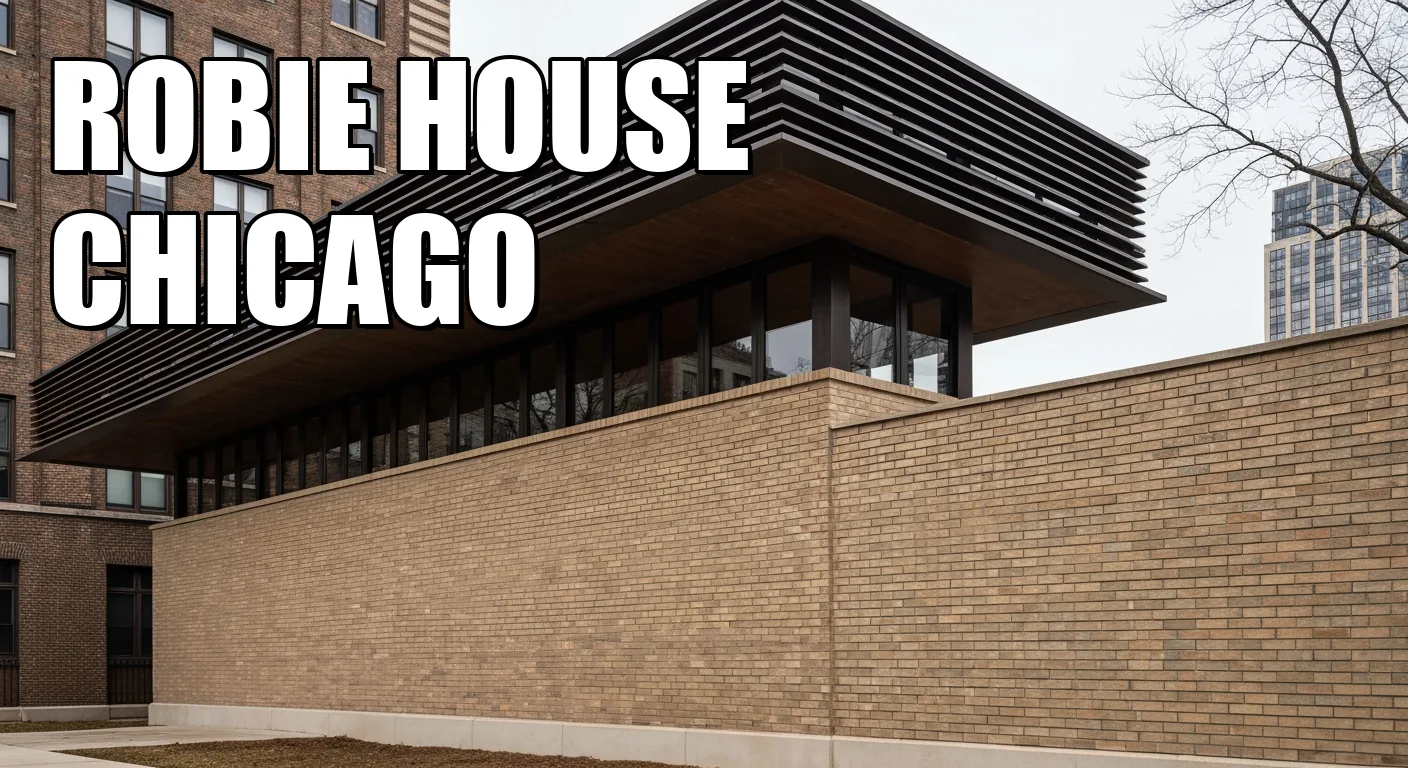
Tour costs vary: Chicago Architecture Center tours start around $35-80, Frank Lloyd Wright Home and Studio tours are $24-38, Miami Art Deco walking tours cost approximately $20-30, Robie House admission is $27, and Taliesin West tours are $55-110. Many cities offer self-guided options for free.
What is the best time to visit early 20th century architecture sites?
Mid-to-late September and spring months (March-May) offer ideal weather for walking tours in most regions. Summer crowds are larger, while winter can be cold for outdoor exploration. Miami and Southern California are comfortable year-round, though November to April provides the best conditions for outdoor tours.
How long do early 20th century architecture tours typically last?
Walking tours generally last 1-2 hours, house tours (like Robie House or Wright's Home and Studio) typically run 75-90 minutes, and self-guided audio tours average 60 minutes. River cruises and multi-site tours may last 2-3 hours or longer.
What are the must-see Art Deco buildings in New York?
Essential Art Deco buildings include the Empire State Building (486 floors of 1931 Art Deco glory), Chrysler Building (1930, chrome and stainless steel spire), Rockefeller Center (1920s-1930s complex), Grand Central Terminal, and the American Radiator Building. Most offer lobby access for free or charge admission for observation decks.
Why This Page Exists
Maison builds place guides to help readers plan a real visit or understand a real site. When a page makes present-day access, booking, or visitor claims, those details are revised against public-facing source material and editorial review. For the wider standards behind that work, see methodology.
The Cornerstone Brief
One historic place, once a week — what it is, why it matters, whether it's worth going. No filler, no paid placements.
Coming soon. Unsubscribe any time.
We use cookies to enhance your experience. By continuing to visit this site you agree to our use of cookies.