Film & TV Locations

Greystone Mansion: Hollywood's Enduring Chameleon

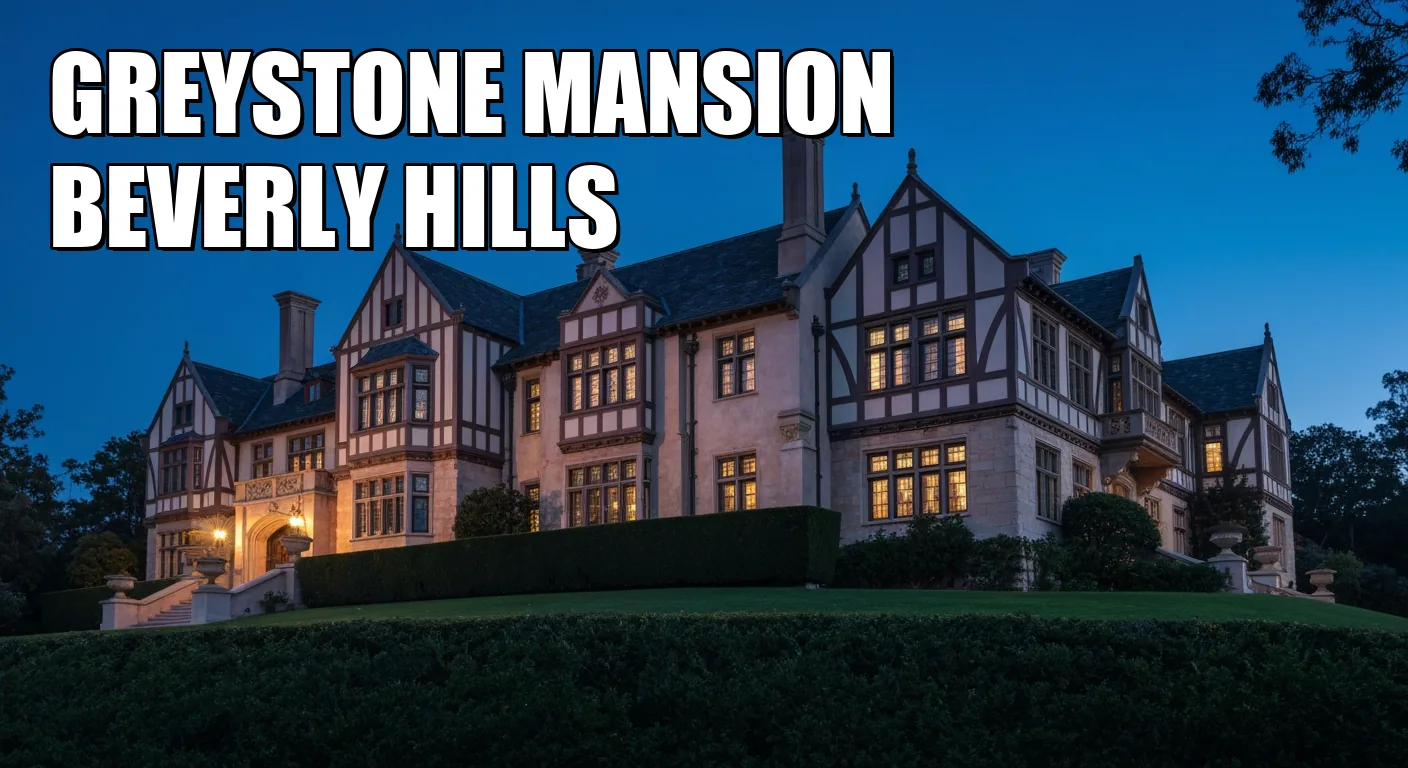
Standing sentinel atop a manicured hill in Beverly Hills, Greystone Mansion is more than just a testament to early 20th-century opulence. It’s a silent, sprawling star in its own right, a cinematic shape-shifter that has graced the silver screen in ways you probably never noticed, yet instinctively recognized. My travels through America’s historic estates have often led me down paths of predictable grandeur, but Greystone offers a surprising narrative, where its historical integrity frequently bends to the whims of fictional narratives. What is it about this particular estate, a sprawling Tudor Revival structure completed in 1928, that Hollywood finds so utterly irresistible? With its 55 rooms spread across a formidable 46,000 square feet, the mansion offers an unparalleled palette of backdrops. From grand foyers to intimate studies, from bustling kitchens to, remarkably, a subterranean bowling alley, Greystone provides a wealth of distinct environments. Its architectural gravitas speaks of old money, East Coast establishment, and even gothic intrigue, allowing it to convincingly portray anything from a New York mayor’s residence to a villain’s lair. ### Decoding Greystone’s Star Power: Why Filmmakers Flock Here Any seasoned location scout will tell you that finding a single site capable of embodying such a wide range of settings is a logistical godsend. Greystone Mansion isn't merely beautiful; it's inherently *adaptable*. Its dark wood paneling, ornate plasterwork, and distinctive black and white tiled hallway offer a timeless aesthetic, one that can be dressed up or down, made sinister or stately, without losing its inherent character. This adaptability is precisely what distinguishes it from many other historic homes, which often cling to a singular period or stylistic identity. Consider the sheer breadth of its cinematic transformations: a millionaire’s study, a brutal oil baron’s hideaway, a mayor’s official residence, a villain’s penthouse, even a macabre funeral home. This isn't just a testament to the mansion’s physical attributes, but to the imaginative leaps filmmakers take when they step onto its grounds. It also speaks to a practical truth in filmmaking: if a location works, you use it again. And again. And for Greystone, this repeated use has cemented its status as one of Hollywood’s most recognizable, yet often uncredited, interior locations. ### The Big Lebowski: Where Opulence Met Nihilism Do you remember Jeffrey “The Big” Lebowski’s palatial home, the very antithesis of The Dude’s humble abode? The Coen Brothers’ 1998 cult classic, *The Big Lebowski*, found its perfect setting for this character’s ostentatious wealth within Greystone’s walls. Specifically, the mansion’s ornate wood-paneled office served as the backdrop for that iconic first meeting between The Dude and his namesake, surrounded by walls of awards and what appeared to be a lifetime of achievements. This room, steeped in dark wood furnishings and an air of early 20th-century sophistication, instantly communicated "old money" and "power." It wasn't just a random set; it was a character in itself, amplifying Lebowski’s pompous self-importance and providing a stark visual counterpoint to The Dude’s perpetually relaxed demeanor. The choice underscored the film’s central conflict – a clash of lifestyles, philosophies, and, quite literally, rugs – making the office a crucial element in establishing the movie's unique tone. ### Unearthing Brutality in There Will Be Blood’s Bowling Alley Perhaps one of the most visceral and unexpectedly grotesque scenes in modern cinema unfolds within Greystone’s lesser-known spaces. Paul Thomas Anderson’s searing 2007 drama, *There Will Be Blood*, utilized the estate’s private two-lane bowling alley for the infamous "I drink your milkshake" confrontation. This particular location, meticulously restored for the production, transformed into the grimy, unsettling lair of Daniel Plainview during his drunken decline. It's a testament to the mansion’s range that its leisure facilities could be so effectively repurposed for such a chilling finale. The original bowling alley, dating back to the mansion’s early days, lends an authentic, if unsettling, historic ambiance. The scene itself, with Daniel Day-Lewis’s oil magnate emerging from the gutter of the lanes to confront Paul Dano’s Reverend Sunday, is unforgettable, its intensity amplified by the claustrophobic, decadent setting. This isn't the grandeur of the main house; it's the forgotten corners, the places of private indulgence, that here reveal a character’s true, broken state. ### Ghostbusters II: New York's Gracie Mansion by Way of Beverly Hills Ever wondered how Hollywood conjures up iconic landmarks without leaving its own backyard? Ivan Reitman’s 1989 sequel, *Ghostbusters II*, offers a brilliant example. The film needed a stand-in for New York’s venerable Gracie Mansion, the official residence of the city’s mayor. Greystone, with its imposing architecture and elegant interiors, stepped effortlessly into the role. While the real Gracie Mansion is indeed a stately home, Greystone’s distinct Tudor Revival style, with its crenellated towers and grand entrance, provided a convincing facade for mayoral power and authority. This architectural sleight of hand is fascinating because it proves that authenticity can sometimes be less about geographical accuracy and more about capturing a *feeling*. Greystone simply *felt* like a place where a mayor would reside, a place where the Ghostbusters would be summoned to explain a city-wide supernatural crisis, despite being thousands of miles from the actual location. ### Spider-Man's Sinister Manhattan Penthouse Stepping into the world of superheroes, Sam Raimi’s blockbuster *Spider-Man* from 2002 leveraged Greystone Mansion to define the opulent, yet often sinister, world of Norman Osborn. Willem Dafoe's Green Goblin and James Franco's Harry Osborn conducted their family and corporate affairs amidst the mansion's elegant main foyer and various other living spaces. The choice of Greystone here wasn't just for luxury; it was for a specific kind of old-world, almost oppressive grandeur that subtly hints at the Osborn family's complicated legacy. The mansion’s interiors lent an air of established wealth to Norman, highlighting his powerful industrialist persona while also providing a stark contrast to Peter Parker’s modest upbringing. It helps establish the visual language of power and influence that becomes a backdrop for the narrative's central conflict. ### Death Becomes Her: A Grand Kitchen's Macabre Makeover Here’s where Greystone’s versatility truly shines in an unexpected, even darkly humorous, way. Robert Zemeckis’s 1992 dark comedy, *Death Becomes Her*, famously used the mansion’s grand kitchen as the setting for a funeral home. Bruce Willis's mortician character, Ernest, performed his reconstructive work on bodies in this very space. The sight of a lavish, vintage kitchen, complete with its original 1920s refrigeration units, repurposed for such a morbid activity, is one of those cinematic details that challenges your expectations. It subverts the traditional role of a kitchen as a place of nourishment and life, transforming it into a sterile, if still historically ornate, environment for death. This particular room, with its unique blend of scale and period detail, has become one of Greystone’s most frequently filmed spots, proving its value extends far beyond its more obvious stately charms. ### The Bodyguard: Defining a Superstar’s Protected World Mick Jackson’s 1992 romantic thriller, *The Bodyguard*, relied on Greystone Mansion to portray the sprawling Beverly Hills estate of Rachel Marron, the superstar singer played by Whitney Houston. Key scenes, particularly those featuring Kevin Costner’s character Frank Farmer, were filmed in the mansion’s kitchen and main dining areas. Greystone's grand architectural elements effortlessly conveyed the opulent aesthetic central to the film’s depiction of Marron’s celebrity lifestyle. The sheer size and grandeur of the rooms emphasized her fame and fortune, creating a convincing backdrop for the high-stakes world of a protected icon. It’s a perfect example of how a location can silently bolster a film’s narrative, making the audience believe in the luxury and, crucially, the vulnerability that comes with such an extravagant existence. The mansion doesn't just look expensive; it feels like a fortress, which adds another layer to Farmer's protective role. ### So, You Want to Visit? Expect More Than Just Movie Magic For those who wish to step onto these hallowed, yet repeatedly filmed, grounds, Greystone Mansion is surprisingly accessible. Operated by the City of Beverly Hills, it typically welcomes visitors to its formal gardens daily, usually from 10 AM to 5 PM or 6 PM depending on the season, with the mansion’s interior only open for special events or tours. Don't expect to wander through Norman Osborn's living room or Jeffrey Lebowski's study at will. The formal gardens are often free to enter, but parking can carry a nominal fee, usually around $5-10 per vehicle on weekends or during popular events. Always check the official City of Beverly Hills website for the most current operating hours, specific dates of interior access, and any potential filming closures. Is it worth the trip if you’re only chasing cinematic ghosts? Absolutely, but with a caveat. While the exterior and gardens are stunning, offering panoramic views of Los Angeles, the *real* magic of Greystone for film buffs often lies unseen or behind closed doors. You might recognize certain architectural flourishes or garden paths, but identifying the exact interiors from your favorite films requires a keen eye and often, a bit of imagination. The mansion itself serves as a beautiful historic site, a tranquil escape from the urban bustle, and an excellent example of American Gilded Age architecture, regardless of its Hollywood pedigree. Just don't arrive expecting a fully interactive "film set tour" experience. It’s a historical park first, a film set second, and understanding that distinction will significantly enhance your visit. Ultimately, Greystone Mansion is more than just a grand estate; it’s a masterclass in cinematic illusion. Its enduring appeal to filmmakers lies in its chameleon-like ability to transcend its own history, adapting to endless narratives and transforming into countless fictional homes. This isn't just a place where movies are made; it’s a living testament to Hollywood’s ingenuity, where the boundaries between reality and the silver screen elegantly blur, making it a surprisingly rich destination for any discerning traveler.

Ultimate Guide to Greystone Mansion: Hollywood's Most Iconic Filming Location

Greystone Mansion Filming Location Guide - What Should I Know?
Greystone Mansion at 905 Loma Vista Drive, Beverly Hills, is one of Hollywood's most versatile filming locations, featuring 18.3 acres of grounds and 46,000+ square feet of Tudor-style architecture. The park is free to visit daily from 10 AM to 6 PM, with free parking and public restrooms available.
What Movies Were Filmed at the Greystone Mansion?
Over 100 productions have filmed at Greystone, including major films like Spider-Man, The Big Lebowski, X-Men, Ghostbusters II, The Social Network, Teenage Mutant Ninja Turtles, The Prestige, Death Becomes Her, and Austin Powers in Goldmember. The mansion has also appeared in TV shows like The West Wing and has been featured in music videos and specials.
Was Gilmore Girls Filmed at Greystone Mansion?
Yes, Greystone Mansion served as the exterior location for Chilton Academy in Gilmore Girls, including the iconic graduation scene in season 3 where Rory is named valedictorian. Many scenes showing the school's exterior were filmed on the mansion grounds.
What Is the Greystone Mansion Famous For?
Greystone is famous as one of Hollywood's most-filmed private estates, originally built in 1928 as a wedding gift from oil tycoon Edward Doheny Sr. to his son Edward Jr., and now recognized for its stunning 1920s Tudor-style architecture, expansive gardens, and iconic appearance in countless films and television productions.
Where Is Greystone Mansion?
Greystone Mansion is located at 905 Loma Vista Drive, Beverly Hills, California 90210, nestled in one of the wealthiest neighborhoods in the United States.
Can I Visit Greystone Mansion?
Yes, the park grounds are open to the public daily from 10 AM to 6 PM with free admission and free parking. Self-guided interior tours of the first floor are available once monthly on select Saturdays or Sundays for a small fee, with advance reservations required.
Does Sylvester Stallone Still Own Property in California?
No, Sylvester Stallone no longer owns property in California as his primary residence. In February 2024, Stallone and his wife Jennifer Flavin made their Palm Beach, Florida waterfront estate their permanent primary residence after many years in California.
Where Is Taylor Swift's Mansion Located?
Taylor Swift's primary residence is a $17.75 million estate located at 16 Bluff Avenue in Watch Hill, Westerly, Rhode Island, which she has owned since 2013 and famously inspired her song 'The Last Great American Dynasty.'
Who Lives at 1000 Roxbury Drive, Beverly Hills?
1000 Roxbury Drive was the legendary home of Lucille Ball and Desi Arnaz from 1954 until Lucy's death in 1989; the historic residence is no longer their home.
Is Greystone Mansion Worth Visiting?
Yes, Greystone Mansion is absolutely worth visiting for its architectural beauty, expansive gardens, and the opportunity to see real Hollywood filming locations featured in over 100 productions. The free admission and parking make it an excellent Los Angeles attraction.
What Are the Best Times to Visit Greystone Mansion?
Weekdays offer a quieter experience with fewer crowds, while early morning hours (10-11 AM) or late afternoon (4-5 PM) are ideal for photography. Spring and fall provide the most pleasant weather and beautiful garden conditions.
Do I Need Permission for Photography at Greystone Mansion?
Personal/non-commercial photography is permitted during regular park hours. However, professional photo sessions, commercial photography, or social media content creation require a permit, available through Beverly Hills Parks & Recreation with advance reservations up to 14 days in advance.
What Special Events Are Held at Greystone Mansion?
Greystone hosts 'Greystone In The Movies,' a monthly program featuring film screenings in the restored theatre followed by guided tours of filming locations, monthly chamber concerts by Beverly Hills musicians, live play readings, and special holiday events throughout the year.
How Long Should I Plan to Spend at Greystone Mansion?
Plan for at least 45 minutes to an hour for exploring the grounds and gardens. If you're taking a self-guided interior tour, add 30-45 minutes, and budget additional time for photography or attending special events like 'Greystone In The Movies' screenings.
What TV Shows Have Been Filmed at Greystone Mansion?
Popular television productions filmed at Greystone include The West Wing, Columbo, Revenge, NCIS, Entourage, General Hospital, The Mentalist, Hart to Hart, and many others spanning multiple decades of television production.