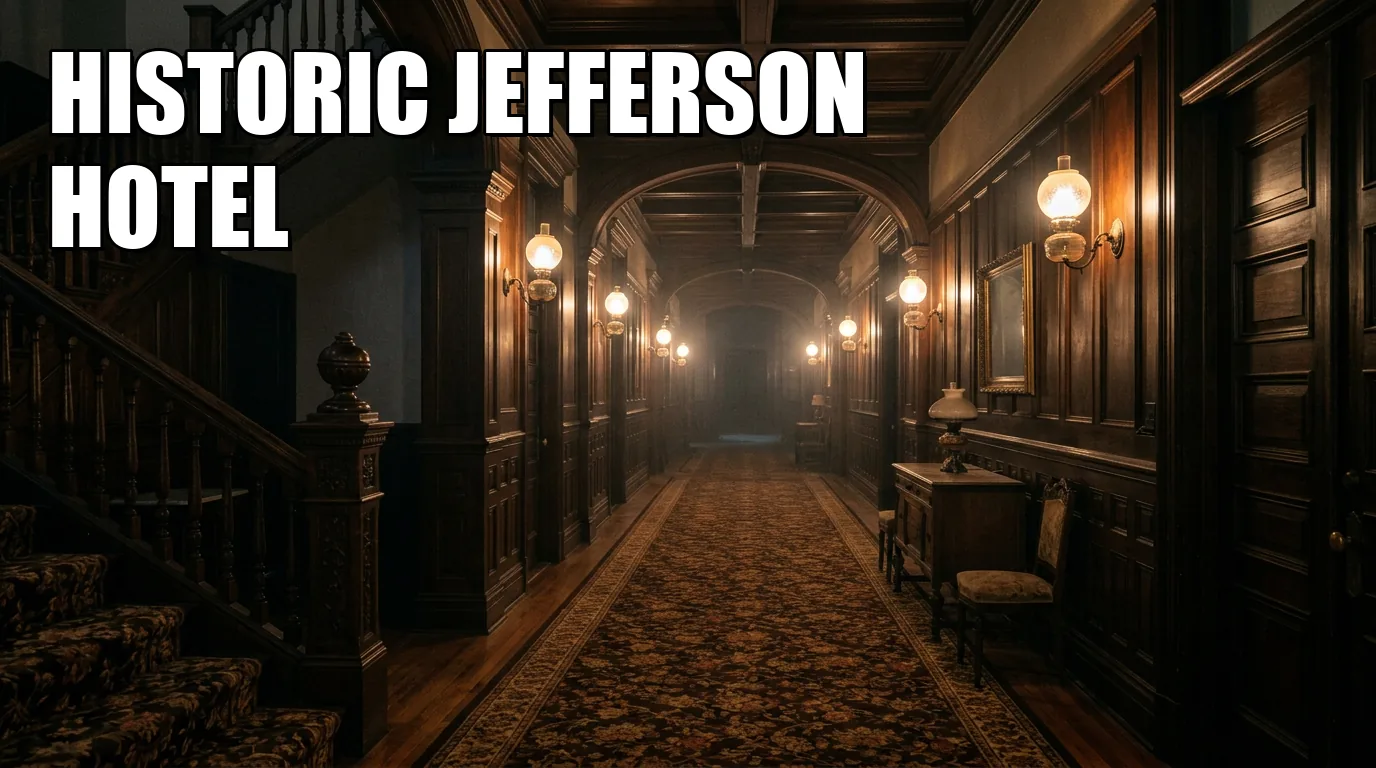
Stepping into Jefferson, Texas, feels like time-traveling through a sepia-toned photograph. This isn't just another quaint Southern town; it’s a living museum, brimming with antebellum architecture and riverboat lore that predates much of the state's modern development. Amidst this evocative backdrop stands the Historic Jefferson Hotel, a structure that whispers tales of its tumultuous past, not merely through faded photographs but, as many claim, through the very air itself. It’s a bold assertion, I know, but after years of sifting through historical records and interviewing countless witnesses at purportedly haunted locales, I’ve learned that some places simply hum with an energy that defies easy explanation. What truly distinguishes the Jefferson, though, isn't just its reputation for ghostly residents, but the deep, often tragic human stories embedded within its walls.
My first visit to the Jefferson wasn’t for the ghosts; it was for the history. This isn't a purpose-built "haunted attraction" that popped up last Halloween; the hotel itself dates back to 1861, originally functioning as a cotton warehouse and later, during its more notorious periods, as a brothel. Such beginnings naturally sow the seeds for darker legends, don't they? The sheer age of the building, its thick brick walls, and its location in a town that saw more than its share of boom-and-bust cycles, Civil War conflicts, and the rough-and-tumble of riverboat commerce, all contribute to an atmosphere ripe for the unexplained. Many historic sites carry a certain gravitas, but the Jefferson carries a palpable weight, a sense that echoes of its past haven't merely faded, but linger, waiting for an opportune moment to resurface.
Unveiling the Layers of the Jefferson's Past
How does a place accumulate so many spectral claims? The answer lies not just in spooky anecdotes, but in the town's tumultuous history, which the hotel directly mirrors. Jefferson was once the Queen of the Bayou, the most inland port in Texas, a bustling hub of trade long before railroads dominated the landscape. This meant a constant flow of transient characters: merchants, gamblers, soldiers, and, yes, women of the night. Life was often brutal and short in the 19th century, particularly in frontier towns where law and order were fluid concepts. The hotel, in its various iterations, was a witness to countless human dramas – passions, betrayals, sudden deaths – the very fabric from which enduring ghost stories are often spun. It's this deep well of human experience, this historical "why," that lends credibility to the claims, rather than just isolated incidents of things going bump in the night.
Many guides simply reel off dates and names, but to truly understand the Jefferson, you have to appreciate the profound shifts it witnessed. From a functional warehouse built to handle the region's lucrative cotton trade, it transitioned into a hotel and, controversially, a brothel during eras when such establishments were a common, albeit often hidden, part of frontier life. Imagine the desperate hopes and shattered dreams that passed through those doors. The hotel served as a microcosm of Jefferson itself – a place of prosperity and poverty, illicit dealings and desperate measures. These aren't just details; they are the emotional undercurrents that explain *why* certain rooms are rumored to hold such potent energies, tying specific hauntings directly to the intense human experiences that occurred there.
Room 19: More Than Just a "Jilted Bride" Tale?
The most infamous of the Jefferson’s haunted chambers, Room 19, carries a legend so potent it’s become almost cliché: the jilted bride, Judy. But peeling back the layers reveals something more complex than typical gothic romance. Guests frequently report seeing the apparition of a teenage girl in the bathtub mirror, sometimes scratching her name or desperate pleas into the condensation, or hearing loud banging above the bed and the distinct sound of water splashing in an empty tub. The story, as it’s often told, suggests a young woman either stabbed to death or hanged herself in that very room during its brothel era. It’s a grim narrative, certainly, but it’s the visceral, sensory details—the scratching, the splashing—that make it truly unnerving. This isn't just a faint whisper; it's an insistent, almost violent reminder of a past trauma.
While the "jilted bride" trope is common in paranormal lore, what strikes me about Room 19 is the specificity of the phenomena. It's not a generic cold spot; it's a visible, interactive manifestation in a mirror, a detail that feels far more personal and urgent. Is it really Judy, a specific individual, or an energetic echo of countless desperate women who might have suffered similar fates within those very walls? To my mind, the power of this particular haunting lies in its ambiguity, allowing visitors to project their own fears and sympathies onto the narrative. When you're there, standing in that bathroom, the historical context of its past as a brothel lends a horrifying plausibility to a story of profound anguish and abandonment.
What Lies Beyond: Echoes in Rooms 15 & 17
Venturing further, Room 15 offers a different, perhaps more insidious, kind of haunting. There's no dramatic backstory of a tragic death here, no named specter. Instead, visitors describe fleeting dark shadows darting in the bathroom and loud, inexplicable banging noises emanating from within the restroom walls. This absence of a clear narrative actually makes it more unsettling in some ways, less a story and more a raw, unexplained experience. The hotel staff theorize this space, adjacent to former service corridors, might retain echoes from its 19th-century cotton-warehouse days, perhaps the frantic energy of workers or less savory activities hidden from public view. It's a reminder that not all hauntings come with a tidy, tragic tale; sometimes, it’s just the residual energy of a place, a lingering imprint of unseen lives.
Then there's Room 17, where the paranormal takes on an unnervingly direct tone. Here, guests have reported finding messages like "Get out" scrawled on the bathroom mirror, sometimes morphing into the more insistent "Leave now." Beyond the visual, disembodied conversations echo in the seemingly empty room. My own take? These aren't playful spirits. The context here likely points to the hotel's Prohibition-era speakeasy days, a period rife with clandestine activities, illicit alcohol, and undoubtedly, heated arguments or even violent confrontations. Such messages feel like warnings, perhaps from former patrons whose lives ended abruptly or violently within the hotel's secretive confines. It's the kind of direct communication that challenges even the most hardened skeptic, prompting a very real internal debate about what exactly you're witnessing.
The Curious Case of Libby in Rooms 12 & 14
Moving across the hall, Rooms 12 and 14 share a particularly poignant, if somewhat convoluted, legend surrounding a ghostly figure known as Libby. Here, a golden-haired bride in a tattered wedding gown is said to float across the floor, sometimes appearing with no feet, a classic spectral trope. What makes this story unique is its dual origin: two women, Elizabeth and Lydia Grigsby, both believed to have committed suicide by hanging on their wedding days, roughly fifty years apart. The narrative suggests these tragic figures now inhabit these rooms, their spirits tied to an antique bed that was purportedly moved between the two chambers and eventually, intriguingly, into Room 19. It’s a fascinating example of how hauntings can be interconnected, almost creating a spectral ecosystem within the hotel.
This particular story raises interesting questions about the nature of hauntings. Is it the spirits themselves that are tied to the furniture, or does the antique bed merely serve as a conduit for their lingering energy? The idea of a physical object acting as an anchor for the deceased is a common theme in paranormal research, but here it feels particularly potent, linking multiple rooms and multiple tragedies. The tale of Libby, a figure of profound sorrow and unfulfilled dreams, underscores the hotel's capacity to absorb and reflect the emotional intensity of its former occupants. It challenges the conventional wisdom that ghosts are confined to a single spot; instead, they seem to drift, their stories intertwining through the very fabric of the building.
Planning Your Encounter: Practicalities and Unexpected Truths
If the whispers of the Jefferson Hotel beckon you, be prepared. This isn’t a cheap thrill, nor is it a luxury resort. Specific "haunted" rooms like 15, 17, and 19 can be booked directly through the Historic Jefferson Hotel’s website, but don't expect a same-day reservation; advance booking is crucial, especially for peak seasons or weekend stays. While standard haunted rooms generally run between US $100-$150 per night in 2025, depending on the season, understand that this price reflects the unique experience and historical ambiance, not necessarily modern amenities. Don't confuse it with the entirely unrelated, upscale Richmond Jefferson Hotel, where suites start at US $285; those are two very different experiences, and you wouldn't be checking into a Gilded Age palace here.
When planning your trip, consider visiting during the off-season, perhaps a crisp Tuesday night in late February or early November, to avoid the bustling crowds that descend during summer holidays or around Halloween. Jefferson, while charming, can become quite congested, and a more solitary experience often enhances the eerie atmosphere. Also, be realistic: while paranormal activity is indeed unpredictable, and you might not encounter a full-blown apparition, the hotel itself offers an incredibly rich historical experience. What you *will* encounter is a profound sense of stepping back in time, a tangible connection to the past that even without a ghostly encounter, makes the journey worthwhile. Don't go expecting Hollywood; go expecting history, and perhaps, a shiver or two down your spine.
Finally, remember that the true magic of places like the Jefferson Hotel lies not just in the ghost stories, but in the questions they provoke. Why do certain tragedies resonate more powerfully than others? What does it mean for a spirit to linger? And what does our fascination with these tales say about our own relationship with history, memory, and the unknown? The Jefferson is more than a hotel; it's a testament to the enduring power of human stories, etched into brick and mortar. Whether you leave with a tale of a spectral encounter or merely a deeper appreciation for Texas history, the experience will stay with you long after the silence of your own home returns.