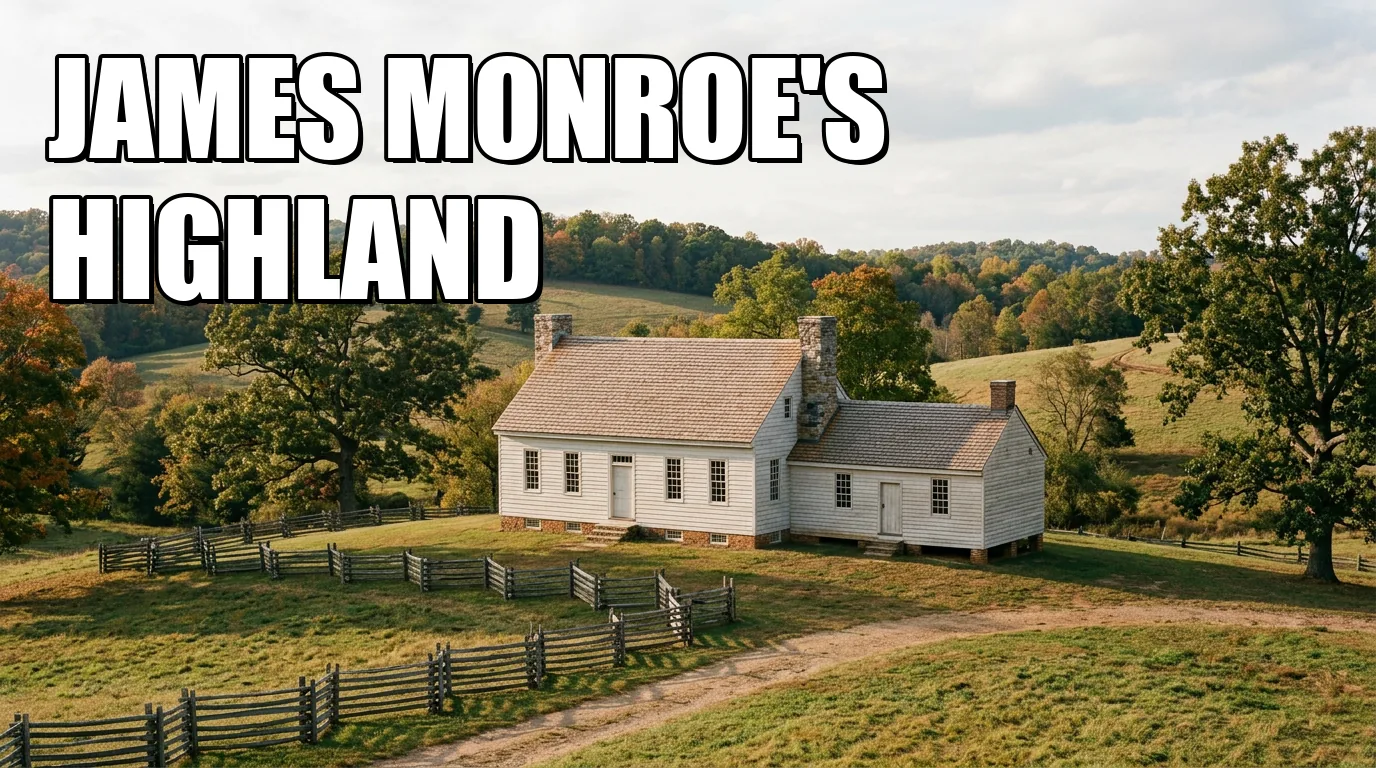
Unexpected fact: the building you enter at James Monroe’s Highland near Charlottesville is not Monroe’s original 1799 main house. Tree-ring dating and archaeology in 2016 proved the standing structure is an 1818 presidential guesthouse built by enslaved carpenters Peter Mallory and George Williams. The real main house burned mid-19th century; its foundation is outlined in flagstone on the lawn. For a century guides sold the cottage as a “surviving wing.” Highland reimagined that error into the story visitors pay for today.
Highland 2026: tickets, the Ash Lawn name myth, descendant-led interpretation, and three cost paths—including free SNAP admission and free rustic trails.
Tickets, hours, and how a visit works
Open daily 9:30 a.m.–4:30 p.m.; closed Thanksgiving, Christmas Eve, Christmas Day, and New Year’s Day. General admission: $20 adult at the door / $17 online (save $3 by buying ahead), $13 youth 7–12, free ages 6 and under. Locals Pass: 5-visit punch card ~$50. Monroe’s Farm Friends annual family grounds pass ~$50. Museums for All: SNAP/EBT free general admission for up to four family members. Active military families free from Armed Forces Day to Labor Day (Blue Star Museums window). Standard visit is self-paced indoor exhibits plus outdoor spaces with guides available for questions and outdoor history walks. Private guided tour (select mornings, book ahead): $150 flat for up to six. Groups of 15+: about $16 adult / $14 student for 90-minute programs.
~50,000 visitors a year. Six miles of Highland Rustic Trails are free to the public daily 9:30–4:30 (enter trails by 3:30; check in at the museum shop first). No pets—working farm; only leashed ADA service animals. Combo options with Monticello exist; the estates sit about 2.5 miles / 10 minutes apart.
What you see after the 2016 reset
1818 guesthouse interiors, reconstructed slave quarters, a 300-year-old white oak older than Monroe’s ownership, and the flagstone footprint of the lost 1799 house. Self-guided exhibits (English/Spanish) developed with a Council of Descendant Advisors braid Monroe’s diplomacy with the people who ran the plantation. Numbers the site owns: Monroe enslaved on the order of ~250 people over a lifetime; researchers document 178 unfree individuals across his properties; 53 known at Highland specifically; he manumitted only one person (Peter Marks, deathbed request). Peak plantation ~3,500 acres. In 1828, debt after the presidency drove sale of up to two dozen Highland enslaved people for about $5,000 to Casa Bianca cotton plantation in Florida—families such as Dudley and Eve, Toby and Betsy appear in shipping and letter evidence. Descendants still live near Monroetown (under 10 miles) and in Florida; Highland partners with them rather than erasing that continuity.
Fact vs lore: Ash Lawn, “true home,” gentle Monroe
Lore: “Ash Lawn–Highland” is Monroe’s own romantic name for a complete surviving presidential mansion; Monroe’s gradual-abolition talk means the place was soft on slavery. Documented: later owner Jay Gould’s daughter Helen renamed the place Ash Lawn in the late 19th century; the site has reclaimed Monroe’s name Highland. The standing house is the 1818 guesthouse, not the 1799 core. Monroe advocated gradual emancipation and African colonization (Monrovia, Liberia bears his name) while financing aristocratic life through enslaved labor—contradiction the museum now stages explicitly. The 1828 Florida sale is not a footnote; it is family trauma on the ledger.
Logistics: Monticello day, lodging, 2026 events
Park and walk the historic core; open outdoor spaces suit self-directed pacing. Stack Monticello the same day—arrive Monticello 30+ minutes before timed tours for parking/shuttle. Charlottesville lodging spans Comfort Inn Monticello and Holiday Inn Monticello-area chains to Omni downtown, Boar’s Head Resort, Keswick Hall, and The Clifton. America250 programming in 2026 includes special talks/performances (e.g., early March book talk and multidisciplinary show—confirm dates); Virginia 250 Passport stamps can unlock discounted admission and prize drawings. Private tour groups wanting exclusive morning access pay the $150 flat rate rather than à la carte tickets.
Three scenarios and who should go
Who yes: presidential-history travelers who want labor history with the house myth corrected; SNAP families on free Museums for All entry; trail walkers using free rustic miles; Monticello day-stackers. Who no: visitors demanding a fully intact 1799 mansion walk-through; pet owners; people seeking plantation romance without descendant narratives.
Three cost scenarios. (1) Couple online: 2 × $17 = $34 adults. (2) Family of four (2 adults + kids 8 and 11) online: $17+$17+$13+$13 = $60. (3) Private guided morning for five friends: $150 flat. Military family in Blue Star summer window: $0 general admission. Bottom line: Highland’s true home story is archaeological honesty—pay for the guesthouse, the foundation outline, and the people Monroe sold south, not a fairy-tale wing of a house that burned away.
James Monroe Highland FAQ
How much is Highland admission?
About $20 for adults at the door or $17 if purchased online, $13 for youth ages 7–12, and free for children 6 and under. SNAP/EBT Museums for All can provide free general admission for up to four family members. Private guided tours for up to six guests are about $150.
Is the house at Highland Monroe’s original home?
No. The standing building is an 1818 presidential guesthouse built by enslaved carpenters. Monroe’s 1799 main house burned in the mid-1800s; its foundation is marked with flagstone on the lawn. Archaeology and tree-ring dating in 2016 corrected the older “surviving wing” story.
What are Highland’s hours?
The estate is typically open daily from 9:30 a.m. to 4:30 p.m. and closed on Thanksgiving, Christmas Eve, Christmas Day, and New Year’s Day. Free rustic trails require check-in and entry before late afternoon—confirm trail cut-off times on site.
Can I combine Highland with Monticello?
Yes. The sites are about 2.5 miles or ten minutes apart. Combination tickets are sometimes offered; arrive early for Monticello’s timed tours and parking shuttle. One day can cover both if you pace exhibits and house tours carefully.
Why was the site called Ash Lawn?
A later owner renamed the property Ash Lawn in the late nineteenth century. Monroe knew it as Highland. The site now emphasizes Monroe’s original name while still appearing in older materials as Ash Lawn–Highland.
The Cornerstone Brief
One historic place, once a week — what it is, why it matters, whether it's worth going. No filler, no paid placements.
Coming soon. Unsubscribe any time.