Photo by Elena Vasquez for Cornerstone Mansion · January 1, 2026
For years, travel guides have painted a picture of America’s historic cities as charming, static tableaux—places to observe a preserved past, neatly framed and untouched. Yet, that vision couldn't be further from the truth. The most compelling historic destinations aren't merely maintaining their old bones; they are actively, sometimes audaciously, reinventing themselves, pushing the boundaries of what "preservation" truly means. This isn't about slapping a fresh coat of paint on an antique facade; it's about integrating cutting-edge technology and climate resilience into the very DNA of these venerable places, often in ways that challenge conventional wisdom and profoundly impact the visitor experience.
Does Charleston's Charm Withstand the Tides of Change?
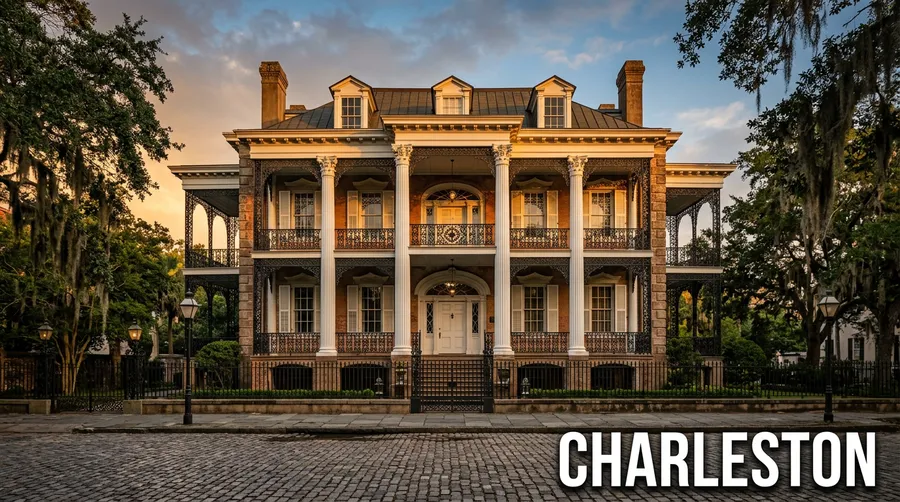
Stepping onto Charleston’s peninsula, you’re immediately enveloped by the whispers of the 18th century, a colonial-era grandeur that feels almost sacred. But beneath those cobblestone streets and wrought-iron balconies, a silent battle is being waged against the encroaching sea. Visitors often notice the sheer proximity of the ocean, particularly around the iconic Battery. What many don’t realize is the monumental, multi-phase effort underway to protect this historic heart: a $75 million Low Battery Seawall Restoration Project, raising the wall by two feet over more than 48,000 linear feet. This isn't just a utilitarian upgrade; it’s a delicate dance between safeguarding heritage and adapting to a wetter future. While the construction can be an eyesore in parts, particularly during peak season (avoid March-May if you dislike scaffolding), the wider sidewalks and enhanced drainage emerging from the work actually improve pedestrian access and, frankly, make for a more comfortable stroll along the waterfront—a subtle but significant enhancement that typical guides overlook.
How does a city like Charleston, so defined by its water, plan for even more? The city’s 2025 Water Plan is a fascinating case study in foresight, viewing water not as an enemy but as an integral, if challenging, asset. For the curious traveler, its online StoryMap offers an unexpected window into the city's future, detailing historic creek basins and community-driven flood management strategies. This isn't your average historical narrative; it's an interactive digital archive explaining the *why* behind the new urban fabric you’re experiencing. It proves far more engaging than it sounds, offering a depth of context that transforms a casual observation of a newly installed bioswale into an understanding of a civic-wide ecological strategy, effectively turning infrastructure into an interpretive exhibit.
Electric vehicle charging in historic districts might sound like an oxymoron, a modern intrusion into a carefully preserved past. Yet, Charleston has deftly integrated 28 publicly accessible Level 2 EV ports across four city garages by 2024, strategically placed to minimize visual impact while maximizing utility for both residents and environmentally conscious visitors. This isn't about replacing the horse-drawn carriage tours, which remain a perennial favorite and, dare I say, a bit of a tourist trap if you're looking for genuine insight. Instead, these charging stations offer a practical solution for travelers exploring beyond the immediate peninsula, allowing for day trips to nearby plantations or beaches without range anxiety. The city’s proactive zoning updates, requiring EV-ready features in new commercial construction, signal a long-term commitment that ensures seamless integration rather than a clunky afterthought, quietly shaping the city's future accessibility.
Beyond the public works, the Preservation Society’s Resilience Guidance for Charleston offers homeowners 656 actionable recommendations, from permeable landscaping to dry floodproofing. You might not see these changes explicitly as a tourist, but they contribute to an overall sense of stability and thoughtful stewardship that underpins the city's enduring charm. It’s a quiet testament to a community deeply invested in its identity, ensuring that what you see today—the vibrant streetscapes, the elegant homes—has a fighting chance of surviving tomorrow, a commitment that goes far deeper than a coat of paint. My expectation for Charleston was a static museum; the reality is a living, breathing, adapting organism, which is infinitely more compelling.
Pittsburgh: From Steel City Grime to Green, Smart Legacy?
Pittsburgh, Pennsylvania, offers a starkly different historical narrative than Charleston's genteel coastal charm. Once the industrial engine of America, its legacy is etched in steel and the confluence of its three mighty rivers. This heritage, however, comes with its own set of challenges, particularly flash floods, which regularly plagued its lower-lying historic neighborhoods. What I found surprising was the aggressive, forward-thinking approach to mitigating these issues, exemplified by projects in areas like the Negley Run watershed. Here, designs blend new river outfalls, constructed wetlands, and even road elevation to redirect stormwater and reduce peak flows by an estimated 60%. This isn't just an engineering feat; it's an urban transformation that, for a visitor, means exploring areas once prone to disruption with a newfound sense of ease and, frankly, a greener, more pleasant aesthetic.
The Steel City is also embracing electrification with a pragmatic vigor that challenges its grittier image. Federal grants are deploying dual-port Level 2 chargers across equity-focused census blocks, a move that benefits not just residents but also the intrepid traveler venturing beyond downtown into Pittsburgh's diverse, historically rich neighborhoods like the Hill District. While not as overtly "historic" in the mansion sense, these areas hold the narratives of working-class America, immigration, and industry. These EV charging hubs, designed with backup power and microgrid integration for resilience during outages, are critical for exploring a city built on steep hills and sprawling river valleys. It's an unexpected convenience that frees you from the downtown core and encourages deeper exploration, proving Pittsburgh is anything but stuck in its industrial past.
For those truly seeking to understand Pittsburgh's complex social history, the Carnegie Library’s Digital Community Archive is a revelation. Many historic archives are tucked away in academic institutions, requiring special access. This initiative, however, empowers residents with mobile scanning stations to digitize their own family photographs, documents, and oral histories. The result? A publicly accessible, community-sourced online archive capturing underrepresented stories of neighborhoods like Homewood and the Hill District. It’s an invaluable resource for cultural tourists seeking authentic, often raw, narratives that traditional museum exhibits might gloss over. This isn't just a database; it’s a living testament to collective memory, offering a profoundly personal entry point into the city’s past that typical travel guides simply don't highlight. It reveals the *why* of Pittsburgh's vibrant, diverse character more eloquently than any textbook.
Galveston's Gilded Age: A Gamble Against the Gulf?
Galveston, Texas, carries the weight of a dramatic past—a Gilded Age boomtown that rose to prominence only to be tragically reshaped by the Great Storm of 1900. Its Victorian architecture and historic Strand District speak volumes about a bygone era of prosperity and ambition. But this island city, perpetually vulnerable to hurricanes and sea-level rise, is actively fortifying itself against future calamities. Living shorelines, featuring oyster reef restoration and barrier beach renourishment, are being implemented as nature-based coastal defenses. What does this mean for the visitor? These aren't just invisible infrastructure projects; they contribute to a healthier ecosystem that you can literally see and experience. A kayak tour through these restored areas offers an entirely different perspective on coastal preservation, connecting the island's historical vulnerability with its ecological future. These efforts are expected to lower shoreline retreat rates by 40%, a tangible impact on the island's very existence.
The Port of Galveston, a bustling hub for cruise passengers, is also integrating sustainability into its operations, significantly expanding its EV charging capabilities. With 28 universal EV stations across multiple parking areas, funded in part by VW Environmental Mitigation grants, the Port serves over one million annual cruise passengers. For travelers arriving by car, or for those who rent an EV to explore the island, this amenity is a welcome convenience that extends beyond just "eco-tourism." It allows for seamless exploration of the island's many historic sites, from the grandeur of the Moody Mansion—a quintessential Gilded Age residence—to the quirky charm of its historic neighborhoods. This integration of modern utility into a major heritage gateway makes Galveston surprisingly accessible for the climate-conscious traveler, a feature often overlooked in discussions of its historic appeal.
Mirroring Charleston's innovative approach, Galveston's 2025 Water Plan utilizes an online StoryMap to detail projects addressing sea-level rise, tidal flooding, and stormwater management. While similar in concept, Galveston's version distinguishes itself by the immediacy of its threat, making the engineering solutions feel profoundly urgent. It provides context for every historic building and street, explaining *why* certain elevations exist or why particular drainage systems are critical. For the truly engaged visitor, exploring this digital tool before or during your trip offers an unparalleled understanding of the island’s ongoing fight for survival, transforming a picturesque seaside town into a compelling story of resilience. It highlights local voices and guides policymakers, demonstrating a holistic approach to preserving Galveston's unique cultural character against formidable natural forces.
Unpacking the "Tourist Trap" Label: What's Genuinely Unique Here?
It’s easy to dismiss popular historic destinations as "tourist traps"—overrun, overpriced, and devoid of authentic experience. Yet, these three cities challenge that cynical view by investing in infrastructure and digital initiatives that elevate the visitor experience beyond mere consumption. While Charleston’s carriage rides can feel manufactured, its visionary seawall project and accessible EV infrastructure are genuine enhancements. Pittsburgh, often overlooked as a leisure destination, offers a surprisingly rich narrative through its digital archives and green infrastructure that actively redefines its post-industrial identity. Galveston, despite its obvious vulnerability, is turning ecological adaptation into a visible, engaging part of its historic narrative. The real uniqueness lies not just in their preserved pasts, but in their transparent, ongoing evolution.
What truly sets these places apart from other "historic cities" is their commitment to explaining the *why* behind their adaptations. They aren't just reacting; they're proactively shaping their futures and offering visitors a chance to witness preservation in action. For instance, you might expect Charleston to be mired in the past, but it’s actively building a future. Pittsburgh, instead of just celebrating steel, is showcasing how its industrial grit can translate into innovative urban resilience. Galveston isn't just rebuilding after storms; it's cultivating nature-based defenses that reshape its coastline. Expect crowds at Charleston, particularly on spring weekends; for a more intimate experience, plan your visit for the shoulder seasons of late fall or early winter, when the light is softer and the city feels more reflective. Pittsburgh is fantastic year-round, though the fall foliage adds an extra layer of beauty to its hilly landscape. Galveston, while lovely in spring, can be brutally hot and humid in summer; aim for October to April for pleasant weather.
A practical note: Admission fees exist for many historic houses in Charleston and Galveston, typically ranging from $15-$25 per person, but the broader city initiatives discussed are largely accessible for free, requiring only a curious mind and an internet connection for their digital StoryMaps. Parking can be a challenge and costly in the historic cores of Charleston and Pittsburgh, often $10-$20 for a few hours in a garage. Consider utilizing public transport or walking in these compact areas. Galveston is more spread out; an EV rental, leveraging the expanded charging network, would be ideal for exploring the entire island.
The Evolving Narrative: What This Means for Your Next Trip
The notion of a historic site as a static entity, perfectly preserved under glass, is increasingly antiquated. The future of heritage travel lies in understanding these places as living laboratories—dynamic environments grappling with 21st-century challenges while honoring centuries-old legacies. These three cities exemplify this paradigm shift. They’re not just about looking back; they're about looking forward, demonstrating that true preservation means adaptation. They offer a layered experience that rewards those who dig a little deeper, moving beyond the surface-level beauty to appreciate the ingenuity beneath.
When planning your next journey, approach these destinations with an open mind, ready to engage with their evolving stories. Don't just admire the architecture; ask *why* it still stands and *how* it's being protected. Seek out the digital archives; they often hold the most poignant, personal insights. Witness the infrastructure projects; they are the unsung heroes of modern preservation. By doing so, you'll uncover an America that is not only proud of its past but bravely shaping its future, offering a travel experience far richer and more relevant than any conventional guide could possibly convey. These aren't just historic cities; they're blueprints for resilience, offering a glimpse into what truly enduring heritage looks like.
Historic Mansions Worth Building a Weekend Around
Start with the estates and mansion properties that still justify tickets, routing, and a real visit, not just a mood-board detour.
Timeless Towns: Your Guide to America’s Historic Cities
Oldest historical towns in America?
The oldest continuously inhabited towns are St. Augustine, FL (1565), Jamestown, VA (1607), and Santa Fe, NM (1610).
What is the oldest town in the United States history?
St. Augustine, Florida, founded in 1565, is the oldest continuously inhabited town in the United States.
What is the 10 oldest city in the United States?
Jersey City, New Jersey, founded in 1630, ranks as the 10th oldest continuously inhabited city in the United States.
What town in America has the most history?
Boston, Massachusetts, with its wealth of Colonial and Revolutionary War sites, is often regarded as the American town richest in history.
Where is the most historical place in the USA?
Philadelphia, Pennsylvania—home to Independence Hall and the Liberty Bell—stands out as the nation’s most historically significant location.
What is the oldest landmark in America?
Castillo de San Marcos National Monument in St. Augustine, Florida (built 1672), is the oldest masonry fortification in the United States.
What is the most visited town in America?
New York City, welcoming over 65 million visitors in 2024, remains the most visited urban destination in the United States.
What state has the most history behind it?
New York leads U.S. states with the highest number of National Historic Landmarks, reflecting its deep historical heritage.
What is the best time of year to visit historical towns in the US?
Spring (April–June) and fall (September–October) offer mild weather and fewer crowds for visiting historic towns.
Are there any free walking tours available in historic US cities?
Yes, many cities like Boston and Charleston offer self-guided and donation-based walking tours of their historic districts.
What are the travel requirements for visiting historic national parks?
Most historic national parks require either per-vehicle or per-person entry passes, with annual passes available for frequent visitors.
What tips help avoid crowds at popular historical towns?
Visiting on weekdays and arriving early in the morning can help you enjoy historic sites with fewer crowds.
How accessible are historical sites for persons with disabilities?
Most major historic sites in the U.S. offer ADA-compliant access, including ramps, audio guides, and accessible restrooms.
Why This Page Exists
Maison builds place guides to help readers plan a real visit or understand a real site. When a page makes present-day access, booking, or visitor claims, those details are revised against public-facing source material and editorial review. For the wider standards behind that work, see methodology.
The Cornerstone Brief
One historic place, once a week — what it is, why it matters, whether it's worth going. No filler, no paid placements.
Coming soon. Unsubscribe any time.
We use cookies to enhance your experience. By continuing to visit this site you agree to our use of cookies.