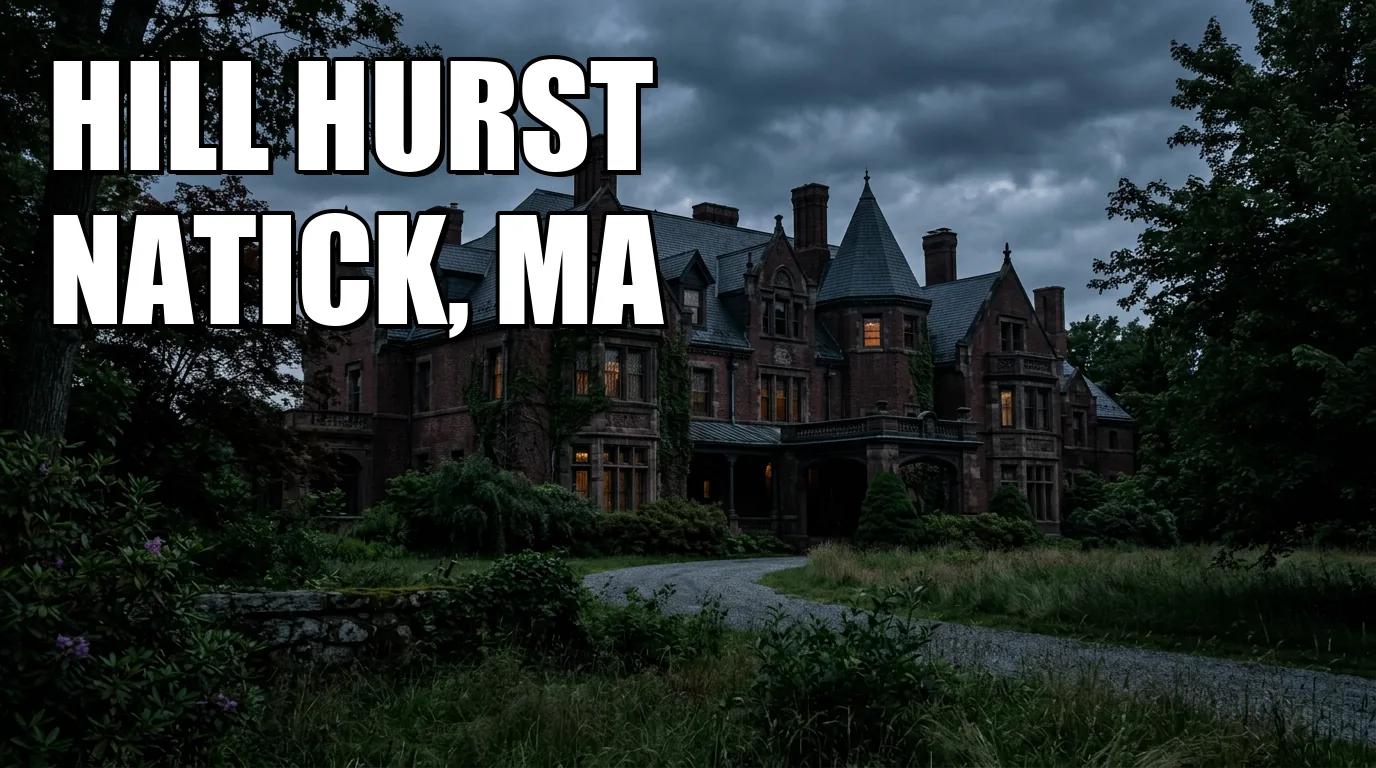
The moment I first saw the sprawling, Gothic-tinged estate in *Knives Out*, I knew it was something special. That magnificent, almost brooding brick mansion, with its intricate gables and commanding presence, wasn't merely a set; it felt like a character unto itself, silently observing the unfolding family drama. As a travel writer who’s spent years sifting through the layers of America’s historic places, my immediate instinct was to find it, to understand its real story. What I discovered about Hill Hurst, the actual home used for those iconic exterior shots in Natick, Massachusetts, is a tale far more complex and, frankly, a bit more frustrating than a simple location scout.
Is it truly possible to experience a place that remains staunchly private, guarding its secrets behind stone walls and generations of lineage? This isn't your typical travel guide that promises open doors and guided tours. Instead, consider this an expedition into the intriguing tension between cinematic fantasy and the inviolable reality of a private, historic American home. What makes Hill Hurst so uniquely compelling isn’t just its starring role, but the profound history it embodies—a history almost entirely hidden from public view.
The Cinematic Allure Meets Stark Reality: A Detective Story's Unseen Star
When a film like *Knives Out* captures the imagination, it often sends viewers scrambling to find its real-world locations. Daniel Craig's Benoit Blanc, with his drawling Southern charm, navigating the labyrinthine corridors and grand halls of the Thrombey estate, made that mansion seem utterly essential to the plot. And indeed, the production designers did a masterful job of creating an interior that *felt* like it belonged to the exterior, which, as it turns out, is a genuine architectural masterpiece known as Hill Hurst. Located at 82 Pond Road in Natick, Massachusetts, within the exclusive Hunnewell Estates Historic District, this brick Château-style mansion is a tangible link to the film's gothic atmosphere.
Yet, here's where the travel guide takes an immediate, necessary turn from expectation: you can't visit it. The excitement of discovering the "Knives Out mansion" quickly evaporates when confronted with the reality of its strict privacy. The Hunnewell family, whose descendants still occupy properties within this sprawling compound, maintains a steadfast commitment to their privacy, an understanding explicitly reinforced during the filming. This means those grand interiors you remember from the movie? They were filmed on a soundstage, a brilliant illusion. The actual Hill Hurst only lent its magnificent facade to the camera, a crucial distinction often missed by eager location hunters.
Unpacking Hill Hurst's Architectural Language: A Glimpse into the Gilded Age
So, if you can't walk through its halls, what *can* you appreciate about Hill Hurst? Its very existence offers a fascinating window into late 19th-century American aristocracy and architectural ambition. The mansion was built between 1883 and 1884, a period when American industrialists and financiers were eager to display their wealth and status through grand residences. Designed by the esteemed architectural firm Shaw & Hunnewell, Hill Hurst perfectly embodies the Château-style, a European revival popular during this era.
Who were Shaw & Hunnewell, you might ask? It wasn’t just a random pairing; the firm had deep family ties to the estate's original owner. George Russell Shaw, one half of the partnership, was the son-in-law of Hollis Hunnewell, the man who commissioned the house. Henry S. Hunnewell, the other partner, was Hollis’s own son. This familial connection likely imbued the design with an intimate understanding of the family’s needs and tastes, producing a home that was both imposing and deeply personal. It's not merely a house; it's a statement about family legacy and a testament to the era's taste for historical European grandeur, reinterpreted for the New England landscape.
Beyond the Facade: Squash Courts and Rhododendrons—A Family's Enduring Legacy
What truly distinguishes Hill Hurst from other stately homes of its period, and what a casual observer would never guess from its cinematic appearance, are the unexpected innovations it harbored. Imagine, nearly a decade after its initial construction, in 1892, Hill Hurst was augmented with some of the very first squash courts in the United States. This wasn't a mere luxury; it was a leading-edge amenity, signaling a family deeply engaged with progressive recreational pursuits and a lifestyle far ahead of its time. It speaks volumes about the original inhabitants' interests, suggesting a blend of traditional elegance with a keen eye for modernity.
The Hunnewell family's historical significance, however, extends far beyond their impressive real estate and early sporting facilities. The patriarch, H. Hollis Hunnewell (1810–1902), was not only a prominent railroad financier and businessman but also a renowned landscape designer and horticulturalist. His passion for plants, particularly the introduction and cultivation of Asian rhododendrons and various coniferous evergreens, transformed American horticulture. While Hill Hurst itself sits on approximately 92 acres of meticulously maintained land near Lake Waban, it's part of a much larger, cohesive Hunnewell Estates Historic District—a vast family compound that, at its peak, comprised nearly twenty contiguous estates. This isn't just a rich family; it's a family whose contributions shaped American gardening and botany, a facet that no typical film location guide would ever highlight.
The Gatekeepers of Natick: Why You Can't Just Knock
Understanding the Hunnewell family's long-standing prominence helps contextualize why Hill Hurst remains so resolutely private. This isn't a case of a single eccentric owner; it's a deeply rooted generational commitment to privacy. The Hunnewell Estates Historic District itself is a testament to this, with multiple family properties, including Hill Hurst, continually occupied by descendants. When filmmakers approached them for *Knives Out*, a core contractual obligation was to maintain strict confidentiality regarding the exact location, precisely to avoid the kind of unwanted attention that a blockbuster film generates.
This privacy isn't just about avoiding curious tourists; it's about respecting a living legacy. These homes are not museums, but active family residences, brimming with personal history and memories. So, while the thought of glimpsing the "Knives Out mansion" is tempting, any attempt to trespass or disrupt the residents’ peace would be inappropriate and futile. There are no tours, no gift shops, and definitely no opportunities to re-enact your favorite scenes on the property. What you're seeing in Natick is merely the exterior shell of a cinematic dream, while the vibrant, private life of a significant American family continues within.
Appreciating the Unseen: Experiencing Hunnewell History from Afar
So, what’s a curious history buff or film fan to do? While a direct visit to Hill Hurst is off the table, understanding its context can still be a rewarding experience. If you find yourself in the Natick/Wellesley area, you can still appreciate the broader landscape that the Hunnewell family so meticulously shaped. The region itself, particularly around Lake Waban, offers hints of the kind of refined natural beauty that captivated H. Hollis Hunnewell. Take a walk around the public areas of Wellesley College, which borders some of the Hunnewell land, and you can imagine the kind of horticultural ambition that defined the family's influence.
When planning any trip to New England, remember that many historic estates *are* open to the public, offering a glimpse into similar Gilded Age grandeur, often with fascinating stories of their own. Consider visiting places like the Breakers in Newport, Rhode Island, or certain Trustees of Reservations properties in Massachusetts. These offer tangible experiences of historical architecture and landscape design, without infringing on private lives. The lesson from Hill Hurst isn't about what you *can't* see, but about the rich layers of history and family legacy that exist just beneath the surface of our most captivating cultural artifacts—even the fictional ones. And sometimes, the true discovery lies not in seeing everything, but in understanding why some things must remain unseen.
Ultimate Guide to Knives Out & Glass Onion Mansion Filming Locations
Where was The mansion in Knives Out filmed?
The Knives Out mansion features two primary filming locations: the Ames Mansion in Borderland State Park, Easton, Massachusetts (interior shots), and a private gothic revival mansion in Natick, Massachusetts, located about 10 miles west of Boston (exterior shots). The private residence's exact address remains confidential per contractual agreements with the filmmakers.
Where is the Thrombey house located?
The Thrombey house, the main setting of Knives Out, is located at the Ames Mansion in Borderland State Park at 259 Massapoag Avenue, Easton, Massachusetts 02356, where interior scenes were filmed. The exterior shots were filmed at a private mansion in Natick, Massachusetts.
What is the history of the Knives Out mansion location?
The Ames Mansion was built in 1910 as the residence of Oakes Ames, an heir to a wealthy shovel company and Harvard botany professor, and his wife Blanche Ames, an artist, botanist, and women's rights activist. The mansion was previously used for filming the 2016 Ghostbusters reboot in the same library room featured in Knives Out.
Can you visit the Knives Out mansion filming locations?
Yes, the Ames Mansion at Borderland State Park is open to the public with guided tours available. Mansion tours are 30 minutes long and explore the history of the Ames family; tours typically cost $10 and are available on select weekends. The private Natick mansion exterior is not accessible to visitors as it remains a private residence.
Where is the Glass Onion House located?
The Glass Onion mansion is Villa 20 at the Amanzoe luxury resort located in Porto Heli on the Peloponnese peninsula in Greece. This ultra-luxury resort villa features stunning architecture resembling a Greek acropolis with views of the Aegean Sea.
Is the Glass Onion house a real house?
Yes, Villa 20 is a real villa at the Amanzoe luxury resort in Porto Heli, Greece, and is available for guests to stay in, though rates are extremely high as part of the exclusive Aman resort brand known for hosting celebrities and high-profile clientele.
Can you visit or stay at the Glass Onion filming location?
Yes, you can stay at Villa 20 at Amanzoe resort in Porto Heli, Greece. However, rates are premium due to the luxury resort's status and can be quite expensive. The resort offers amenities including private spas, six swimming pools, outdoor barbecue areas, and traditional Greek dining facilities.
Where is Billy Joel's Glass House located?
Billy Joel's Glass House is located at 149 Cove Neck Road in Cove Neck (Oyster Bay area) on Long Island, New York. The glass house, where Joel lived with his first ex-wife Elizabeth Weber, is a private residence and not open to the public.
Where is Billy Joel's mansion?
Billy Joel's Glass House on Long Island, New York (149 Cove Neck Road) is his primary residence featured on his album cover for 'Glass Houses' (1980). It is a glass-walled home with floor-to-ceiling windows overlooking the coastal landscape of Cove Neck.
Is the Piru mansion real and available for visits?
Yes, the Piru Mansion (also known as the Newhall Mansion) at 829 Park Road in Piru, California is a real Victorian Queen Anne mansion. While it has been used extensively for filming various TV shows and movies, it operates as a private film location facility and is not typically open for public tours.
Was the Piru mansion in any movies?
Yes, the Newhall Mansion in Piru has been featured in numerous film and television productions including 'Live by Night,' 'Brooklyn Nine-Nine,' 'The X-Files,' 'Charmed,' 'Melrose Place,' 'Charlie's Angels,' 'The Incredible Hulk,' 'Monk,' 'Murder She Wrote,' and 'American Wedding,' among many others.
Is the Glass House in London real?
Yes, there are several real glass houses in London. The most notable is the Glass House in Hampstead (completed in 2013) and The Glass House in Fulham, which was a historic stained-glass studio and workshop for artists. Additionally, there is a £70 million modern glass mansion in London with luxury amenities.
What is the famous Glass House in Connecticut?
The iconic Glass House designed by architect Philip Johnson is located at 798–856 Ponus Ridge Road in New Canaan, Connecticut. Built in 1948-1949, it is a National Trust for Historic Preservation site and a masterpiece of International Style architecture. It is open to the public for tours.
Where was Glass Onion filmed besides the mansion?
Glass Onion was filmed in multiple Greek locations including Porto Heli, Spetses, and other areas on the Peloponnese peninsula. The film also had some filming in Serbia for additional scenes beyond the Greek island and mansion sequences.
How far is the Ames Mansion from Boston?
The Ames Mansion in Borderland State Park in Easton, Massachusetts is located approximately 25 miles south of Boston, making it easily accessible for a day trip from the city.
We use cookies to enhance your experience. By continuing to visit this site you agree to our use of cookies.