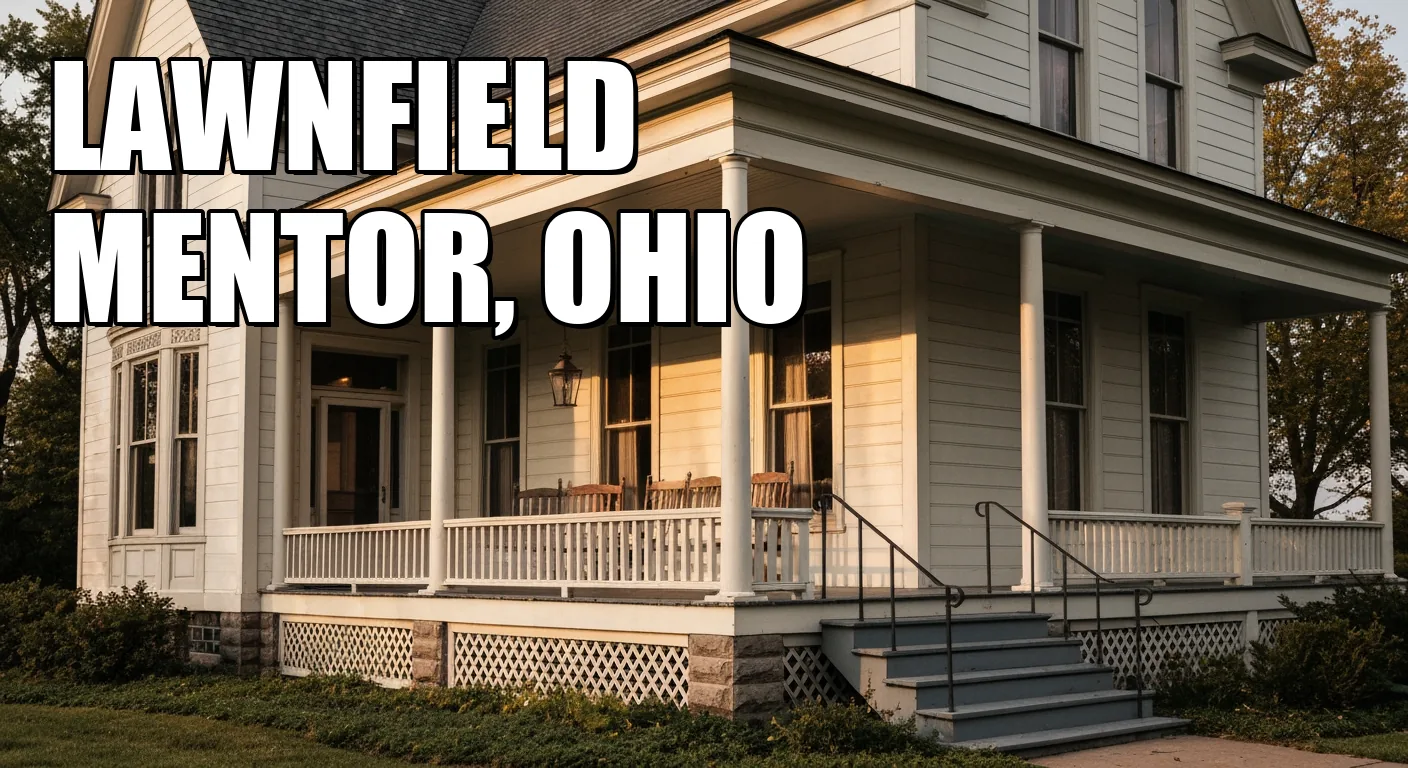
For years, I’ve chased whispers of history across the American landscape, from humble cabins to gilded mansions, always seeking the authentic pulse of a place. Many historic homes feel like museums frozen in time, but James A. Garfield’s Lawnfield in Mentor, Ohio, possesses a distinct, almost vibrant energy. It doesn't just display history; it reveals how a private residence became a national stage, a campaign headquarters, and ultimately, a testament to a family's enduring spirit. This isn't one of those over-commercialized sites; it's a genuine historical experience, rich with nuance.
When a Front Porch Became a National Forum
Think about the modern presidential campaign: meticulously choreographed rallies, endless media cycles, a constant scramble for sound bites. Now, rewind to 1880, and imagine a candidate, James A. Garfield, conducting his entire presidential campaign from his own home. That's precisely what happened at Lawnfield, transforming a relatively modest farm into a bustling political nerve center. This "front porch campaign" wasn't merely a quaint historical footnote; it dictated the very rhythm of the Garfield family’s life and turned their private spaces into public forums. Every day, thousands descended upon the property, eager to shake the future president's hand, hear his words, or simply be part of the spectacle. It’s hard to imagine a candidate today opening their home in such a fashion, underscoring just how profoundly different American politics once was.
As Election Night, November 2, 1880, dawned, the air at Lawnfield must have crackled with anticipation. The dining room, recently expanded that spring, became the focal point for a celebration that night. Imagine twenty-two family members and close guests, gathered around tables arranged in a cross shape, the candles that had illuminated Garfield’s long, arduous summer campaign now specially lit "in honor of Victory." This wasn't a distant, formal affair; it was an intimate, domestic triumph, witnessed by those closest to the candidate, underscoring the deeply personal stake involved in presidential politics of the era.
The "Treaty of Mentor": Truth or Political Theater?
One of the most whispered-about events at Lawnfield, often framed as a secretive political maneuver, was the so-called "Treaty of Mentor." On September 28, 1880, the estate played host to a cavalcade of Republican heavyweights: former President Ulysses S. Grant, New York Senator Roscoe Conkling, and Illinois Senator John Logan, among others. They arrived after delivering speeches in nearby Warren, Ohio, drawing a crowd of roughly 200 local supporters who met the dignitaries on the front porch. Inside, Mrs. Garfield served light refreshments in the dining room, a rather domestic touch for such high-stakes political maneuvering. Later, some of the gentlemen retreated to Garfield’s upstairs study for cigars and, presumably, political discourse.
This gathering immediately fueled speculation across the nation about backroom deals, particularly concerning Conkling, a powerful New York "boss" who had initially resisted Garfield’s nomination. Yet, here's where Lawnfield challenges conventional wisdom: Garfield himself later insisted he had *no private conversation* with the party. This detail makes you wonder: was it a genuine attempt at reconciliation, a strategic show of unity for a fractured Republican party, or perhaps an instance where the narrative outran the reality? Sometimes, the most important historical lessons are found in the discrepancies between public perception and private account. It reminds us that political optics are hardly a modern invention; they've been shaping narratives for centuries.
Voices of Change: How Lawnfield Echoed with Unforeseen Performances
Beyond the political machinations, Lawnfield's parlor once resonated with a far different, and arguably more poignant, kind of performance. In September 1880, amidst the relentless campaign, the Fisk Jubilee Singers, an *a cappella* choir of African American students from Fisk University in Nashville, Tennessee, requested a visit. On September 30, they performed for Garfield and his neighbors. Garfield, a former Civil War general who understood the lingering wounds of slavery and the fight for civil rights, personally served them coffee and fruit. Their emotional performance moved many to tears, including the future president.
His response, as recorded by his secretary Joseph Stanley-Brown, was profoundly telling for its time: "I tell you now, in the closing days of this campaign, that I would rather be with you and defeated than against you and victorious." This wasn't merely a polite platitude; it was a powerful, almost radical, statement from a presidential candidate in an era still grappling with Reconstruction’s aftermath. It highlights a lesser-known facet of Garfield's character—his empathy and recognition of the "race out of place"—and serves as a stark reminder of the social progress still painfully unfolding. This moment, often overlooked in standard biographies, offers a window into the nuanced moral landscape of 19th-century America and the quiet power of cultural exchange.
The parlor, it seems, held more than one kind of historical memory. Following Garfield's tragic assassination in 1881, portrait artist Caroline Ransom, a family friend, arrived at Lawnfield in July 1882. She wasn't there for political talks or musical performances, but to meticulously capture the family for a commemorative portrait commissioned after the president's death. This wasn't just any painting; Ransom’s painstaking attention to detail, meticulously rendering the parlor's furnishings, colors, and textile patterns, proved invaluable decades later. When the house underwent restoration thirty years after the president's death, her painting served as an indispensable historical document, guiding preservationists in recreating the authentic look and feel of the room. It’s a compelling testament to how art, often seen as purely aesthetic, can become a critical tool for historical accuracy and preservation.
A Widow's Vision: The Memorial Library and a Double Wedding
History often remembers the men, but Lucretia Rudolph Garfield, the president's widow, stands as a formidable figure in her own right. Her strength and vision after her husband’s death were extraordinary. Four years after his passing, she oversaw the addition of the magnificent Memorial Library wing to the house—a space that became the nation's first presidential library. This wasn’t just a place to store books; it was a sanctuary for her husband’s papers and a testament to his intellectual legacy.
This very library, conceived in sorrow, became the backdrop for an event of immense joy on June 14, 1888: the double wedding of two of the Garfield children. Harry Augustus Garfield married Belle Hartford Mason, and his sister Mary "Mollie" Garfield wed Joseph Stanley-Brown, who had been President Garfield’s private secretary. The ceremonies were nothing short of spectacular. Imagine the library, adorned with an astonishing 6,000 rosebuds, 3,000 carnations, 2,000 daisies, and 200 yards of smilax. Even a bust of President Garfield, positioned in the northeastern corner of the library, was draped with the flag of his alma mater, Williams College. Following the ceremonies, a grand wedding supper filled the main floor, with guests like ex-President Rutherford B. Hayes and his wife mingling in rooms draped with daisy chain curtains. This event, born from Mrs. Garfield's determination to honor her husband’s memory while celebrating her children’s futures, offers a powerful glimpse into the intersection of personal grief and familial resilience. It’s a beautiful, bittersweet reminder that even in the shadow of tragedy, life, and love, continue to blossom.
Navigating Your Visit: What to Expect at Lawnfield Today
So, you’re convinced Lawnfield is worth the detour? Excellent choice. What might surprise you most about this National Historic Site is its accessibility. Unlike many presidential homes that come with hefty admission fees, admission to the James A. Garfield National Historic Site is completely free of charge for all visitors. Yes, you read that right: no entrance fees, no parking fees, no tour charges. This gesture from the National Park Service genuinely sets it apart, allowing anyone to delve into this rich history without financial barrier. It’s refreshing, honestly, in an age where historical access often feels commodified.
The site operates with seasonal hours, so a little planning goes a long way. If you're hoping for the full experience, aim for the summer months, roughly May through October. During this period, daily guided house tours run between 10 a.m. and 5 p.m., with the last tour typically commencing between 3 p.m. and 4 p.m. Off-season, from November through April, hours are more limited, usually to Friday through Sunday. My advice? Arrive earlier in the day if you want to avoid any potential wait, especially on a weekend. The tours, which last about 45 minutes, are intimate and guided by knowledgeable rangers, offering a personal touch that you won't find at larger, more impersonal historical attractions. There are no age restrictions, making it a surprisingly engaging outing for families, assuming children have a reasonable attention span for historical detail. You can simply show up, but if you're part of a group of six or more, a quick call to 440-255-8722 to reserve your tour is a smart move.
More Than Just Bricks and Mortar: Lawnfield's Lasting Echo
Lawnfield isn't merely a collection of rooms where famous people once stood; it's a profound narrative woven into the very fabric of American politics and family life. From the raw ambition of a presidential campaign conducted from a front porch to the quiet dignity of a widow constructing the nation's first presidential library, this site offers unparalleled insights into the human story behind the historical headlines. You won't find sweeping, generic displays here. Instead, you'll uncover the subtle details: the specific arrangement of candles on an election night, the emotional weight of a gospel choir's song, the architectural resilience of a grieving wife.
What makes Lawnfield truly unique isn't just its role as a presidential home, but its exceptional preservation as the *first* presidential library, meticulously curated by Lucretia Garfield herself. This foresight ensures that what you experience is not a modern interpretation, but a direct link to the man and his era, filtered through the loving dedication of his family. It stands apart from many other presidential estates that were either heavily modified or restored much later without such direct familial guidance. For those seeking to understand the often-unseen human dimensions of power, loss, and legacy in 19th-century America, Lawnfield is not just a destination; it's an essential pilgrimage. Go, and let its quiet stories reveal themselves.
Explore Lawnfield: Your Complete Guide to the James A. Garfield Historic Home
Where is James Garfield's Lawnfield located and how do I get there?
Lawnfield is located at 8095 Mentor Avenue, Mentor, Ohio 44060, approximately 23-26 miles east of Cleveland, which takes about 30 minutes to drive via Interstate 90 and Route 615. The site is easily accessed from I-90 by exiting at Route 615 (Center Street), turning north on 615 to Route 20 (Mentor Avenue), then turning west on Route 20.
What are the operating hours for the Garfield site?
From May through October, the site is open daily from 10 AM to 5 PM. From November through April, it's only open Friday, Saturday, and Sunday from 10 AM to 5 PM. The site is closed on New Year's Day, Martin Luther King Jr.'s Birthday, Presidents Day, Veterans Day, Thanksgiving, and Christmas.
Is there an admission fee to visit the site?
No, admission to James A. Garfield National Historic Site is completely free for all visitors, and the guided house tours are also free. You can apply for special passes such as the America the Beautiful Access, Veteran, Active Duty Military, and 4th grade passes.
How do I tour the Garfield house and are reservations required?
Guided tours of the Garfield house are the only way to view the interior and are offered multiple times daily on a first-come, first-served basis. Reservations are only required for groups of 6 or more; call 440-255-8722 to arrange. Tours typically last about 45 minutes to an hour.
What should I expect during the house tour?
The guided tour takes approximately 45 minutes to an hour and showcases original furnishings and artifacts (about 80% are original). You'll see the Memorial Library with Garfield's Queen Anne Wooten desk and his wife Lucretia's writing desk, original exhibits in the former kitchen, and learn about the family's life and history.
Is photography allowed at the site?
Photography is not permitted inside the Garfield home itself, but personal photography is allowed outside on the grounds and in the museum exhibits. No permits are required for personal, non-commercial photography at the site.
How long should I plan for my visit?
Plan for at least 2-3 hours to fully enjoy your visit: about 45 minutes to an hour for the house tour, 30 minutes to an hour for the Visitor Center exhibits and films, and additional time to explore the 8-acre grounds.
What's the best time to visit Lawnfield?
Late spring through fall offers the most pleasant weather and fewer crowds, with May through October having daily operations. Summer offers free outdoor concerts on the grounds, making it an especially appealing time to visit.
What will I see at the site besides the house?
The 8-acre grounds include walking paths through historic farmland, a Visitor Center with museum exhibits and an 18-minute biographical film about Garfield, various artifacts and displays, and opportunities to walk the scenic estate where Garfield lived from 1876-1881.
Is the site accessible for people with mobility challenges?
Yes, the site offers free accessible parking spaces near the Visitor Center, a drop-off area closer to the entrance, and paved walking paths. Contact the site at 440-255-8722 for specific accessibility information for your needs.
Are there any special events or programs in 2025?
Yes, 2025 features free summer concerts on the grounds where local bands perform historical pieces, and special educational programs throughout the year. Visit the National Park Service website or call 440-255-8722 for the current 2025 event schedule.
Can I bring children to visit Lawnfield?
Yes, children are welcome to visit the site and tours. School groups are accommodated year-round with special scheduling (typically 10 AM-noon in May), and the site offers educational programs. The museum exhibits and grounds provide a family-friendly experience.
Are there group tour options available?
Groups of 6 or more can arrange guided tours by calling 440-255-8722. School groups can arrange special educational visits, and tours are available for various group sizes throughout the year.
What nearby attractions should I visit while in the Mentor area?
Popular nearby attractions include Headlands Beach State Park, Mentor Lagoons Nature Preserve, and Headlands Dunes State Nature Preserve, all offering scenic lakeside experiences. The James A. Garfield Memorial is also located in Lake View Cemetery in Cleveland (25 miles away).
Is there a gift shop or restaurant at the site?
There is a Visitor Center with exhibits and an introductory film, though dining and gift shop services vary. It's best to call 440-255-8722 or check the website for current amenities available during your visit.
We use cookies to enhance your experience. By continuing to visit this site you agree to our use of cookies.