There are countless historic houses scattered across the American landscape, each whispering tales of bygone eras. Yet, few resonate with the profound human drama and national significance quite like the Abraham Lincoln Home in Springfield, Illinois. As someone who's wandered through dusty attics and stately parlors from coast to coast, I can tell you this isn't merely a meticulously preserved relic. This house is a living document of Lincoln’s most formative years, a place where the lawyer, husband, and father wrestled with both personal sorrows and the weighty issues that would define his presidency.
Most guidebooks present the Lincoln Home as a straightforward historical attraction, a box to check off your itinerary. But to truly appreciate its essence, you need to look past the velvet ropes and the ranger's script. What did it feel like to be Mary Lincoln, raising four boisterous boys in these rooms? How did the future president, often described as melancholic, find solace or stir ambition within these walls? This is where the real story lies, in the tangible connection between the man and his most personal space, and it's far richer than any brochure suggests.
The Evolving Dwelling: More Than Just a House
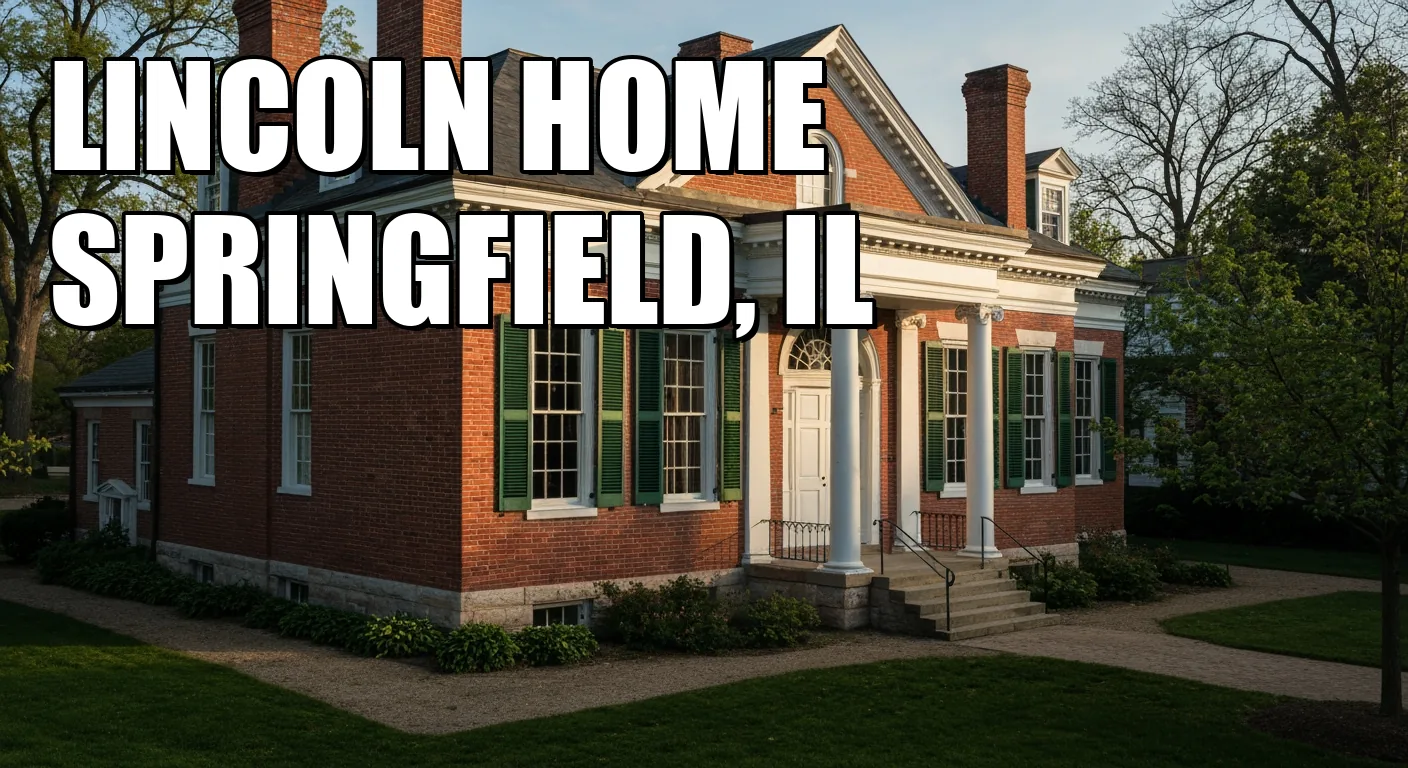
Consider the structure itself. When Abraham and Mary Todd Lincoln moved into their new home at 413 South 8th Street in May 1844, it was a relatively modest one-and-a-half-story cottage. Their first son, Robert Todd Lincoln, born on August 1, 1843, had actually entered the world at the Globe Tavern boarding house, a detail often overlooked. This early home, however, quickly became the backdrop for their burgeoning family and aspirations, necessitating significant changes over time.
The Lincolns, like many growing families of their era, didn't hesitate to adapt their living space. In 1846, for example, they added a downstairs bedroom and a pantry, practical additions reflecting an immediate need for more utility. What’s often missed is how these renovations weren't just about expanding square footage; they were about creating a functional, comfortable home for a family constantly in flux. Between 1849 and 1850, they even installed stoves in the parlor rooms, a small upgrade that speaks volumes about the desire for warmth and domestic comfort during chilly Illinois winters.
The most dramatic transformation occurred between 1855 and 1856, when the original cottage blossomed into a full two-story residence. This wasn't merely cosmetic; it profoundly altered their domestic life. Three new bedrooms appeared upstairs, alongside a master "his and hers" suite. This separation allowed Lincoln his own room for legal work—a quiet sanctuary from the bustle of a household with four young boys. Mary, ever the manager, also oversaw the construction of a dividing wall between the kitchen and dining room, creating a proper formal dining area. These improvements weren't just about status; they were about functionality and perhaps a subtle yearning for more refined living as Lincoln's career gained momentum, yet they still retained the home’s unpretentious character.
Tragedy and Triumph: The Human Heart of the Home
Step inside, and the spirit of the Lincoln children is almost palpable. It’s here, in these very rooms, that three of their four sons were born. Edward Baker Lincoln, affectionately known as "Eddie," arrived on March 10, 1846. His life was tragically cut short, however, when he died in the family home on February 1, 1850, after a prolonged illness initially misdiagnosed as diphtheria but later attributed to tuberculosis. Imagine the grief that hung heavy in these parlors during his funeral, an unbearable loss that Lincoln himself would recall years later in his emotional farewell address, saying, "Here my children have been born, and one is buried." This deeply personal tragedy reminds us that even monumental figures face profound sorrow within their own walls.
Just ten months after Eddie's passing, another life brightened the home with the birth of William Wallace ("Willie") Lincoln on December 21, 1850. Three years later, Thomas Lincoln, the youngest, arrived on April 4, 1853. Abraham, with characteristic affection, nicknamed him "Tad," a playful reference to his appearance as an infant—a wiggling, lively "tadpole." These details, often glossed over in historical accounts, humanize Lincoln, painting a picture of a devoted father who found joy and meaning in the chaos of family life, even as the nation teetered on the brink of division. The home wasn't just a stage for political ambition; it was the crucible of his personal world.
Where Destiny Called: The Political Stirrings within These Walls
The Lincoln Home transitioned from a domestic haven to a stage for national politics with startling speed. On the evening of May 19, 1860, the Republican National Convention's notification committee descended upon the house. This was the moment they formally announced Lincoln’s nomination as the Republican presidential candidate. Picture the scene: George Ashmun of Massachusetts, president of the convention, leading a delegation into the "large north parlor" to deliver the life-altering news. Afterward, the group retreated to the "south parlor," where Mary Lincoln had thoughtfully arranged refreshments, a testament to her grace under pressure.
The election itself, on November 6, 1860, solidified his destiny, but the house witnessed the intense preparations for his departure. The farewell levee, a formal reception, held on February 6, 1861—just five days before the family left for Washington—was perhaps the most poignant event of all. The house was, by all accounts, "thronged by thousands" of Springfield citizens and legislators from 7 p.m. to midnight. This wasn't just a political gathering; it was a deeply emotional communal goodbye, a recognition that a local son was stepping onto a national, perilous stage. The sheer number of people, overflowing from the parlors into the street, underscores the profound connection Lincoln had forged with his community.
Then came the final act: the departure. Abraham and Mary Lincoln officially moved out of their home on February 8, 1861, settling briefly at the Chenery House Hotel. Three days later, on February 11, 1861—his 52nd birthday—President-elect Lincoln boarded a specially arranged train at the Great Western Depot. His famous, emotionally charged farewell address, delivered in the pouring rain, solidified the home’s place in history. He spoke of his 25 years in Springfield, of Eddie's burial, of leaving behind a part of himself. It’s a moment that captures the bittersweet essence of the house: a place of humble beginnings that launched a nation-changing journey.
Navigating the Home: Practicalities Beyond the Postcard
Planning a visit to the Lincoln Home requires a little more strategic thinking than simply showing up. Here's what the typical glossy brochures might not emphasize. Tours of the interior, led by knowledgeable National Park Service rangers, are entirely free, which is fantastic. However, you cannot wander through the house on your own; access is exclusively via these guided tours. This structured approach, while ensuring preservation, means you're tied to a schedule.
Crucially, tickets are distributed on a first-come, first-served basis, in-person only, at the Lincoln Home Visitor Center (426 South 7th Street). You cannot reserve tickets in advance for individuals or groups under 15 people. This is a critical piece of information for visitors, especially those accustomed to online booking. Be prepared to obtain your tickets on the day of your visit, and if you're traveling during peak times, this means arriving early. The Visitor Center operates from 9:00 AM to 5:00 PM, with the last tours typically starting around 4:00 PM to 4:30 PM in winter and 5:00 PM to 5:30 PM in summer.
Each internal tour is succinct, lasting approximately 20-30 minutes, accommodating a maximum of 15 people due to the 180-year-old structure's delicate nature. While the house tour itself is brief, the entire site experience, including the visitor center exhibits, a video screening, and a self-guided walk through the historic neighborhood, easily consumes 2-3 hours. Parking is available, but expect a fee of $2.00 per hour, payable at the visitor center. Savvy visitors might opt for the free parking available on weekends in downtown Springfield, just a short walk away, offering a pleasant stroll through the historic district.
Beating the Crowds: A Strategic Visitor's Guide
If you're planning your trip, consider this honest assessment: the Lincoln Home is incredibly popular, and its popularity dictates the experience. Peak visitation stretches from March through November. During these months, particularly on weekends and throughout the school group seasons (April, May, and October), wait times can easily exceed an hour. Don't underestimate this; during the busiest summer Saturdays, tour tickets have been known to run out before 2:00 PM, leaving later arrivals disappointed after a two-hour wait or more.
My advice? Arrive early—ideally right when the visitor center opens at 9:00 AM—to secure your tickets for a desired tour time. This is especially true if you are visiting between March and November. If you stroll in around 10:00 AM or later during peak season, you could face significant delays, potentially waiting hours for an afternoon slot, or worse, finding all tickets gone.
For a more serene experience, consider visiting during the off-season, specifically November through February. The crowds thin considerably, allowing for a more intimate engagement with the site. Even during peak season, early morning weekdays offer a much more manageable experience. Organized groups of 15 or more, such as school tours or charter groups, must absolutely reserve tours in advance through the Springfield Convention and Visitors Bureau (SCVB). For those planning to visit during the peak school group months of April, May, and October, securing reservations approximately 6 months in advance is not an exaggeration, but a necessity to avoid disappointment. You can reach the SCVB at 1-800-7300 or via their website.
The Lincoln Home isn't just a house; it's a profound portal into the life of one of America's most revered figures. It’s a place where the grandeur of history intertwines with the mundane realities of family life, grief, and domestic ambition. By understanding its nuances and planning strategically, you won't just see where Lincoln lived; you'll gain a deeper, more human appreciation for the man who saved a nation.