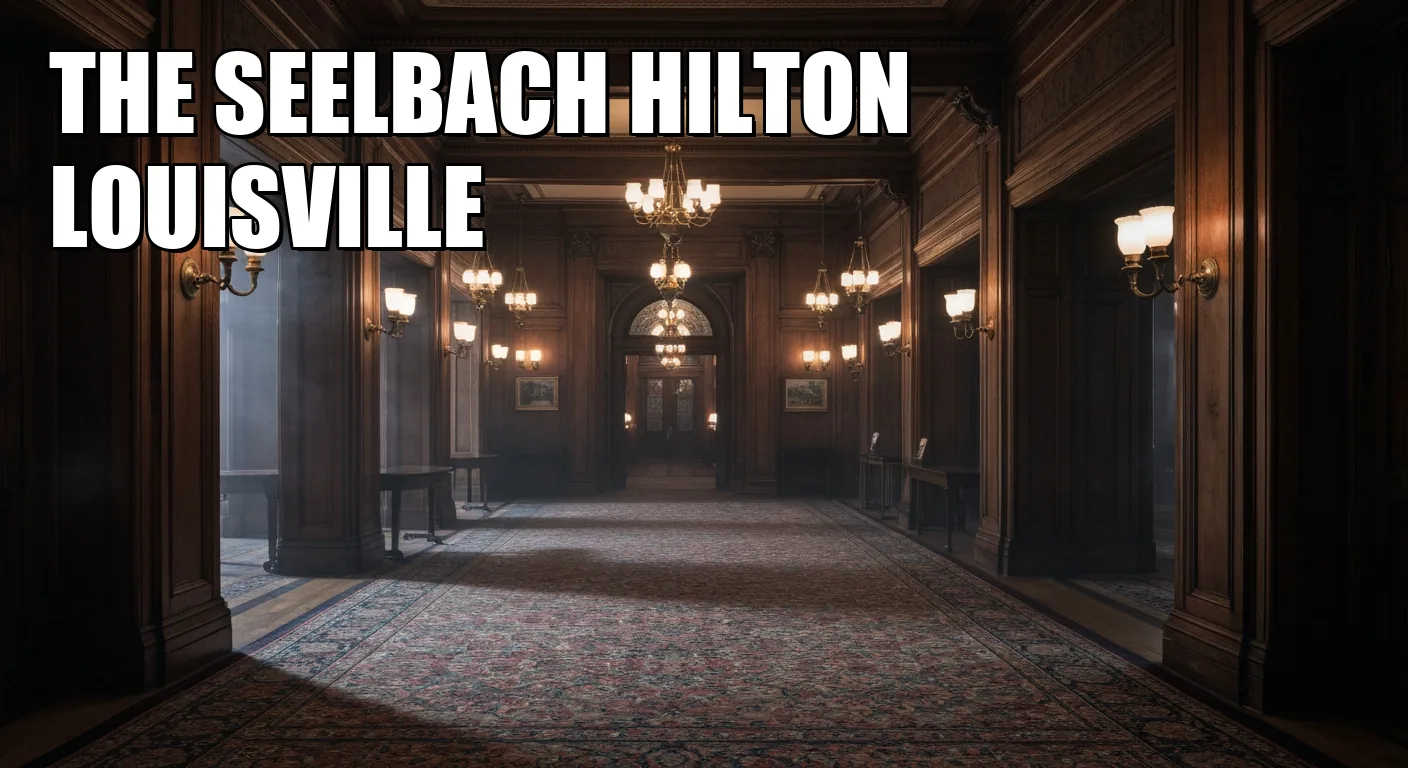
Stepping into the Seelbach Hilton Louisville, one immediately senses an almost palpable weight of history, a silent hum emanating from its gilded ceilings and marble floors. This isn't just another century-old landmark; it’s a living, breathing testament to a bygone era, one that apparently refuses to fully depart. For decades, stories of spectral residents have woven themselves into the very fabric of the hotel's narrative, drawing in curious travelers and seasoned ghost hunters alike. But what's real, what's embellished, and what does a veteran explorer of America’s most haunted locales truly find when checking into Room 810?
I’ve walked the creaking floorboards of countless historic inns, slept in rooms where whispers are said to echo from the past, and observed the eager anticipation (and occasional disappointment) of fellow seekers. The Seelbach holds a special kind of allure, largely because its ghostly tales are so inextricably linked to specific, tragic human stories. You’re not just chasing a generic bump in the night here; you’re attempting to connect with souls who had tangible lives and very real endings within these walls. This is what separates a truly compelling haunted site from mere rumor.
Tracing the Ethereal Trail of the Lady in Blue
Every reputable account of the Seelbach's hauntings begins with Patricia Wilson, known more evocatively as the "Lady in Blue." Her story is a poignant one, dating back to July 1936. She was here, supposedly, to meet her husband, only to receive the devastating news that he'd been killed in a car crash en route. Grief-stricken, wearing a distinctive blue chiffon dress, she took her own life, plunging down the No. 3 service elevator shaft. Her body was later discovered, tragically broken, atop a dummy elevator car—a non-functional lift used for structural counterweight or testing, not passenger service, making her descent even more desolate. It’s a detail that adds a visceral layer to her sorrow.
Now, decades later, her presence is said to be most concentrated around that very No. 3 elevator shaft, and the reports are remarkably consistent. In 1987, during a Sunday brunch, an Oakroom chef claimed to witness a woman in a blue chiffon dress step into the closed doors of the No. 3 elevator. Moments later, a housekeeper on the second floor reported the exact same chilling sighting. These aren't isolated incidents; countless guests and staff members, particularly on the mezzanine and along the eighth-floor hallway, have described inexplicable cold spots near that elevator. What truly adds to the mystique, though, is the distinct scent of lilac or lavender perfume, which sometimes accompanies these sudden chills, often followed by the unsettling sensation of a light touch on one's shoulder. It’s not a violent haunting; it’s a lingering, melancholic echo, a ghost trapped in the very moment of her despair.
What makes Patricia's story particularly compelling is its specificity. Unlike many amorphous "female specter" tales, her identity and tragic end are well-documented. You’re not just imagining a ghost; you’re contemplating the sorrow of a real woman, Pearl Mae Elliott, who used the alias Patricia Wilson, whose life ended so abruptly here. The consistency of the sensory reports—the perfume, the cold, the visual—lends a certain credence to her continued presence. But does every cold spot indicate a spectral touch? Perhaps not. Yet, the sheer volume and congruence of these experiences around one specific area of the hotel are difficult to simply dismiss as collective hysteria or overactive imaginations. It demands an open mind, even from the most skeptical observer.
Did Al Capone's Shadow Linger in Room 810?
Moving from a confirmed tragic figure to a legendary gangster, the Seelbach’s other prominent ghost story revolves around Room 810 on the eighth floor. This particular chamber is often linked to the notorious Al Capone, who reputedly used the hotel as a base during Prohibition. He wasn’t just a casual guest; whispers persist of secret tunnels and private gaming alcoves on this very floor, allowing him discreet movement and illicit activities away from prying eyes. This historical context provides a fascinating backdrop to the paranormal claims.
The most compelling incident tied to Room 810 comes from a honeymoon couple in 2004. They awoke around 2 AM to a sudden, dramatic drop in room temperature, finding a man in a dark suit peering out the window. The figure vanished when they turned on the lights. It’s a classic ghostly encounter: sudden chill, a clear visual, and then disappearance. The jump to attributing this figure to Capone is a natural, almost irresistible, leap for many. Is it definitively him? One can never say with certainty. But the idea of such a powerful, notorious figure, known for his secrecy and territorial nature, leaving an energetic imprint in a place he frequented during such a volatile period, certainly captures the imagination. It’s the kind of story that sells tours and makes a stay here feel just a little more dangerous.
The Seelbach itself has never officially confirmed a direct link between Capone and this specific haunting, but the legend persists, fueled by local guides and the collective consciousness of guests. It’s a wonderful example of how historical fact (Capone's presence) can merge seamlessly with paranormal folklore, creating a narrative far more compelling than a generic "man in a suit." What surprises many first-time visitors is how subtle these encounters often are. You might expect a dramatic apparition, but more often, it’s the sudden, inexplicable chill or a fleeting shadow that leaves you questioning your own perceptions. That, I find, is often the most unsettling kind of haunting.
Whispers and Footfalls: Exploring the Seelbach's Other Haunted Corners
While Patricia Wilson and Al Capone capture most of the headlines, the Seelbach’s spectral tapestry extends beyond the elevator shaft and Room 810. Several other areas within the sprawling hotel harbor their own distinct tales of the unexplained, offering varied experiences for those sensitive enough to perceive them. It’s in these lesser-known locales that the hotel’s more generalized residual energy seems to manifest, reminding us that many souls have passed through these grand doors.
Descend to the lower level, and you’ll discover the Rathskeller Room. This remarkable space, with its Gothic design and ornate Rookwood Pottery décor, is a true architectural marvel, a remnant of a bygone era when Bavarian-style beer halls were all the rage. Here, staff members have consistently reported disembodied footsteps echoing through the vaulted space, cold spots that defy logical explanation, and fleeting apparitions glimpsed out of the corner of an eye. The Rathskeller, by its very nature, feels ancient and somewhat isolated from the rest of the hotel, making it a natural magnet for residual energies. It’s a place where you can almost hear the clinking steins and boisterous laughter of a century ago, alongside the more subtle, inexplicable sounds of unseen movement. The sheer craftsmanship of the room itself is worth the visit, even if the ghosts remain shy.
Another peculiar spot is the Otto Café, specifically its mirror. Employees have recounted seeing the reflection of an elderly woman in tattered clothes behind them as they glance at the mirror. When they turn to confront the figure directly, she has invariably vanished. This type of mirror haunting, where a reflection exists independently of the immediate physical space, is a particularly unsettling phenomenon, playing on our primal fears of what lies just beyond our perception. It’s a classic trope, yes, but when reported consistently by multiple staff, it ceases to be just a story. These aren't blockbuster hauntings; they're the subtle, persistent anomalies that make a place truly feel alive with the past, demanding your attention through their quiet persistence.
A Traveler's Honest Take: Is the Seelbach Genuinely Spooky, or Just a Good Story?
Having traversed the globe seeking out the world's most atmospheric and allegedly haunted locations, I've developed a keen sense for discerning genuine unease from cleverly marketed folklore. The Seelbach Hotel, in my estimation, falls squarely into the former category, though its allure is certainly amplified by excellent storytelling. What sets it apart isn't the dramatic, in-your-face scares, but rather the pervasive, almost melancholic atmosphere that clings to its opulent interiors. It’s a place where history feels very close, and with that closeness often comes the sensation of lingering presences.
Is every cold spot a ghost? Probably not. Old buildings often have drafts and inconsistent heating. Is every shadow an apparition? Of course not; lighting can play tricks on the eyes. However, the sheer volume of consistent, unprompted reports from both guests and long-term staff, particularly regarding Patricia Wilson and the No. 3 elevator, cannot be easily dismissed. It’s one thing for a guest, primed by reputation, to *hope* for an encounter; it’s another for a seasoned chef or housekeeper, going about their daily routine, to be genuinely startled by an inexplicable event. This distinction is crucial when evaluating a haunted claim. The Seelbach manages to walk that fine line between historical intrigue and genuine paranormal activity with remarkable elegance.
What typical guides often miss is the sheer beauty and historical significance of the Seelbach, beyond its ghosts. This isn't just a haunted house; it's a testament to Gilded Age opulence, a place that hosted presidents, literary giants like F. Scott Fitzgerald (who supposedly drew inspiration from its grandeur for "The Great Gatsby"), and legendary figures. The Rathskeller alone, with its unparalleled Rookwood Pottery, is a destination in itself. So, while you might come for the ghosts, you'll stay for the architecture, the history, and the subtle, creeping feeling that you’re not entirely alone. Expect to be impressed by its grandeur, and pleasantly unnerved by its whispers. The hotel doesn’t rely on cheap tricks; its scares are a natural byproduct of its rich, often tragic, past.
Planning Your Descent into the Eerie: Practicalities for Ghost Seekers
If the Seelbach’s spectral residents are calling to you, a bit of strategic planning will enhance your experience, whether you're hoping for a full-blown encounter or simply soaking in the chilling ambiance. First, consider when to visit. While any time of year can yield results, the hotel leans into its haunted reputation, especially around Halloween. If you're looking for fewer crowds and a more intimate, reflective experience, consider visiting during the quieter months of late autumn or early spring, avoiding major holiday weekends. The crisp, cool air outside somehow seems to deepen the mystery within its walls. Weekday visits are always preferable to weekends for a more subdued atmosphere.
As for specific experiences, if you’re hoping for a brush with the Lady in Blue, spending time on the mezzanine level or the eighth-floor hallway near the No. 3 elevator is your best bet. Don't just rush through; pause, breathe, and pay attention to subtle shifts in temperature or fleeting scents. For those brave enough to seek out Al Capone's alleged haunt, booking Room 810 is the obvious choice. However, be aware that it's a popular request, so secure your reservation well in advance, especially if you're targeting a specific date. Expect the room to feel, well, like an old hotel room – the real chilling factor comes from the stories and your imagination, not necessarily from a theatrical set-up. General room rates at the Seelbach can vary widely, but expect standard nightly rates to start around $200-$300, with Room 810 potentially commanding a slight premium due to its notoriety. Parking is available, but like most downtown hotels, it often comes with a daily fee, typically around $30-$40 per night for valet service.
Lastly, approach your visit with an open mind, but also a healthy dose of skepticism. Not every creak is a ghost, and not every draft is a spirit. Yet, the Seelbach has an undeniable energy, a deep-seated history that seems to cling to its very structure. Arrive early for check-in to explore the common areas without the rush, perhaps grab a drink in the Old Seelbach Bar, which itself exudes a prohibition-era charm. Take a moment to truly appreciate the Rathskeller’s unique Rookwood Pottery. The true magic, and perhaps the true terror, of the Seelbach lies in its ability to transport you back in time, to a place where the veil between past and present feels remarkably thin. What you choose to believe is ultimately up to you, but the stories, and the feelings they evoke, are undeniably real.