Haunted Hotels

Manresa Castle: Unveiling Its True Haunted Heart

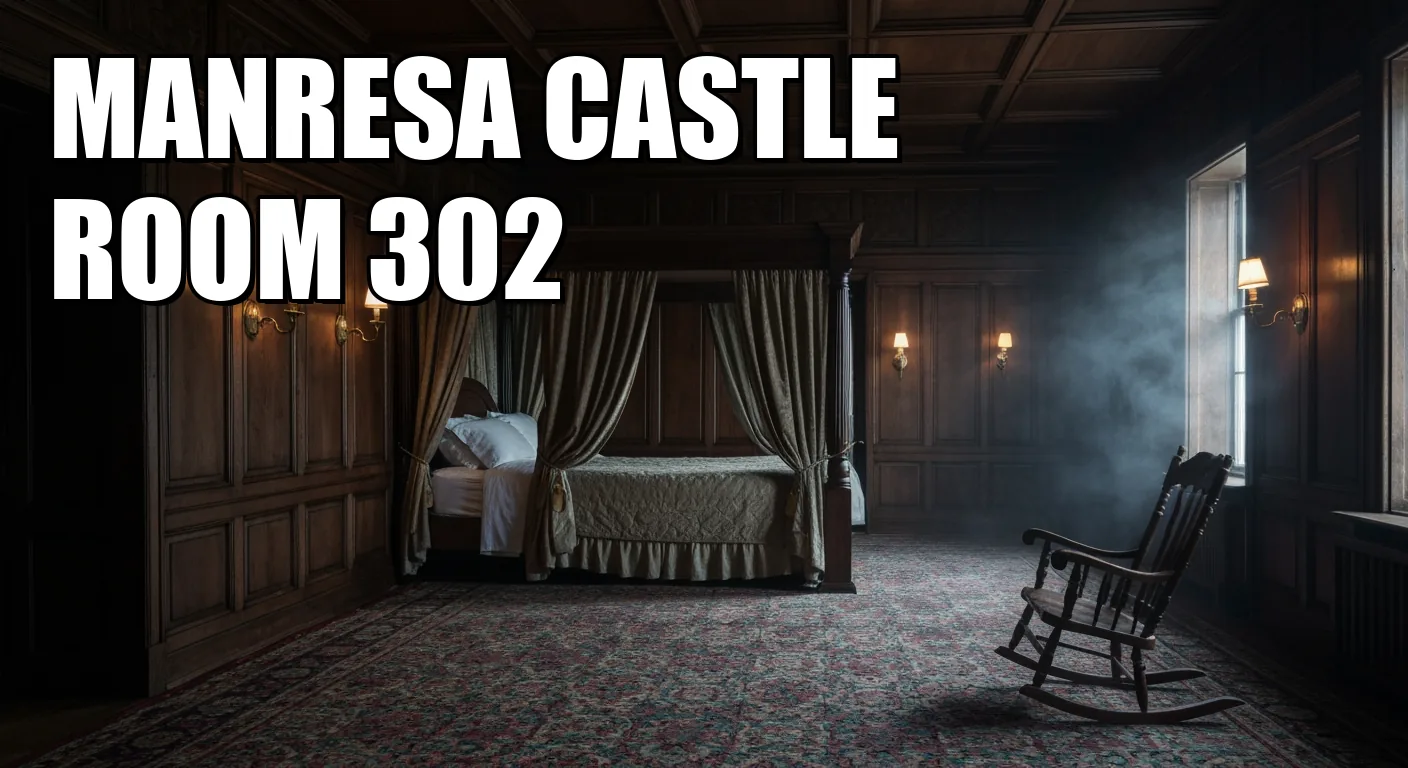
Does any seasoned traveler ever truly believe all the ghost stories they’re fed at a historic hotel? We want to, of course. The allure of a spectral encounter, a chill down the spine, a glimpse into another realm – it’s part of what draws us to places like Manresa Castle in Port Townsend, Washington. Yet, after years spent sifting through exaggerated lore and genuine reports, a pattern emerges, revealing which tales hold a kernel of truth and which are merely good for booking a room. Manresa, an imposing brick edifice that once served as a Jesuit novitiate, feels different. It possesses a gravitas, an almost palpable sense of history, that lends credence to the whispered accounts, pushing it beyond the realm of simple tourist kitsch. Standing tall on a hill overlooking the Puget Sound, the castle immediately commands attention, its gothic Revival architecture evoking a sense of European antiquity rather than Pacific Northwest practicality. Completed in 1892 as the home of wealthy German immigrant Charles Eisenbeis, it’s a monument to ambition and, some would argue, lingering sorrow. Later, it was indeed purchased by the Jesuits, who repurposed it as a training ground for priests, a period often cited as the catalyst for some of its more profound spectral activity. This conversion from a private residence to a monastic institution, and eventually a hotel, layered spiritual energies and human drama thick within its walls, creating a rich soil for paranormal phenomena. It's not just a haunted house; it's a building with an exceptionally varied and often intense human history, which, as any serious ghost hunter will tell you, is often the true prerequisite for persistent hauntings. ### The Monk's Unquiet Rest in Room 302 Anyone seeking an encounter at Manresa Castle invariably hears about Room 302. This particular chamber, situated directly beneath the old attic rafters, carries the weight of a truly grim legend. The story goes that a young Jesuit priest, broken by a forbidden affair, chose to end his life by hanging himself from an attic beam right above this very room. What makes this tale particularly chilling isn't just the tragic narrative, but the consistency of the reports emanating from those who dare to spend a night here. Visitors frequently describe an oppressive feeling upon entering 302, a heaviness that belies the room’s otherwise comfortable furnishings. Investigators using electromagnetic field (EMF) detectors often record sudden, inexplicable spikes in energy readings, a classic indicator of spirit presence. Guests have reported hearing disembodied chanting, faint but distinct, along with sharp knocking noises that seem to emanate from within the walls themselves. But perhaps the most unsettling accounts involve glimpses of a hooded figure, sometimes seen lingering in a corner of the room, or the sensation of icy cold spots that appear and vanish without any logical explanation. It’s also worth noting that the attic above, an area usually inaccessible to guests, has been the source of reports of phantom footsteps when Room 302 is occupied, suggesting a direct, unbroken link between the monk's tragic act and his enduring presence. This isn't just folklore; these are tangible, repeatable experiences, which is why Room 302 remains a perennial favorite for serious paranormal enthusiasts, rather than merely curious tourists. ### Who is the Lady in Blue and What Does She Really Want? Another cornerstone of Manresa Castle’s supernatural reputation centers on Room 306, a space once used by the Jesuits for storage but now a guest room infamous for the "Lady in Blue." This spectral resident is widely believed to be Kate Eisenbeis, the wife of the castle’s original owner, Charles. Her story is equally tragic, though shrouded in slightly more ambiguity: legend claims she committed suicide by jumping from a window, though the exact year—whether it was before the castle became a hotel or during its early operational period—remains a point of contention among local historians and ghost enthusiasts. This ambiguity, rather than detracting from the story, somehow enhances its mystique, forcing you to question the precise details while never doubting the underlying tragedy. Her manifestations are distinct and often quite interactive. Guests staying in Room 306 frequently report waking to find their personal belongings subtly rearranged, sometimes moved from one side of the room to another, or even tucked away in drawers. One of the more compelling pieces of evidence comes from electronic voice phenomena (EVP) recordings, where a clear female voice has been captured saying, "I'm here," or even whispering the name "Natalie." Imagine waking in the middle of the night to such a declaration in an otherwise empty room. Apparitions of a woman in a flowing blue gown are a common sighting, and inexplicable cold drafts sweep through the room, even when windows are tightly shut. Perhaps the most intriguing historical detail, often omitted from general tourist brochures, is that the hotel management once maintained a "ghost register" specifically in this room, allowing guests to record their experiences. They eventually discontinued it, however, because so many visitors were refusing to stay in the room at all due to the intensity of the activity. This isn’t a story concocted for marketing; it’s a presence so profound it forced a change in hotel policy. ### Beyond the Bedrooms: Echoes in the Dining Hall and Cupola The castle’s hauntings aren't confined to its guest rooms; the lingering presences extend into communal spaces, offering a broader canvas for the unexplained. Downstairs, the former dining room, now a popular event space, also hosts its share of residual energy. Here, the presence is again attributed to Mrs. Eisenbeis, albeit in a different manifestation. Rather than an active, interactive spirit, her presence here feels more like an echo of her former life, a deeply ingrained impression on the very fabric of the building. During quiet moments, particularly when the room is empty or during off-hours, an EVP has been captured featuring a woman speaking German, a poignant nod to the Eisenbeis family’s heritage. There are also occasional sightings of a woman in a Victorian gown, seemingly observing the room from a distance, her gaze sweeping over the tables and chairs. Staff and guests have reported glasses overturning without provocation and chairs tilting inexplicably, minor but persistent disturbances that hint at an unseen hand. These are not grand, dramatic apparitions, but rather subtle yet undeniable signs of a lingering spirit, a testament to the idea that some individuals leave such an indelible mark on a place that their essence continues to resonate long after they're gone. And then there's the Tower Room, or cupola room, a truly unique space beneath the castle's distinctive cupola. This area has yielded reports of objects being knocked off tables and, chillingly, razor-like cuts appearing in discarded cups. Guests have also described an overwhelming feeling of being smothered in the ante-room leading to the tower, a visceral, terrifying sensation that is far from a simple trick of the mind. Even the basement, often overlooked, contributes to the castle’s eerie atmosphere with frequent cold spots, disembodied whispers, and the unnerving sensation of being watched from unseen corners. These are the quieter, often more chilling, hauntings because they rely less on dramatic sightings and more on the insidious feeling of dread. ### Discerning Genuine Phenomenon from Mere Folklore What truly sets Manresa Castle apart from many other "haunted" establishments isn't just the sheer volume of reports, but the nuanced nature of its phenomena. Many places rely on a single, oft-repeated tale, but Manresa presents a complex ecosystem of spirits, each with their own distinct characteristics and preferred modes of interaction. This isn't a single, generic ghost; it’s a collection of unique, historical individuals whose energies seem trapped or imprinted here. Is every single account entirely accurate? Probably not. The human mind is adept at filling in gaps, and suggestion plays a powerful role in paranormal experiences. Yet, when multiple, unrelated guests report similar phenomena in the same specific rooms over decades, it’s difficult to dismiss it all as mere coincidence or overactive imaginations. For instance, the specific details regarding the Jesuit monk’s manner of death and his presence in Room 302, distinct from the Lady in Blue's interactive nature in Room 306, suggests more than just a vague "ghost story." It points to specific, localized energy. Similarly, the German EVP in the dining room adds a layer of cultural and historical specificity that feels authentic, unlike generic disembodied voices. What typical guides often fail to convey is this delicate balance between verifiable historical context and subjective personal experience. Manresa manages to bridge that gap with surprising elegance. Visitors often arrive expecting jump scares, but they frequently leave describing a profound sense of presence, a quiet unease, or a brief, chilling interaction that feels deeply personal. It's less about the theatrics and more about the unsettling reality of something just beyond our comprehension. This difference is critical for understanding why Manresa remains a touchstone for serious paranormal researchers. ### Planning Your Stay: How to Approach a Night at Manresa Considering a visit to Manresa Castle isn't merely booking a hotel room; it’s an intentional immersion into a potentially unsettling, yet utterly fascinating, environment. To make the most of your experience, some strategic planning is essential. If your primary goal is a paranormal encounter, you’ll want to request specific rooms: Room 302 for the monk, or Room 306 for the Lady in Blue. Be aware that these rooms are exceptionally popular and often booked months in advance, particularly during peak seasons like October. Don't simply show up expecting to snag one; call ahead and book well in advance. Expect to pay typical boutique hotel prices for a night here, generally ranging from $150-$300 depending on the season and room type. Parking is usually available on-site but can fill up, especially on busy weekends. For the most intense experiences, consider visiting during the off-season, perhaps late autumn or early spring, outside of the immediate Halloween rush. Crowds during October can dilute the atmosphere, making it harder to discern genuine phenomena amidst the excited chatter of other guests. Arriving on a weekday rather than a weekend also often provides a quieter, more conducive environment for sensitivity to subtle energies. Don't forget your voice recorder and an open mind. While many arrive with cameras and ghost-hunting gadgets, sometimes the most profound experiences are those felt rather than seen, a sudden drop in temperature, a whisper on the edge of hearing, or the inexplicable feeling of not being alone. Embrace the possibility, but temper expectations; ghosts, like history, reveal themselves on their own terms, not necessarily on yours. Regardless of whether you encounter a spectral resident, you’ll leave with a profound appreciation for a truly unique piece of American history, imbued with stories that refuse to stay silent.

Mysteries & Hauntings of Manresa Castle: The Complete Visitor's Guide

Is the Manresa Castle hotel haunted?
Yes, Manresa Castle in Port Townsend, Washington is widely reported to be haunted, with guests and staff frequently experiencing paranormal activity including flickering lights, mysterious footsteps, disembodied voices, and apparitions, particularly in rooms 306, 302, and 304.
What happened in room 428 in the Stanley Hotel?
Room 428 at the Stanley Hotel in Estes Park, Colorado is reportedly haunted by the ghost of a friendly cowboy who appears at the foot of beds or in room corners; guests also report hearing heavy footsteps and furniture being moved despite the room's position below the roof line where sounds should be impossible.
What happened in room 441 of Congress Hotel?
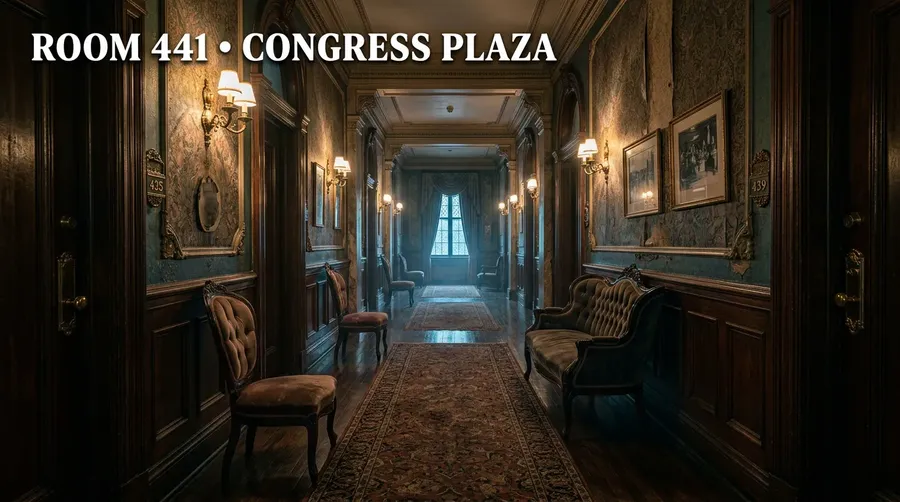
Room 441 at the Congress Plaza Hotel in Chicago is considered the most haunted room in the building, with reports of a woman's apparition seen standing or hovering over the bed, pushing or tugging at covers, and objects moving without being touched.
What is the most haunted hotel in New Orleans?
The Hotel Monteleone, built in 1886 in the French Quarter, is among the most haunted hotels in New Orleans, with reports of phantom footsteps, whispering voices, ghostly apparitions, elevators stopping at wrong floors, and paranormal activity particularly on the 9th and 14th floors.
What is the only 7 star hotel in the world?
The Burj Al Arab in Dubai is commonly referred to as the world's only '7-star' hotel, though it holds an official Five-Star Deluxe rating; the term '7-star' originated from a British journalist's description and has become a marketing term for its exceptional luxury rather than an official classification.
Why cant you go inside the LaLaurie Mansion?
The LaLaurie Mansion at 1140 Royal Street in New Orleans is a private residence and is not open to the public; visitors can only photograph the exterior from the street, though ghost tours pass by and point out the historic building's notorious past.
Does Nicolas Cage still own the LaLaurie Mansion?
No, Nicolas Cage no longer owns the LaLaurie Mansion; he purchased it in 2007 for approximately $3.45 million but lost it to foreclosure in 2009, and it is currently owned by energy trader Michael Whalen who purchased it in 2010.
Is it safe to walk around Bourbon Street at night?
Walking Bourbon Street at night can be safe if you stay in well-lit, high-traffic areas and avoid walking alone, though the southwest side of the French Quarter near Canal Street has more crime; it's recommended to remain sober and use rideshare services for travel outside the main tourist areas.
Why are the bodies buried above ground in New Orleans?
Bodies are buried above ground in New Orleans because much of the city is at or below sea level, causing a high water table where traditional underground graves would flood, displacing coffins and exposing remains; the Spanish influence on vault burials further solidified this practice into the unique 'Cities of the Dead' style.
What are the most active haunted rooms at Manresa Castle?
Rooms 306, 302, and 304 are reported to be the most actively haunted at Manresa Castle, with room 306 associated with a young woman named Kate who allegedly threw herself from the window, and room 302 connected to a monk who reportedly hanged himself in the bell tower.
How much does it cost to stay at Manresa Castle?
Nightly rates at Manresa Castle start at approximately $280-$300, with prices varying based on room selection and season; the historic hotel offers various room types including standard rooms and more luxurious suites in the castle's towers.
What paranormal phenomena have been reported in Manresa Castle?
Reported paranormal activity includes flickering lights that turn on and off independently, television sets that change channels by themselves, drinking glasses that spontaneously shatter or overturn in the café (formerly a chapel), disembodied footsteps, and apparitions including the figures of Kate, Charles Eisenbeis, and a young girl throughout the castle.
Can I take a paranormal investigation tour at Manresa Castle?
Yes, Manresa Castle offers paranormal investigation experiences and ghost hunt tours on demand for guests interested in investigating the castle's haunted reputation with equipment and guided paranormal investigation opportunities.
When was Manresa Castle built and what is its history?
Manresa Castle was built in 1892 as the residence of Charles Eisenbeis, a prominent Port Townsend businessman and the city's first mayor; the 30-room Prussian-inspired mansion was purchased by Jesuit priests in 1927 who named it Manresa Hall and added a chapel wing, before being converted into a hotel in 1968.
Was Manresa Castle featured on Ghost Adventures?
Yes, Manresa Castle was featured in a 2015 episode of the Travel Channel's 'Ghost Adventures' series, which investigated the castle's paranormal activity and helped fuel broader interest in its haunted reputation among paranormal enthusiasts and visitors.