Famous Residents

Navigating the White House Tour: Expert Insights

Planning a pilgrimage to America’s most iconic address, the White House, typically conjures images of bustling hallways and a quick, awe-filled walk through history. For years, securing a public tour has been a coveted, albeit challenging, endeavor for travelers to Washington D.C. But here’s the rub, and it’s a significant one for anyone eyeing a visit in the immediate future: as of September 1, 2025, public White House tours have been suspended indefinitely. This isn't a temporary hiccup; it's a full stop, directly attributable to extensive construction on the White House State Ballroom, adjacent to the East Wing, which began demolition in late October 2025.

My years of trekking through historical monuments across the nation have taught me one thing: expectations often collide with reality. The White House, even when tours are running, is no exception. While most guides will simply list the rooms, I want to delve into the spirit of these spaces, the quirks, the untold stories, and what you should genuinely anticipate once the doors reopen. This isn't just about what you *see*, but what you *feel* standing in rooms where history was forged, debated, and often, tragically, mourned.

The Elusive Door: Understanding the Current Tour Suspension

So, what does an "indefinite suspension" truly mean for the eager visitor? It signifies uncertainty, a frustrating reality check for those who've made travel plans around this unique experience. White House officials have hinted at an "updated tour route" eventually, but no firm dates for resumption have been announced. This current closure affects the very entry point, the East Wing, which traditionally serves as the gateway to the public areas. The demolition is slated for completion by October 26, 2025, but a construction completion date for the new ballroom, and thus a tour resumption date, remains a mystery.

This situation forces a re-evaluation of how we approach this particular monument. Unlike many historical homes that offer consistent access, the White House operates on its own unpredictable rhythm, often dictated by security, diplomatic functions, or in this case, major renovations. My advice? Assume any White House tour plans for the near future are on hold, and keep an extremely close eye on official announcements via whitehouse.gov/visit, nps.gov/whho, or the dedicated 24-hour White House Visitors Office Information Line at (202) 456-7041. Flexibility, as any seasoned traveler knows, is your most valuable asset when dealing with sites of such national significance.

Whispers from the Ground Floor: Beyond the Grandeur

When tours *do* eventually resume, and they will, visitors typically begin their journey through the Ground Floor. Don't let the "ground" moniker fool you; these rooms are far from secondary. What's often overlooked is their evolution, how practical needs transformed into spaces steeped in presidential legacy. Take the Library, for instance. Initially, in 1800, this was the White House laundry! It morphed into a gentleman's waiting room in 1902 before becoming a library in 1935. Today, it holds over 2,700 books on American life, occasionally hosting interviews – a quiet corner for reflection, far removed from its sudsy origins. Above its mantle hangs Georgia O'Keeffe's 1930 "Mountain at Bear Lake Taos," a subtle nod to American artistic heritage.

Directly across, you'll find the Vermeil Room, a space that might sound opulent and, indeed, it is, displaying a 1,575-piece collection of gilded silver (that's what "vermeil" means, a French term for gilded silver). While the collection itself is impressive, reflecting a specific period of White House acquisition in 1957, the room's former life as a billiard room adds a touch of unexpected informality to its history. A portrait of First Lady Jacqueline Kennedy hangs here, a fitting tribute to her monumental efforts in restoring and preserving the White House's interior. Then there's the China Room, a vibrant testament to presidential tastes from George Washington's era to Barack Obama's. It's not merely a display case; First Ladies use it for intimate teas and meetings, infusing it with an ongoing, living history.

The State of the Union: First Floor Grandeur and Presidential Tragedies

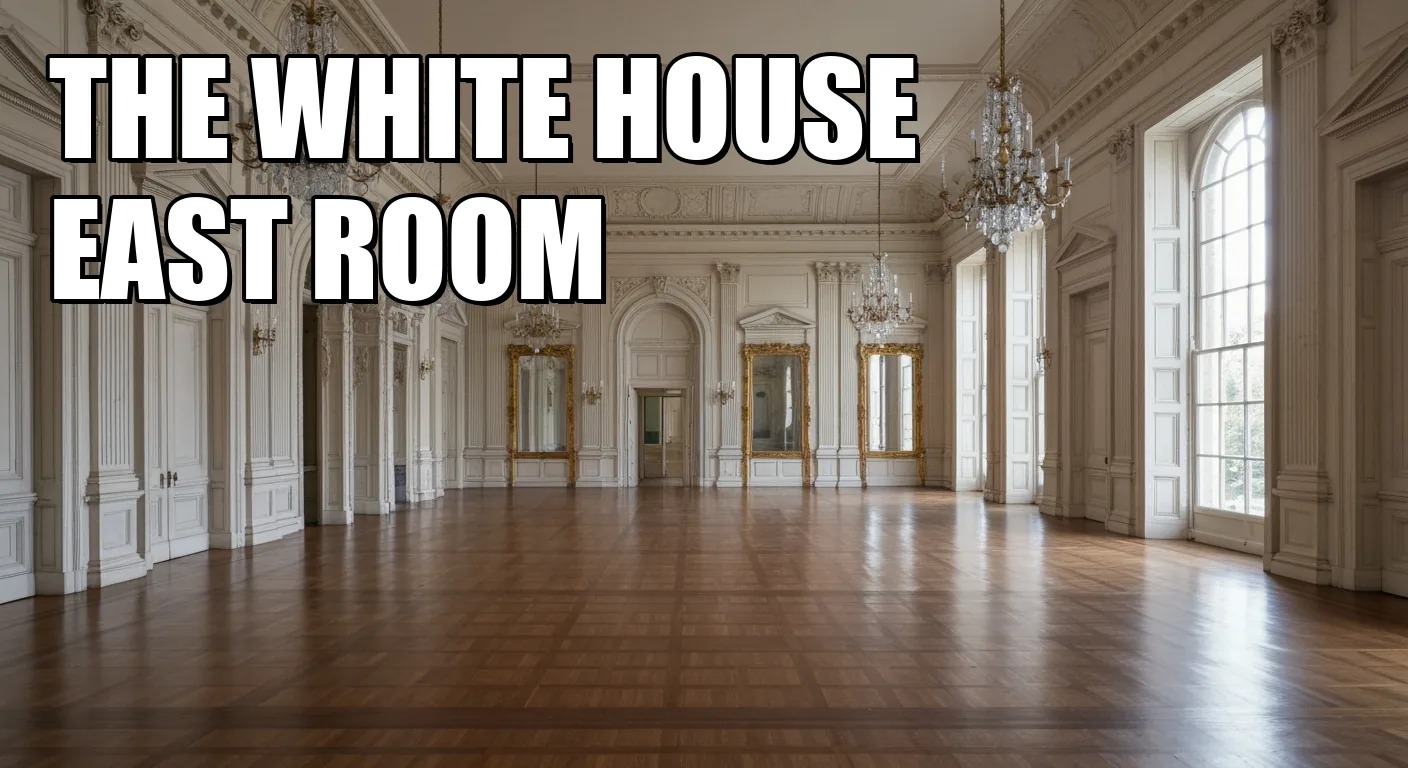
Ascending to the First (State) Floor, the historical weight becomes almost palpable. The East Room is undeniably the grandest. It's the largest room, a stage for state funerals, press conferences, and magnificent receptions. But its true significance lies not just in its scale, but in an act of profound courage: it displays the original George Washington portrait that First Lady Dolley Madison famously rescued in August 1814 as the British set the White House ablaze during the War of 1812. This makes it the only original item from the 1800 White House still in situ—a tangible link to a nation’s nascent, turbulent history.

This room has also witnessed profound sorrow. Both of Abraham Lincoln's family funerals occurred here: first, his 11-year-old son Willie, who succumbed to typhoid fever on February 20, 1862 (a poignant reminder of the White House's once-contaminated water systems), and then Lincoln himself, following his assassination in April 1865. The stark contrast between celebratory state dinners and such personal tragedy within these very walls offers a powerful, sobering dimension often missed in typical tour narratives.

Adjacent to this somber grandeur is the Green Room, a smaller, more intimate parlor named by President James Monroe in 1818 for its verdant décor. It serves today as an art gallery for presidential portraits, but its past holds a chilling secret: Willie Lincoln's body was embalmed here. This unexpected detail grounds the abstract notion of presidential power in the raw reality of human grief. Even more impactful, it was in this very room that President James Madison signed the nation's first declaration of war, initiating the very conflict that led to the White House's burning.

The oval-shaped Blue Room, resplendent in blue and gold, remains a staple for official receptions, its elegance belying its occasional role in more personal history, such as the marriage of President John Quincy Adams’ son, John Adams II, in 1828. Then there’s the Red Room, once Dolley Madison's salon for fashionable Wednesday night receptions. This room holds its own surprising historical moment: the swearing-in of Rutherford B. Hayes on March 3, 1877, amidst intense political tension, a testament to the White House's role even in fraught transitions of power. And, a curious note for history buffs, in 1833, during Andrew Jackson’s presidency, it hosted only the second Catholic ceremony ever held in the White House.

Finally, the State Dining Room, a cavernous space seating up to 140 guests, has transformed dramatically over two centuries. Initially serving as offices for Adams and Jefferson, it wasn’t formally designated for dining until the Monroe administration. President Theodore Roosevelt’s 1902 renovation significantly expanded it, giving it much of its current imposing character. An iconic 1869 portrait of Abraham Lincoln by George P. A. Healy, placed here in 1939, presides over the grandest meals and ceremonies. The first formal use of this expanded room, incidentally, was President Lincoln's dinner honoring his new Cabinet on March 28, 1861. It’s a room that simultaneously embodies presidential power, official hospitality, and the sheer administrative evolution of the executive branch.

Navigating the Labyrinth: Securing Your Future White House Glimpse

Once tours resume, remember that getting inside is a bureaucratic dance, not a casual stroll. You cannot simply book a tour directly with the White House. The process, while free, demands foresight and tenacity. All requests must be submitted through your Member of Congress – your representative in the U.S. House or Senate. This means identifying your congressional representatives (via Congress.gov/members or the Capitol Switchboard at (202) 225-3121 for the House, or (202) 224-3121 for the Senate) and contacting their office.

The timing is crucial: requests must be submitted between 21 and 90 days (three months) in advance of your desired visit. Given the limited availability, especially for popular times, submitting your request at the earliest possible window is paramount. Don't be shy; you can submit requests to multiple congressional offices (both your House representative and your state senators) to maximize your chances. You'll need to provide full legal names, dates of birth, social security numbers, and countries of citizenship for everyone 18 and older, plus your preferred dates (offer several alternatives!) and any accessibility needs. International visitors, take note: you'll need to contact your home country’s embassy in Washington D.C. for assistance, as congressional offices cannot process your requests.

A Final Word of Caution (and Hope)

Even after navigating the rigorous booking process and receiving a confirmation (which typically arrives 2-3 weeks before your date, with a final time assignment 1-2 weeks prior), remember the inherent unpredictability. White House tours are subject to cancellation with little to no notice due to security concerns, official events, or even inclement weather. This isn't a museum where you can confidently plan your day down to the minute. My advice: never schedule tight connections or other non-negotiable activities immediately before or after a confirmed White House tour. Always have a backup plan for your day in D.C.

The White House public tour, when available, is a remarkably intimate experience for a building of such global significance. You're not just observing; you're tracing the footsteps of presidents, first ladies, and countless individuals who shaped American history. It's a privilege, one that requires patience and persistence. While the doors are currently closed, the insights into its past, and the intricate path to its future reopening, remain essential for any true student of American heritage. Keep hope alive, stay informed, and one day, you too might walk those storied halls.

Your Complete Guide to Experiencing America's Most Historic Residence

How do I schedule a tour of the White House?
U.S. citizens must submit a tour request through their Member of Congress or Senate (7-90 days in advance). International visitors should contact their embassy or consulate in Washington, DC. Requests can be made via congress.gov/members or by calling the Capitol Switchboard at 202-224-3121.
Can foreigners do a white house tour?
Yes, foreign nationals of all ages can tour the White House by contacting their embassy or consulate in Washington, DC. All visitors must provide valid government-issued identification matching their registered information.
How much does it cost to do a White House tour?
White House tours are completely free of charge for all visitors.
What are the requirements for a white house tour?
All visitors must submit personal information in advance through an RSVP link, present a valid government-issued ID that exactly matches their submitted information (REAL ID-compliant as of May 7, 2025 for U.S. citizens), and be accompanied by an adult if under 18 years old. Minors 17 and younger do not need to provide an ID or Social Security number.
How difficult is it to get a tour of the White House?
Tours are available on a first-come, first-served basis with limited capacity, making them competitive. It's recommended to submit requests as early as possible (ideally 60-90 days in advance) as spaces fill quickly, especially during peak seasons.
Can I wear jeans on a White House tour?
There is no official dress code. Jeans are acceptable if they are in good condition without holes or tears, paired with a respectable top. Dress neatly and prepare for outdoor portions of the tour with appropriate weather clothing.
What disqualifies you from touring the White House?
Individuals with criminal convictions (particularly felonies), violent crime history, terrorism-related offenses, outstanding warrants, pending criminal charges, or other security concerns may be denied. Failure to provide accurate information matching government-issued ID also results in denial.
How long does it take to get approval for a White House tour?
After submitting personal information, approval typically takes 2-3 weeks, though timelines vary. Some visitors receive approval within 2-3 days, while others may wait up to 4 weeks. You will be notified by your Member of Congress or embassy once approved.
Do they do background checks for White House tours?
Yes, all visitors undergo a background check. Visitors must provide personal information including name, date of birth, and for U.S. citizens 18+, a Social Security number. U.S. citizens under 18 do not need to provide a Social Security number.
White House tours booking
Submit tour requests through your Member of Congress (U.S. citizens) or embassy (international visitors) between 7 and 90 days before your preferred date. Early submission is strongly encouraged as spaces are limited and allocated on a first-come, first-served basis.
What is included in a White House tour?
The self-guided tour includes public rooms in the East Wing and Residence such as the State Dining Room, Blue Room, Red Room, Green Room, Vermeil Room, Library, and China Room, plus views of the Kennedy Garden. Secret Service officers stationed along the route answer questions about history, art, and furnishings.
How long does a White House tour take?
The self-guided tour typically lasts approximately 45 minutes, though visitors can spend 1-1.5 hours depending on their pace and how long they spend in each room.
What items can I bring on a White House tour?
Permitted items include cell phones, compact cameras (lenses under 3 inches), umbrellas without metal tips, wallets, baby carriers, baby supplies, and service animals. Medical items and devices such as wheelchairs and medications are also allowed.
What items are prohibited on a White House tour?
Prohibited items include bags of any kind (purses, backpacks, fanny packs), weapons, knives, strollers, laptops, tablets, cameras with detachable lenses, tripods, food, beverages, fireworks, smoking paraphernalia, and any pointed or potentially dangerous objects. Storage facilities are not available.
What are the current White House tour hours?
When tours resume, typical hours are 7:30 a.m. to 11:30 a.m. Tuesday through Thursday and 7:30 a.m. to 1:30 p.m. Friday and Saturday, excluding federal holidays. Please note: Public tours are currently suspended indefinitely beginning September 1, 2025, due to White House expansion construction and will resume when available.