For decades, my travels across America’s historic landscapes have been a quest to peel back the layers of familiar narratives, searching for the overlooked details, the human struggles that truly define our past. I’ve walked battlefields where echoes seemed to whisper only of grand generals, and visited stately homes that hinted at lives far more complex than their polished facades suggested. The real gems, I’ve found, are often not the sprawling, heavily marketed destinations, but the quieter places, poised to unveil a truth more nuanced and, frankly, more compelling.
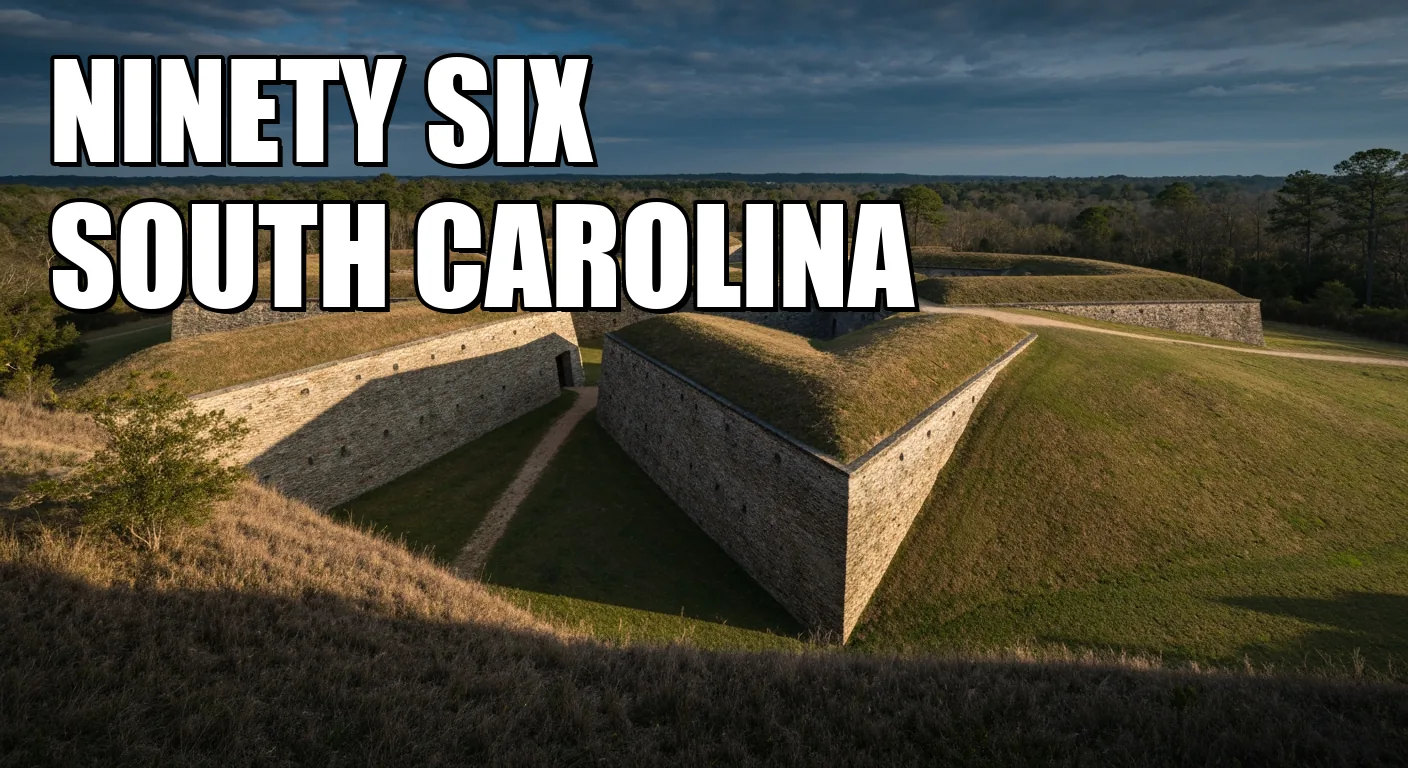
One such place, perhaps a bit of a dark horse in the pantheon of Revolutionary War sites, is Ninety Six National Historic Site in South Carolina. It’s a locale that many might pass over, perhaps dismissing it as "just another battlefield." But that would be a grave mistake, particularly as we approach 2025. This site, a crossroads of fierce loyalties and brutal skirmishes in the backcountry, is about to undergo an interpretive revolution that promises to redefine how we engage with history, pushing far beyond the traditional, often one-dimensional, tales we’ve been fed.
Why Does a Small Fort in South Carolina Matter So Much?
Before we dive into the future, let’s anchor ourselves in the past. Ninety Six wasn’t some marquee metropolitan battleground; it was the frontier. Nestled in what was then the wild upcountry of South Carolina, it held strategic significance as a crossroads and judicial center. Think of it as a vital outpost where the lines between "civilized" and "wilderness" blurred, and loyalties were fiercely divided. The Revolution here wasn't just about independence from Britain; it was a brutal civil war, pitting neighbor against neighbor, often with deeply personal grievances fueling the conflict. The name itself, "Ninety Six," is believed to refer to the distance to the Cherokee village of Keowee, a stark reminder of the indigenous presence and influence in the region.
Here, in May and June of 1781, Major General Nathanael Greene's Patriot forces laid siege to a heavily fortified Loyalist outpost. The siege lasted for 28 grueling days, marking the first significant land battle of the Revolutionary War in the South. It was a desperate affair, characterized by intricate siege works, hand-to-hand combat, and immense suffering on both sides. Despite Greene’s ingenuity and the Patriots’ tenacity, the siege was ultimately unsuccessful, lifted only by the approach of British relief forces. Yet, the strategic withdrawal of the British and Loyalists that followed effectively ceded control of the interior of South Carolina to the Patriots. This isn't just a military footnote; it’s a powerful testament to the often-overlooked grinding warfare that defined the Southern Campaign, a campaign every bit as crucial as the more celebrated battles up north.
Beyond the Static Signboard: A New Vision for Historical Immersion
Let’s be honest, visiting many historical sites can sometimes feel a bit… flat. You read a plaque, you look at a field, and if you’re lucky, you get a costumed interpreter. The challenge, particularly with battlefields, is translating the static landscape into a dynamic, visceral experience. How do you make the earthworks speak of the laborers who dug them, or the quiet fields echo with the shouts of combatants and the cries of the wounded? This is precisely the critical gap Ninety Six aims to bridge with its ambitious 2025 strategic plan.
The site is set to launch an integrated augmented reality (AR) and mobile app platform, a move that promises to be nothing short of transformative. This isn’t just about making history "cool" with tech gadgets; it’s about making it *real* and, more importantly, *inclusive*. The plan explicitly seeks to move beyond a singular military chronology, consciously weaving together the stories of local militias, Loyalists, enslaved African Americans, and Native American tribes – voices too often marginalized or entirely absent from standard interpretations.
What You'll Actually Discover: Layered Narratives and Living History
Imagine this: you arrive at Ninety Six, download the free mobile app, and step onto the historic grounds. As you approach the reconstructed star fort, instead of merely seeing an earthen mound, you raise your phone, and through augmented reality, witness a 3D animation. You won't just see soldiers drilling; you'll see enslaved laborers toiling under the scorching sun, their muscle and sweat shaping the very fortifications that defined the battle. The app will auto-trigger geo-located audio-drama vignettes – a Cherokee warrior describing the strategic alliances with the British to defend ancestral lands, or a Loyalist landowner detailing the desperate fight to protect their property and way of life. This isn't passive viewing; it’s active discovery, a dynamic unraveling of the site’s complex past.
The mobile app itself will become your interactive guide, a portal to an immersive, multidimensional experience. You'll be able to toggle layers on an interactive timeline, switching between "Military Actions," "Enslaved Perspectives," "Militia Voices," and "Indigenous Narratives." This allows visitors to choose their focus, delving into diaries, maps, and primary documents that reveal the deeply personal stakes involved. Five permanent AR kiosks, strategically placed at critical points, will offer even deeper dives: 3D reenactments of ambush tactics, first-person narratives delivered by AR avatars, and even interactive decision points where you can choose actions for virtual characters, immediately learning the historical consequences. This is about making visitors active participants in the unfolding story, not just spectators.
This approach directly challenges the conventional wisdom that history is a fixed, singular narrative. Instead, it demonstrates that historical truth is often a mosaic, composed of countless individual experiences. The deliberate inclusion of descendants groups and indigenous representatives in co-creating content ensures authenticity and emotional resonance, making sure that these stories aren't just told, but told *right*. What might surprise many is just how raw and unfiltered these narratives can be, forcing us to confront uncomfortable truths about liberty, slavery, and displacement during a period we often idealize.
Planning Your Expedition to a Reimagined Backcountry Site
So, when’s the best time to experience this groundbreaking transformation? The public launch is slated for October 2025, but the site will be actively refining its content and features throughout the year. If you want to be an early adopter, arriving in the autumn after the official launch will likely offer the most polished experience. The mild South Carolina fall weather is also ideal for exploring the outdoor grounds. Avoid the peak summer months (June-August) unless you thrive in heat and humidity; the site is largely exposed, and the physical demands of engaging with the AR system will be amplified. Spring (March-May) is also lovely, but consider potential school group visits, especially during weekdays.
Admission to Ninety Six National Historic Site, being a National Park Service unit, is typically free, which is a welcome surprise compared to many private historical attractions. Parking is readily available on-site. Expect to spend at least two to three hours once the AR platform is fully operational, especially if you plan to engage with all the interactive elements and explore the entire battlefield trail. Arriving early in the day will give you a quieter experience, allowing you to immerse yourself fully before potential crowds gather. Bring good walking shoes, water, and perhaps a portable charger for your mobile device, as you'll be using it extensively.
For a truly comprehensive experience of the Southern Campaign, consider combining your visit to Ninety Six with other regional sites. The nearby Cowpens National Battlefield offers a stark contrast in battle tactics and a different flavor of Revolutionary warfare. Further afield, places like Camden provide yet another perspective. South Carolina’s history is rich and interwoven, and Ninety Six, with its renewed focus on inclusive storytelling, provides an unparalleled entry point into its complex past.
Why Overlooked Sites, Reimagined, Offer the Deepest Insights
In a world saturated with information, where every major historical event has a Wikipedia page and a documentary, it's the nuances that truly enlighten us. Ninety Six, with its commitment to a multi-vocal historical interpretation, is poised to offer precisely that. It moves beyond the simplistic "good guys vs. bad guys" narrative, acknowledging that the Revolution was a crucible for everyone involved – free, enslaved, indigenous, loyal, or rebellious.
This isn't merely a technological upgrade; it's a philosophical shift. By giving voice to those who shaped the landscape, suffered its consequences, and influenced its outcome, Ninety Six is demonstrating how heritage sites can evolve. They aren’t just places to see where history happened; they are places to *understand* why it mattered, and how its echoes continue to resonate. For any serious student of American history, or simply a curious traveler seeking a genuinely profound experience, Ninety Six National Historic Site, post-2025, should be at the very top of your list. It promises to be a powerful, perhaps even unsettling, journey into the heart of a conflict far more intricate than most textbooks ever let on.