For years, I've crisscrossed the country, poking into forgotten corners and gazing up at titans of concrete and steel, always searching for that spark of genius, that unique story a building tells. Few architectural movements speak as eloquently as Art Deco, that exuberant yet sophisticated style that swept across America, particularly in the roaring, then rumbling, 1920s and early 1930s. New York City, of course, stands as its glittering, jagged-edged capital, boasting some of the most extraordinary residential expressions of this era. But truly seeing these structures means looking beyond the obvious, understanding the audacious dreams and stark realities that forged them.
Let me take you on a tour of five such marvels, all standing as testament to a very specific, tumultuous moment in American history. These aren't just pretty facades; they are deeply layered narratives, often surprising in their blend of opulence, pragmatism, and sheer defiance.
What Grand Ambition Looked Like on the East River?
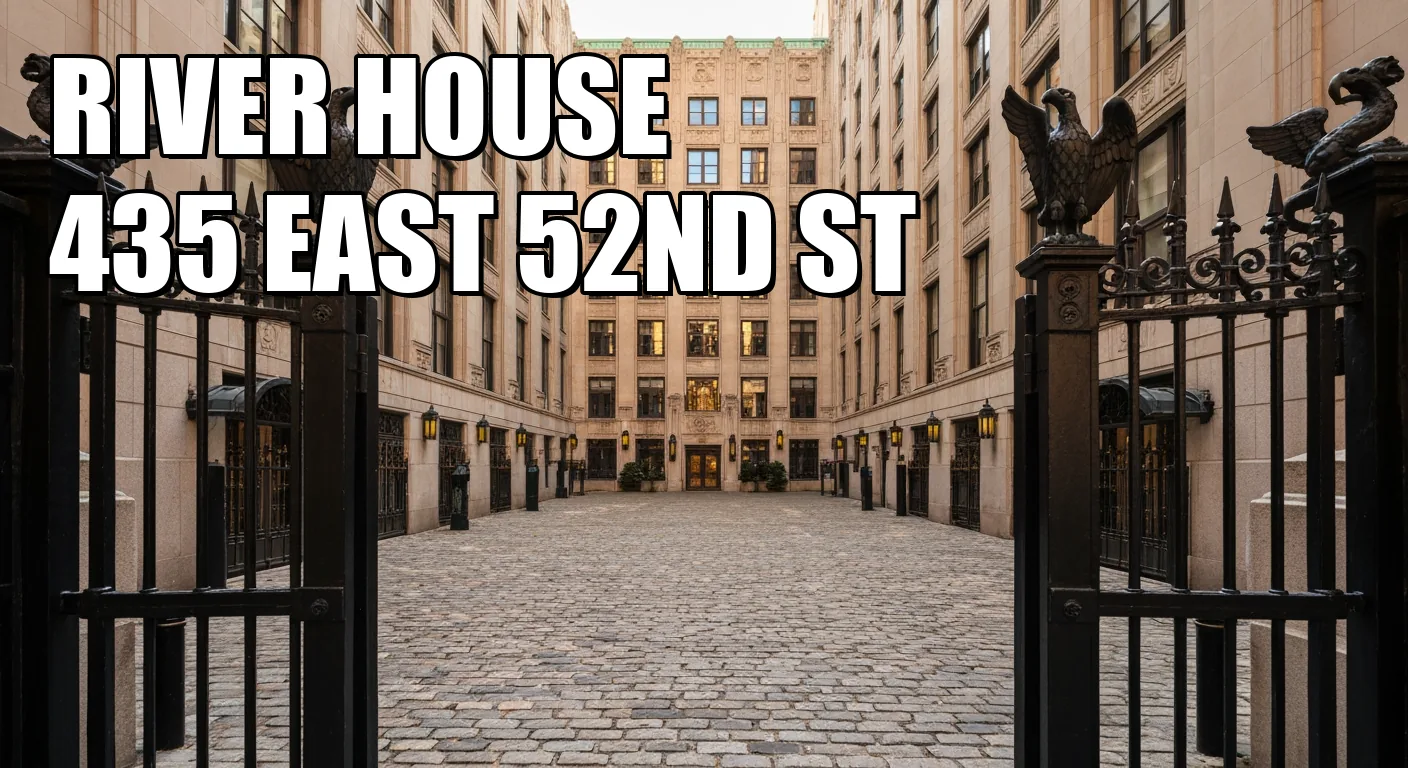
First, consider the River House at 435 East 52nd Street, a 1931 behemoth that practically screams old money. You might spot it from the F.D.R. Drive, a commanding, 26-story presence, but what you *won't* see from that vantage point is the sheer audacity of its original design. This wasn't merely a luxury apartment building; it was an entire lifestyle statement. Imagine pulling up to its private pier in your yacht – yes, a private pier – right there on the East River. The construction of the F.D.R. Drive, of course, swallowed that amenity whole, leaving only the memory of its exclusivity. So, while its U-shaped plan and towering central crown remain impressive, the most telling detail might be the ornately gated cobblestone courtyard, featuring stylized eagle finials in wrought iron atop elegant Art Deco stanchions. It’s a curious blend, a rococo flourish meeting stark geometry, hinting at a design philosophy that was still finding its footing, even in high society.
Standing outside River House, trying to catch a glimpse past those imposing gates, you understand the palpable sense of exclusion these buildings were designed to project. Architect William Lawrence Bottomley, collaborating with Wagner & White, crafted 77 (later 78) apartments, each a palatial 12-room, 6-bath affair with two fireplaces. This was not just housing; it was a fortress of privilege, completed right as the Great Depression began to bite deeply. The fact that such a project was conceived and largely executed in that transitional period, defying economic gravity, is an insight often overlooked in mere architectural descriptions. Parking in this area can be a challenge, so consider a taxi or ride-share for the easiest approach, allowing you to focus on the intricate details of its imposing entrance rather than a frantic search for a spot.
Do Twin Towers Always Mean Uniformity?
Head west across Manhattan, and Central Park West presents a spectacular architectural tableau, dominated by iconic twin-towered Art Deco residential buildings. The Eldorado at 300 Central Park West (1929-1931), designed by Margon & Holder with Emery Roth as consulting architect, is undeniably one of its brightest stars. But here’s where the typical guide often misses the real delight: those utterly fantastic, stepped zigzag finials topping its twin towers. They’re straight out of a 1930s pulp sci-fi comic – think "Flash Gordon" blasting off from the Upper West Side. They even specified gold leaf detailing originally, a level of flamboyant optimism that’s almost heartbreaking given the economic storm clouds gathering overhead.
Walk into the main lobby, and if you're lucky enough to peek inside, you’d be greeted by monumental murals depicting a high-rise skyline, almost a "promised land," originally flanked by 14-karat gold decorations. These murals, painted over in the mid-20th century, were painstakingly restored in the 1980s, revealing a hidden layer of the building's narrative. The Eldorado, with its tan and brown brick emphasizing verticality, feels more purely Art Deco than some of its peers. Its 30-story structure housed 200 apartments with 1,500 rooms, offering "fair rentals" upon opening – a phrase that sounds almost quaint today, especially considering the lavish interiors. To fully appreciate its scale and those distinctive finials, position yourself across Central Park or along the pedestrian paths within the park itself, particularly during the late afternoon when the sun catches its upper reaches.
What Happens When Modernism Meets Hard Times?
Just a few blocks south, at 115 Central Park West, stands The Majestic, another twin-towered masterpiece (1930-1931) that offers a fascinating counterpoint. Irwin S. Chanin, its chief architect, made a dramatic conversion to modernistic design after being captivated by the 1925 Paris Exhibition of Decorative and Industrial Arts. The Majestic is his first major residential foray into Art Deco, and it tells a different story. While the Eldorado delights in its "Flash Gordon" whimsy, The Majestic leans into a more austere, streamlined geometric purity, often referred to as Art Moderne – a later, more restrained evolution of Art Deco.
The exterior, buff brick and stone with red marble accents, is dramatic, but it’s the interior lobby, with its white-metal walls and terrazzo floors, that truly embodies this refined aesthetic. This design choice wasn't just stylistic; it also reflected the pragmatic realities of the Depression. The building’s 30 stories, housing 235 apartments, ranging from three to fourteen rooms, still conveyed luxury, but with a sharpened, less overtly ornamental edge. Those boldly ribbed pinnacles on its twin towers, creating a striking silhouette against the sky, are a testament to achieving dramatic impact through profile and form rather than excessive frippery. Approaching The Majestic from Central Park West, pay attention to the cantilevered terraces with their subtle Art Deco balustrades – a detail often missed but crucial to its sleek persona.
Did Greek Temples Land on Central Park West?
Continuing our journey down Central Park West, we arrive at The San Remo (1929-1930) at 145-146, a building that challenges the very notion of what Art Deco should look like. Emery Roth, its chief architect, delivered a masterpiece that is decidedly *not* pure Art Deco in its crowning glory. Instead of geometric zigzags or streamlined forms, its twin towers are topped with classical Greek temple-style forms, complete with round colonnades and lanterns. Roth’s inspiration? The ancient Athenian Choragic Monument of Lysicrates, which he had studied years earlier at the 1893 World's Columbian Exposition in Chicago. This unexpected classical flourish sets the San Remo apart, making it a hybrid beauty that blends Renaissance elements with the modern residential demands of the era.
Construction began mere weeks before the 1929 stock market crash, a truly foreboding start. Despite opening in September 1930, the building quickly entered receivership when the Bank of the United States, which held its $5 million mortgage, collapsed. This isn't just a historical footnote; it's a profound insight into the fragility of even the grandest ventures during that period. The San Remo was marketed for luxury, with apartments ranging from six to sixteen rooms, but its early financial woes speak volumes about the era’s economic turmoil. Take a moment to walk around the entire block if you can, observing how those classical temples seem to defy the very Art Deco movement surrounding them. Visiting on a clear day will offer the best views of its intricate upper details against the sky.
Is Art Deco Ever Truly Playful?
Finally, let's leave Central Park West and venture to 235 East 22nd Street at Second Avenue, where Gramercy House (1930-1931) by George and Edward Blum (the Blum Brothers) awaits. This building is an absolute revelation, a vibrant explosion of color and pattern that defies the often-monochromatic expectations of Art Deco. Architectural historians have affectionately nicknamed it "Pueblo Deco," and for good reason. Its terra cotta ornamentation bursts forth in a Southwestern palette of turquoise, green, ochre, and navy blue. This isn't just decoration; it's a deliberate act of optimism during the Depression era, a visual antidote to the prevailing gloom.
The most striking feature is its dramatic two-story entrance, where three stylized terra cotta waterfalls seem to cascade downwards, a whimsical yet powerful motif. Look closely at the facade, and you'll spot pointy zigzag patterns resembling mountain ranges above gentle wave motifs. Even the corner bricks are set at 45-degree angles, creating a dynamic visual intrigue. The spacious lobby, if you can glimpse it, continues this Art Moderne aesthetic with chunky white columns and terrazzo floors, though it's the exterior that truly sings. Gramercy House, one of the largest prewar apartment buildings in its area with 335 apartments, offers a rare glimpse into a more joyous, colorful side of Art Deco, proving the style was far more diverse than many realize. Exploring this neighborhood during a weekday afternoon might offer a more serene viewing experience, avoiding the hustle and bustle common on weekends.
These five buildings, each a testament to a specific vision, collectively paint a rich picture of American Art Deco residential architecture. They stand as enduring symbols of luxury and innovation, built during a time when the very definition of prosperity was being brutally redefined. While most were intended as luxury cooperatives, their initial rental phases faced the grim reality of the Great Depression, leading to financial instability for some. Documented rental prices for specific two-bedroom units from that inaugural year are remarkably scarce, a telling detail in itself. These were private transactions in an era sensitive to overt displays of wealth. Yet, their presence continues to shape our understanding of a pivotal moment when architects dared to dream big, even as the world around them threatened to collapse. Seek them out, not just as buildings, but as frozen moments of history, each with its own story to tell.
Timeless Geometry: Your Complete Guide to American Art Deco Residential Architecture
What is the history of Art Deco homes in the United States?
Art Deco residential architecture emerged in the United States during the 1920s and 1930s, inspired by the 1925 Paris Exposition Internationale des Arts Décoratifs et Industriels Modernes. While less common than commercial Art Deco buildings, residential properties showcased the movement's hallmark geometric forms, luxurious materials, and modernist aesthetic during America's prosperous pre-Depression era.
What was Art Deco architecture in the 1920s?
Art Deco in the 1920s represented a revolutionary design movement that combined geometric shapes, streamlined forms, and modern materials like chrome, glass, and aluminum with ornate decorative details. This style symbolized progress, luxury, and the machine age, reflecting the optimism and prosperity of the era.
How did Art Deco influence architecture?
Art Deco fundamentally transformed architectural design by introducing bold geometric patterns, vertical emphasis, symmetrical compositions, and luxurious materials that broke from traditional revival styles. Its influence extended to residential, commercial, and public buildings worldwide, establishing a new standard for modern urban architecture and inspiring contemporary design revivals.
What are three characteristics of the Art Deco style in architecture?
Three defining characteristics are geometric shapes and patterns (chevrons, triangles, sunbursts), symmetrical and balanced proportions, and the use of luxurious modern materials like chrome, stainless steel, and decorative glass. These elements create the distinctive sharp-edged, ornamental aesthetic that immediately identifies Art Deco buildings.
What is the rule of three in Art Deco?
The rule of three is an Art Deco design principle where architectural elements, decorative details, and motifs are arranged in groups of three to create visual balance, harmony, and memorability. This includes triple division of facades, repetitive patterns in threes, and layered three-dimensional features that enhance the composition's visual appeal.
What are the four key features of Art Deco architecture?
The four key features are geometric shapes and ornamental patterns, streamlined and symmetrical forms, luxurious and modern materials, and bold vertical emphasis. These elements combine to create buildings that symbolize modernity, progress, and sophisticated craftsmanship while maintaining the decorative opulence characteristic of the style.
What are the three styles of Art Deco?
The three main styles are Zigzag (or Stepping) Art Deco, the earliest style featuring bold, angular patterns; Classic Moderne, emphasizing geometric forms with refined ornamentation; and Streamline Moderne, which emerged during the 1930s with machine-inspired curved forms and less lavish decoration reflecting Depression-era sensibilities.
What are the characteristics of Art Deco painting?
Art Deco painting features simplified geometric shapes, fields of unblended color, symmetry, and strong linear emphasis, often depicting stylized human figures, botanical themes, and abstract geometric compositions. The movement's works emphasize bold outlines, vibrant colors, and a balance between abstraction and representation, reflecting modernist principles.
What are three facts about Art Deco?
First, Art Deco emerged in Paris before World War I and was officially unveiled to the world at the 1925 Exposition Internationale, establishing the movement's formal identity. Second, the style flourished internationally between 1919 and 1939, influencing architecture, decorative arts, fashion, and design worldwide. Third, Miami Beach contains the world's largest collection of Art Deco residential and commercial buildings, with over 800 structures concentrated in the Art Deco Historic District.
Which US cities have the best preserved Art Deco residential neighborhoods?
Miami Beach, Florida boasts the world's largest Art Deco collection with 960 historic buildings, while other notable cities include Asheville, North Carolina (well-preserved due to Depression-era financial constraints), Tulsa, Oklahoma, Buffalo, New York, and Chicago, Illinois. These cities feature distinctive Art Deco residential areas with accessible historic districts and ongoing preservation efforts.
What is Tropical Deco and where can it be found?
Tropical Deco is Miami Beach's unique variant of Art Deco architecture featuring local imagery, whimsical flora and fauna motifs, ocean-liner designs, and pastel color palettes that reinforce the city's seaside resort identity. This sub-style is predominantly found throughout Miami Beach's Art Deco Historic District, creating the iconic pastel-colored aesthetic the area is famous for.
How can visitors tour Art Deco residential homes?
Organized walking tours are available in major Art Deco cities, with Miami Beach's Miami Design Preservation League offering official tours starting from $32, while Tulsa and other cities provide specialized architecture tours with insider access to buildings. Many museums and historical societies also host mansion tours during designated heritage weekends and special events throughout the year.
What is the typical price range for Art Deco residential properties?
Art Deco residential properties in the United States vary widely, with Miami Beach Art Deco homes ranging from $174,500 to over $2.4 million depending on size, condition, and location. Prices reflect local real estate markets, with properties in premium districts commanding significantly higher values than those in emerging preservation areas.
What are the most identifiable features to look for in Art Deco homes?
Key identifying features include geometric patterns and sharp angular lines, symmetrical facades, ornamental detailing like chevrons and sunbursts, decorative windows, mixed modern and traditional materials (chrome, glass, stucco), bright or pastel colors, and vertical emphasis. These distinctive elements create the unmistakable aesthetic that makes Art Deco architecture immediately recognizable.
Are Art Deco residential homes more common than commercial Art Deco buildings?
No, Art Deco was primarily applied to public and commercial buildings; individual Art Deco homes remain relatively rare compared to commercial structures, skyscrapers, and public buildings from the era. Residential Art Deco architecture represents a smaller, more select collection of the movement's architectural achievements in the United States.
What preservation efforts exist for Art Deco residential architecture today?
Major preservation initiatives include the designation of historic districts (like Miami Beach's 1979 designation), specialized restoration companies using period-appropriate materials and methods, and organizations like the Miami Design Preservation League and Art Deco Society of New York. These efforts protect thousands of residential properties through landmark status, adaptive reuse projects, and community advocacy against demolition.
We use cookies to enhance your experience. By continuing to visit this site you agree to our use of cookies.