Haunted Hotels

Palmer House Hauntings: An Expert's Unfiltered Guide

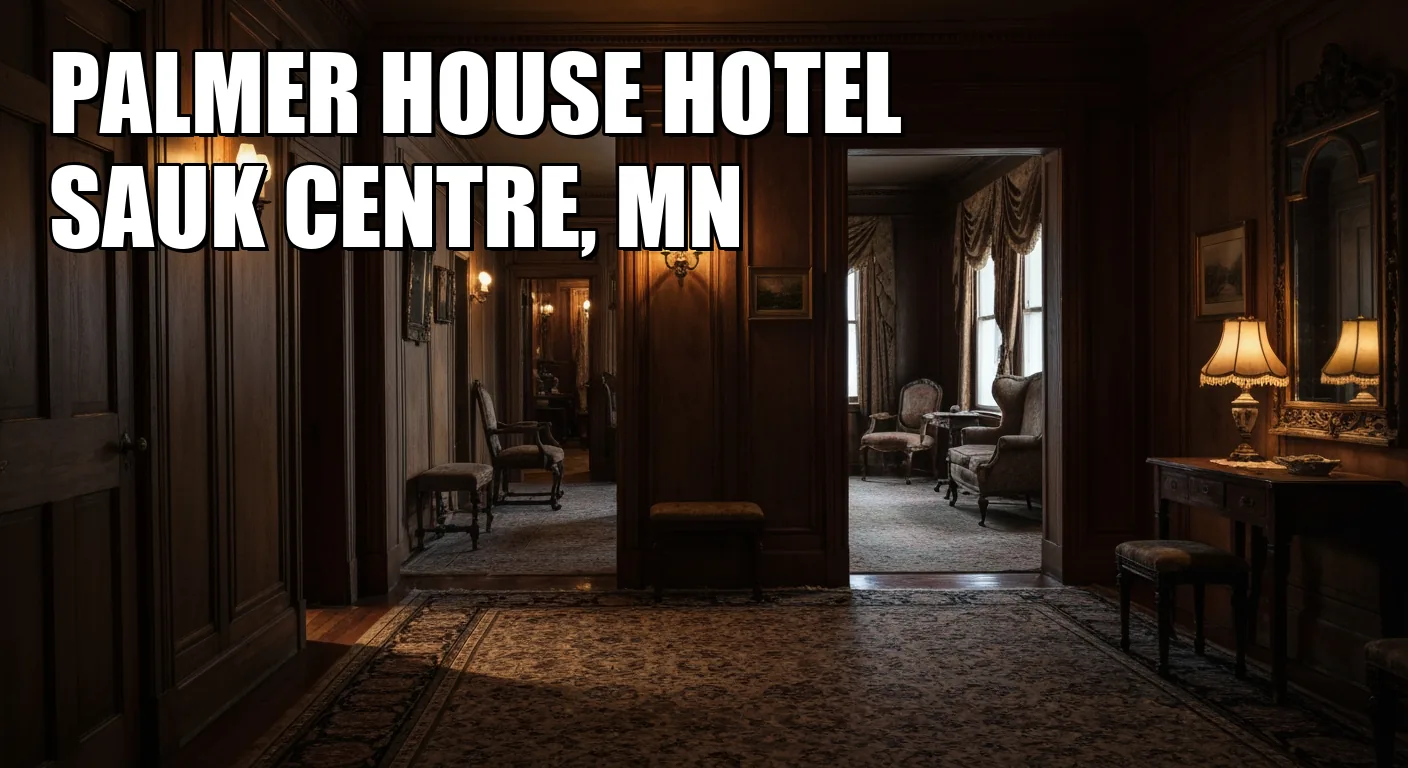
There's a curious magnetism to places that refuse to let go of their past. We build new structures, lay fresh foundations, but sometimes, the echoes of what came before remain stubbornly embedded. My travels have taken me to grand estates where the gentry still seemingly glide through ballrooms, to battlefields where the spectral cries of soldiers pierce the silence. Yet, few places have offered quite the persistent, almost playful, and occasionally unsettling, blend of history and persistent presence as the Palmer House Hotel in Sauk Centre, Minnesota.

You might expect a haunted hotel to rely on dim lighting and theatrical props to set the mood, but the Palmer House sidesteps such contrivances. Its history is its haunting, and its spirits are its most dedicated residents. Forget the manufactured frights; here, the chill that races up your spine isn't from a poorly aimed air conditioner, but perhaps the brush of an unseen hand. The true marvel of this place isn't just the sheer volume of reported activity, but the way its spectral narratives are so deeply interwoven with the very fabric of its tumultuous past.

What Lies Beneath: The Fiery Genesis of a Haunting

Before the stately Palmer House graced Main Street, another establishment stood on this very ground: the notorious Sauk Centre House. This predecessor, known locally for its less-than-reputable activities as a hotel and brothel, met a fiery end in 1900. While official reports claimed no fatalities, one has to wonder about the uncounted, the forgotten, or perhaps, the simply inconvenient. Building anew atop such a scarred foundation, especially one steeped in the raw human emotions tied to a brothel, invariably means inheriting more than just property lines. It suggests that the Palmer House, from its very inception in 1901, was destined to be a nexus for residual energy, a psychic sponge soaking up the dramatic final moments of the Sauk Centre House, even if no bodies were officially recovered.

This historical overlay provides crucial context for much of the hotel's reported paranormal phenomena. It’s not simply a matter of old buildings having ghosts; it’s about the specific energies and events that precede them. Moreover, the Palmer House was a marvel of its era, being Sauk Centre's first fully electrified building in 1901. This detail, often overlooked by casual ghost hunters, might offer a plausible, if still speculative, link to the recurring electrical disturbances reported by guests and staff. Are these spirits merely interacting with the most advanced technology of their time, or is there a more profound connection between early electrification and the energy necessary for spectral manifestations? It’s a question that always lingers in my mind when lights flicker and devices inexplicably power on and off within its walls.

Disturbing Guests: A Deep Dive into Rooms 11 and 17

When you're chasing ghosts, certain locations earn their reputation through consistent, undeniable activity. At the Palmer House, Room 17 stands out like a neon sign in the spectral landscape. Tales of its unsettling resident, a tall, lanky man in 1920s-30s attire, have become legendary. Imagine waking in a strange bed, only to find a figure from a bygone era silently observing you. This isn't a jump scare; it's a slow, creeping dread, a violation of personal space by something that shouldn't exist. Guests have also reported the disconcerting experience of furniture mysteriously rearranging itself and sudden, unexplained drops in temperature—classic poltergeist activity that suggests not just a lingering presence, but an intelligent, interactive one, perhaps even a spirit with a mischievous streak, or one deeply uncomfortable with new occupants in its old space.

Equally notorious is Room 11, a place many seasoned paranormal investigators consider a prime hotspot. Here, the experiences are often more visceral, more intimate, and arguably more unnerving. Extreme cold spots are a given, but it’s the sensation of unseen fingers stroking guests’ legs in the dead of night that truly sends shivers. This isn’t a gentle caress; it’s an invasion, a reminder that you are not alone, and your space is not truly your own. The pervasive heavy feeling in the room, a kind of psychic pressure, combined with the ubiquitous electrical flickering, paints a picture of intense, focused energy. It makes you wonder what tragedy or unresolved emotion anchors such a potent, tactile presence to this specific corner of the hotel.

And then there's Room 18, a peculiar case that highlights the less direct, yet equally unsettling, manifestations of the unseen. Occupants in the rooms *beneath* 18 frequently report the distinct sound of heavy footsteps pacing above them. The catch? Room 18 is often vacant. This isn't a trick of the pipes or an old building settling; it's the unmistakable cadence of someone walking, a phantom resident asserting their continued presence, even when no living soul is there to make the sound. It’s a reminder that not all hauntings are confined to a single room; some bleed through the very structure, affecting those who are merely in the vicinity, creating an auditory illusion that challenges rational explanation.

Beyond the Threshold: Raymond's Realm and Childlike Echoes

The hauntings at the Palmer House aren't confined to the guest rooms; they spill into the public spaces, each with its own compelling narrative. Ascend to the top floor, and you'll find what some now unofficially dub "Raymond's Room." Raymond, a figure from the hotel's past, ran a clandestine brothel here around 1920, perhaps a subtle nod to the building's predecessor. His restless spirit is strongly credited with much of the activity in this area: disembodied footsteps, hushed voices caught on recordings, and chilling EVPs (Electronic Voice Phenomena) captured by investigation groups. It's a palpable sense of the past, the echoes of illicit encounters and hushed dealings, a stark contrast to the hotel's present-day facade. This isn't just a historical anecdote; it’s an ongoing, active haunting, a persistent reminder of the darker, more scandalous side of the hotel's early days.

Equally poignant, though vastly different in nature, is the activity on the second floor, specifically around what was once a children's play area. Here, the laughter isn't from living children. Guests frequently report hearing the distinct sound of childish giggles and the rhythmic bounce of a rubber ball when no youngsters are present. This playful, yet profoundly eerie, activity is largely attributed to Carlisle, the hotel owner’s young son, and another unidentified little boy with dirty blonde hair and striking green eyes. It's a reminder of the fragility of life and the innocence lost too soon, leaving behind a residual joy that is both heartwarming and heartbreaking. These innocent spirits offer a stark contrast to the more imposing adult presences, adding layers of emotional complexity to the Palmer House's spectral tapestry.

Stepping into the basement corridor is an experience in itself. The air grows noticeably heavier, colder, and shadow figures are frequently glimpsed at the periphery of vision. It feels like the historical heart of the haunting, perhaps the most direct link to the original Sauk Centre House and its ill-fated conclusion. In the bar area, objects have been known to move on their own, guests report phantom hands on their shoulders, and the unmistakable scent of cigar smoke—even in non-smoking rooms—often wafts through the air. And the stairwells? They are prime spots for the distinctive sound of footsteps, a sense of being watched, and fleeting glimpses of that shadowy boy figure, perhaps running up and down, caught in an eternal game.

Planning Your Encounter: Maximize Your Paranormal Immersion

If the tales of the Palmer House have piqued your curiosity, a visit requires more than just booking a room; it demands a strategy. Firstly, don't expect a theme park ride. This is an authentic, historic location with genuine reported activity, not a manufactured haunted attraction. The hotel usually offers specific ghost tours and overnight investigations, particularly around October, but check their official website or local listings well in advance for current dates and availability. These tend to book out quickly, especially the special events, so securing your spot should be your first priority. A good rule of thumb: plan your visit for a weekday if possible to avoid peak weekend crowds, which can dilute the experience and make it harder to focus on subtle phenomena. You’ll want the quiet, undisturbed atmosphere to fully absorb the hotel's unique energies.

For those truly seeking an encounter, consider booking one of the more active rooms—if you dare. While Rooms 11 and 17 are famously busy, remember that the hotel is old, and some of the amenities might reflect its age, not a luxury resort. It’s a small price to pay for potentially waking up next to a spirit, but it’s something to be aware of. When you arrive, take some time to simply exist in the space. Don't rush into a ghost hunt. Explore the common areas, sit in the bar, walk the stairwells slowly. Pay attention to temperature fluctuations, subtle sounds, and anything that feels out of place. Many people arrive with an expectation of dramatic, undeniable events, but often, the most profound experiences are the quiet, personal ones—a whisper, a fleeting shadow, a sudden, inexplicable feeling of presence that leaves an indelible mark. This isn’t a place that screams for attention; it simply is.

Practicalities are key: parking is usually available on site or nearby, and while admission fees apply for specific tours, a regular overnight stay encompasses the opportunity to experience the hotel's ambiance. Don't go expecting grand revelations or Hollywood-style manifestations every five minutes. The Palmer House offers something far more compelling: a chance to connect with history on a deeply personal, often unsettling, level. This is where the past truly intersects with the present, a place where the veil feels perpetually thin, inviting you to step beyond mere tourism and truly experience the unseen residents who have never checked out.

Haunted Palmer House: Complete Guide to Minnesota's Most Mysterious Historic Hotel

What is the Palmer House hotel haunted history?
The Palmer House Hotel in Sauk Centre, Minnesota was built in 1901 on the site of the original Sauk Centre House, which burned down on June 26, 1900. The current hotel sits partially on the original foundation, and many believe the fire victims and former guests have never fully departed, making it one of Minnesota's most actively haunted locations with over 70 years of documented paranormal reports.
Why is the Palmer House hotel haunted?
Experts believe the Palmer House is haunted due to traumatic events associated with the original Sauk Centre House fire in 1900 and the hotel's colorful history as a former brothel, saloon, and gathering place. The current owner theorizes that demonic or residual energy originates from the basement, where the original foundation remains, combined with the spirits of former guests who may have died at the hotel or simply decided to stay.
What is the #1 most haunted hotel in the world?
According to 2025 rankings, the Riccarton Racecourse Hotel in Christchurch, New Zealand is considered one of the most haunted hotels globally due to an unsolved 1933 murder, while other top contenders include the Stanley Hotel in Colorado (which inspired Stephen King's 'The Shining'), the Hollywood Roosevelt in California, and Hotel del Coronado in San Diego.
What happened at the palmer house?
The Palmer House has experienced decades of unexplained paranormal phenomena including disembodied voices, objects moving independently, apparitions of children and adults in period clothing, extreme cold spots, and electronic disturbances. Guests have reported mysterious footsteps in empty hallways, furniture rearrangement when rooms are unoccupied, and encounters with named spirits including Raymond (a former brothel operator), children, and Palmer family members.
What is the history of the Palmer House hotel?
Built in 1901 by Ralph L. Palmer and Christena J. Palmer on the site of the burned Sauk Centre House, the Palmer House was the first building in Sauk Centre with electricity and catered to traveling salesmen. Nobel Prize winner Sinclair Lewis worked there as a young man and referenced it as the 'Minniemashie House' in his 1920 novel 'Main Street.' The hotel underwent major renovations in 1993, reducing rooms from 38 to 19.
What is the 10 and 5 rule in hotels?
The 10 and 5 Rule (also called the 'Zone of Hospitality') is a hospitality industry standard where staff must make eye contact and smile at guests within 10 feet, and provide a verbal greeting within 5 feet. This principle ensures guests feel acknowledged, welcomed, and valued by hotel staff during their stay.
What are some fun facts about the Palmer House?
The Palmer House features ornate stained glass windows imported from Vienna in its original 1901 construction, and it's one of the most investigated haunted locations by paranormal research teams and television shows. The hotel boasts named resident ghosts including Raymond with his own haunted room, mysterious 'children's playroom' phenomena, and has been featured on Ghost Adventures and other paranormal investigation programs.
What is the history of the Palmer family?
Ralph L. Palmer and his wife Christena J. Palmer built the Palmer House in 1901 and lived there with their two children, Hazel Palmer and Carlisle R. Palmer. Christena's mother and brother George Brandner also worked at the hotel. The Palmer children are believed to be among the resident spirits, with Carlisle's ghost blamed for playful juvenile pranks and sounds of children playing in the hallways.
What is the mandatory charge at Palmer House?
The Palmer House (Chicago's Hilton property) charges a Daily Mandatory Destination Charge of approximately $25 per room per night, which includes premium guest internet, a $10 daily food and beverage credit, health club access, and spa service credits. Note: This applies to the Palmer House in Chicago; the haunted Palmer House Hotel in Sauk Centre, Minnesota has different pricing.
Why was the Palmer mansion demolished?
The original Potter Palmer Mansion (Chicago's largest private residence, built 1882-1885) was demolished in 1950 to make way for modern commercial development. After standing largely vacant following Potter Palmer's death in 1902 and subsequent ownership changes, the mansion was demolished to be replaced by two 22-story apartment buildings housing 740 families, reflecting the city's shift toward urban density.
What are the most haunted rooms at Palmer House?
Rooms 11 and 17 are the most actively haunted at the Sauk Centre Palmer House, with Room 17 featuring reports of apparitions standing at the foot of beds and furniture mysteriously relocating. Room 11 has experienced extreme cold spots, oppressive feelings, and guests reporting sensations of invisible hands; 'Raymond's Room' on the top floor is also notably active with paranormal phenomena.
How can I visit the Palmer House hotel?
The Palmer House Hotel in Sauk Centre, Minnesota operates as a functional hotel, restaurant, and pub at 500 Sinclair Lewis Ave. Guests can book regular rooms for overnight stays or participate in organized Paranormal & Historical Tours that include basement access and mini-investigations led by professional guides, typically costing around $45 per person.
What paranormal investigation groups have visited Palmer House?
The Palmer House has been investigated by numerous paranormal research teams including Ghost Adventures (featured on Travel Channel), the Twin Cities Paranormal Society, Midwest Paranormal Files, Ghost Stories Inc., and countless independent paranormal investigators. All investigations have documented EVP evidence, electronic disturbances, apparitions, and unexplained phenomena.
What are the best times to experience paranormal activity at Palmer House?
Paranormal activity at the Palmer House is reported year-round, though paranormal tours are regularly scheduled. October traditionally sees increased activity reports and organized paranormal events; however, guests report unexplained experiences during all seasons and times of day, with the basement noted as the most consistently active area.
Are there accommodations at the Palmer House for paranormal investigators?
Yes, the Palmer House Hotel offers overnight accommodations in its 19 guest rooms, with most rooms featuring reported paranormal phenomena. The hotel also arranges group paranormal investigation events and guided tours through the basement (typically closed to general guests) for those interested in documented investigations.