Pasadena's Gamble House: Doc Brown's Real Architectural Gem
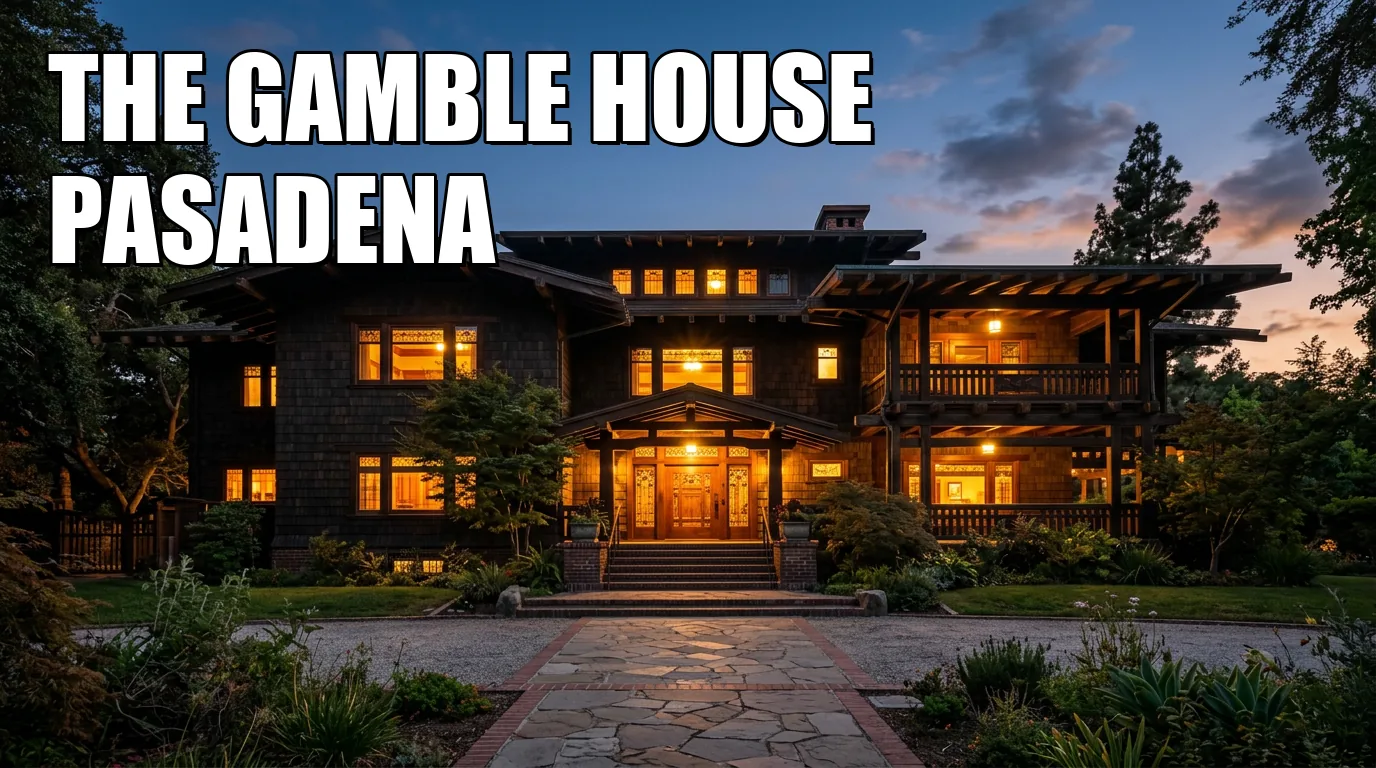
Standing proudly amidst the tree-lined streets of Pasadena, California, the mere mention of the Gamble House often elicits a knowing nod from film aficionados. For many, it's immediately recognizable as the eccentric laboratory-home of Dr. Emmett L. Brown, the time-traveling scientist from the iconic *Back to the Future* trilogy. Yet, to reduce this magnificent structure to solely a movie set is akin to judging a complex symphony by a single catchy tune. This house, a true masterpiece of American design, offers layers of history, craftsmanship, and quiet beauty that far transcend its cinematic cameo. Having explored countless historic homes across the United States, I can confidently assert that the Gamble House isn't just another stop; it's an immersive experience that challenges expectations and rewards careful observation.
### Beyond the Flux Capacitor: Deconstructing a Craftsman Icon
What exactly makes the Gamble House so significant? To truly appreciate this structure, you must first understand the context of the American Arts and Crafts movement, a period from roughly 1880 to 1920 that championed handmade quality, honest materials, and integration with nature, directly rebelling against the perceived excesses of Victorian industrialism. Into this milieu stepped Charles and Henry Greene, brothers who would elevate the Craftsman style to an art form, crafting what many consider their crowning achievement for David and Mary Gamble (of the Procter & Gamble fortune) between 1908 and 1909. This wasn't merely a house; it was a total environment, a "synthesis of art and craft" where every detail, from the custom-designed furniture to the intricate joinery, was meticulously planned and executed.
Entering the Gamble House, you quickly shed any preconceived notions of a sprawling, opulent mansion. Instead, a sense of harmonious serenity washes over you. The use of rich, dark woods—teak, mahogany, oak, and cedar—is breathtaking, creating a warm, organic glow that feels almost alive. The brothers Greene didn't simply apply wood paneling; they treated wood as a sculptural medium, shaping and joining it with an almost religious reverence that is evident in every exposed peg and mortise-and-tenon joint. This isn't just decoration; it's structural expression, a core tenet of the Craftsman philosophy, where the construction itself becomes the ornament. The house feels incredibly integrated with its natural surroundings, a testament to the Greenes’ belief in blurring the lines between indoor and outdoor spaces, a concept perhaps more revolutionary in early 20th-century America than we might initially imagine.
### A Glimpse into Hill Valley's Past: Filming Locations & What Really Remains
For those arriving with *Back to the Future* firmly in mind, a certain thrill undoubtedly accompanies the realization that you're standing before Doc Brown's house. Yes, this is indeed the very exterior used in the films, particularly prominent in the first movie when Marty McFly first encounters the DeLorean in the garage. However, managing your expectations here is paramount. You'll likely find that the exterior is *all* that directly connects to the film. The interiors you remember from the movie—the laboratory with all its fantastical gadgets and scientific chaos—were entirely studio sets, built to Hollywood specifications, not filmed within the Gamble House itself.
This revelation often prompts a momentary flicker of disappointment in some film tourists, who anticipate a walkthrough of Doc's fantastical workshop. Yet, this distinction serves as a powerful reminder: the Gamble House is a genuine historical and architectural landmark *first*, and a film location *second*. Its true magic lies not in its cinematic illusion, but in its tangible reality as a preserved example of unparalleled craftsmanship. While you won't find a flux capacitor or a time-traveling DeLorean parked in the driveway, the house offers something far more enduring: a real connection to an extraordinary period of American design and a glimpse into the lives of those who commissioned and created such beauty. It challenges the conventional wisdom that a film location is only as good as its cinematic accuracy, proving that authentic history often offers a richer, more profound narrative.
### Navigating the Grounds: Practicalities and Unexpected Charms
Planning your visit to the Gamble House requires a bit of foresight, as it operates as a house museum managed by the University of Southern California (USC) School of Architecture. Unlike a free-roaming national park, access is generally restricted to guided tours. These tours are expertly led and provide invaluable context, diving deep into the Greenes' design philosophy, the specific materials used, and the stories of the Gamble family. Expect to spend a solid 75-90 minutes engrossed in the details. What might surprise you is the intimacy of the tour experience; group sizes are kept relatively small, which enhances the feeling of being a guest in a private home rather than a tourist herded through a museum.
Admission fees are standard for a site of this caliber; currently, adult tickets hover around the $15-20 mark. Parking can be found on nearby residential streets, but pay close attention to posted signs for restrictions and time limits; Pasadena is diligent about enforcement. Photography inside is typically prohibited to protect the delicate interiors and ensure a focused tour experience, a policy that, while sometimes frustrating for those eager to snap a selfie, genuinely allows you to immerse yourself in the moment. Don't overlook the serene gardens surrounding the house; they’re an integral part of the Greenes’ vision, designed to complement the architecture and provide tranquil outdoor living spaces, offering a peaceful counterpoint to the structured interior tour.
### Planning Your Expedition: Timing Your Visit (November 2025 & Beyond)
Considering a trip to the Gamble House, perhaps even in the coming weeks of November 2025? This is actually a fantastic time to visit. Southern California's autumn weather is typically mild and pleasant, ideal for strolling the grounds before or after your tour. I'd strongly recommend booking your tour tickets online well in advance, especially if your travel dates fall on a weekend or during a major holiday period. While the house isn't often *sold out* like a blockbuster concert, tour slots are limited, and showing up hoping for a walk-in spot can lead to disappointment, particularly for larger groups.
Weekday visits, especially on a Tuesday, Wednesday, or Thursday, generally offer a more relaxed experience with fewer crowds compared to the bustling weekends. Arriving for the first tour of the day, usually around 10:00 AM, provides the best opportunity for a more intimate viewing and cooler temperatures if you visit during a warmer month. Be aware that the house typically closes for some holidays and occasionally for special university events, so always double-check their official website for the most up-to-date schedule before finalizing any plans. Flexibility in your schedule, even by a day, can significantly enhance your experience.
### Where to Reside in Pasadena: Hotels for the Discerning Time Traveler
After a day spent exploring architectural marvels, finding the right place to unwind is key. Pasadena offers a delightful array of accommodations, many within a convenient five-mile radius of the Gamble House. Forget soulless chain hotels; this city boasts several historic and boutique options that complement the architectural theme of your visit. Consider the luxurious Langham Huntington, Pasadena, a grand dame hotel with stunning gardens and a storied past, offering a lavish retreat for those who appreciate old-world charm. For a more contemporary yet still stylish stay, downtown Pasadena provides excellent choices like The Hotel Constance or Hotel Dena.
If you're traveling with family or a larger group and seeking a two-bedroom suite, many of the larger chain hotels in the area (like Hilton, Marriott, or Embassy Suites) offer these configurations, providing more space and amenities. Average nightly prices for these suites can range anywhere from $250 to $500+ in November 2025, depending on the specific hotel, its star rating, and how far in advance you book. Proximity to the Gamble House typically adds a premium. As for specific historical incidents or notable past guests associated with particular room numbers, hotels, for understandable privacy and security reasons, rarely disclose such granular details. While I've certainly heard whispers and local legends over the years concerning various establishments, such information is almost never publicly confirmed or verifiable. What you can expect, however, is a comfortable, well-appointed stay that allows you easy access to Pasadena's many other attractions, from the Norton Simon Museum to Old Pasadena's vibrant dining scene.
So, while the allure of Doc Brown's cinematic residence draws many, the true heart of the Gamble House beats with a different rhythm—one of unparalleled design, meticulous craftsmanship, and a profound connection to a pivotal era in American art. It stands as a testament to the fact that sometimes, the real story is far more compelling than any Hollywood fiction.
Ultimate Guide to Back to the Future Filming Locations
Where is Doc Brown's house located?
Doc Brown's house from Back to the Future is the Gamble House, located at 4 Westmoreland Place, Pasadena, California 91103. This iconic 1908 Arts and Crafts mansion is now a historic landmark and museum open to the public for guided tours.
Doc brown house location tour - how can I visit?
The Gamble House offers one-hour guided docent tours open Tuesday and Thursday-Sunday. Advance tickets are recommended; regular admission is approximately $15 per person, with discounts available for students and seniors.
Can you tour the Gamble House?
Yes, the Gamble House is open to the public for guided tours and offers multiple tour options including standard one-hour tours, specialty tours focusing on craftsmanship, and exterior-only garden tours. The bookstore is open 10 a.m. to 4 p.m. on touring days.
What happened to Doc Brown's mansion?
The house used as Doc Brown's residence in the film was never a mansion but rather the Gamble House, a masterpiece of Arts and Crafts architecture. It was donated to the City of Pasadena in 1966 and is now operated as a historic museum by the Gamble House Conservancy.
Who lives at 1640 Riverside Drive Hill Valley?
In the Back to the Future films, Doc Brown's home address was listed as 1640 Riverside Drive in the fictional town of Hill Valley, California. The real-world filming location is the Gamble House in Pasadena.
Where is Marty McFly's house from Back to the Future?
Marty McFly's house was filmed at 9303 Roslyndale Avenue in Arleta (Pacoima), California. The property is a private residence and not open to the public for tours.
Where did Marty live in Back to the Future?
In the 1985 timeline of the film, Marty lived at 9303 Roslyndale Avenue in Los Angeles, which is a private residence visible only from the street.
Can you visit the clock tower from Back to the Future?
Yes, the Hill Valley Clock Tower is located on the Universal Studios Hollywood backlot and can be viewed as part of the World-Famous Studio Tour, which is included with park admission. Special Back to the Future events are also available during certain periods.
Where is the Twin Pines Mall from Back to the Future?
The Twin Pines Mall (later Lone Pine Mall) in the film is actually the Puente Hills Mall, located at 1600 S Azusa Avenue in City of Industry, California. The Twin Pines sign from the movie is now displayed inside the mall.
What is the best time to visit Doc Brown's house?
The Gamble House is open Thursday through Sunday for tours, making weekends ideal for visits. Avoid Mondays and Wednesdays when the house is closed. Booking advance tickets is recommended during busy seasons.
Are there other Back to the Future filming locations I can visit?
Yes, key visitable locations include the Puente Hills Mall (Twin Pines/Lone Pine Mall), the courthouse square set at Universal Studios Hollywood, and Marty's house exterior in Arleta. Various locations in Los Angeles County were used for filming.
How much does it cost to tour the Gamble House?
One-hour docent-guided tours cost approximately $15 for general admission, with student and senior discounts available. Various specialty tours with longer durations have higher pricing, and group rates are available.
Where is Marty Byrdes house in Ozark?
The Byrde family house from the Netflix series Ozark is located in Flowery Branch, Georgia on Lake Lanier, not in Missouri as the show depicts. The actual address is near Van Pugh North Park off Gaines Ferry Road.
Where is the Byrd House located?
The Byrd House featured in the Netflix series Ozark is located in Flowery Branch, Georgia near Lake Lanier at 6802 Gaines Ferry Road. The property has been preserved with set furnishings by the current owners.
What are the Gamble House hours of operation?
The Gamble House is open Tuesday, Thursday through Sunday from 10 a.m. to 4 p.m. for bookstore and ticketing. The house is closed Mondays and Wednesdays. Tours are available at various times throughout the day.