
Poe Museum Richmond: What the Site Actually Covers and Why It Still Matters
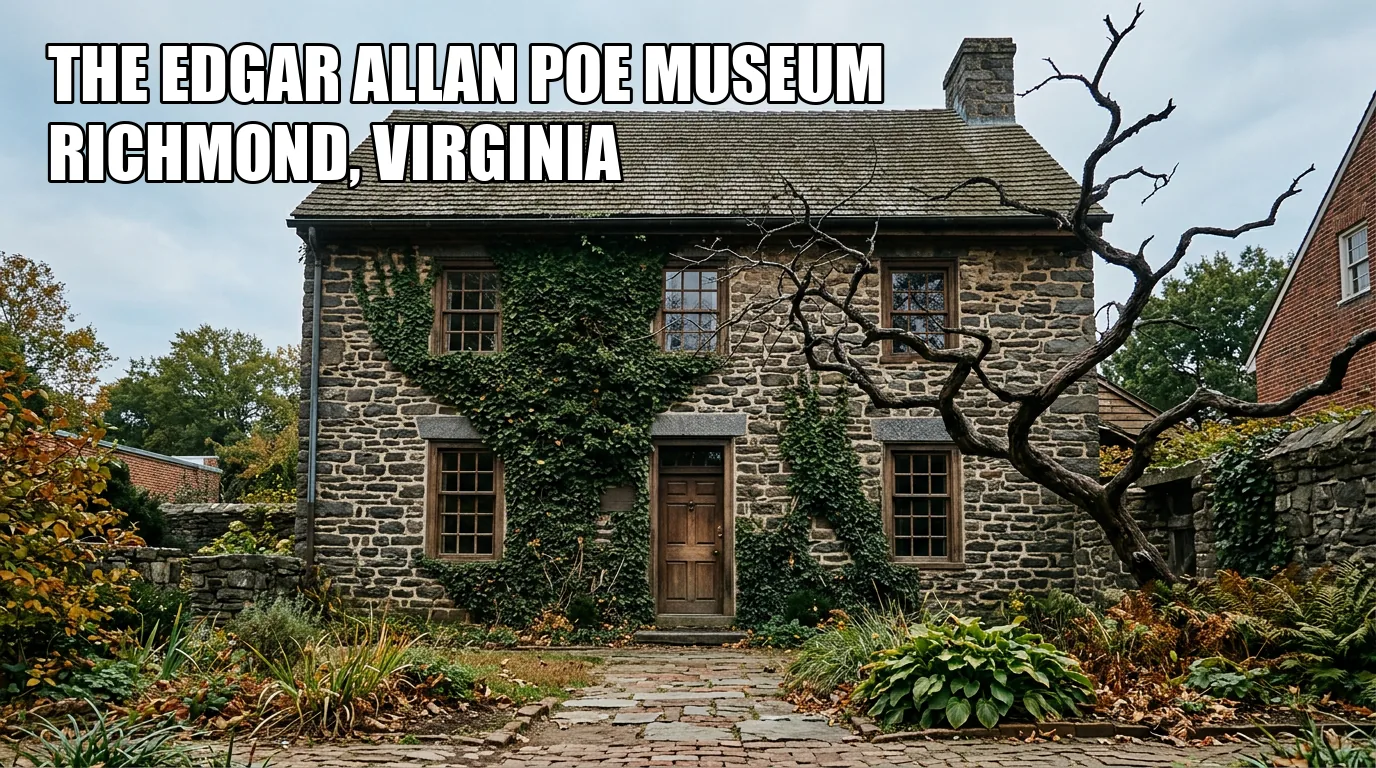
Most visitors arriving in Richmond, armed with vague notions of Edgar Allan Poe, might expect a grand, sprawling mansion dedicated to the master of the macabre. They imagine flickering gaslights and dramatic reenactments. The reality, however, is far more subtle, far more profound, and ultimately, far more unsettling than any Hollywood-esque horror show. Housed within the ancient Old Stone House—a structure dating back to 1737 and predating Poe by nearly a century—and its surrounding garden and buildings in the historic Shockoe Bottom neighborhood, the Edgar Allan Poe Museum meticulously traces the writer's formative years in Richmond, demonstrating how this city molded the very fabric of his dark genius. This isn't a place for cheap thrills; it's a deep dive into the psychological wounds that festered into literary masterpieces.
### Unpacking a Genius: How Richmond Forged Poe's Soul
Did you ever wonder why Poe’s tales are so relentlessly bleak, so steeped in loss and psychological torment? The answer, I’ve found after years crisscrossing literary landmarks, isn't just a stylistic choice. It's a biographical imperative. Richmond, where he arrived as an infant orphan after his mother's death from tuberculosis, became the emotional crucible for his entire worldview. His foster parents, John and Frances Allan, offered a precarious existence: Mrs. Allan's affection contrasted sharply with Mr. Allan's cold, calculating rejection. This constant push-pull, the yearning for love met with financial and emotional abandonment, became the undercurrent of his work. The museum, through its surprisingly sparse yet powerful collection, doesn't just display objects; it lays bare this foundational trauma. To truly appreciate the museum, you must suspend your expectations of a conventional historical site and instead prepare for a psychological journey, one that demands contemplation over quick consumption.
### The Tick-Tock of Terror: A Watch's Unsettling Echo
One artifact, perhaps more than any other, perfectly encapsulates the anxiety that gnawed at Poe throughout his life: his personal pocket watch. This isn't just any timepiece; it's an 18k gold engraved watch bearing "Edgar A. Poe" that now resides in the main museum galleries. According to curator Chris Semtner, this very watch likely inspired the haunting, insistent beat in "The Tell-Tale Heart"—that low, dull, quick sound, "such as a watch makes when enveloped in cotton," which drives the narrator to madness. But the watch's significance extends beyond a literary reference. Poe, perpetually burdened by debt—a direct legacy of his foster father John Allan's refusal to adequately support him—was forced to give this very watch to a creditor in 1843. It's a stark, visceral reminder of the economic precarity that plagued him from his Richmond youth, transforming financial desperation into the chilling obsession and psychological unraveling so vividly depicted in his fiction. Seeing it, I wasn't just observing a relic; I was feeling the oppressive weight of a ticking clock, counting down not just time, but a life defined by struggle.
### Love's Haunting Echo: An Engagement Ring's Melancholy Tale
Step into the main galleries, and you’ll encounter a small, unassuming ring that carries the weight of a life's unfulfilled love. This is the engagement ring Poe gave to Elmira Royster Shelton, engraved simply with "Edgar." Their story is a quintessential Poe tragedy. They were childhood sweethearts in Richmond, first engaged as teenagers before Elmira's father, disapproving of the impoverished orphan, broke off the match. Decades later, both widowed, they reunited, rekindling their love, only for Poe to die a mere ten days before their second planned wedding in 1849. Elmira herself believed she was the "Annabel Lee" of Poe’s famous poem, a belief historians generally affirm. The ring, therefore, isn't merely jewelry; it's a tangible manifestation of lost love and the death of beautiful women, recurring themes that haunt Poe’s poetry, directly echoing the profound trauma of parental loss and social rejection he experienced in his youth within Richmond’s elite circles. That "kingdom by the sea" from the poem? It might just be an idealized vision of Richmond and the James River, forever etched into his memory.
### Stairway to Shadows: A Childhood Home's Lingering Dread
Ascend the central feature of the Elizabeth Arnold Poe Memorial Building, and you're not just walking up stairs; you're climbing a piece of Poe's literal and psychological landscape. This staircase was salvaged from one of Poe's childhood homes on 14th and Tobacco Alley in Richmond. The building housing it, named for his deceased mother, is dedicated to his literary career and personal letters. It’s here, museum staff will tell you, that visitors sometimes report unsettling feelings—a peculiar malevolence. While I'm always a skeptic of spectral claims, I can attest to a distinct shift in atmosphere. This staircase, a conduit between floors, becomes a metaphor for the unresolved tensions between Poe and his foster father, John Allan. It was in that original home where Poe lived under the suffocating authority of a man who never formally adopted him and eventually disowned him financially. This spatial artifact directly connects the oppressive domestic environment of his youth to the pervasive dread and psychological darkness found in works like "The Fall of the House of Usher" or "Ligeia," both of which feature imposing, often decaying, architectural settings that mirror internal states of decay. It’s a powerful, if uncomfortable, connection that few other museums manage to convey so viscerally.
### Penniless Pleas and Grand Mansions: Poe's Lifelong Contradiction
One of the museum's most compelling exhibits presents a stark contrast, highlighting the dramatic pendulum swing of Poe's life: from the grandeur of his youth to the destitution of his adult years. Consider the letter to Edward Valentine (November 20, 1848), a rare handwritten plea from Poe to his foster uncle. In it, he writes: "After a long & bitter struggle with illness, poverty, and the thousand evils which attend them, I find myself at length in a position to establish myself permanently, and to triumph over all difficulties." Written less than a year before his mysterious death, this document is a desperate entreaty for financial aid to launch his literary magazine, *The Stylus*. This isn't just a historical note; it's a raw cry born from a lifetime of economic insecurity, an insecurity deeply rooted in his Richmond childhood when John Allan's financial restrictions led to gambling debts at the University of Virginia and chronic struggles thereafter. The letter starkly illustrates how financial despair manifested as the psychological torment woven into "The Raven" and "Annabel Lee."
Alongside such pleas for sustenance, the museum displays objects from Moldavia, John Allan's imposing brick mansion at the corner of Main and Fifth Streets in Richmond. Poe lived in this symbol of aristocratic splendor from age sixteen until he left for UVA. Furniture, artwork, and even humble salt cellars from Moldavia are preserved, alongside four fascinating pencil sketches of Moldavia by poet Sally Bruce Kinsolving from the 1880s, captured just before the house’s demolition. These sketches visually document the wealth and grandeur that surrounded Poe, a stark, almost cruel, contrast to his later penury. Curator Chris Semtner astutely points out that "many of Poe’s fictional works reference oversized mansions," including his earliest story, "Metzengerstein," and later, "Ligeia" and "The Fall of the House of Usher." These decaying, oppressive houses in his tales are not just setting; they are direct literary metaphors for Poe’s psychological experience: living in lavish surroundings while emotionally rejected, then losing all access to that wealth. The fall of the House of Usher becomes a chilling echo of Poe's own social and economic decline, initiated right here in Richmond.
### Richmond's Unseen Hand: How a City Shaped a Master of Macabre
The true genius of the Poe Museum, however, lies not just in its individual pieces, but in how the very bones of the complex tell Poe’s story. Take the Poe Shrine in the Enchanted Garden. Its bricks and granite were salvaged from the Southern Literary Messenger building, where Poe began his journalism career in Richmond. This isn't mere repurposing; it's a symbolic act, literally embedding the foundations of his early professional life into the commemorative space. Imagine: the physical materials of his first literary proving ground now forming a shrine to his legacy.
Stroll through the garden, and you'll find stone benches taken from the Yarrington Boarding House, where Poe married his young cousin Virginia. This union, tragically, was plagued by poverty, her tuberculosis, and his lifelong struggles—themes that would echo through his most profound works. Even the ivy lining the garden was harvested from his mother’s grave at St. John’s Church, where Eliza Poe died when Edgar was two. These landscape elements, woven into the very fabric of the museum grounds, create a physical environment where visitors are literally surrounded by the traumatic spaces of Poe's Richmond childhood: loss, rejection, poverty, and disease. It's these profound emotional currents that would ultimately fuel his macabre masterpieces.
The museum’s archival collection, a century's worth of research from countless Poe biographers, reinforces the scholarly consensus: Poe’s Richmond formative years—marked by maternal loss, foster father rejection, economic humiliation, and social marginalization—were the crucible in which his distinctive Gothic sensibility was forged. This isn't just literary innovation; it’s psychological necessity, born from lived experience.
### Planning Your Pilgrimage: Beyond the Tourist Trail
To fully absorb the profound atmosphere of the Poe Museum, resist the urge to rush. This isn't a quick stop on a broader Richmond tour. Devote at least two hours, preferably more, to wander the buildings and garden. I strongly recommend aiming for a weekday morning, especially during the shoulder seasons of April-May or September-October. You'll largely avoid the peak summer crowds and the sweltering Virginia humidity, allowing for a more reflective, intimate experience. Parking is available in nearby public decks within Shockoe Bottom, though expect to pay a modest hourly fee. The museum itself has a general admission fee, but it's a small price for such a rich, unvarnished insight into a literary giant. Forget expecting jump scares or overt horror; come prepared for a nuanced, sometimes uncomfortable, journey into the mind of a writer shaped by the very streets you’ll walk. This is a place where every whisper of history feels deeply personal, revealing the true genesis of American Gothic.
Discover the Master of Macabre: Your Complete Guide to America's Premier Poe Destination
What is the history of the Poe Museum?
Founded in 1922 in Richmond, Virginia by collector and researcher James Howard Whitty and literary enthusiasts, the Poe Museum began as the Poe Memorial Association in 1906 to create Virginia's first monument to a writer. The museum salvaged building materials from demolished structures associated with Poe's career, including bricks and granite from the Southern Literary Messenger office, to construct the iconic Enchanted Garden.
What is the history of Edgar Allan Poe?
Edgar Allan Poe was born January 19, 1809, in Boston to professional actors and became an orphan at age three, raised by merchant John Allan in Richmond, Virginia. He served in the U.S. Army under an assumed name, attended the University of Virginia, worked as an editor and critic, married his cousin Virginia Clemm at age 27 (she was 13), and died under mysterious circumstances on October 7, 1849, in Baltimore.
Is the Poe Museum worth visiting?
Yes, the Poe Museum is highly worth visiting for fans of American literature, history enthusiasts, and gothic art lovers, featuring the world's largest collection of Poe artifacts, manuscripts, and personal belongings in a historic setting. Visitors can explore three exhibit buildings, the beautiful Enchanted Garden inspired by Poe's poetry, and complete a self-guided tour with audio guides in approximately 1-2 hours.
What is the Edgar Allan Poe Museum called?
The museum is officially called The Poe Museum, though it is also commonly referred to as the Edgar Allan Poe Museum and historically known as the National Poe Museum. It is located at 1914-16 E Main Street in Richmond, Virginia's Shockoe Bottom neighborhood.
What are 5 interesting facts about Poe?
1) Poe pioneered modern detective fiction with his character C. Auguste Dupin, serving as the father of the detective story genre; 2) He was orphaned at age three and raised by merchant John Allan; 3) He enrolled in the University of Virginia but left due to gambling debts; 4) He was a soldier in the U.S. Army; 5) His young wife Virginia Clemm (his cousin) died of tuberculosis in 1847, deeply influencing his works about dying women.
Part of ⭐ Famous Residents
Famous Residents
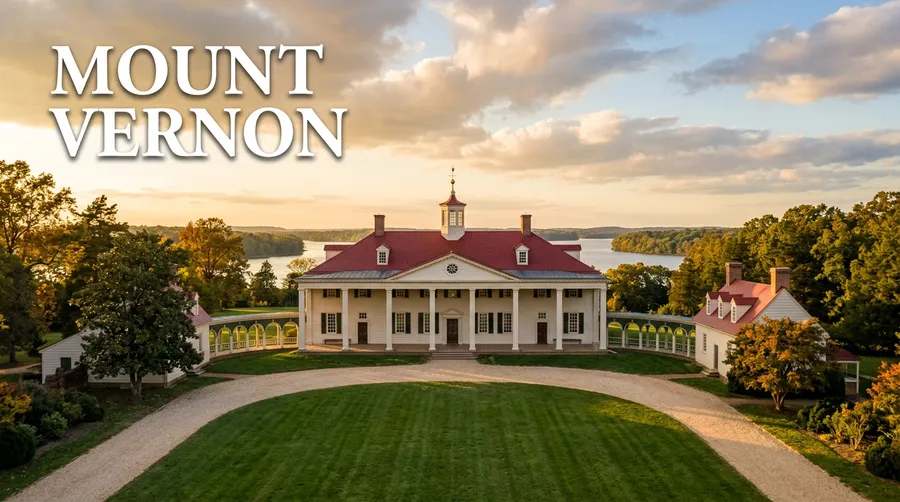
Mount Vernon Tickets, Mansion Tour, and What to See at George Washington’s Estate
A first-timer’s Mount Vernon guide covering timed mansion entry, how long to budget, what is included beyond the house, and how the estate now frames slavery as central history.

Famous Residents
Humphrey Bogart Homes: The Los Angeles Addresses Fans Still Search For
Most Bogart addresses in Los Angeles are private residential properties. Here is which stops are publicly accessible, what each address documents, and how to frame the trip.

Famous Residents
Walden Pond and Thoreau's Cabin: Replica, Site, and What Is Original
The cabin near the lot is a replica; the documented site is a half-mile away. A field guide to scale, archaeological location, landscape change, and access.
From the author of this guide
Check In After Dark
One writer checks into the rooms with the stories — Stanley 217, Banff Springs 873, the Del's 3327 — and reports what the night is actually like.