The phrase “preserved just as the Reagans left it” is useful at Rancho del Cielo, but only if it is not mistaken for “untouched.” The ranch house contains an adobe core built for the Pico family in the early 1870s, changes made by a later owner, Ronald Reagan’s remodeling, federal communications and security infrastructure, and preservation decisions made after Young America’s Foundation acquired the property in 1998.
That layered authorship is the real key to the ranch. It separates Reagan’s documented handiwork from older fabric, presidential operations from private life, and conserved objects from reproductions or modern support construction. Without those distinctions, “Western White House” becomes a mood rather than a description of evidence.
The house had two histories before the Reagans arrived
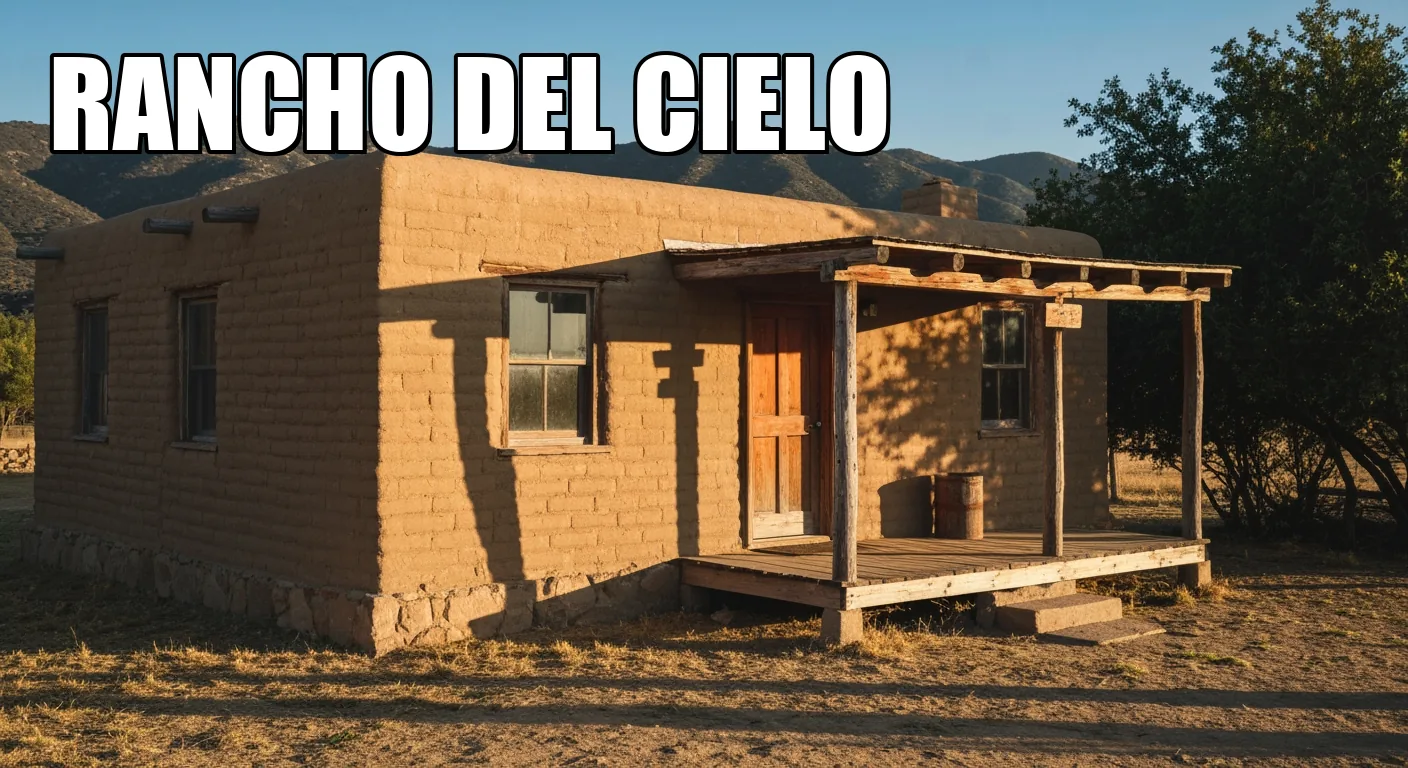
Selected institutional records identify Hispanic settlers Jose and Juana Pico as the builders of the original adobe ranch house in 1871 or the early 1870s. The building now associated with Reagan therefore began about a century before he bought it. It was not designed as a presidential retreat, and its adobe origin should not be credited to him.
The next layer matters too. Before the Reagans’ purchase, the property was known as Tip Top Ranch. The selected institutional source set does not establish the intermediate owner’s name or a reliable inventory of changes made before 1974. That gap is important: the house was not documented here as an untouched Pico-period interior, but neither should an unverified renovation story be promoted to fact.
Ronald and Nancy Reagan bought the 688-acre property on November 13, 1974 and renamed it Rancho del Cielo. The institutional sources examined here do not securely identify the seller in the purchase transaction, so the article does not supply one. That small omission is preferable to turning an often-repeated name into a documented deed history.
Five labels prevent one ranch from becoming one person’s creation
| Layer | Documented example | Common mistake |
|---|
| Pre-Reagan fabric | Pico family’s early-1870s adobe house | Calling the whole residence Reagan-built |
| Intermediate alteration | Undocumented pre-1974 alterations | Jumping directly from 1871 to 1974 |
| Reagan alteration | Enlarged interior to about 1,500 square feet; fences, patio and lake use documented | Crediting every ranch structure or trail to Reagan alone |
| Federal operational layer | Communications, protective systems and the Secret Service command post | Treating presidential use as ordinary domestic fabric |
| Post-1998 preservation | 2024 maintenance and new support construction; object custody remains unspecified | Reading “preserved” as “materially unchanged” |
The labels are not a ranking of authenticity. A Reagan-laid patio can be original to his ownership without being original to the homestead. A surviving Secret Service building can be historically important without belonging to the private-ranch design. A reproduction can be an honest conservation choice if it is identified as one.
Reagan’s handiwork is specific—and does not include everything
Sources describe the Reagans enlarging the house interior to about 1,500 square feet. The selected institutional sources do not detail material choices such as a particular roof replacement or vinyl floor, and they do not provide a precise phase plan showing where the early adobe ends and each later addition begins.
The house remained materially modest. Institutional descriptions say it had no central heating and relied on two fireplaces, one in the den and one in the living room. They do not date the fireplaces, so those should not automatically be labeled Pico fabric or Reagan additions.
Outside, the evidence becomes more personal. Records document Reagan building fences and using the outdoor patio, but the selected institutional sources do not specify telephone poles or sandstone slabs as the materials. The property also features a small lake called Lake Lucky, where the Reagans kept and paddled their canoe, Tru Luv; the clean source set does not establish who built the pond or the exact dimensions of its dock. Photographs and captions document the railroad bell outside the tack barn, used to signal that his morning Washington paperwork was finished, and the Mexican equipal table and chairs on the patio.
The boundary is equally important. Records document Reagan riding horses, clearing brush and branding log trail markers across the property; they do not establish a total trail mileage or prove that he created every route. Barns, stables, guest accommodation and presidential support buildings also involved other workers, contractors or military construction. The accurate story is substantial personal labor, not solitary authorship of an entire 688-acre landscape.
The presidency arrived as an overlay, not a second capital
One institutional account totals Reagan’s presidential stays at 349 days; other official summaries round the figure to about 350. That is nearly a year across two terms, enough to make the ranch an operational presidential location without making it a replacement White House.
Reagan rejected the popular label in writing. In an August 3, 1981 letter he stated, “Let me point out that we are not having a western White House.” The distinction was not merely semantic. The constitutional office remained in Washington while communications staff, security personnel, records and working arrangements were temporarily carried into a private mountain property.
The ranch nevertheless hosted formal acts. On August 13, 1981 Reagan signed both the Economic Recovery Tax Act and the Omnibus Budget Reconciliation Act outdoors at the equipal patio table. Reagan Library records also document Queen Elizabeth II and Prince Philip arriving for lunch on March 1, 1983, and George and Barbara Bush at the ranch on August 14, 1985. Retrospective institutional lists name Margaret Thatcher, Brian Mulroney and Mikhail Gorbachev, but the selected source set does not supply dated visit records for them; they are therefore not folded into one invented presidential guest chronology.
The security layer mixed temporary systems with a surviving building
Presidential protection required more than agents standing near a fence. Records describe communications installations, temporary quarters, protective teams, vehicle and aircraft support, and other systems adapted to the mountain site. Reagan’s 1981 correspondence treated some federal structures as temporary additions that would be removed after his presidency.
One major piece did not disappear. Navy Seabees built a Secret Service command post near the tack-barn area during the presidential period. A later Secret Service association preservation account says the structure remains intact and requires restoration. It belongs to the site’s federal operational history: neither an 1871 ranch building nor merely a vanished security procedure.
The often-repeated story of microwave sensors hidden in fake rocks made by Disney craftsmen did not survive the institutional audit. No selected Reagan Library, YAF, Secret Service association or Library of Congress record documented it. The story may yet have an attributable source, but repetition is not provenance, so it is excluded here.
Preservation after 1998 includes maintenance and new work
Young America’s Foundation acquired Rancho del Cielo on April 21, 1998 with the Reagan family’s blessing. Its public language emphasizes preserving the ranch as the Reagans left it, and the evidence supports high continuity in the house, furnishings, tack room and working landscape. That claim describes preservation intent; it does not mean every displayed object remains in its former environmental conditions.
The preservation promise is broad, but the selected institutional sources do not provide a complete object-by-object custody ledger for paintings, furniture or tools. This article therefore does not label any particular wall image an original or a reproduction. The defensible point is narrower: YAF describes a preservation policy, while the material status of individual displayed objects still requires object-level documentation.
Maintenance also leaves a dated record. YAF reported repaving the ranch drive known as Pennsylvania Avenue and repainting the hay barn in 2024. The same report records completion of the Moore Family Retreat Center, a new educational support facility on the property. That building should not be confused with a Reagan-era addition to the historic residence.
A 2002 plaque requires similar precision. The Native Sons of the Golden West, a private organization, dedicated a historical plaque at the ranch. That event is not evidence that the property entered California’s state-administered Historical Landmark program.
The strongest evidence is the boundary between authors
Rancho del Cielo retains an unusual concentration of Reagan-associated fabric and objects, but its value does not depend on pretending one man created every visible thing. The Pico adobe anchors the earlier homestead. The undocumented intermediate layer remains a research gap. Reagan’s documented enlargement, fences, patio and lake use record hands-on alteration without proving authorship of every structure or route. The patio table and surviving command post show private space converted for executive work. Maintenance projects and the new retreat center reveal preservation as an active process.
The most useful question at the ranch is therefore not whether an object feels “authentically Reagan.” Ask who made it, when, for what function, and whether the object is original fabric, a movable association, a federal overlay or a later conservation decision. Those answers make the site more exact—and more interesting—than the unfiltered legend.