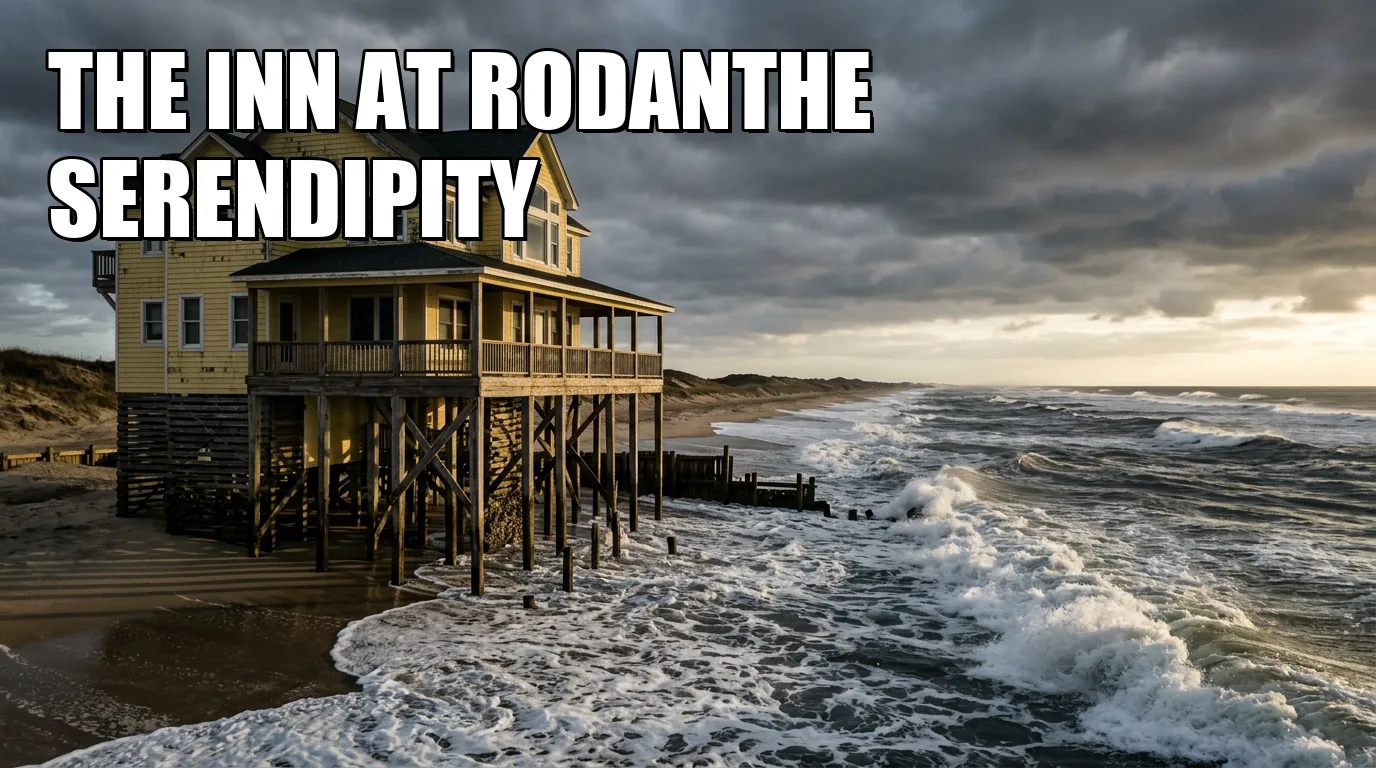
Venturing to Rodanthe, North Carolina, is an experience far more profound than simply tracing the steps of a Nicholas Sparks novel. For the seasoned traveler, especially one drawn to historic sites that tell a larger story, Rodanthe offers an unparalleled, if sometimes sobering, lesson in dynamic geography. This isn't merely a quaint beach town; it's a vivid, often brutal, testament to the immense power of the ocean and the stark realities of a disappearing coastline, a narrative largely missing from glossy travel brochures.
My first visit here, years ago, was driven by a casual curiosity, but what I discovered was a place actively engaged in a desperate, expensive dance with the Atlantic. Forget the idealized movie scenes for a moment. What truly captivated me was the raw engineering grit and the heartbreaking decisions residents face as their very foundations literally erode beneath them. This isn't just about iconic houses; it's about a community grappling with the future, one wave at a time.
Beyond the Big Screen: The Inn at Rodanthe's Real Story
Most visitors, understandably, arrive in Rodanthe with the image of “The Inn at Rodanthe” — the charming yellow house from the movie Nights in Rodanthe — firmly etched in their minds. But the real story of this structure, famously dubbed "Serendipity" by its owners, is far more dramatic and less romantic than Hollywood portrayed. Built in 1988, it once sat a comfortable 400 feet from the ocean's edge. By 2009, that buffer had vanished entirely, a casualty of aggressive coastal erosion.
Imagine waking up to find your dream home condemned, deemed a public nuisance by Dare County because repeated nor'easters and hurricane swells had fatally compromised its pilings. That was the reality for the Serendipity house. Its very existence was a threat, not just to itself, but to the surrounding public beach. So, on January 18, 2010, in a breathtaking feat of engineering, the 83,000-pound structure was lifted, shored, and wheeled a staggering half-mile south along Highway 12. This wasn't a quaint cottage move; it was a desperate rescue operation, executed by Expert House Movers, the same firm that masterminded the relocation of the revered Cape Hatteras Lighthouse in 1999.
The move itself, taking a mere 30 minutes, required the temporary removal of power lines and a full police escort to halt traffic. It’s a testament to human ingenuity in the face of nature’s relentless force. Today, the house, now known as The Inn at Rodanthe, still stands on East Beacon Road, having bought itself a few more years. But its journey serves as a powerful symbol, a warning sign on a stretch of coast where the ocean is actively redrawing the map.
An Unsettling Reality Check: When the Ocean Claims Its Own
The Inn at Rodanthe's tale, while famous, is hardly an isolated incident. Travel guides often spotlight the iconic, yet what they frequently miss is the broader, more pervasive struggle playing out across Rodanthe's beachfront. Dr. Scott Twentyman and Cindy Doughty experienced this stark reality firsthand. They purchased their three-story beachfront home in 2002, long before erosion became a daily anxiety. Then came the 2019 nor'easter sequence, a relentless series of storms that didn't just threaten their home; they brought neighboring houses crashing down around them, sending debris through their back door and inundating their first floor with two feet of water. It was an experience that fundamentally altered their perception of coastal living.
Their solution? An entirely homeowner-initiated relocation, costing $200,000 out-of-pocket. Insurance, as they quickly learned, doesn't cover moving a house to prevent collapse; it only pays if it's already in the ocean. This personal financial burden, often overlooked in the grander narratives, paints a clearer picture of the human cost of coastal erosion. Expert House Movers again performed the miracle, shifting their enormous house 100 feet inland, with such precision that china remained in cabinets and a glass untouched on a counter. It’s a remarkable achievement, but one born from desperation, not luxury.
This isn't just about a few unlucky homeowners. The numbers are grim: since 2020, 22 privately-owned houses have collapsed on Cape Hatteras National Seashore beaches, with a staggering 11 of those in Rodanthe alone between May 2020 and November 2024. The Outer Banks experiences one of the highest erosion rates in the nation, averaging 13-14 feet annually. This relentless assault by the sea is forcing a fundamental rethinking of how we interact with these fragile barrier islands.
The Shifting Sands of Policy: From Preservation to Retreat
As the ocean relentlessly encroaches, the approach to managing these threatened properties has undergone a significant philosophical shift. Where once the focus was on defending structures, a new strategy of "managed retreat" is gaining ground, particularly from the National Park Service (NPS). This evolution became strikingly clear in October 2023, when the NPS acquired and subsequently demolished two oceanfront houses on East Beacon Road, adjacent to where the Serendipity house now sits. These weren't just any houses; their eastern pilings were literally in the intertidal zone, the area between high and low tide, essentially standing in the ocean.
Why this shift? The NPS's rationale was crystal clear: to restore the beach to its natural condition and provide public access, a stark contrast to private efforts focused on preserving individual homes. The funding source for these acquisitions is particularly noteworthy: the Land and Water Conservation Fund, a critical national program fueled by earnings from offshore oil and gas leasing, meaning these removals were not paid for by general taxpayer dollars. It's an important distinction that highlights a national acknowledgment of the problem, but also a pragmatic acceptance that some battles with the ocean simply cannot be won.
The decision to demolish, rather than reinforce, underscores a grim reality for many coastal communities. It's a move away from defending the indefensible and towards a more sustainable, if challenging, long-term vision for our changing coastlines. For a traveler, understanding this policy pivot offers a deeper appreciation of the delicate balance between human habitation and natural processes in a place like Rodanthe.
Counting the Cost: The Economics of a Disappearing Coastline
The price tag attached to Rodanthe's battle with the sea is staggering, and it's not just the $150,000 to $200,000+ typical relocation costs for private homeowners. The economic calculus is complex and often favors retreat over prolonged defense. Demolishing a standing structure, for example, averages around $120,000. But if a house collapses into the ocean, the cleanup costs skyrocket to $50,000-$100,000, a significant burden often left to the public. These aren't just abstract figures; they represent tangible costs borne by individuals and, ultimately, by society.
Consider the story of Betty Jane Saylor. She bought her Rodanthe property in 2014, only to see her pool, fence, and hot tub destroyed by Hurricane Erin in August 2025. Her attempt to relocate the main house was mired in significant permitting delays through the Coastal Area Management Act and the Army Corps of Engineers, with final approvals arriving months after her initial application. These bureaucratic hurdles add another layer of frustration and expense to an already daunting situation, highlighting a practical issue many guides simply gloss over.
A 2023 study estimated that comprehensive beach nourishment efforts in Rodanthe would demand $120 million over 15 years. Compare that to approximately $43 million to purchase all 80 threatened oceanfront properties in Rodanthe. The stark difference forces a critical question: what’s the most responsible and sustainable allocation of resources? This isn't just a local issue; it's a microcosm of the larger national debate on coastal resiliency and climate adaptation.
Planning Your Visit to a Vanishing Shore: What Every Traveler Should Know
For those considering a trip to Rodanthe, it's essential to approach it with an understanding that extends beyond typical vacation expectations. You're not just visiting a beach; you're witnessing a dynamic environmental drama. The best times to visit for a more reflective experience, avoiding the frantic summer crowds, are the shoulder seasons: April-May or September-October. During these periods, the weather is often pleasant, and you'll find more space for quiet contemplation of the landscape.
Expect to see evidence of the ocean's relentless work. While specific house locations are private, you can observe the wider impact of erosion along public beach access points. Parking can be found at designated public access areas along Highway 12, but arrive early, especially on weekends, as spots fill quickly. Be mindful of private property boundaries and never trespass on or approach houses that appear abandoned or precariously close to the water, as they could be unstable. The beauty here is undeniable, but it's a fragile, changing beauty.
What typical guides often don't tell you is the emotional weight of this place. It's a prime location to grasp the tangible effects of climate change, not as a distant threat, but as an immediate, ongoing reality. Engage with local businesses, but also take time to simply sit on the beach and observe. What you expect might be a romantic getaway; what you'll find is a powerful, educational encounter with nature's raw power and human resilience. This is a historic site not because of ancient ruins, but because it's where history is being made right now, shaping the future of our coastlines in real time.