The Mother Road. It’s a phrase that conjures images of chrome-laden diners, endless blacktop, and a distinct brand of American freedom. But after countless miles traversing its sun-baked asphalt, I’ve learned that the true magic of Route 66 isn't found in the most obvious, perfectly restored landmarks. No, the real soul of this iconic highway whispers from the places teetering on the brink of oblivion, the sites where dust devils dance through skeletal remains, and where history feels less curated and more raw. This isn't your average tourist brochure; consider this your seasoned guide to the less-trodden, more authentic stretches of Route 66, specifically across Arizona, New Mexico, and Oklahoma, with an eye toward what’s vanishing and what's fighting to stay.
For decades, the story of Route 66 preservation has been a romantic, if often underfunded, saga of grassroots passion. You’d find local enthusiasts scrubbing rust off old signs, hand-painting murals, and clinging to the memory of a bygone era with fierce dedication. However, the last few years have seen a fascinating shift: state-funded grants, totaling tens of millions annually, have begun to outpace those tireless community efforts in sheer financial muscle. This newfound influx of structured capital means certain beloved motor courts and iconic diners now stand a fighting chance, but it also creates a stark contrast, often leaving the more remote, less flashy sites to fend for themselves, their stories fading with each passing year.
What’s Truly Unique: Digital Echoes of a Vanishing Past
Forget your traditional guidebooks for a moment. What if the best way to "visit" a historic site isn't always with your feet on the ground? This might sound like heresy to a purist, but the frontier of digital preservation is now actively shaping how we interact with Route 66’s most vulnerable locations. In Arizona, for instance, organizations are deploying 3D scanning technology to capture ghost-town structures with astonishing sub-millimeter accuracy. Imagine walking through a digital archive of an entire mining town, every intricate truss detail and terrain contour meticulously recorded – it’s a permanent record, a blueprint for potential future restoration, and an invaluable educational resource, especially for places that might not survive the next decade.
Similarly, New Mexico's Albuquerque, a vibrant hub of mid-century motor courts and trading post lore, has wholeheartedly embraced augmented reality (AR) storytelling for its centennial celebration. The City's Department of Arts & Culture has invested over half a million dollars in external funding for AR public-art activations and interactive mobile experiences. Picture this: you're standing in front of a faded neon sign, pointing your phone, and suddenly the bustling street of the 1950s springs to life on your screen, complete with period vehicles and animated characters. It doesn't just preserve the lore; it invites visitors to contribute their own stories, blending personal memory with historical fact in a way few static plaques ever could.
Over in Oklahoma, the Route 66 Commission is pushing the boundaries further, partnering with community groups to pilot virtual-reality (VR) reconstructions of pre-interstate trading posts. These aren't just fancy tech demos; funded through state grants, these VR experiences allow remote audiences to "walk" through reconstructed interiors of at-risk sites. This is crucial for fundraising and awareness campaigns, giving potential donors and future visitors a visceral sense of what's being lost, even if they can't physically be there. While some might argue this dilutes the "authentic" experience, I see it as a vital lifeline, making these almost-gone places accessible to a wider audience and creating a compelling reason for intervention.
Money Talks: State Grants vs. the Scrappy Crowdfund
When you traverse these states, you’ll notice a distinct difference in the quality and scale of preservation efforts, often dictated by the funding source. Arizona’s NPS Paul Bruhn Historic Revitalization Grants, for instance, funnel over a million dollars annually into rural preservation. These are competitive awards, supporting large-scale projects like the rehabilitation of the magnificent La Posada Hotel in Winslow, a true architectural marvel. The impact is palpable: thousands of visitor-days each year, a boost to local jobs, and a feeling of solidity that few smaller projects can replicate.
New Mexico's strategy leans into the future with its Route 66 Centennial Grant Program, injecting $1.3 million specifically for infrastructure and promotion, alongside another $1.5 million via MainStreet awards. These funds have dramatically improved wayfinding and signage in towns like Santa Rosa and Tucumcari, resulting in a noticeable 15% increase in seasonal traffic in 2025. You feel it in the air; these towns are buzzing a little more, their historic streetscapes a bit more polished, welcoming the influx of travelers.
Oklahoma has made perhaps the most substantial financial commitment, with its Route 66 Revitalization Program boasting $6.6 million in 2023-24, allowing up to $2 million per project. These investments have underpinned massive undertakings, like a
$35 million bridge reconstruction and the revitalization of several iconic diners, contributing an estimated
$12 million in incremental local tax revenue in 2025. When you drive through, the difference is stark—these are not just cosmetic fixes but deep-seated structural improvements ensuring these landmarks stand for decades to come.
Conversely, the individual crowdfunding campaigns, while inspiring, generally struggle to break the $50,000 mark. The
Hotel Blue
in Albuquerque is a notable exception, raising $280,000 toward a $6 million redevelopment through an investment platform. This proves local investor enthusiasm exists, but its economic ripple remains modest compared to grant-backed initiatives. The takeaway here is clear: while grassroots efforts foster immense community pride and often serve as crucial pilot projects, the heavy lifting of large-scale preservation, the kind that draws in significant tourism and ensures longevity, requires the structured support and deeper pockets of state and federal grants.
The Silent Erosion: Sites on the Brink of Disappearance by 2030
This is where the story gets urgent. As a traveler, I constantly seek out the authentic, the unvarnished, the places not yet scrubbed clean for Instagram. But the reality is, some of these "hidden gems" are truly hidden because they’re crumbling into the landscape, with little hope of rescue without immediate intervention. Without a drastic shift in preservation strategies—particularly blending digital archives with diverse funding—several places I've known for years will simply cease to exist in any meaningful way by 2030. This isn't hyperbole; it's a stark forecast.
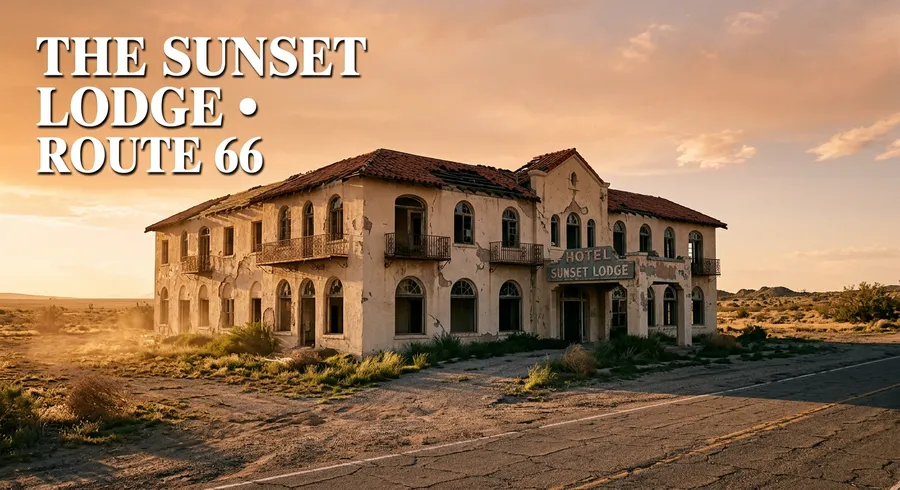
Consider Glenrio, straddling the New Mexico/Oklahoma border. It's a ghost town, an empty shell of what was once a bustling stop. Its storefronts are in critical disrepair, paint peeling, roofs caving, and crucially, there's no active digital archive to capture its current state. Your visit here is less about appreciating history and more about bearing witness to its slow, inevitable surrender to time. There are no major grant awards coming its way, and the sense of decay is overwhelming.
Out in Arizona, Amboy's Roy's Motel & Café, while famous, has faced agonizingly long restoration timelines, perpetually hindered by water-rights negotiations. Grant cycles simply don't align with these urgent infrastructural needs, leaving the site in a frustrating limbo. It's a place that draws visitors for its iconic sign, but the experience of seeing its ongoing struggle is a somber reminder of how complex preservation truly is. If you're planning a trip, prepare for a sense of anticipation mixed with quiet disappointment over its slow progress.
Driving through New Mexico, you might stumble upon the Continental Divide Trading Post (Two Morgans, NM). It’s largely under-documented, its wooden façades visibly deteriorating. This place, rich with untold stories of traders and travelers, has no recorded crowdfunding or grant support. It’s a genuine step back in time, but one where every creak of timber signals a silent alarm. Then there's the Cal-Nev-Ari Motor Court in Holbrook, AZ, abandoned since the 1970s. It’s entirely absent from state grant portfolios and untouched by the innovative VR/AR preservation efforts seen elsewhere. It’s a skeletal remains, a stark monument to what was.
Finally, the Glen Ellen Trading Post near Clovis, NM. Remote, yes, but home to historic murals that narrate a vibrant past. Yet, its structural decay is accelerating faster than any preservation activity. A visit here is a race against time. What makes these places truly unique, and tragically vulnerable, is their raw authenticity. They aren't polished; they haven't been disneyfied. They are living, breathing (or dying) history, and experiencing them now, before they disappear, offers an insight into the true, unfiltered spirit of Route 66 that no glossy brochure can replicate.
Navigating the Future: Your Role in Preserving the Past
So, what’s a dedicated traveler to do? Beyond simply visiting, how can we engage with the delicate balance of preservation and decay on Route 66? First, when you encounter sites with QR codes for augmented reality experiences or information on VR reconstructions, take the time to engage. These aren’t gimmicks; they are crucial digital lifelines for places that might not survive physically. Expanding these 3D scanning programs and integrating open-access repositories isn't just for academics; it's about creating a living, accessible history for everyone, especially for future generations who may never see these structures standing.
Furthermore, consider where your tourism dollars go. Supporting local businesses, even small, struggling ones near these vulnerable sites, makes a tangible difference. Seek out the small, unheralded museums or local historical societies that are often fighting tooth and nail with minimal resources. If a site has a crowdfunding link, even a small contribution can signal community interest, potentially unlocking larger grant opportunities down the line. We need to blend funding streams—state grants with micro-donations—and simplify the accreditation process for smaller, community-led initiatives. This isn't just about financial input; it's about demonstrating value and engagement.
Above all, let your experiences be heard. Share your authentic encounters with these fading gems, good or bad, through social media, travel blogs, or even direct feedback to local tourism boards. Encourage the use of user-generated content modules within AR/VR applications, making preservation a dynamic, ongoing conversation rather than a static decree. By aligning grant application windows with urgent infrastructure deadlines and even establishing emergency grants for critical stabilization, we can shift the preservation landscape from reactive to proactive. The ultimate goal is to formalize regional preservation coalitions across AZ, NM, and OK, allowing these states to share technical resources, training, and joint fundraising campaigns. The spirit of Route 66, in its truest, most vulnerable form, depends on it. Go now, and bear witness to a legacy that needs your attention.
Journey Through America’s Mother Road: Historic Route 66 FAQ
Must-see Route 66 historic landmarks
Highlights include the Santa Monica Pier, Gateway Arch, Blue Whale of Catoosa, Cadillac Ranch, Petrified Forest National Park, U-Drop Inn Cafe, Gemini Giant, Chain of Rocks Bridge, and the Wigwam Motels.
What are the best things to see on Route 66?
Iconic roadside attractions like Cadillac Ranch, Blue Whale, and historic diners mix with natural wonders such as the Petrified Forest and scenic byways through the Ozarks and Mojave Desert.
Where is the iconic part of Route 66?
The stretch between Holbrook and Kingman in Arizona, including the Petrified Forest and the historic towns of Seligman and Oatman, is often cited as the most emblematic.
Where is the best place to start on Route 66?
Chicago, Illinois, at the historic “Route 66 Begin” sign on Adams Street is the traditional starting point for east-to-west travelers.
What is one famous tourist stop along Route 66 in Texas?
The MidPoint Cafe in Adrian, Texas, marks the exact halfway point and is famed for its “ugly” pies and vintage diner atmosphere.
Whats the best time of year to drive Route 66?
Late spring (April–June) and early fall (September–October) offer mild weather, open attractions, and moderate crowds.
How long is Route 66 from Texas to California?
The Texas-to-California segment spans approximately 800 miles along the original alignments and modern connectors.
What kind of car is best for Route 66?
A reliable fuel-efficient sedan or compact SUV with good ground clearance and air conditioning is ideal for varied terrain and climate.
Why is Route 66 called Bloody 66?
Between the 1940s and 1970s, certain stretches saw unusually high fatal accident rates—earning it the nickname “Bloody 66.”
How much time do you need for Route 66?
A leisurely trip from Chicago to Santa Monica typically takes 10–14 days to allow for sightseeing and detours.
How many states does Route 66 pass through?
Historic Route 66 crosses eight states: Illinois, Missouri, Kansas, Oklahoma, Texas, New Mexico, Arizona, and California.
What is the total length of Route 66?
Originally it ran 2,448 miles from Chicago to Santa Monica, though drivable sections today total about 2,278 miles.
Are there guided tours of Route 66 historic sites?
Yes, numerous tour operators offer guided bus, motorcycle, and self-drive itineraries covering key landmarks.
What museums can I visit along Route 66?
Notable museums include the Route 66 Museum in Clinton, Oklahoma; the Arizona Route 66 Museum in Kingman; and the Illinois Route 66 Hall of Fame & Museum in Pontiac.
Are RVs allowed on Route 66?
RVs are welcome and many campgrounds, RV parks, and roadside rest areas accommodate large vehicles.
Are there camping sites along Route 66?
Campgrounds and state parks dot the route in most states, offering sites near attractions and in scenic natural areas.