
Stepping into Santa Fe, most visitors are immediately struck by a visual harmony: the soft, earthen tones, the rounded edges, the wooden beams poking out from sun-baked walls. This isn't merely a pretty aesthetic; it’s the physical manifestation of centuries of adaptation, a profound dialogue between Indigenous building traditions and Spanish Colonial influences. My travels across the Southwest have shown me countless examples of this unique synthesis, but nowhere does it resonate with such a sustained hum as in Santa Fe. Yet, to truly appreciate this city's architectural soul, one must look beyond the postcard-perfect facades and delve into the fascinating stories of ingenuity, resilience, and even contention that shaped these structures.
Santa Fe Pueblo Architecture: Beyond the Adobe Cliché
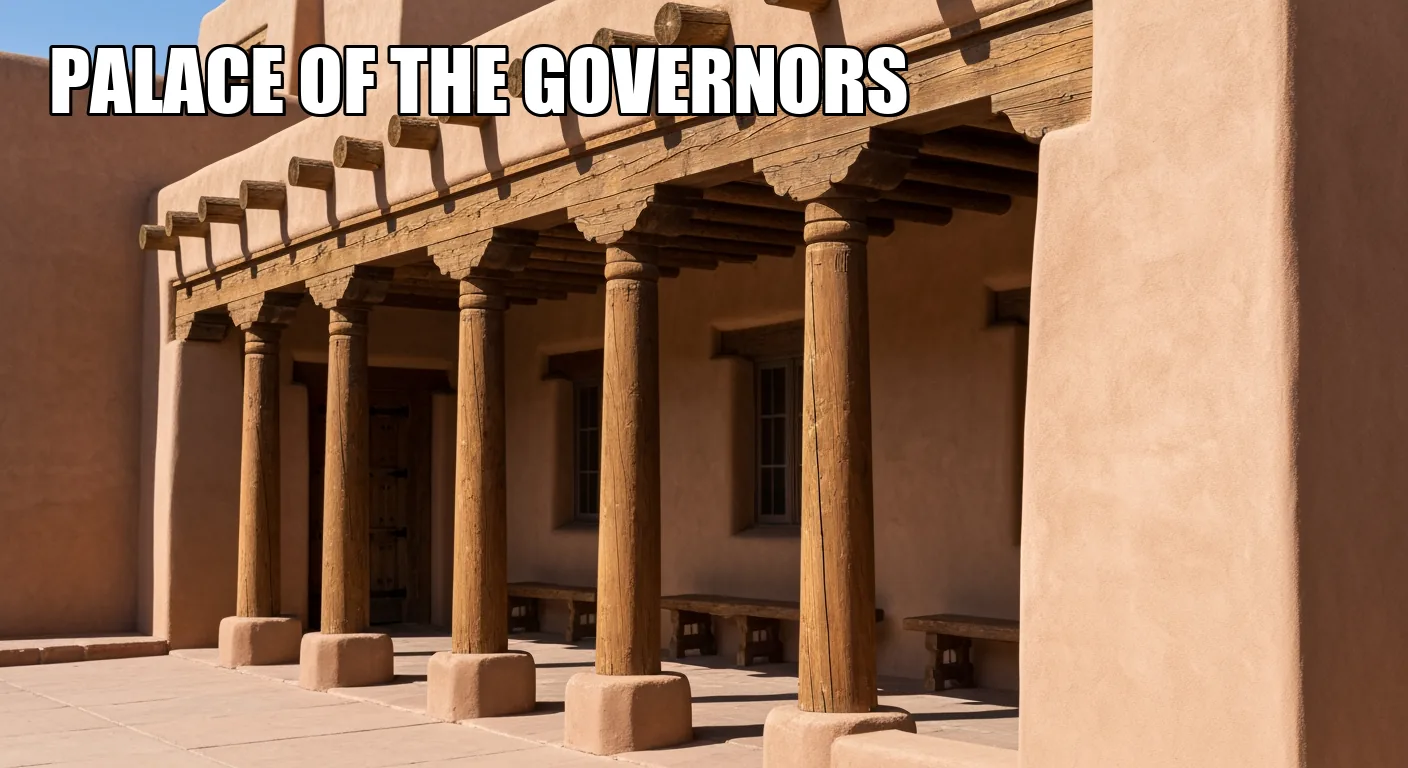
Beyond the Adobe Facade: Unearthing Santa Fe's Architectural Soul
What exactly defines Santa Fe Pueblo architecture? It's more than just mud and straw. At its heart, it's a living tradition that blends pre-Columbian Pueblo construction techniques with Spanish Colonial forms, eventually evolving into the conscious "Pueblo Revival" style that became synonymous with the region in the early 20th century. The core material is, of course, adobe—sun-dried bricks of earth, sand, and straw, a building method perfected by Pueblo peoples for millennia. Spanish friars, arriving in the 17th century, adapted these techniques, introducing elements like pitched roofs (though flat roofs remained prevalent), bell towers, and larger, more formalized floor plans. The exposed wooden beams, called vigas, that protrude from walls aren't just decorative; they’re structural, supporting the roof, often covered by smaller wooden strips known as latillas, then packed earth. This practical, climate-responsive architecture kept interiors cool in summer and warm in winter, a testament to its enduring functionality in a high-desert environment.
For visitors, understanding this historical layering is key. Don't just observe; ask what each element signifies. Why is that corner rounded? It's not just a stylistic choice; it's a reflection of how adobe weathers and how it was historically formed and maintained. The architecture here tells a story of survival, cultural exchange, and an ongoing conversation between past and present.
Echoes of Empire and Ingenuity: The Enduring Missions and Palaces
When you wander through the historic core of Santa Fe, you're tracing paths laid out centuries ago, flanked by buildings that have witnessed extraordinary shifts in power and culture. Take the Palace of the Governors, for instance, anchoring the north side of the Santa Fe Plaza. Completed around 1618, this sprawling adobe structure holds the distinction of being the oldest continuously used public building constructed by European settlers in the continental United States. Its very presence demands reflection: for over 400 years, different flags have flown above it, different languages echoed in its chambers, and different leaders have governed from within its thick adobe walls. What often gets overlooked is the expansive portal—the deep, shaded colonnade stretching along its length. This wasn't just an architectural feature; it was, and remains, a vital public space, a marketplace where Native American artisans have sold their crafts for generations, continuing a tradition that predates even the Palace itself. While the building has seen countless modifications and restorations, its fundamental adobe character persists, a testament to the durability of the original construction and the unwavering commitment to its preservation. Don't expect a pristine museum piece; expect a living monument that has adapted to every era.
Just a short walk from the Palace stands the San Miguel Chapel, widely recognized as the oldest Catholic church in the United States. While its earliest iteration dates back to the 1610s, with a significant rebuilding in 1710, the "oldest" claim here warrants a nuanced view. The current structure, though venerable, is a palimpsest of repairs and renovations, a testament to resilience rather than static antiquity. It was built by Tlaxcalan Indians from Mexico under Franciscan direction, a critical detail often minimized in tourist brochures. This wasn't merely a European imposition; it was a complex undertaking involving various Indigenous peoples. Inside, the simple, single-nave design and rustic wooden beams, or vigas, convey an immediate sense of history and devotion. Visitors often rush through, but pause to consider the 18th-century religious sculptures and paintings, imagining the generations who have sought solace within these same walls. To fully appreciate San Miguel, go on a weekday morning when the crowds are thinner, allowing its quiet dignity to truly sink in.
Venturing beyond Santa Fe to Acoma Pueblo introduces you to an architectural marvel that truly bridges worlds: the San Estévan del Rey Mission Church. Built between 1629 and 1641, this magnificent structure exemplifies the hybrid Spanish Colonial and Puebloan styles, standing majestically atop a mesa. The sheer logistical effort involved in its construction is staggering and often goes unappreciated. Imagine the Acoma people hauling 20,000 short tons of adobe, straw, sandstone, and mud up a steep mesa, and ponderosa pine beams, some spanning 40 feet, transported over 40 miles from the San Mateo Mountains. This wasn't just a church built *for* the Acoma; it was built *by* them, with their immense labor and skill. The massive adobe walls, up to 7 feet thick at the base, speak to an engineering prowess that allowed a structure of this scale to endure for nearly four centuries. Its designation as a National Trust Historic Site, uniquely for a Native American site, underlines its profound significance. Visiting Acoma requires a guided tour, and frankly, that's the only way to truly grasp the monumental effort and spiritual depth woven into the fabric of San Estévan. The story of its construction is far more compelling than its architectural dimensions alone.
Taos Pueblo: A Living Masterpiece, Not a Museum Piece
Many historical sites present a curated past, a frozen moment in time. Taos Pueblo, however, defies this neatly packaged experience. A UNESCO World Heritage Site since 1992, it holds a distinction that sets it apart: it’s the only site cited for the significance of its traditional Native American living culture. This isn't a ruin or a re-enactment; it is a continuously inhabited, millennia-old community. The multi-storied adobe dwellings, with their iconic ladders providing access to upper levels through roof openings, offer a tangible link to a way of life that has persisted for centuries. Most of these structures were likely built between 1000 and 1450 CE, with walls often several feet thick, supported by massive vigas hauled from surrounding forests. The continuous annual replastering with mud is not merely maintenance; it’s an ongoing act of cultural preservation, a rhythmic renewal that keeps the Pueblo alive. Inside, you won't find hallways connecting units; each home is a discrete entity, typically two rooms—one for living and sleeping, another for cooking and storage. Expect a respectful encounter, as this is a private community. Visitors are welcome, but adhere strictly to the guidelines regarding photography and privacy. The beauty of Taos Pueblo isn't just in its ancient architecture, but in the vibrant human spirit that continues to animate it every single day. Plan for a full morning or afternoon, and be prepared to walk; the experience is meant to be slow and immersive.
The Art of Revival: How a Style Was Born (and Reborn)
The early 20th century brought a fascinating turn to Santa Fe's architectural narrative: the conscious development of the Pueblo Revival style. This wasn't about building new ancient structures, but about celebrating and reinterpreting the region's unique heritage. One of the most pivotal examples is the New Mexico Museum of Art, completed in 1917. Designed by Isaac Hamilton Rapp, this building wasn't a copy of any single mission but a brilliant synthesis of elements drawn from six different Franciscan mission churches—Acoma, San Felipe, Cochiti, Laguna, Santa Ana, and Pecos Pueblos. Rapp's genius lay in distilling the essence of the tradition and applying it to a modern public building. The main façade, specifically modeled after the Mission of San Esteban at Acoma, features the characteristic projecting vigas, curved beam supports known as corbels, and decorative roof drains, or canales. This building wasn't just an architectural statement; it was a cultural manifesto, firmly establishing Santa Fe's identity as an emerging artist colony and a place fiercely proud of its regional aesthetic. Don't simply admire its exterior; step inside to appreciate how the interior design, with murals by prominent artists like Carlos Vierra, reinforces the building's role in fostering New Mexican art. It’s a testament to how a historical style can be consciously adapted and celebrated in a contemporary context.
Another monumental achievement of the Pueblo Revival era is the Cristo Rey Church, dedicated in 1940. Often claimed to be the largest adobe building in the United States, it represents an astonishing feat of traditional construction, albeit with clever modern assistance. Architect John Gaw Meem, a titan of Pueblo Revival, designed a cruciform church that again drew inspiration from multiple historic mission churches: towers from San Esteban (Acoma), a balconied facade from San José de Gracia (Trampas), and elements from the San Francisco Parroquia and Santa Ana mission. The sheer scale is breathtaking: 150,000 to 200,000 individual adobe bricks were laid, requiring 222 large logs for its vigas and latillas. What many visitors miss, however, is the ingenious compromise: Meem concealed a modern steel frame and concrete foundations within the traditional adobe shell. This allowed for a structure of immense size and stability while maintaining the authentic aesthetic. It’s a brilliant example of how traditional forms can be pushed to new limits with subtle contemporary engineering. The church houses the magnificent Reredos of Our Lady of Light, an 18th-century carved limestone altar screen, which adds another layer of historical depth to this impressive modern interpretation of Pueblo architecture. Aim for a quiet afternoon visit to truly absorb its grandeur without the bustle of weekend services.
The "Oldest House" Conundrum: Peeling Back Layers of Time in Barrio de Analco
Every historic town seems to have an "oldest house," and Santa Fe is no exception. Located in the charming Barrio de Analco Historic District, just across the Santa Fe River from the main plaza, you’ll find the De Vargas Street House, colloquially known as "The Oldest House." But like many such claims, its story is far more complex and intriguing than a simple date. While often attributed to the early 1600s, archaeological studies suggest its foundations incorporate elements of a much earlier Pueblo dwelling dating back to approximately 1200 CE. The visible structure largely dates to the Spanish Colonial period, likely built by Tlaxcaltec people who accompanied the Spanish settlers. Tree-ring analysis of its impressive wooden vigas, for instance, points to dates between 1646 and 1767, indicating significant renovations over time. This isn't one continuous build from a single moment in time; it's a layered history, a physical record of successive cultural occupations. The adobe walls, exceeding two feet in thickness in some places, demonstrate the incredible durability of traditional building methods. What makes this house truly special isn't just its age, but its ability to tell a story of continuity and adaptation, showcasing how Indigenous and Spanish construction techniques blended and evolved over centuries on the same foundational ground. Don't expect a grand mansion; expect a humble, authentic glimpse into the daily lives of Santa Fe’s earliest residents. It's a small museum, easily digestible in 30 minutes, but packed with historical resonance.
Santa Fe Pueblo architecture, in all its varied forms, is a constant reminder that history isn’t static; it’s a dynamic interplay of cultures, materials, and human endeavor. From the ancient, continuously inhabited dwellings of Taos Pueblo to the monumental mission churches, and the conscious revival styles of the 20th century, each building tells a fragment of a larger, compelling story. As you explore, resist the urge to simply admire the aesthetics; instead, peel back the layers, question the narratives, and seek out the ingenious compromises and enduring traditions that have shaped this truly unique architectural landscape. It’s an experience that offers far more than just pretty pictures; it offers profound insight into the very soul of the American Southwest.
Santa Fe Pueblo Architecture: The Complete Traveler's Guide
What is the history of Santa Fe Pueblo architecture?
Santa Fe Pueblo architecture evolved from Native American Ancestral Puebloan dwellings that impressed Spanish conquistadors arriving in the 1600s, blending indigenous construction techniques with Spanish Colonial influences to create a unique regional style.
What is the style of architecture in Santa Fe?
Santa Fe architecture is predominantly Pueblo Revival (also called Santa Fe Style), characterized by flat roofs, rounded edges, thick adobe walls, exposed wooden vigas (beams), and earth-toned stucco finishes inspired by both Spanish Colonial and Native American Pueblo traditions.
What is the history of Pueblo architecture?
Pueblo architecture originated with Native American Pueblo peoples in the Southwestern United States over 1,000 years ago, featuring multistoried adobe structures with flat roofs and minimal exterior openings; this traditional design reflected both climate adaptation and cultural practices.
What is the Santa Fe architecture tour?
Santa Fe architecture tours are guided walking experiences available daily from April through November (2025), costing $98-$129 per person, where visitors explore historic districts learning about four centuries of architectural evolution, from the Plaza to residential neighborhoods and cultural landmarks.
What were the buildings of Santa Fe made of?
Traditional Santa Fe buildings were constructed primarily from adobe bricks made of sun-dried mud, straw, and organic materials, stacked and bound with adobe mortar, then protected by mud plaster or stucco coatings to withstand weathering.
Part of 🏛 Architecture Styles
Bed & Breakfast
Santa Fe Historic Inns and B&Bs: Plaza, Canyon Road, and Which Stay Fits?
A practical Santa Fe inn guide for readers deciding between Plaza-first stays, quieter Canyon Road and Eastside answers, polished historic properties, and the bigger question of how city-first the weekend really is.
Architecture Styles
Gothic Revival Architecture: What the Street Can—and Cannot—Tell You
A three-level field test separates visible Gothic Revival evidence from a style hypothesis and the dates, authorship or alterations that require records.

Architecture Styles
Greek Revival Without Columns: A Confidence Test
Greek Revival can survive without a portico. Use roofline, entablature, entrance, wall plane, date and later alterations to state confidence.