Architecture Styles

SF's Victorian Soul: A Traveler's Deep Dive

Find Nearby Hotels

Book Flights

There's a certain magic to San Francisco, an anachronistic charm clinging stubbornly to its hillsides despite the relentless march of tech and modernity. It’s a city where 19th-century elegance still defines entire neighborhoods, thanks to an astonishing 48,000 Victorian and Edwardian structures built between the Gold Rush frenzy of 1849 and the brink of World War I. Walking these streets isn't just a stroll; it's a conversation with history, a dialogue etched in gingerbread trim and turreted roofs. Yet, for all their fame, most visitors barely scratch the surface of these architectural marvels, content with a quick photo op. I’ve spent years poring over their details, seeking out the untold tales, and grappling with what makes San Francisco’s Victorian legacy so uniquely compelling, often surprisingly so.

My journeys here have taught me that to truly understand San Francisco’s architectural heart, one must look past the obvious and interrogate the myths. Are the famous Painted Ladies just a pretty facade? What secrets do the lesser-known mansions hold? Let’s pull back the curtain on five exemplary buildings that each, in their own audacious way, encapsulate the spirit and diversity of this architectural epoch, offering far more than mere aesthetic appeal.

Beyond the Postcard Perfection: The True Story of the Painted Ladies

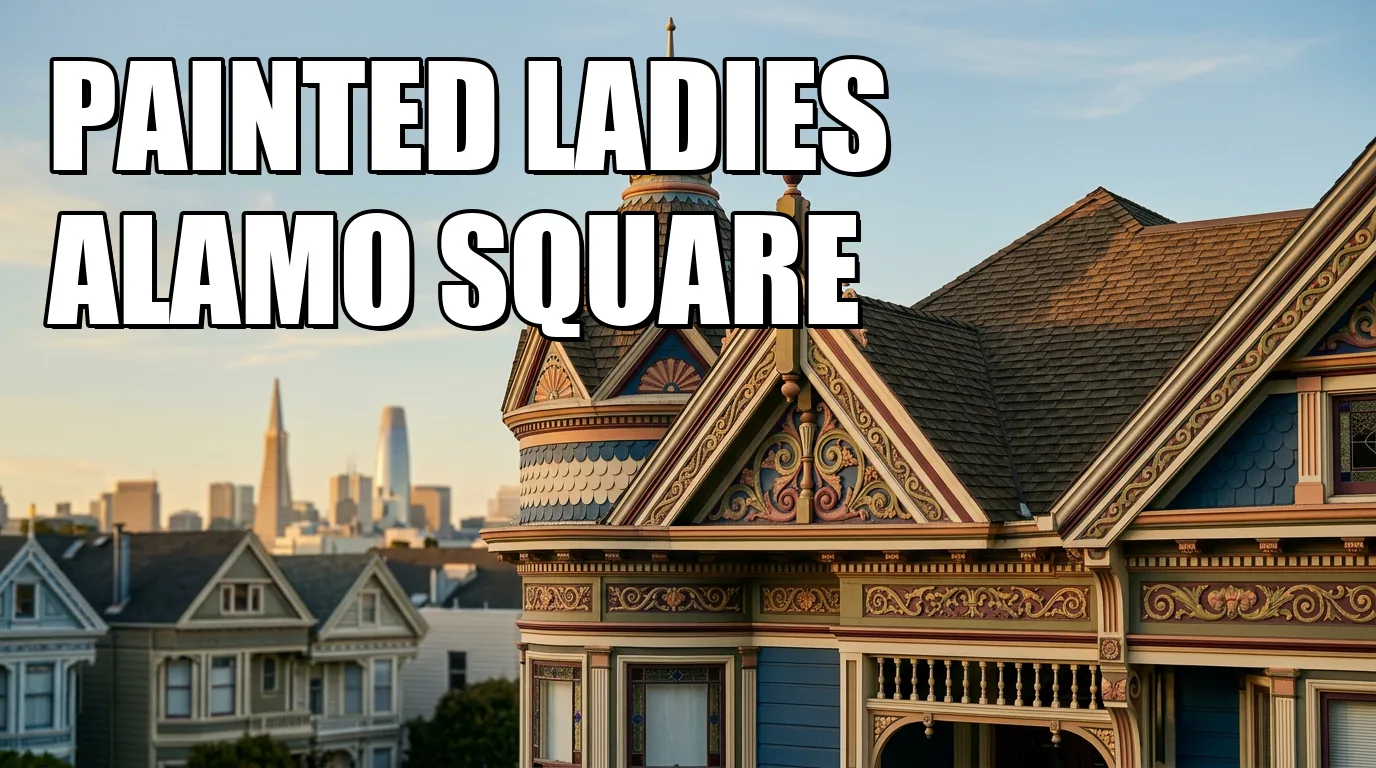
Few images scream "San Francisco" quite like the colorful row of Queen Anne-style townhouses perched above Alamo Square. These aren't just any houses; they’re the Painted Ladies, often called "Postcard Row," built between 1892 and 1896. You've undoubtedly seen them – they’ve graced everything from "Full House" opening credits to countless movie scenes. What many visitors don't realize, however, is that their vibrant, multi-hued appearance is a relatively modern phenomenon, a testament to evolving aesthetic tastes rather than original design. When developer Matthew Kavanaugh first constructed them, these redwood beauties were painted in muted, earthy tones, designed to blend in, not to pop.

Their transformation from subdued to spectacular began in 1963, spearheaded by local artist Butch Kardum, who initiated the "colorist movement." He argued that Victorians, with their intricate details, practically begged for a lively palette to accentuate their architectural flourishes. This wasn't just a paint job; it was a cultural shift that redefined how we perceive these homes globally. Today, the riot of pastel pinks, blues, and yellows is what makes them iconic. But here's the practical truth: the area around Alamo Square itself, while offering unparalleled views for that iconic shot, can be a bit of a challenge. Parking is notoriously difficult, especially on weekends, and the sheer volume of tourists can feel overwhelming. My advice? Arrive early on a weekday morning, preferably around sunrise, to catch the soft light and a fleeting moment of tranquility before the selfie sticks descend en masse.

Stepping Inside a Survivor: The Haas-Lilienthal House Experience

How many truly intact 19th-century private homes remain open to the public in a city famed for its Victorians? Precisely one: the magnificent Haas-Lilienthal House. Erected in 1886 by architect Peter R. Schmidt for William and Bertha Haas, this Queen Anne-Eastlake style mansion offers an unparalleled glimpse into the domestic lives of San Francisco's elite. While you can marvel at countless Victorian exteriors across the city, the Haas-Lilienthal House invites you beyond the threshold, into rooms meticulously preserved with original furnishings, from ornate parlors to servants' quarters. This isn't just a house; it’s a time capsule, maintained by the San Francisco Architectural Heritage organization.

The home’s survival through the devastating 1906 San Francisco earthquake and subsequent fire is a story of sheer luck and a geographical quirk. As flames engulfed much of the city, the Haas family, like so many others, watched in horror from their roof before evacuating. Miraculously, the inferno, which consumed thousands of buildings, halted just one block away at Van Ness Avenue. Why there? Van Ness, a grand boulevard, was wide enough to serve as a natural firebreak, and desperate fire crews also dynamited buildings along its path to starve the fire of fuel. Visiting here, often during their specific tour hours (check their website, but typically Friday through Sunday afternoons), requires a small admission fee, usually around $15-20. It’s a worthwhile investment to experience the tangible history, to walk where prominent San Franciscans once lived, and to appreciate the almost miraculous preservation of this 11,500-square-foot National Treasure.

From Czarist Ballrooms to Counterculture Havens: Unpacking the Westerfeld House's Wild Ride

If you're looking for a Victorian with a truly audacious and utterly unexpected biography, then the William Westerfeld House is your destination. Built in 1889 for German confectioner William Westerfeld by architect Henry Geilfuss, this imposing 28-room Stick-Eastlake mansion stands as a testament to the city's ever-shifting cultural tides. Its architectural grandeur is evident, but its internal history is what truly captivates. After Westerfeld's death, the mansion embarked on a series of transformations that defy belief.

In 1928, it became a de facto "Russian Embassy" when Czarist Russians purchased it, transforming the ground-floor ballroom into a raucous nightclub called "Dark Eyes." Upstairs, meetings were held, plots perhaps hatched, all under the guise of an exiled aristocracy. The house's story doesn't stop there. In the 1960s, it embraced the burgeoning counterculture, hosting the 50-member Calliope Company, a psychedelic art collective immortalized in Tom Wolfe's "The Electric Kool-Aid Acid Test." Underground filmmaker Kenneth Anger even used its opulent, yet decaying, interiors to shoot his occult film "Invocation of My Demon Brother" in 1967, allegedly with members of the Manson family among the cast. This isn't just a Victorian house; it’s a layered cultural palimpsest, a physical representation of San Francisco's radical, often bohemian spirit. While not typically open for public tours, its exterior, particularly during a stroll through the Alamo Square neighborhood, offers a potent reminder that beneath every grand facade lies a story, sometimes one wilder than fiction.

Where Opulence Met Urban Planning: The Spreckels Mansion's Architectural Bridge

Sometimes, to understand an era, you must examine its end. The Spreckels Mansion, constructed slightly later in 1912-1913, serves as a crucial architectural bridge, signaling a departure from the high Victorian ornamentation towards the more refined elegance of the Beaux-Arts style. Designed for sugar magnate Adolph B. Spreckels and his formidable wife, Alma de Bretteville Spreckels, by George Adrian Applegarth (an École des Beaux-Arts graduate), this 55-room limestone château in Pacific Heights embodies sophisticated restraint, a deliberate contrast to the exuberant gingerbread Victorians that preceded it. It’s less about riotous detail and more about classical proportions and understated grandeur.

Alma Spreckels herself, a force of nature known as the "Mother of San Francisco," imprinted her will decisively on this project. In an astonishing act of urban planning – or perhaps, sheer stubbornness – she insisted on preserving the existing Victorian houses on the property. What resulted wasn't demolition, but relocation: six Victorian homes on Jackson Street and two on Washington Street were physically moved to accommodate the château's construction. Think about that for a moment: to build her mansion, she *saved* others. This detail, often overlooked, speaks volumes about a particular kind of early 20th-century preservation ethic, one driven by personal mandate and immense wealth. While the mansion remains a private residence, a drive or walk through Pacific Heights offers glimpses of its impressive facade, allowing you to appreciate this unique architectural transition and the remarkable woman who shaped its creation.

The Resilient Relic Transformed: A Stay at the Payne Mansion

Imagine a grand 19th-century home that survived one of the greatest urban disasters in American history, only to be continually repurposed and ultimately reborn as a luxury hotel. That's the story of the Payne Mansion, built in 1881 for Theodore Fryatt Payne, whose wife Mary inherited a substantial fortune from the Nevada Comstock Lode – a massive silver discovery that fueled many a San Francisco dream. Architect William F. Curlett fused Stick, Eastlake, and Queen Anne elements into its design, creating a distinctive blend that makes it one of San Francisco's rarest pre-1906 earthquake residences.

Its most compelling narrative is its sheer resilience. The Payne family evacuated during the 1906 inferno, and the house itself, miraculously, stood firm. Though the family eventually relocated, the mansion endured, housing various enterprises over the decades: a YMCA, an antiques store, even a wedding venue. Crucially, its exterior remained largely unaltered, earning it a spot on the National Register of Historic Places in 1980. Fast forward to 2018, and the Payne Mansion reopened as The Mansion on Sutter, a boutique hotel, complete with a French restaurant named "1881," a nod to its construction year. This adaptive reuse offers a unique opportunity: you can now not only admire its exterior but also immerse yourself in its history by booking a stay. Expect a luxurious experience, with room rates often starting in the $300-500+ range, reflecting its prime location and historical significance. It’s a chance to truly sleep within a piece of San Francisco's living history, feeling the echoes of its past amidst modern comforts.

San Francisco’s Victorian architecture isn't a static tableau; it’s a dynamic narrative of survival, reinvention, and enduring beauty. From the Haas-Lilienthal House's steadfast preservation to the Westerfeld House's bohemian escapades, and from the Painted Ladies' modern color explosion to the Spreckels Mansion's grand transition and the Payne Mansion's elegant rebirth, each structure tells a unique story. These buildings are more than just homes; they are monuments to the human spirit, reflecting the city’s ability to constantly redefine itself while honoring its rich, often tumultuous, past. So next time you're on these storied streets, pause, look closely, and listen. You might just hear the whispers of a thousand untold tales emanating from their painted walls.

The Ultimate Guide to San Francisco's Victorian Charm

What is the architectural style of San Francisco?
San Francisco is renowned for its Victorian and Edwardian architecture, built between 1849 and 1915, featuring ornate details, bay windows, and colorful exteriors that define the city's iconic skyline. The most prevalent styles include Italianate, Queen Anne, and Stick-Eastlake.
Why are there so many Victorian houses in San Francisco?
The California Gold Rush of 1849 triggered explosive population growth—from about 500 residents to over 25,000 by 1850—creating massive demand for housing that resulted in approximately 48,000 Victorian and Edwardian homes built between 1849 and 1915. The invention of cable cars in 1873 also opened up previously inaccessible hillside neighborhoods, accelerating Victorian development.
Why is the architecture in San Francisco unique?
San Francisco's architecture is unique due to its rapid development during a specific historical period, the adaptation to steep hillside terrain with cable cars, and the preservation of thousands of original Victorian homes despite the devastating 1906 earthquake. The city's colorful painted aesthetic, which emerged in the 1960s and was formalized in the 1978 book 'Painted Ladies,' further distinguishes its architectural identity.
What is the story behind the Painted Ladies in San Francisco?
The term 'Painted Ladies' was coined by writers Elizabeth Pomada and Michael Larsen in their 1978 book 'Painted Ladies: San Francisco's Resplendent Victorians,' referring to Victorian and Edwardian houses painted in three or more colors to enhance their architectural details. The modern color-painting trend began in 1963 when artist Butch Kardum inspired a colorist movement by painting his Italianate Victorian with vibrant blues and greens.
What is the difference between Edwardian and Victorian houses in San Francisco?
Victorian homes (built 1837-1901) feature elaborate ornamentation with intricate moldings, stained glass windows, decorative brackets, and ornate details, while Edwardian homes (built 1901-1910) showcase simpler, more streamlined designs with flat facades, box shapes, and minimal embellishments. Victorians are typically constructed with brick or stone, whereas Edwardians were often built with timber or stucco.
What makes the Painted Ladies so unique?
The famous Painted Ladies at 710-720 Steiner Street across from Alamo Square are uniquely symbolic of San Francisco's Gold Rush wealth and architectural heritage, having been built between 1892-1896 and appearing in approximately 70 movies and TV shows including 'Full House' and 'Fuller House.' Their photogenic qualities—enhanced by the modern San Francisco skyline backdrop—have made them the most photographed Victorian row in the world.
San Francisco Victorian Architecture Guide: Where should I start?
Start with the Painted Ladies at Alamo Square for iconic views, explore Pacific Heights for the highest concentration of Victorian mansions, visit Haight-Ashbury for Queen Anne styles, and tour Noe Valley for charming Edwardian row houses. Consider taking a guided walking tour through SF City Guides or private operators to understand the architectural nuances and historical context.
Where are the most iconic Victorian neighborhoods in San Francisco?
Pacific Heights, Haight-Ashbury, Noe Valley, the Mission District, Russian Hill, and the Castro all feature exceptional concentrations of Victorian and Edwardian architecture. Pacific Heights is particularly renowned for its mansions, while Haight-Ashbury's Queen Anne styles reflect the neighborhood's development between 1890-1910.
Is it free to visit the Painted Ladies at Alamo Square?
Yes, viewing the Painted Ladies from Alamo Square Park is completely free and the park is open from dawn until dusk. However, tours inside the Blue Painted Lady house at 714 Steiner Street require advance booking and cost approximately $35 per person for a 90-minute guided tour.
What is the best time to photograph the Painted Ladies?
Late afternoon (around sunset) is ideal since the Painted Ladies face west and the sun illuminates them beautifully at this time, creating warm lighting and reducing harsh shadows. Weekdays are generally less crowded than weekends, and visiting on clear days provides the best backdrop with downtown San Francisco visible.
What are the main Victorian architectural styles found in San Francisco?
The primary Victorian styles include Italianate (ornate, popular in the 1870s-1880s), Queen Anne (asymmetrical, decorative, dominant in Haight-Ashbury), and Stick-Eastlake (transitional style with linear ornamentation). Each style showcases distinct features like bay windows, turrets, ornamental brackets, and varied textures.
What are the best guided tours for San Francisco Victorian architecture?
SF City Guides offers free Victorian walking tours through Pacific Heights, lasting 1.5-2 hours, while the Victorian Home Walk company charges $25-$58 per person and includes interior access to Queen Anne homes. The Blue Painted Lady House Tour ($35) provides an interior home experience, and the Haas-Lilienthal House offers $10 docent-led tours on select Wednesdays and Saturdays.
How did the 1873 cable car invention impact Victorian development?
The first cable car opened on August 1, 1873, making previously inaccessible hillside neighborhoods accessible and desirable, transforming areas like Nob Hill, Pacific Heights, and Russian Hill into fashionable Victorian neighborhoods. Between 1873 and 1890, 23 cable car lines were established, dramatically expanding urban development and enabling the construction of thousands of Victorian homes in elevated areas.
What was the impact of the 1906 earthquake on Victorian homes?
The 1906 earthquake destroyed 28,000 buildings including many Victorian mansions on Nob Hill, but thousands of modest wooden Victorian homes in western and southern neighborhoods survived due to their flexible wooden construction. The disaster paradoxically led to rapid reconstruction using Edwardian styles in neighborhoods like Noe Valley, which developed extensively after 1906.
Can I tour inside a Victorian home museum?
The Haas-Lilienthal House is San Francisco's only Victorian house museum open to the public, offering guided docent-led tours ($10 admission) on select Wednesdays and Saturdays. The Blue Painted Lady at Alamo Square also offers private home tours ($35) featuring one of the famous Painted Ladies with historical insights from the owner.