For years, I’ve chased the quiet allure of the American Southwest, drawn not just by its sweeping vistas, but by the tangible echoes of its past. Few architectural elements capture that spirit quite like the kiva fireplace – those distinctive, often beehive-shaped hearths carved into adobe walls, promising warmth and an ancient sense of place. Yet, after countless visits and more than a few frustrated inquiries, I’ve come to understand that the romantic image often plastered across travel brochures tells only half the story. The truth, as always, is far more nuanced, a beautiful tapestry woven from indigenous ingenuity, colonial adaptation, and modern interpretation.
My initial quests were always highly specific: "Which room has the oldest kiva?" "Can I trace the exact hand that laid these adobe bricks centuries ago?" I quickly learned a humbling lesson. While many historic sites proudly feature these fireplaces, the meticulous, room-by-room documentation of individual kiva construction dates, or which specific cultural design nuances influenced *that* particular hearth, simply isn't available to the general public. Hotels, for instance, don't typically itemize fireplace blueprints by room number. This isn't a failure of history, but a reflection of how history is recorded and presented, often focusing on the larger structure rather than its intricate, internal details. Understanding this limitation early on shapes a more realistic and, frankly, more rewarding exploration.
Unearthing the Kiva's Spiritual Roots: More Than Just a Fireplace
Before any Spanish colonist ever laid eyes on the Southwest, Indigenous Pueblo peoples had mastered the art of building efficient, sacred structures. Their *kivas* – from which the fireplace takes its name – were deep, circular underground chambers used for ceremonial purposes and community gatherings, some dating back to the 8th century. These were not mere heating units; they were cosmological centers, embodying a profound connection to the earth and sky. When Spanish settlers arrived in the 17th century, bringing with them a need for warmth in adobe homes, they observed the ingenuity of Pueblo construction. They adapted the beehive shape and heat-radiating properties of the indigenous designs, incorporating them into their own homes. This wasn't a simple adoption; it was a clever synthesis, marrying indigenous aesthetic and function with Spanish Colonial building techniques, particularly the use of adobe bricks and the practical decision to place these new hearths in room corners. Every time you see a kiva fireplace, you are looking at a living testament to this incredible cultural exchange.
Santa Fe's Adobe Heartbeat: Kivas in the City Different
No discussion of kiva fireplaces would be complete without a deep dive into Santa Fe, New Mexico, a city where the past feels perpetually present. It’s here you’ll find some of the most prominent examples, each with its own story, its own blend of heritage and modern amenity.
Imagine stepping into one of the Hilton Santa Fe Historic Plaza's luxury casitas. You're not just in a hotel room; you’re standing within the preserved adobe walls of what was once the 17th-century hacienda of Padre Ramon Ortiz, a truly prominent founding family. The casitas here are a testament to meticulous preservation, offering an authentic experience. These kiva fireplaces reflect a genuine blend of Spanish Colonial and Pueblo Indian architectural traditions, their adobe construction echoing centuries of building methods. Expect to pay anywhere from $150 to $300+ per night for the privilege of warming yourself by such a storied hearth, a small price for a tangible link to Santa Fe's deepest roots.
Just around the corner, La Fonda on the Plaza stands as an icon. The current structure, completed in 1922, occupies the site of Santa Fe's very first inn, a place that has welcomed travelers for over 400 years. Famed architect Isaac Hamilton Rapp, with interior designs by Mary Colter, brought to life its Pueblo Revival style. The kiva fireplaces scattered throughout La Fonda don’t just warm the room; they narrate a 400-year saga of cultural synthesis, blending Pueblo ceremonial aesthetics with Spanish Colonial construction. While standard rooms start around $229 per night, the real value here lies in the sheer historical weight of the location – it's less about the individual fireplace and more about being enveloped by the continuous narrative of Santa Fe itself.
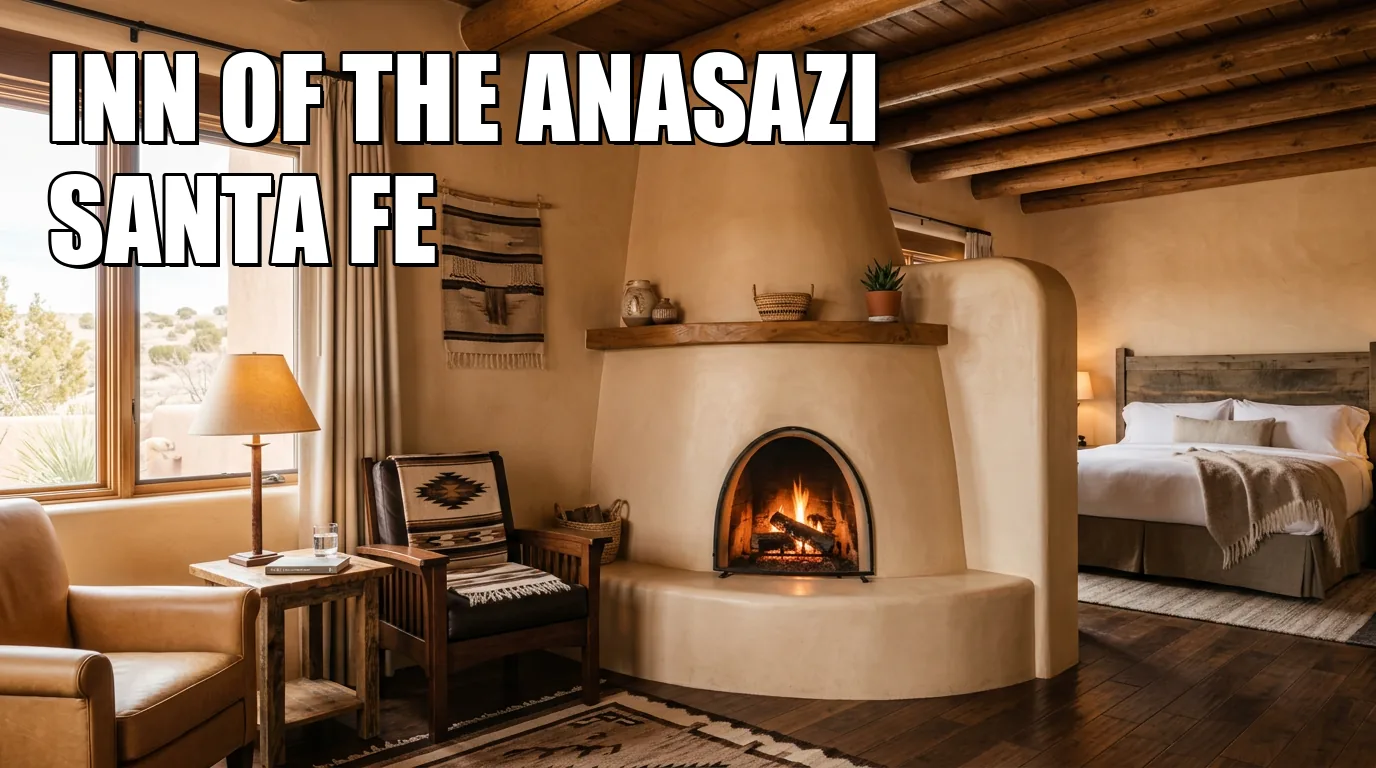
Then there's the Rosewood Inn of the Anasazi, a property that offers a fascinating, albeit different, take on the kiva tradition. Built in 1990, it explicitly draws inspiration from Ancestral Puebloan (Anasazi) pottery and stonework. Here's where expectation sometimes meets modern reality: all 58 rooms feature gas-lit kiva fireplaces. Yes, gas. While the aesthetic is impeccable, with locally sourced piñon wood stacked for visual effect and beautiful terracotta ceramics by local artist Lorraine Lewis framing each one, the gas flame tells you this is a contemporary homage, not a direct descendant of ancient fire-building. This isn’t a critique, merely an honest observation that typical guides might gloss over. Deluxe rooms and suites, which range from $243 to $419 per night, provide ample space to appreciate this artful, safe nod to history.
Venture slightly outside the city, and you discover the Four Seasons Resort Rancho Encantado. This luxurious retreat doesn't just feature kiva fireplaces; it ensures they're *wood-burning*, a detail that truly elevates the experience. After a multi-million-dollar renovation completed in 2024, the resort preserved and enhanced its authentic Southwestern design, including 60+ casitas and suites with these traditional hearths. They even supply locally sourced piñon firewood, ensuring that distinct, comforting scent fills your space. The beehive shape here, emphasized by the resort, is not just decorative; it's a testament to the efficient heat radiation of Pueblo designs. Many rooms even boast outdoor patio fireplaces, offering stunning desert sunset views – a truly unforgettable way to end a day in the high desert. Expect casita accommodations to start around $500+ per night, a premium that buys not just luxury, but a truly authentic fire experience.
Taos's Quiet Reverence: A Hidden Gem's Hearth
Moving north to Taos, a town steeped in its own distinctive blend of artistic spirit and indigenous heritage, the scale shifts. The Inn on La Loma Plaza provides a more intimate, hacienda-style experience, a welcome contrast to Santa Fe’s larger establishments. This adobe inn, situated on land dating back to the 1800s and listed on the National Historic Register, meticulously blends Southwest ambiance with modern comfort. Here, kiva fireplaces are just one element among hand-carved woodwork and private decks. The cultural influence is distinct: these fireplaces honor the Tiwa Pueblo heritage of the Taos area, seamlessly integrating indigenous ceremonial space design with practical residential heating. Starting around $180 to $215+ per night, this inn offers a quieter, perhaps more reflective encounter with the kiva's legacy, a perfect antidote to the bustling energy of the larger towns.
Grand Canyon's Unexpected Warmth: Kivas on the Rim
One might not immediately associate the vast, monumental scale of the Grand Canyon with the cozy intimacy of a kiva fireplace. Yet, two of its most iconic lodges offer fascinating, if sometimes subtle, interpretations of this Southwestern tradition.
The El Tovar Hotel, built between 1902 and 1905, was designed by Chicago architect Charles Whittlesey for the Fred Harvey Company. It was one of the earliest examples of luxury hospitality architecture in the Southwest. While its overall design incorporates Southwestern elements, the kiva fireplaces here represent the Fred Harvey Company’s interpretation of Native American artistic styles, serving an emerging railroad tourism market. Don't expect detailed archaeological reports on each fireplace; instead, appreciate them as part of a grand, turn-of-the-century vision of the West. Rooms range from $205 to $640 per night, depending on size and view, with the fireplace adding to the overall historic charm rather than being the sole focal point.
Just a stone's throw away, Bright Angel Lodge & Cabins, designed by the legendary Mary E.J. Colter and built in 1935, offers a different kind of marvel. Colter, a visionary architect known for her deep appreciation of Southwestern sources, incorporated Pueblo architectural traditions throughout the lodge. The most famous example isn't strictly a kiva, but the extraordinary "geologic" fireplace in the History Room, which literally features all the rock layers of the Grand Canyon. However, throughout the property, you'll find numerous kiva-style fireplace aesthetics, reflecting her understanding of the spiritual significance of fire in Native American cultures. Colter's work here beautifully balanced accessibility for tourists with an authentic cultural representation, even in its adaptations. Lodge rooms start from $93 to $221, and historic cabins from $115 to $221 per night, making these more accessible ways to experience her unique vision.
Navigating the Hearth's Legacy: Practicalities and Unexpected Truths
When planning a trip centered around these distinctive fireplaces, a few insights can make all the difference. Firstly, remember my earlier point about documentation: if a specific fireplace in a specific room is paramount to your experience, *never* rely on generic hotel websites. You absolutely must call the property directly, speak to a concierge or reservations agent, and confirm details. Even then, be prepared for some ambiguity; these are historic structures, not newly constructed themed rooms.
Secondly, costs vary wildly. From the intimate, sub-$200 experience at the Inn on La Loma Plaza to the $500+ luxury of the Four Seasons, your budget dictates your options. For the best rates and fewer crowds, consider visiting during the shoulder seasons – late spring (April-May) or early fall (September-October). Avoid peak summer (June-August) and major holidays, when prices soar and popular sites can feel less like a historic retreat and more like a theme park.
Finally, manage your expectations regarding authenticity. As my analysis of the Rosewood Inn of the Anasazi suggests, many modern kiva fireplaces are gas-lit for safety and convenience, especially in luxury accommodations. This isn't a detraction; it's an evolution. They still offer the visual appeal and the comforting warmth, but the crackle and scent of burning piñon wood are often a carefully constructed illusion or reserved for specific, often higher-tier, rooms. If a true wood-burning experience is critical, confirm this detail explicitly when booking.
The kiva fireplace, in all its forms across the American Southwest, is more than just a heating element. It’s a symbol of cultural resilience, ingenious adaptation, and the enduring human need for warmth and connection. From the preserved walls of a 17th-century hacienda to a modern luxury resort, each hearth offers a unique window into the layered history of this captivating region. By understanding their origins, their evolution, and the subtle differences in their presentation, you can move beyond the superficial and truly appreciate the profound stories these adobe structures have to tell. So, go forth, explore, and let the quiet warmth of a kiva fireplace draw you deeper into the soul of the Southwest.
The Kiva Fireplace: A Guide to Sacred Fire and Southwestern Heritage
What is a kiva fireplace?
A kiva fireplace is an indoor or outdoor fireplace inspired by traditional Pueblo architecture, featuring a distinctive rounded or beehive shape with a broad base and narrow top, made from adobe or pre-cast materials and commonly found in Southwestern homes.
What is the history of the kiva fireplace?
The kiva fireplace design originates from traditional Puebloan ceremonial chambers that date back approximately 1,400 years, with the architectural form being adapted during the Spanish Colonial era and later popularized in Southwestern residential design during the early 20th-century Pueblo Revival movement.
What was the purpose of a kiva?
Kivas originally served as underground ceremonial and social chambers for Pueblo communities, used for religious dances, spiritual ceremonies, political meetings, and annual gatherings like feast days, while also fostering community interaction and cultural practices.
What was the purpose of a kiva and what are its main features?
Kivas were ceremonial spaces featuring circular or D-shaped floor plans partially submerged underground, with distinctive architectural elements including fire pits, floor vaults, wind deflectors, benches for seating, and ritual artifacts; the rounded design symbolized the Puebloan spiritual connection to the earth rather than the heavens.
What is the significance of kiva?
Kivas hold profound spiritual and cultural significance for Pueblo peoples as sacred spaces that connect communities to their ancestors, earth, and divine power, while representing the ingenuity and precision of Ancestral Puebloan engineering and mastery of geometric design.
Who lived in kivas?
Kivas were primarily used by the men of Puebloan communities, particularly the Ancestral Puebloans (also called Ancestral Pueblo peoples) and their descendants, including modern Pueblo tribes such as the Hopi, Zuni, Acoma, and Laguna peoples.
What were the features of the kivas at Native American Pueblos?
Kivas at Pueblos featured masonry construction with circular or D-shaped layouts, fire pits for ceremonial fires, bench seating along interior walls, niches for ritual objects, wind deflectors to control smoke, and in larger great kivas, diameters reaching up to 64 feet as seen in Chaco Canyon's Casa Rinconada.
What is a kiva in art history?
In art history, a kiva represents a significant example of Native American architectural innovation and spiritual symbolism, demonstrating advanced understanding of geometry, structural engineering, and the integration of religious practice with community spaces within Ancestral Puebloan civilization.
What are the benefits of using a kiva fireplace?
Modern kiva fireplaces offer excellent energy efficiency due to their broad base design that radiates heat downward, creating cozy gathering spaces that encourage social interaction, while their aesthetic appeal enhances Southwestern-style homes and providing both functional warmth and cultural authenticity.
Where can I visit authentic kivas in the United States?
Major sites include Mesa Verde National Park in Colorado with cliff dwellings and ceremonial structures, Chaco Culture National Historical Park in New Mexico featuring Casa Rinconada's great kiva (64-foot diameter), Aztec Ruins National Monument, and Coronado Historic Site with its reconstructed painted kiva accessible by guided tours.
What are the best times to visit kiva archaeological sites?
The ideal visiting season is late May through early October when weather is mild and most guided tours operate; however, parks remain open year-round, with Mesa Verde's Wetherill Mesa specifically open May 23 to September 29, 2025, and most visitor centers operating daily from 8:30 a.m. to 5 p.m.
What are the admission fees for major kiva sites in 2025?
Mesa Verde National Park charges $30 per vehicle during peak season (May-October) and $20 off-season; Chaco Canyon costs $25 per vehicle for 7 days; Aztec Ruins and Coronado Historic Site require separate fees, with Coronado charging $7 for adults and offering discounts for residents and seniors.
How long does it take to tour kiva sites?
A typical visit to Aztec Ruins takes 1-2 hours, while comprehensive Chaco Canyon tours require 2-4 hours depending on which ruins you explore; Mesa Verde cliff dwelling tours last approximately 45 minutes to 2 hours depending on the specific tour selected.
What is required to access reconstructed kivas?
Access to the reconstructed painted kiva at Coronado Historic Site requires joining a guided tour available daily at 11:00 a.m. and 2:00 p.m. lasting approximately 45 minutes, with no reservation needed but advance phone confirmation recommended; active kivas on tribal lands require cultural sensitivity and often have specific visitor protocols.
How much does a modern kiva fireplace cost to install?
Modern kiva fireplace kits range from approximately $1,000 to $5,000+ depending on materials, size, and whether they are wood-burning or gas models, with professional installation adding additional costs; pre-fabricated lightweight kiva fireplace kits are also available for easier installation in residential homes.
We use cookies to enhance your experience. By continuing to visit this site you agree to our use of cookies.