Famous Residents

Steinbeck's Salinas Home: More Than Just a Birthplace

Find Nearby Hotels

Book Flights

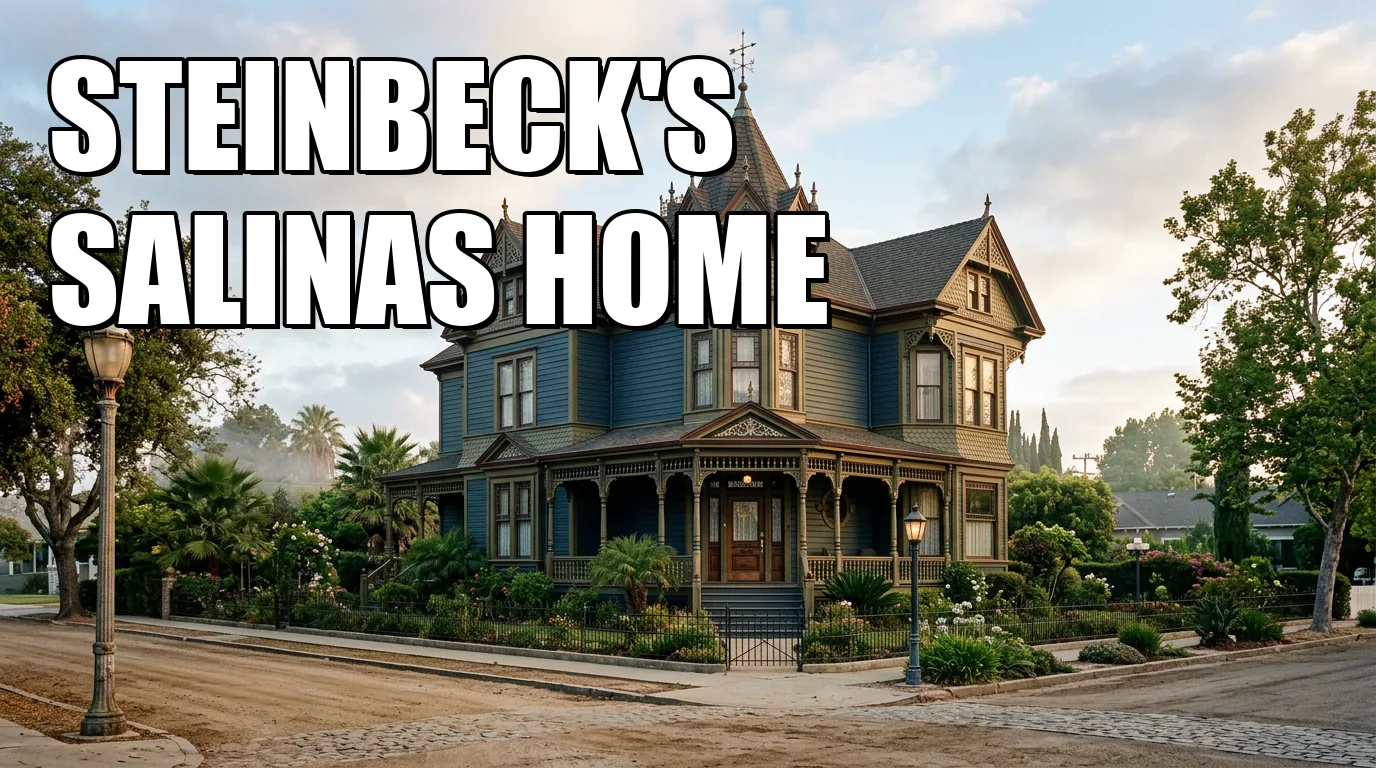
Standing on the corner of Central Avenue and Stone Street in downtown Salinas, California, the John Steinbeck House offers a deceptively unassuming facade. It’s a handsome Queen Anne-style Victorian, constructed in the late 19th century, with horizontal wood siding and buttwood shingles adorning its exterior walls. My first visit years ago, after having read nearly everything Steinbeck ever penned, was laced with an almost reverential anticipation. Yet, what I found inside challenged my conventional notions of literary preservation, proving that history can be both profoundly respected and delightfully reanimated.

The Roots of a Literary Giant: A Queen Anne's Enduring Legacy

Before the Steinbeck family ever set foot here, the two-story residence was completed around 1897-1898, commissioned by J. J. Conner. It was a sturdy, respectable home, typical of its era, grounded on a concrete foundation with a full basement – a feature that would later play an interesting role in young John's imaginative world. The Steinbecks, arriving in 1900, made it their own, providing the author with the very first landscape of his life. Indeed, it was within these walls that John Steinbeck was born on February 27, 1902, specifically in the bedroom situated to the left of the main entrance. This detail, seemingly small, anchors the entire experience; it’s not just *a* house he lived in, but *the* house where his life began. His early years unfolded here, a childhood steeped in the Salinas Valley, the dramatic setting that would fuel so much of his groundbreaking work. He remained in the family home, absorbing the sights and sounds of the Central Coast, until his departure for Stanford University in 1919, a period that irrevocably shaped his artistic sensibility.

Where Stories Took Shape: Unpacking the Rooms of Inspiration

Perhaps the most compelling aspect of visiting the Steinbeck House isn't just seeing where he slept or ate, but understanding the tangible connection between these spaces and his creative genesis. Many writers describe a sense of place, but for Steinbeck, his childhood home became a literal forge for his earliest narratives. You can almost feel the nascent stirrings of genius lingering in the air. Climbing to the upper floor, one discovers the particular bedroom overlooking Central Avenue that served as Steinbeck's teenage sanctum. Here, as a young man, he began to craft his first short stories, anonymously submitting them to magazines – a fascinating glimpse into his early, somewhat secretive dedication to his craft. More significantly, as an adult, this very room became a prolific workspace. It was here, amidst the familiar comforts of his boyhood, that he completed two of his most important novels: *The Red Pony* (1933) and *Tortilla Flat* (1935). The latter, upon its publication, brought him his initial wave of fame, a poignant achievement occurring in the same year his father passed away. Beyond his upstairs writing retreat, other rooms hold their own specific gravity. The parlor, a formal room typically reserved for receiving guests, was the setting for his christening in 1905, and later, the space where he practiced piano. Downstairs, in the living room, a young Steinbeck boldly declared his intention to become a writer – a moment of self-definition that echoes through history. Even the basement, often overlooked in historic homes, served a unique purpose: it was his personal stage for entertaining neighborhood friends with enthralling ghost stories and other tales, an early indication of his prowess as a storyteller. This intimate connection between the physical spaces of the house and specific moments in his life, and even echoes in his later novel *East of Eden* (1952), truly elevates the visit beyond a mere walk-through.

From Family Home to Community Hub: The Valley Guild's Vision

Following the passing of Steinbeck's parents in the mid-1930s, the house embarked on a journey through several hands. It was sold to Mrs. Marie Koenecke Klute, who resided there until 1953. For years afterward, the grand old Victorian stood largely vacant, occupied only by occasional tenants, a quiet sentinel to its illustrious past. Upon Mrs. Klute's death in 1967, the property was entrusted to the Hartnell College Newman Foundation, intended to serve as a center for the Newman Club. Student members undertook renovations, culminating in a formal dedication in December 1969, breathing a fleeting new life into the historic structure. Then came a truly remarkable turn: in 1971, the Newman Club sold the property to the Valley Guild of Salinas. This wasn't some corporate entity or a traditional historical society, but a women's organization born from a shared passion for gourmet cooking and showcasing the bountiful produce of the Salinas Valley. Their vision was radical and brilliant: to transform Steinbeck’s birthplace into a restaurant, staffed entirely by volunteers. This unconventional approach, rather than creating a static museum, imbued the house with a vibrant, living purpose. It reopened to the public on February 27, 1974, Steinbeck's 72nd birthday, a fitting tribute to a man deeply connected to the land and its sustenance. The Valley Guild’s efforts also secured the house's rightful place in history by having it added to the National Register of Historic Places in 2000, ensuring its preservation while maintaining its unique, active role in the community.

Navigating Your Visit: Dining, Discovery, and Delights

Visiting the Steinbeck House today requires a slight recalibration of expectations. You aren't stepping into a silent, roped-off museum. Instead, you're entering a bustling, charming restaurant, a living testament to community spirit and culinary dedication. The house operates primarily as a lunch establishment, open Tuesday through Saturday from 11:30 AM to 2:00 PM, a schedule that reflects the volunteer staffing model. Sundays and Mondays offer a well-deserved respite for the dedicated team. The menu, a celebration of Salinas Valley produce, changes seasonally, featuring freshly baked rolls and a range of dishes from vegetarian options to soups, salads, sandwiches, and wraps. Expect average entrée prices between $13 and $21, with many options comfortably under $12, making it an accessible and delightful culinary experience. Don't leave without trying their signature Frozen Chocolate Charlotte dessert or the exquisite crème brûlée. For those eager to delve deeper into the house's historical layout, summer offers a special opportunity. Tours of all floors, including John's private bedroom, are available on Sundays from 11:00 AM to 2:00 PM. Crucially, these tours are not offered during regular lunch service to ensure a seamless experience for restaurant patrons. No reservation is required for these specific summer Sunday tours, but planning your visit around this limited window is essential if seeing Steinbeck's bedroom is a priority. It's a different rhythm than a typical historical site, one that prioritizes the unique dual function of the house. Before or after your meal, a visit to "The Best Cellar" gift shop, nestled in the original basement, is highly recommended. Open Tuesday through Saturday from 11:00 AM to 3:00 PM, it's more than just a souvenir shop. Here, among unique gift items and a curated selection of vintage and new Steinbeck books, you'll find original Steinbeck family furniture, including the headboard of the very bed in which John Steinbeck was born. It’s a tangible link to his earliest moments, providing a profound, quiet counterpoint to the vibrant restaurant above. The house also periodically hosts special events, such as holiday teas and prix fixe dinners, with a notable Winemaker's Dinner scheduled for Friday, October 24, 2025, from 6:00 PM to 8:00 PM, priced at $75 per person, offering a chance for a more elevated, evening experience.

Beyond the Threshold: Salinas and Steinbeck's Broader Canvas

The Steinbeck House’s downtown Salinas location, at 132 Central Avenue, places it just two blocks west of the magnificent National Steinbeck Center at 1 Main Street. A visit to both sites creates a comprehensive and deeply rewarding experience, painting a full picture of Steinbeck's life and the indelible mark he left on American literature and the world’s perception of the Central Valley. The National Steinbeck Center, open Wednesday through Sunday from 10:00 AM to 5:00 PM (with an adult admission of $15), offers a broader contextual understanding of his works and the socio-economic landscapes he depicted. Truly, the John Steinbeck House is not merely a preserved building; it's a living, breathing tribute, sustained by the passionate dedication of volunteers and the bounty of the land Steinbeck himself immortalized. It challenges the conventional wisdom of how we preserve history, demonstrating that sometimes, the best way to honor a legacy is to infuse it with new life, purpose, and, perhaps most importantly, a shared meal. It’s a place that continues to nourish, in every sense of the word, both body and soul, inviting visitors to connect with Steinbeck’s world in an unexpectedly intimate and delicious way. For more details or to inquire about reservations, you can reach the Steinbeck House at (831) 424-2735.

Exploring John Steinbeck's American Homes: A Visitor's Guide

Where was Steinbeck's house?
John Steinbeck lived in three notable American homes: his birthplace in Salinas, California (1902-1919), now a restaurant and museum; a house in Monte Sereno, California (1936-1938) where he wrote The Grapes of Wrath; and his beloved home in Sag Harbor, New York (1955-1968) where he spent his final years.
Where is John Steinbeck's grave located?
John Steinbeck is buried in the Garden of Memories Memorial Park cemetery in Salinas, California, his hometown, in the Hamilton family plot with his parents, sister Mary, and wife Elaine.
Did John Steinbeck live in Sag Harbor?
Yes, John Steinbeck lived in Sag Harbor, New York from 1955 until his death in 1968 with his wife Elaine. The home featured 1.8 acres of waterfront property and included a writing gazebo called Joyous Garde overlooking the cove.
Why is the Salinas Valley important to John Steinbeck?
The Salinas Valley was Steinbeck's birthplace and served as the primary setting for many of his major works including East of Eden, Of Mice and Men, and The Grapes of Wrath. He aspired to universalize the valley's stories so they would resonate with readers worldwide as 'the valley of the world.'
What movies were filmed in Salinas?
The most notable film shot in Salinas was East of Eden (1955), which filmed scenes throughout the Salinas Valley including locations at the Spreckels Sugar Factory. Other films shot in the area include Bandits, The Muppet Movie, Topaz, and Herbie Goes to Monte Carlo.
What was John Steinbeck's obsession?
Recurring themes of greed and obsession appear throughout Steinbeck's works, most notably in The Pearl where the protagonist's obsession with a pearl leads to his downfall. His novels frequently explore how personal desires and obsessions shape human destiny.
What does John Steinbeck House offer for tours?
The Steinbeck House in Salinas operates as a restaurant and offers summer house tours on Sundays from 11am to 2pm (hours vary seasonally). Reservations are recommended to visit the Victorian birthplace. The Sag Harbor home offers free docent-led tours (reservation required) at steinbeckhouseNY.org.
What does the Salinas River symbolize in Of Mice and Men?
The Salinas River in Of Mice and Men represents George and Lennie's dreams of the future and their hope to own a small farm. The novel opens with the river as a place of sanctuary and security, symbolizing the characters' aspirations and emotional refuge.
What did Steinbeck say about Salinas?
Steinbeck said, 'Not everyone has the good fortune to be born in Salinas.' He wrote lovingly about his hometown, though he also expressed mixed feelings, describing Cannery Row as 'a poem, a stink, a grating noise, a quality of light, a tone, a habit, a nostalgia, a dream.'
What is the main thing Salinas Valley is known for?
The Salinas Valley is known as 'The Salad Bowl of the World' due to its massive agricultural production. It produces over half of the United States' lettuce supply and major commodities including broccoli, cauliflower, tomatoes, and lettuce, with $8 billion in annual agricultural value.
What are the hours and admission for the National Steinbeck Center?
The National Steinbeck Center is open Wednesday-Sunday from 10am-5pm. Adult admission is $15, seniors/military $13, children 6-17 $7, and children under 6 free. Plan for at least 2 hours for a self-guided visit.
Can I visit the Monte Sereno Steinbeck House?
No, the Monte Sereno house where Steinbeck lived 1936-1938 and wrote The Grapes of Wrath is now a private residence and is closed to the public. It is listed on the National Register of Historic Places.
Where is the Steinbeck House restaurant located?
The Steinbeck House restaurant is located at 132 Central Avenue in downtown Salinas, two blocks west of the National Steinbeck Center. It serves lunch Tuesday-Saturday in Steinbeck's childhood Victorian home.
Are there guided tours available at Steinbeck sites?
Yes, the National Steinbeck Center offers self-guided experiences with docent orientation available. The Steinbeck House in Salinas offers limited house tours. The Sag Harbor home offers free reserved docent-led tours seasonally through steinbeckhouseNY.org.
What is nearby Steinbeck House in Salinas?
The Steinbeck House is located in historic Old Town Salinas near restaurants, shops, and two blocks from the National Steinbeck Center. It serves as both a restaurant and museum showcasing Steinbeck's childhood home with a literary gift shop.